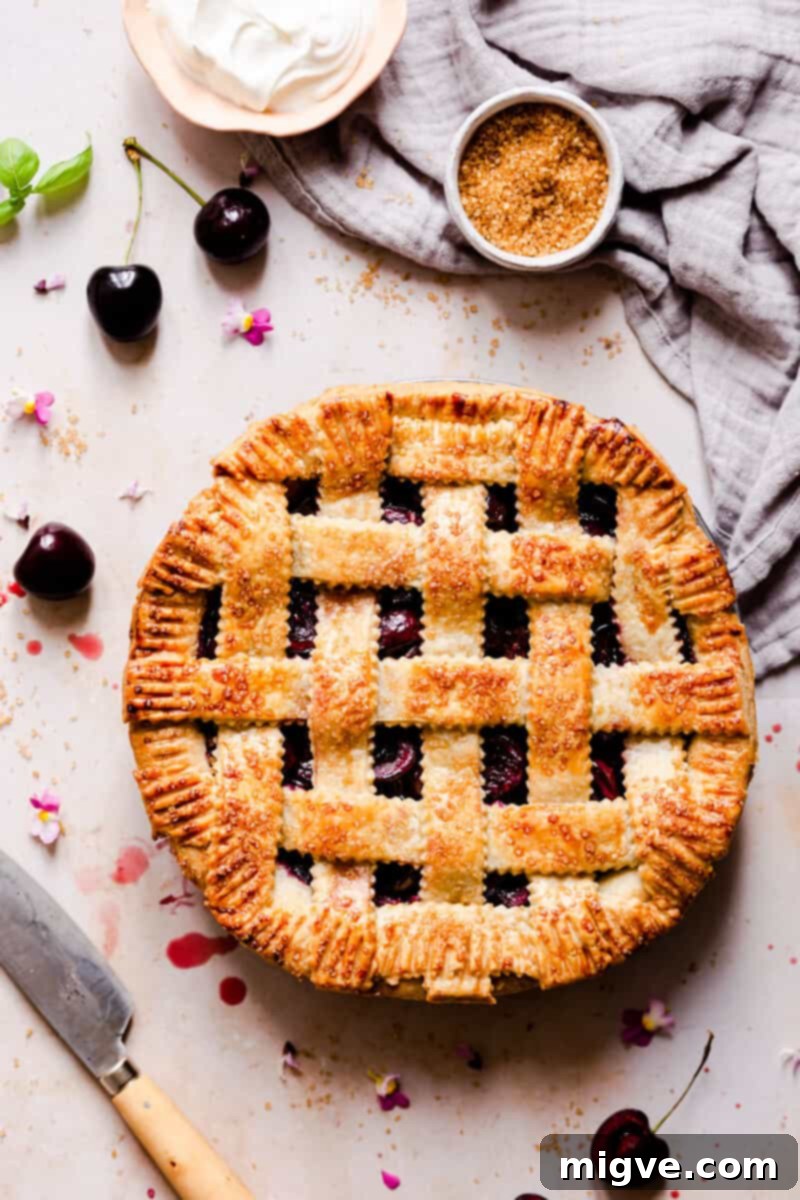
No summer celebration, picnic, or family gathering is truly complete without the comforting presence of a homemade cherry pie. Imagine a perfectly crispy, buttery pie crust, generously filled with an abundance of sweet and juicy cherries, all crowned with an elegant pastry lattice top. This isn’t just a dessert; it’s a testament to the fleeting beauty of the cherry season, offering a delightful way to savor every last bite of this beloved stone fruit. Our easy recipe ensures that even novice bakers can achieve a show-stopping pie that tastes infinitely better than anything you can buy, making it a perfect project to embrace the warmth of summer.
Why This Homemade Cherry Pie Belongs on Your Summer Table
The cherry season is a precious, fleeting time, arriving with a burst of vibrant color and succulent flavor, then departing far too quickly. This homemade cherry pie recipe provides an ideal opportunity to capture and celebrate the peak of this wonderful stone fruit before it vanishes for another year. Beyond simply enjoying fresh cherries, transforming them into a pie creates a truly memorable experience, allowing you to relish their unique taste and texture in a truly comforting dessert.
One of the most rewarding aspects of this recipe is the homemade pie crust. While store-bought alternatives offer convenience, they simply cannot compare to the depth of flavor and exquisite texture of a crust made from scratch. Our recipe yields a crust that is not only incredibly crispy and tender, but also boasts a rich, buttery flavor that complements the sweet-tart cherry filling perfectly. The process of making your own pastry, from mixing the ingredients to carefully rolling it out, is incredibly satisfying. It’s a culinary journey that culminates in a dessert brimming with wholesome goodness and an undeniable personal touch. Forget the fear of pastry making; this recipe is designed to be approachable, guiding you to a flaky, golden-brown crust every single time.
Perhaps you’re looking for other ways to enjoy the bounty of cherry season, or maybe pie isn’t quite what you had in mind today. If you’re keen to explore other cherry-infused delights, consider this wonderful Cherry Cobbler recipe from Little House Big Alaska blog. It offers a rustic, comforting alternative with a delicious fruit base and a delightful biscuit-like topping. If cherries aren’t your fruit of choice, or you simply crave a different classic, be sure to delve into my extensive collection of Pies, Tarts, and Crumbles recipes. You’ll discover a variety of comforting bakes to suit every palate. And for those who adore classic, old-fashioned pies, I highly recommend trying this delectable Pecan Pie recipe, a timeless favorite that never disappoints.
Fresh vs. Frozen Cherries: The Ultimate Choice for Your Pie Filling
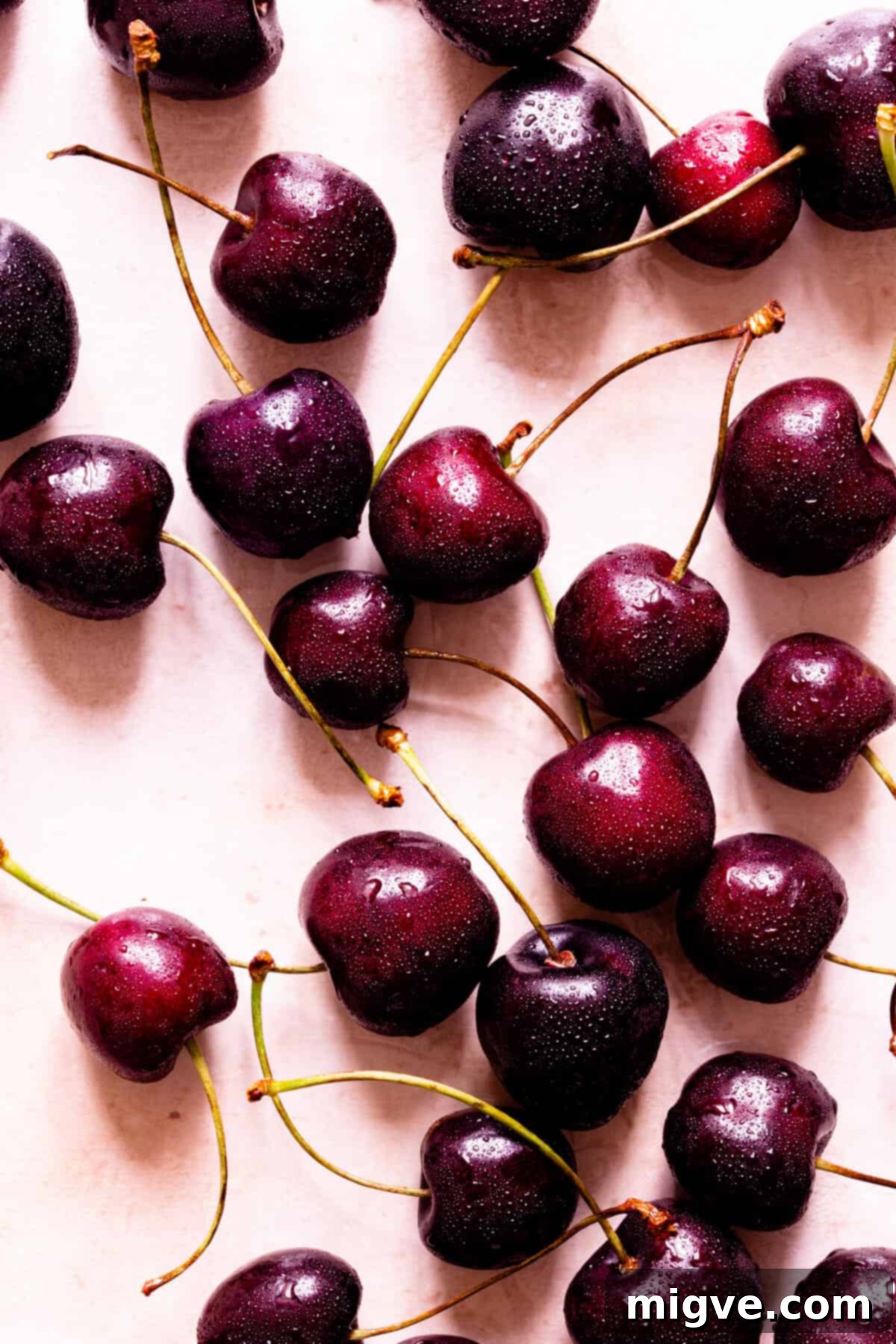
When it comes to crafting the perfect cherry pie, the choice between fresh and frozen cherries is paramount, and I strongly advocate for using fresh cherries for the filling. Fresh cherries yield a pie filling with superior texture and flavor, allowing the natural sweetness and slight tartness of the fruit to truly shine. The vibrant color and firm bite of fresh cherries are simply unmatched. If you opt for frozen cherries, there’s a significant risk that your pie filling will become excessively liquidy, resulting in a soggy bottom crust and a filling that resembles soup rather than a luscious, fruit-filled center. This is primarily because frozen fruits release a considerable amount of water as they thaw and cook, diluting the flavors and compromising the structural integrity of your pie. While some recipes might offer workarounds for frozen fruit, for a truly exceptional cherry pie, fresh is always the way to go.
Strive to use your favorite variety of fresh cherries. Sweet cherries, like Bing or Rainier, will result in a sweeter pie, while tart cherries, such as Montmorency, offer a brighter, more intensely fruity flavor. For a nuanced and perfectly balanced pie, you might even consider using a mix of both sweet and sour cherries. If you primarily use dark or sour cherries, you may wish to slightly increase the amount of sugar specified in the recipe to achieve your desired level of sweetness. Taste a few cherries before you start to gauge their natural sugar content and adjust accordingly.
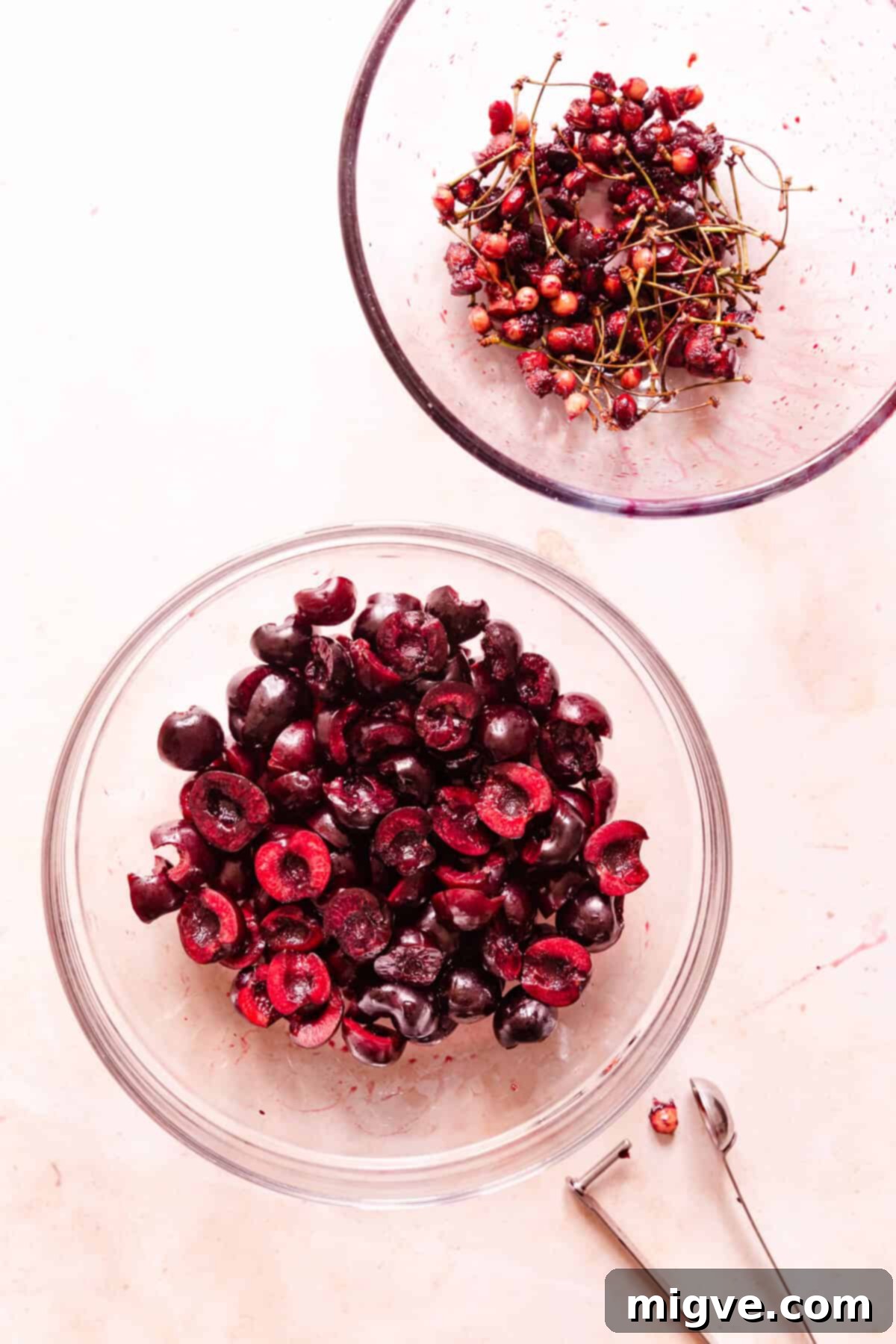
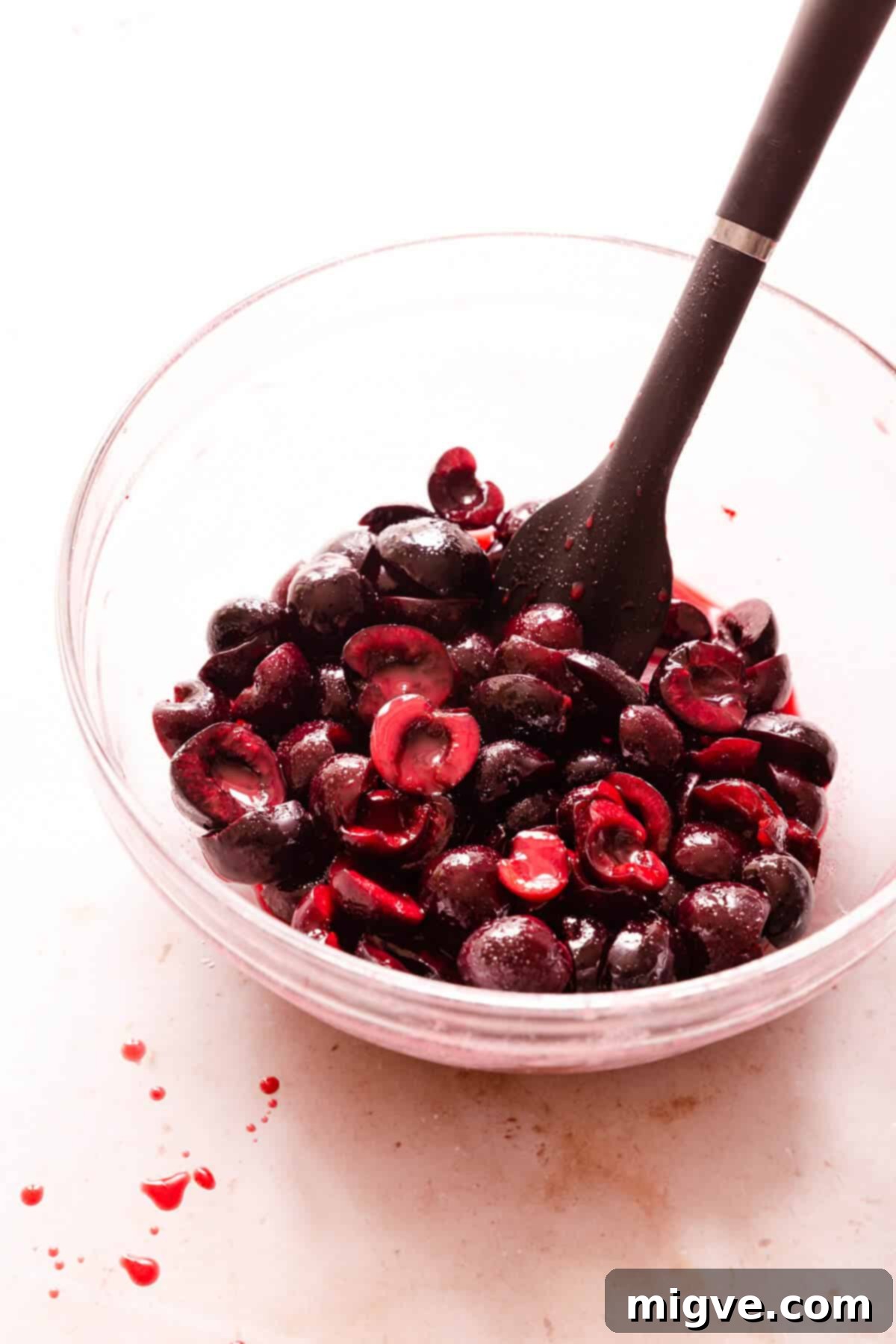
Undoubtedly, pitting the cherries is often considered the least enjoyable step of this entire recipe. However, this task can be significantly eased and even done in advance. Pitted cherries can be stored in the refrigerator for up to two days, making this a perfect make-ahead task if you want to streamline your pie-baking process on the main day. I highly recommend investing in a dedicated cherry pitter; these inexpensive gadgets are incredibly handy and make quick work of removing the stones. While not strictly necessary, it will save you considerable time and effort compared to using a knife or other less efficient methods. When pitting cherries, I also advise wearing a pair of kitchen gloves. Cherries are notorious for their vibrant, staining juices, and gloves will protect your hands from temporary discoloration. And for extra precaution, an apron is a wise choice to safeguard your clothing from any rogue splatters. A little preparation goes a long way in making the pitting process more pleasant and less messy.
Mastering the Art of Homemade Pie Crust
Many home bakers find the idea of making pie crust from scratch a bit daunting, often feeling intimidated by the process. But I am here to reassure you that there is absolutely no need for concern! My tried-and-tested pie crust recipe is remarkably forgiving and, as long as you follow the simple steps outlined below, I promise you’ll achieve a flaky, tender, and delicious crust that will impress everyone. The secret lies in a few key principles and careful handling, which we’ll cover in detail.
This recipe yields enough pie crust dough for both the bottom crust of your pie and the decorative lattice top. To ensure the dough is manageable and easy to work with, especially for rolling and handling, I find it much easier to prepare it in two separate batches. This prevents overworking the dough and keeps it at the ideal temperature. Therefore, I recommend dividing the ingredients for the pastry in half and making each portion individually. This approach helps maintain the desired flaky texture and makes the rolling process much smoother.
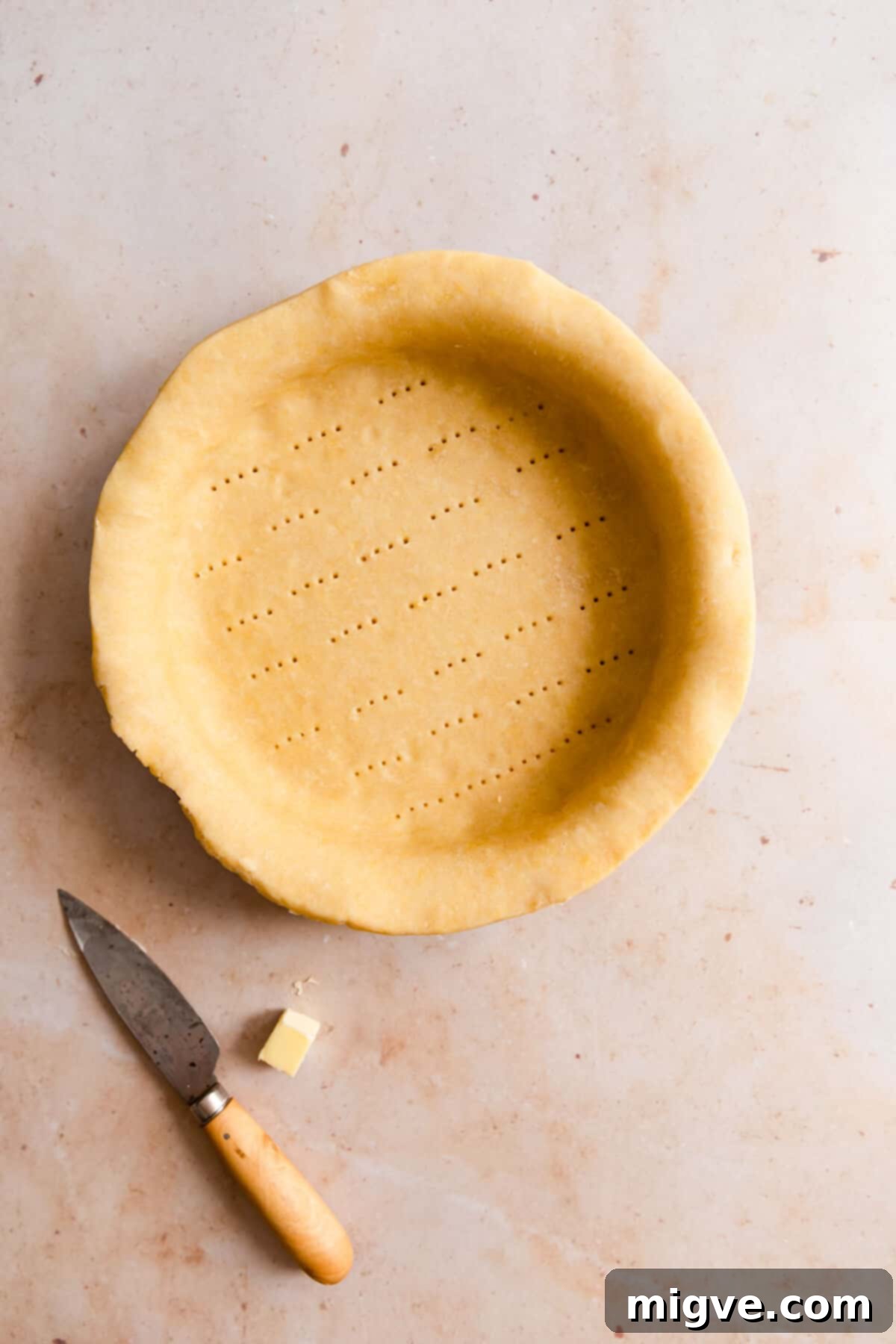
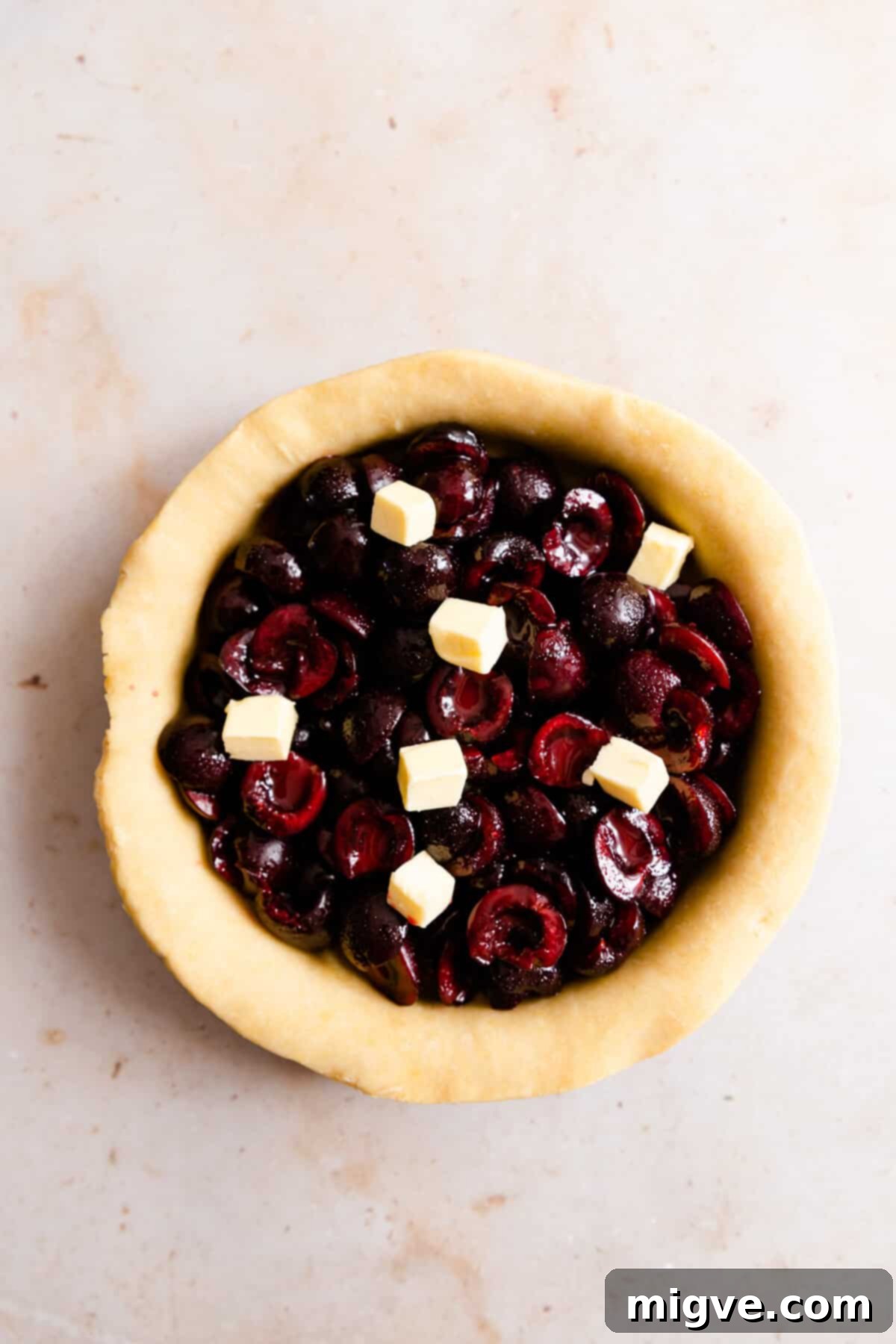
The cornerstone of a truly flaky pie crust is the use of cold, cubed butter. It’s crucial for the butter to remain as cold as possible throughout the mixing process. I typically cut my butter into small, uniform cubes, which makes it easier to incorporate into the flour mixture without overworking. Once cubed, I place the butter in the freezer for about 15 minutes while I gather the remaining ingredients. This ensures the butter stays solid, creating pockets of steam during baking that result in those desirable flaky layers. When you mix the butter with flour, avoid over-mixing; you want a coarse, crumbly texture with some visible pieces of butter remaining.
Once your pie pastry is removed from the refrigerator, it’s essential to work quickly and efficiently. The longer you handle or roll the dough, the more the butter will soften, and the gluten will develop, making the pastry tough and difficult to manage. Aim to roll it into a large, even circle with confident strokes. Carefully transfer the rolled-out dough into your pie dish, gently pressing it against the sides and bottom. Then, spoon your delicious cherry filling into the crust. If at any point the pastry becomes too soft or sticky to handle, don’t hesitate to place it back in the fridge for 10-15 minutes to firm up. Patience and temperature control are your best friends when working with pie dough.
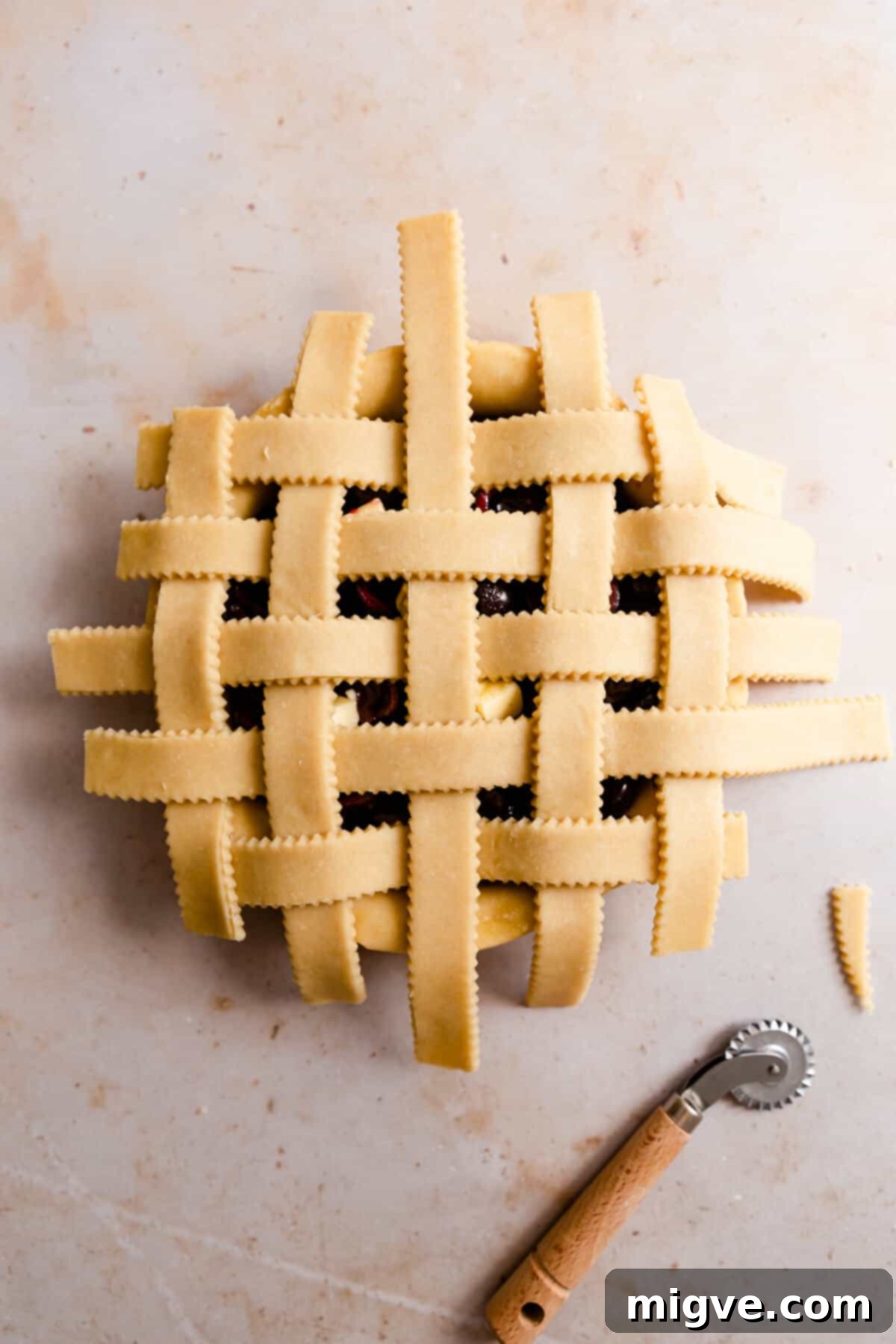
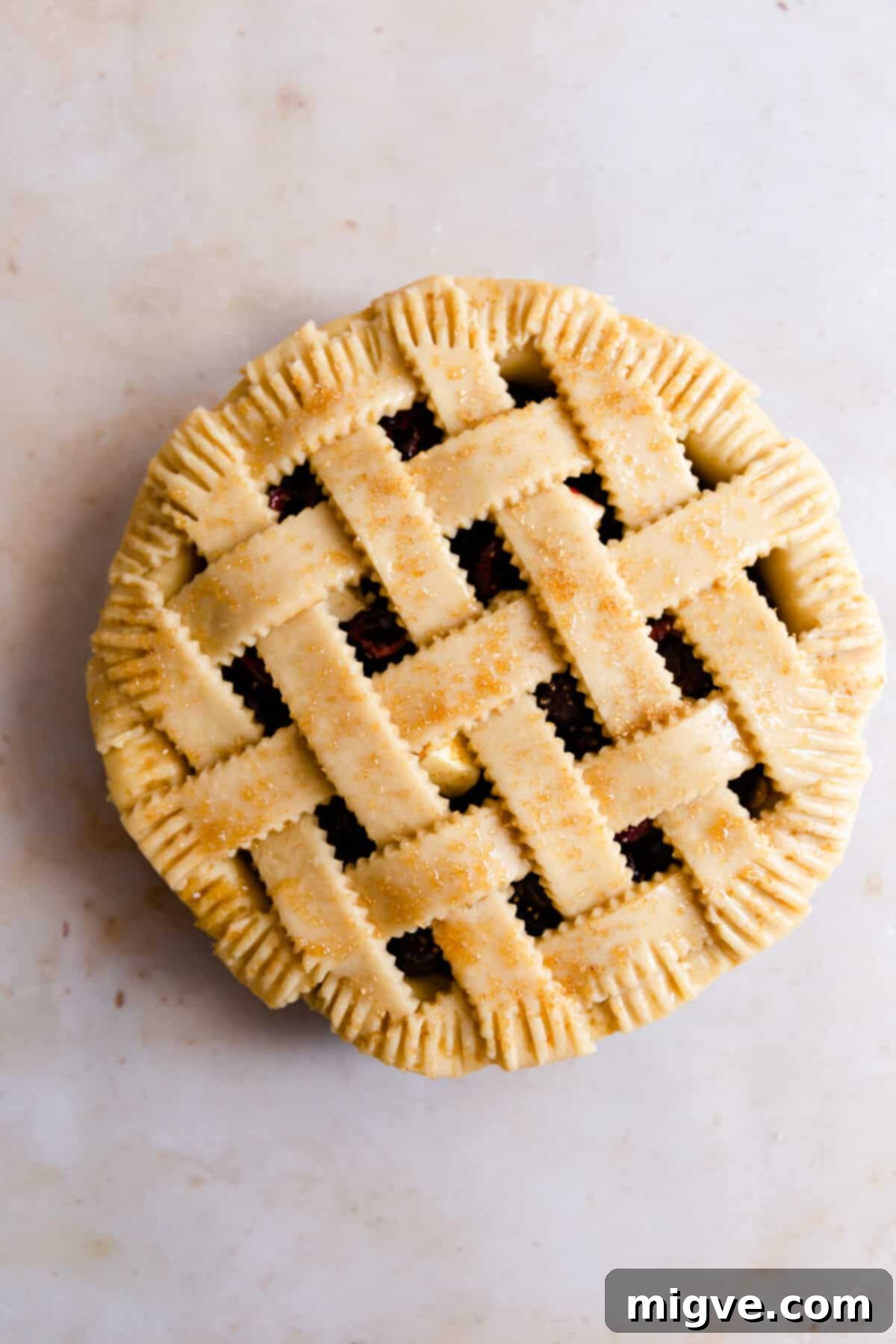
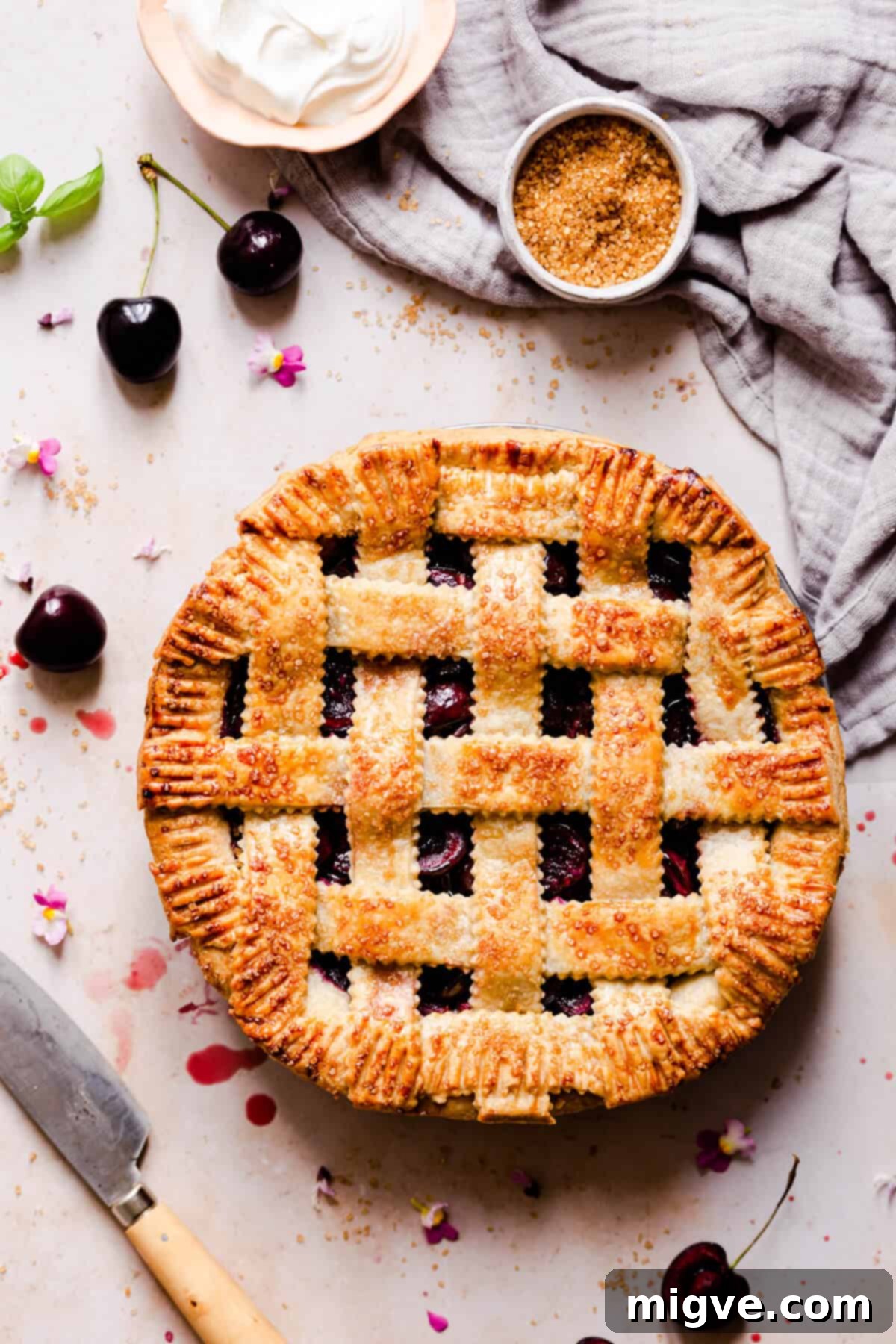
Creating a beautiful lattice top is a hallmark of a classic fruit pie and adds an irresistible visual appeal. To achieve this, roll out your second pastry disc into a large circle, ensuring it’s slightly larger than your pie dish. Using a sharp knife, a pizza cutter, or a specialized pastry cutter, carefully cut about 10 long, even strips. The exact number and width of the strips can be adjusted based on your preference for the lattice pattern. Again, if the pastry dough starts to become too soft and pliable, making it difficult to handle, don’t hesitate to transfer the strips to a baking tray and pop them back into the fridge for a few minutes to firm up. Chilled strips are much easier to weave and manipulate into a neat lattice pattern over your pie filling.
Alternatively, for an even easier approach, you can weave your lattice directly on a baking sheet lined with parchment paper, then gently slide the pre-woven lattice onto your pie. Once the lattice is in place, use a sharp knife or kitchen scissors to trim any excess pastry from the edges, creating a neat, uniform border. Gently press the edges of the lattice top with your fingers to seal it securely with the bottom pie crust, preventing the filling from bubbling out during baking. For an extra decorative touch and a stronger seal, you can also use the tines of a fork to create a crimped pattern around the entire rim of the pie.
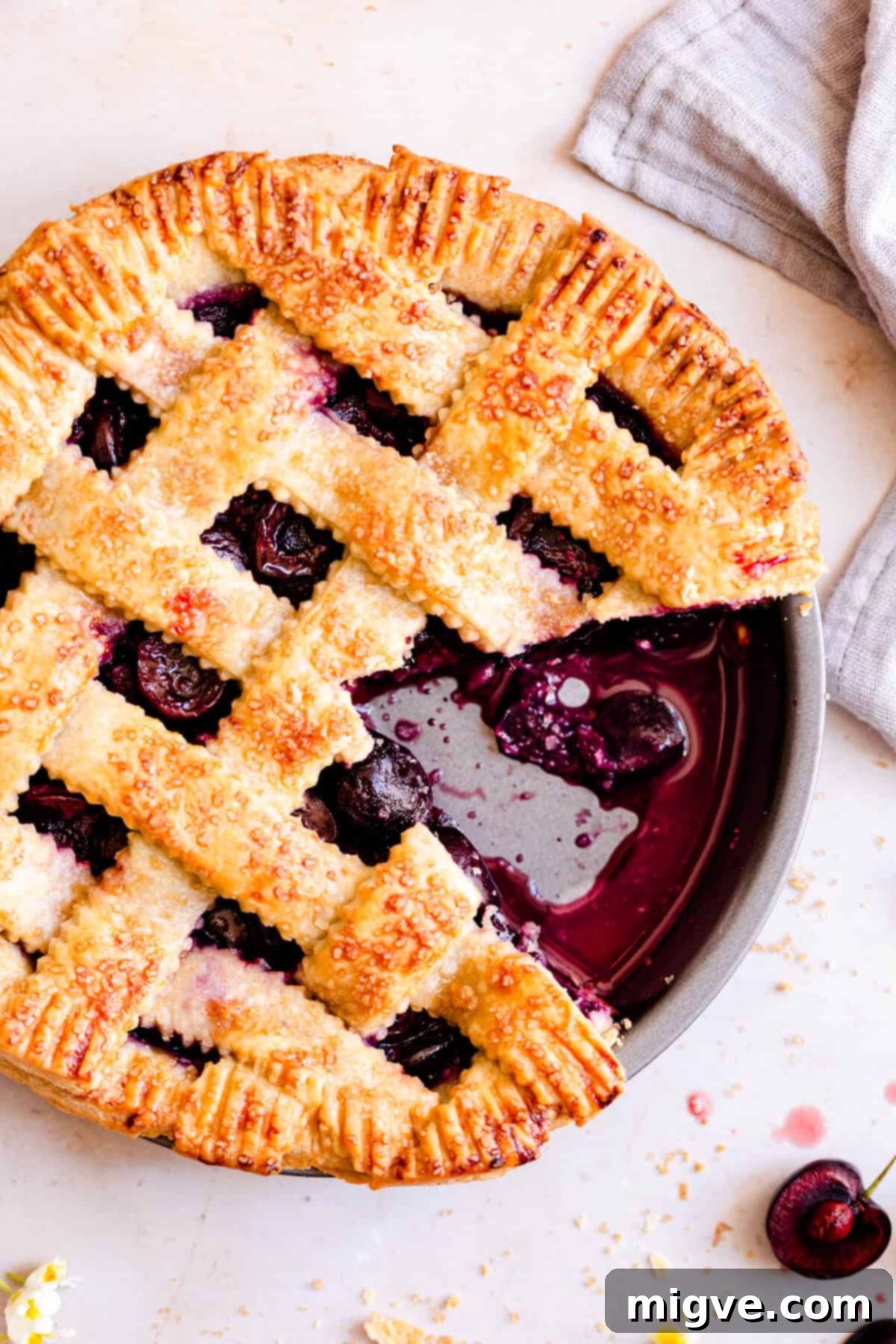
The Art of Finishing Touches for a Perfect Pie
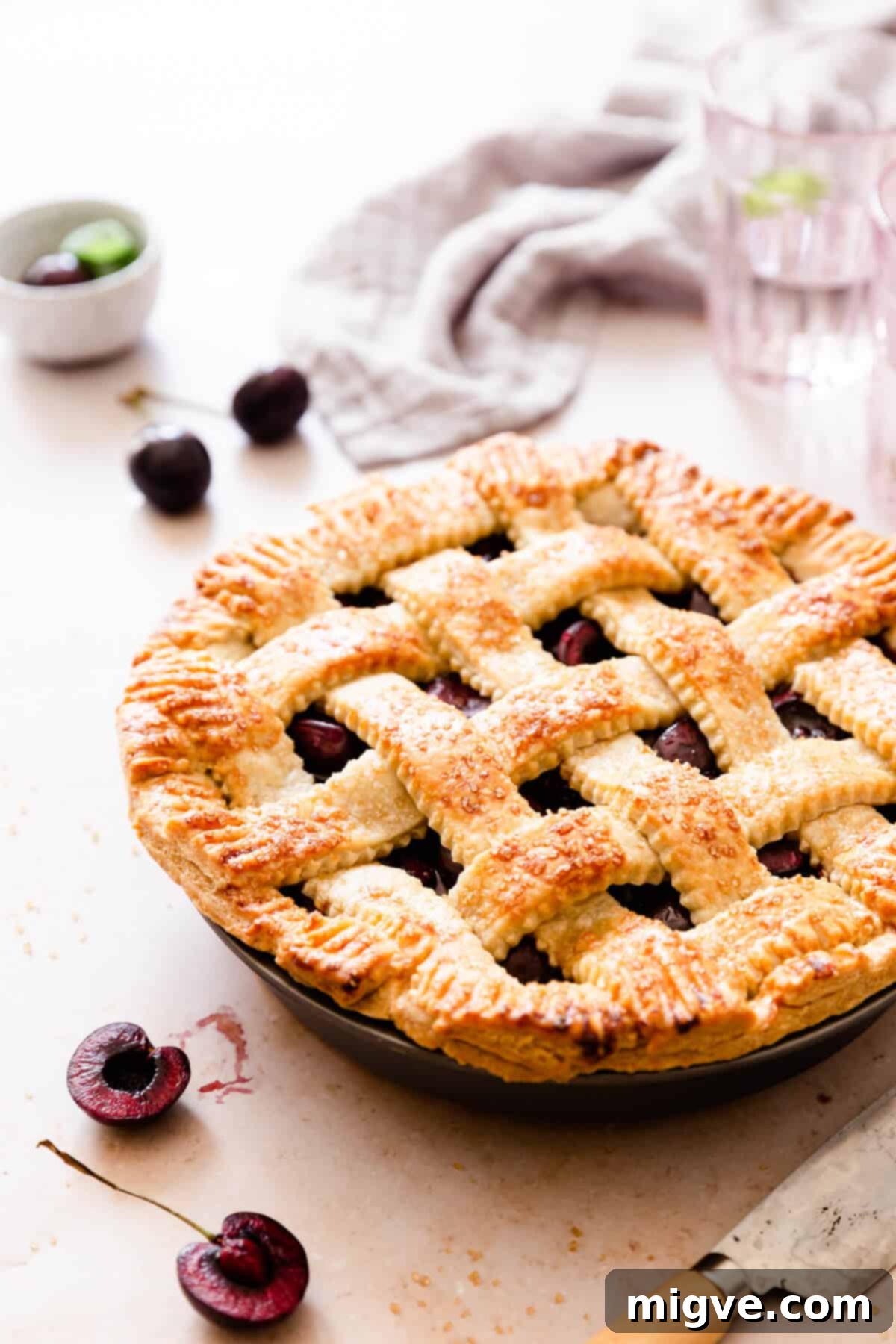
Once you’ve skillfully assembled your cherry pie, a few simple finishing touches can elevate it from delicious to truly spectacular. The first essential step is to brush the entire surface of the pie, including the lattice and edges, with an egg wash (a beaten egg mixed with a splash of water or milk) or just a bit of milk. This isn’t merely for aesthetics; the egg wash creates that beautiful, rich golden-brown shine and color during baking, making your pie visually irresistible. Additionally, it helps to create a slightly crispier crust and further seals the edges, ensuring a tidy, professional-looking finish.
Last, but certainly not least, I always recommend sprinkling a generous amount of demerara sugar over the top of my pie before baking. This coarse-grained sugar not only adds an appealing sparkle and rustic charm to the finished bake, but it also provides a delightful textural contrast. The demerara sugar caramelizes slightly in the oven, creating tiny, crunchy crystals that offer a wonderful bite against the tender crust and juicy filling. It’s a small detail that makes a big difference in both presentation and eating experience.
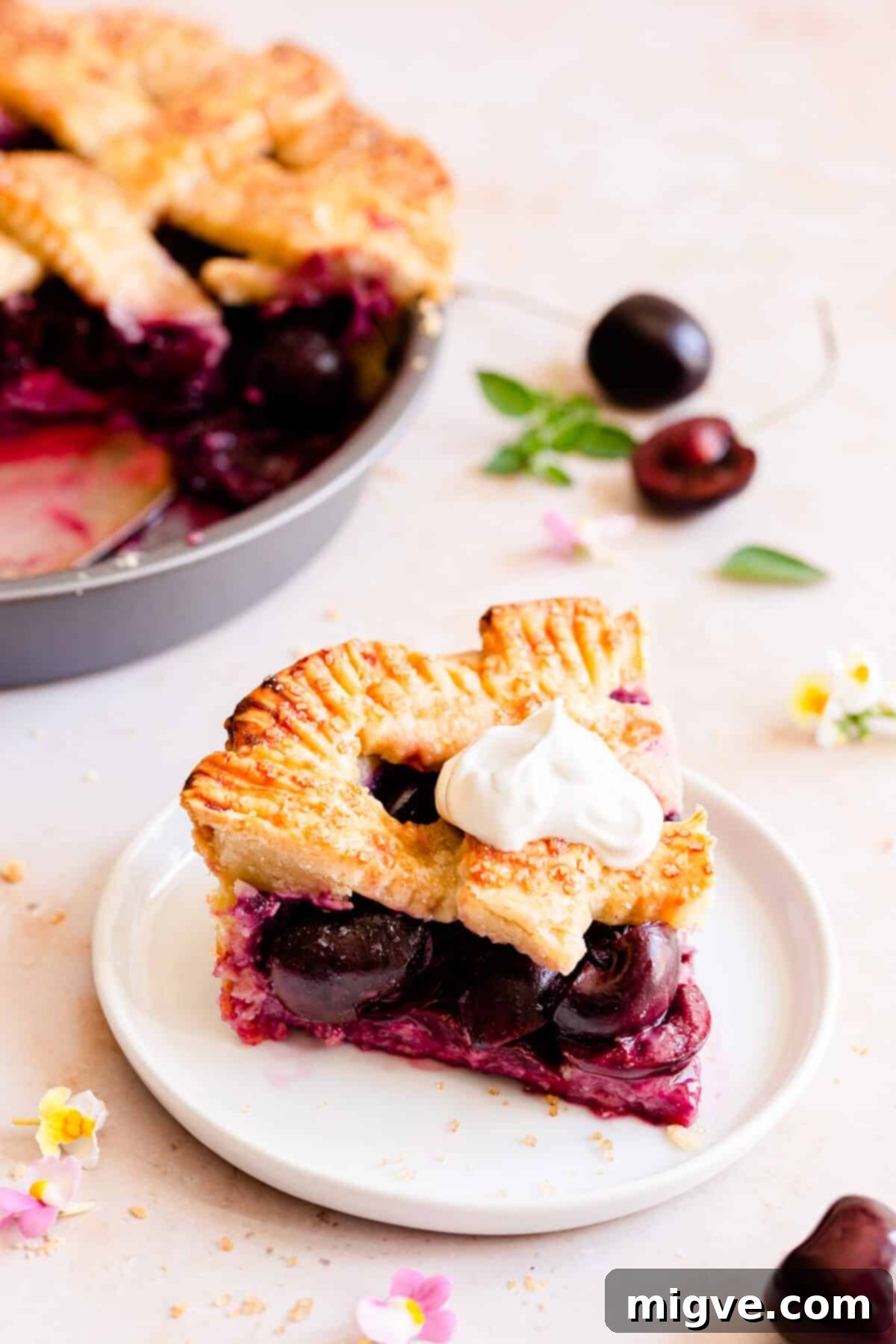
The hardest part of baking a perfect pie often comes after it’s out of the oven: allowing it to cool completely. I know, the aroma is intoxicating, and the temptation to slice into it immediately is almost unbearable! However, patience is key here. As the pie cools, the fruit filling continues to set, thickening to the ideal consistency. Slicing into a hot pie will almost certainly result in a runny, messy filling that spills out. A cooled pie will be much easier to cut into clean, elegant slices and is far more pleasant to handle. Once cooled to perfection, serve your glorious homemade cherry pie with a generous dollop of freshly whipped cream, a scoop of creamy vanilla bean ice cream, or even a drizzle of custard. Each accompaniment adds another layer of indulgence, making every bite truly heavenly!
Make-Ahead and Storage Tips for Your Cherry Pie
Life can be busy, and sometimes the best way to enjoy homemade treats is to prepare components in advance. This cherry pie recipe offers several convenient make-ahead options that can save you time and effort on baking day. You can certainly make the pie dough ahead of time. Once prepared, wrap it tightly in plastic wrap and store it in the refrigerator for up to 5 days. This allows you to tackle the most time-consuming part of the pie a few days before you plan to bake. For longer storage, the pie crust dough can also be frozen for up to 3 months. When you’re ready to use frozen dough, simply transfer it to the refrigerator to thaw overnight before rolling it out as usual.
Beyond just the dough, you can also freeze a fully baked cherry pie, extending its shelf life and allowing you to enjoy a taste of summer long after cherry season has passed. Wrap the cooled, baked pie tightly in several layers of plastic wrap, followed by a layer of aluminum foil, to protect it from freezer burn. It can be stored in the freezer for up to 3 months. To serve a frozen baked pie, transfer it to the refrigerator to thaw overnight. For the best flavor and texture, I recommend bringing it to room temperature or gently reheating it in a low oven (around 150°C or 300°F) for 20-30 minutes before serving. This will help crisp up the crust and warm the filling to perfection.
If you have any leftover pie, it can be stored at room temperature for up to one day, though for optimal freshness and to prevent the crust from softening, covering it loosely or placing it in an airtight container is recommended. For longer storage of baked pie, or in very warm climates, refrigeration is advisable, where it can last for 3-4 days. Just remember to bring refrigerated pie to room temperature or warm it slightly before serving to fully appreciate its flavors and textures.
Thank you for joining me on this culinary journey through the delightful world of homemade cherry pie! I sincerely hope you feel inspired to try this recipe and bring a slice of summer joy into your home. If you do try this pie, or any of my other recipes, please don’t hesitate to leave a comment and a rating below the recipe card. Your feedback truly makes my day, and I love hearing about your baking adventures!
For more delicious recipes and baking inspiration, be sure to follow me on my social media channels: Instagram, Pinterest, and Facebook. I regularly share new content, tips, and behind-the-scenes glimpses.
📖 Recipe: Classic Homemade Cherry Pie

Pin Recipe
Easy Homemade Cherry Pie
2 hrs
55 mins
Dessert
American
cherry pie, homemade cherry pie, summer pie
8 slices
668 kcal
Anna Wierzbinska
Equipment
- 8′ baking dish
- mixing bowl
- pastry or pizza cutter (sharp knife will also work)
- Cherry Pitter (optional, but highly recommended)
Ingredients
For the pie pastry (bottom and top):
- 500 g all-purpose/plain flour
- 300 g cold butter, cubed
- 2 teaspoon salt
- 1 teaspoon caster/superfine sugar
- 2 large eggs
- 2 tablespoon cold milk or water
For the pie filling:
- 700 g cherries, pitted and halved
- 140 g caster/superfine sugar
- 25 g cornflour or cornstarch
- 1 tablespoon lemon juice
- 1 teaspoon vanilla extract
- ½ teaspoon almond extract
- 1 tablespoon butter, cubed
- 1 large egg, beaten (for egg wash)
- 1 teaspoon demerara sugar (for sprinkling)
Note on Units: All my recipes are developed and tested in metric grams. I highly recommend using digital scales for the most accurate results. While I have provided approximate conversions for US customary measurements, please be aware that I have not specifically tested the recipe using these conversions.
Instructions
To make the pastry:
- For easier handling, it’s best to make the pie pastry in two separate batches. Divide the ingredients for the pastry in half for each portion. On a clean, flat surface, heap one portion of the flour and create a well in the center. Add half of the cubed cold butter, one egg, half of the salt, and half of the caster sugar into the well. Using just the tips of your fingers, gently rub the butter into the flour mixture until it resembles coarse breadcrumbs with some larger pea-sized pieces of butter remaining.
- Add one tablespoon of cold milk or water to the mixture and continue to mix until the dough just starts to come together. Briefly knead it a few times until it forms a smooth ball. Shape the dough into a disc, wrap it tightly in cling film or a reusable kitchen wrap, and refrigerate for a minimum of 30 minutes to 1 hour. Repeat this process for the second batch of pastry dough. If you opted to make all the pastry at once, divide the finished dough into two discs, wrap each separately, and refrigerate.
To make the filling and assemble the pie:
- In a large bowl, combine the pitted and halved cherries, lemon juice, vanilla extract, almond extract, caster sugar, and cornflour. Toss gently to coat all the cherries evenly. Place the bowl in the fridge while you prepare the crust. Preheat your oven to 200°C (190°C fan).
- Remove one of the chilled pastry discs from the fridge. On a lightly floured surface, gently roll it out into a large circle, ensuring it’s bigger than your baking dish (approximately 10-11 inches in diameter for an 8-inch dish). Carefully transfer the rolled pastry dough into your baking dish, gently pressing it around the edges and up the sides. Trim off any excess pastry dough from the edges.
- Take the cherry filling from the fridge and spoon it into the prepared pie crust. Discard any excess juices that may have accumulated at the bottom of the bowl. Scatter the 1 tablespoon of cubed butter evenly over the top of the cherry filling.
- Remove the second disc of pastry dough from the fridge and roll it out into another large circle, again slightly larger than your baking dish. Using a pastry or pizza cutter (or a sharp knife), cut out approximately 10 even strips from the pastry dough.
- Carefully arrange these strips into a decorative lattice pattern over the cherry filling. For visual guidance on weaving a lattice, you can refer to online video tutorials. Once the lattice is complete, trim off any excess dough from the edges and gently press the pastry edges together to seal. You can also use the tines of a fork to create a crimped pattern around the rim.
- Brush the entire surface of the pie, including the lattice and edges, with the beaten egg wash. This will give it a beautiful golden sheen. Sprinkle the demerara sugar evenly over the top for added crunch and sparkle.
- Bake the pie in the preheated oven at 200°C (190°C fan) for 20 minutes. After 20 minutes, reduce your oven temperature to 190°C (180°C fan) and continue to bake for another 30-35 minutes, or until the crust is golden brown and the filling is bubbling. If the crust starts to brown too quickly, you can loosely cover the pie with aluminum foil. Remove the pie from the oven and allow it to cool completely on a wire rack before slicing and serving. Enjoy with a scoop of vanilla ice cream or a dollop of fresh cream!
Notes
- If the pie crust dough becomes too soft to handle at any stage, simply place it back in the fridge for 10-15 minutes to firm up before continuing.
- The pie crust dough can be made in advance and stored in the fridge for up to 5 days, or frozen for up to 3 months. Thaw frozen dough overnight in the fridge before use.
- This pie is best enjoyed fresh on the same day it’s baked for optimal texture. You can store any leftovers at room temperature, loosely covered or in an airtight container, for up to a day. For longer storage, refrigerate for up to 3-4 days.
Nutrition (per serving)
Tell me how you like it! Leave a comment or take a picture and tag @anna_wierzbinska on Instagram. I love seeing your take on my recipes!
If you enjoyed this post and would like to receive future recipes straight to your inbox, make sure to sign up for my mailing list! You’ll get exclusive content and never miss a delicious update.