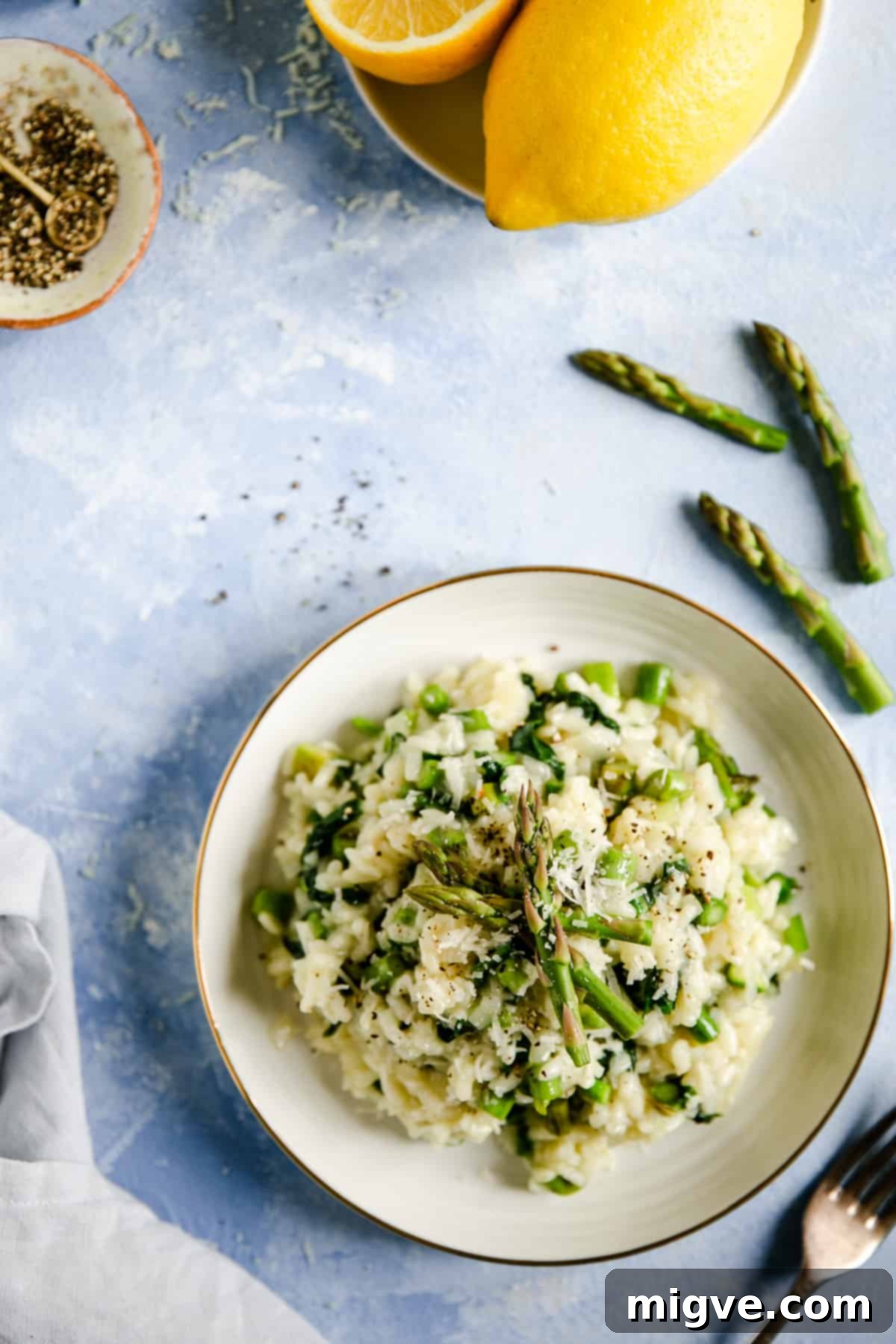
Welcome to a culinary journey that celebrates the vibrant essence of spring – our exquisite Wild Garlic and Asparagus Risotto! This dish is not just a meal; it’s an ode to the season’s freshest bounty, transforming simple, seasonal ingredients into a luxurious, comforting experience. Imagine the creamy texture of perfectly cooked Arborio rice, infused with the subtle, aromatic pungency of wild garlic and the delicate sweetness of crisp asparagus. It’s a symphony of flavors and textures, ideal for a leisurely weekend lunch, an elegant dinner party, or a satisfying weeknight meal that transports you straight to the heart of spring.
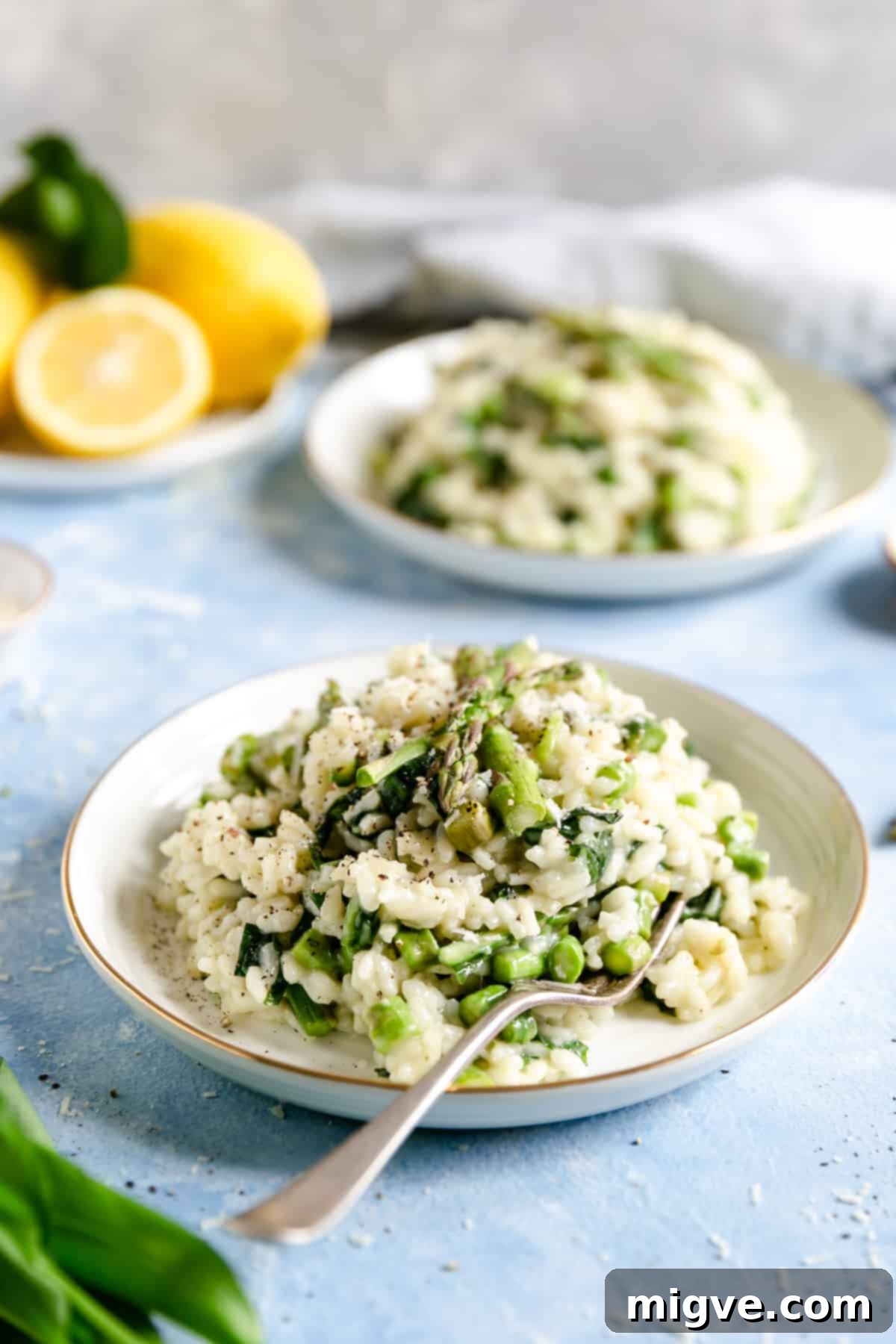
Embracing Spring’s Culinary Canvas: Wild Garlic & Asparagus Risotto
As the days grow longer and the UK landscape bursts into renewed life, so too does our appetite for fresh, vibrant produce. Spring truly heralds a time of culinary awakening, bringing forth a treasure trove of ingredients that inspire light, flavorful dishes. Among these seasonal gems, wild garlic and asparagus stand out as quintessential indicators that winter’s chill has finally receded. The moment these two star ingredients start appearing in local shops and bustling farmers’ markets, you know it’s time to celebrate with dishes that highlight their unique charm.
Our Wild Garlic and Asparagus Risotto perfectly encapsulates this seasonal shift. It’s a dish designed to be both deeply satisfying and refreshingly light, marrying the creamy indulgence expected from a classic risotto with the bright, verdant flavors of spring. The combination is simply irresistible – a harmonious blend that is rich in taste yet feels effortlessly fresh. This recipe promises a wholesome meal that’s easy to prepare, bursting with natural goodness, and ready to enjoy in less than 30 minutes. It’s truly spring on a plate, bringing joy and a burst of flavor to any table.
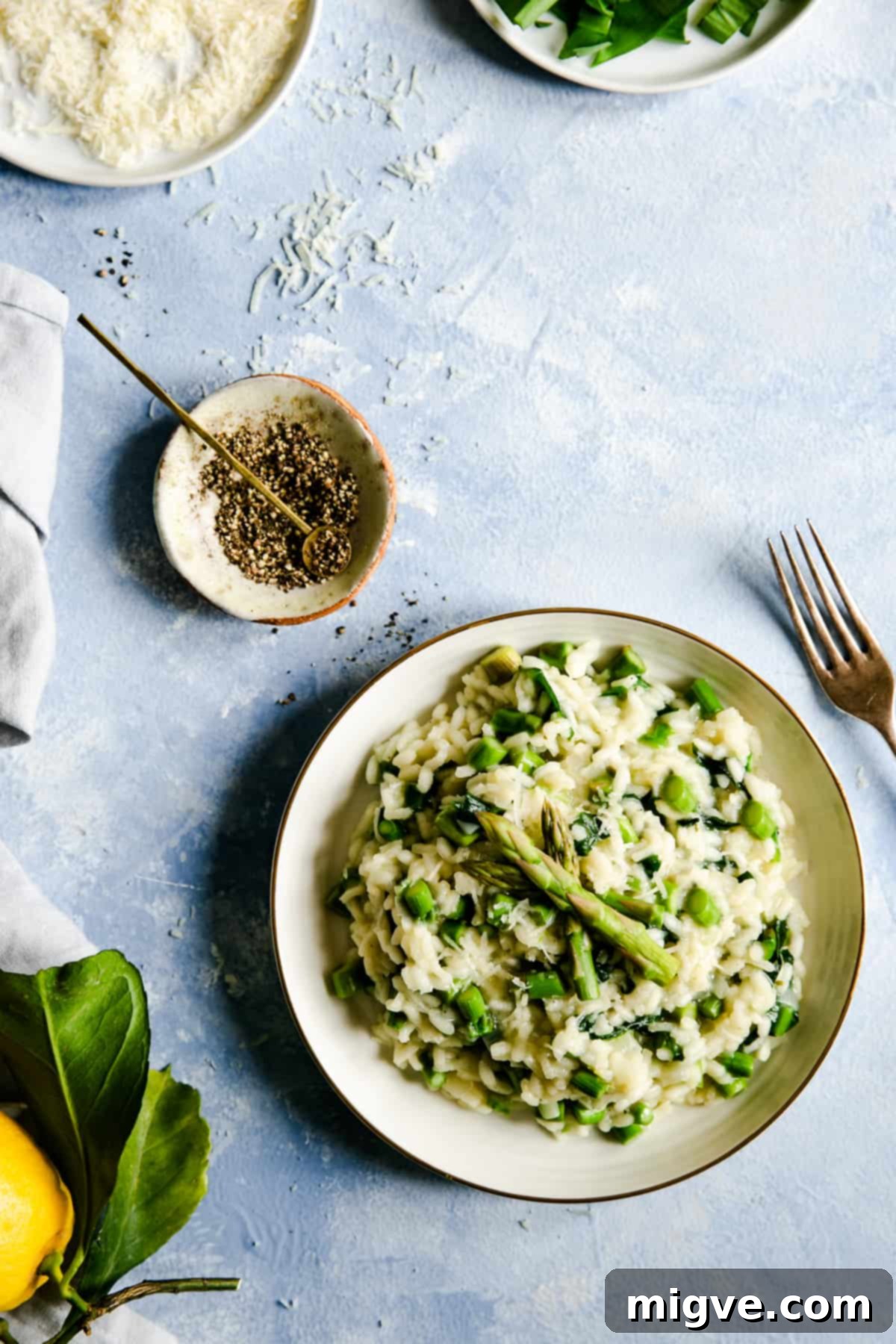
Discovering Wild Garlic: A Forager’s Delight
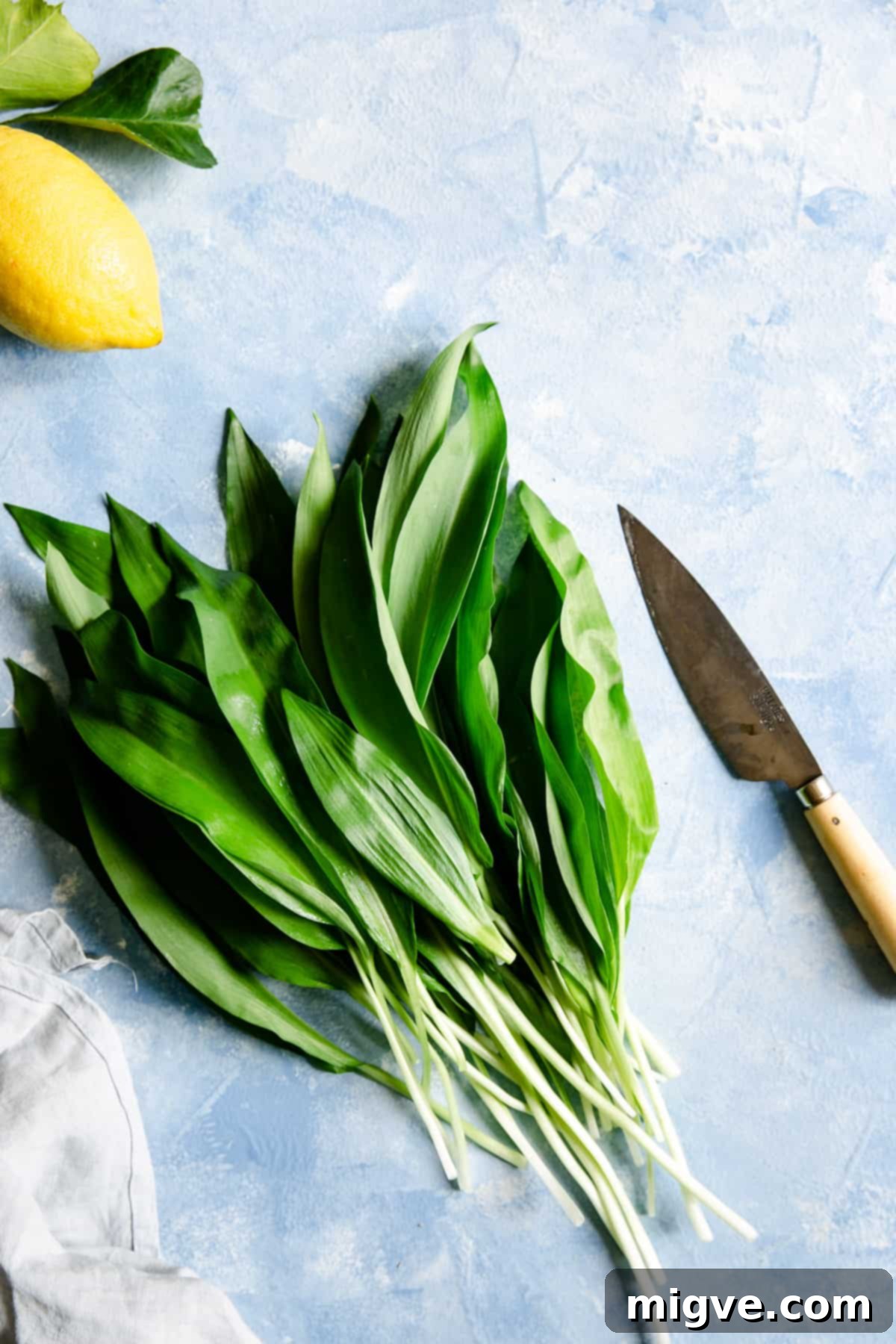
Wild garlic, scientifically known as Allium ursinum, is a remarkable plant native to Britain, though it thrives across various parts of Europe and Asia. Often referred to as Bear Leek or Bear’s Garlic, this versatile herb is easily identified by its broad, bright green leaves and its distinctive, pungent garlicky aroma that fills the air where it grows abundantly. It typically reaches heights of 45-50 cm, boasting delicate white, star-shaped edible flowers that emerge slightly later in the season than its leaves.
The culinary uses of wild garlic are diverse and exciting. Its tender young leaves, which begin to appear in March, are best picked when fresh and vibrant. They can be finely chopped and incorporated into soups, pureed into sauces, or transformed into a wonderfully vibrant pesto. The flowers, appearing around April and lasting until June, offer a more intense garlicky kick, perfect for adorning salads, sandwiches, or as a garnish for an extra layer of flavor.
If you’re eager to embark on a foraging adventure, wild garlic is commonly found blanketing woodland floors throughout spring. The unmistakable garlicky scent is your primary clue that you’re in the right place. However, responsible foraging is paramount. Always ensure you can confidently identify the plant, as it can be mistaken for other, potentially poisonous woodland plants like lily of the valley or lords and ladies, especially before it flowers. Never consume anything you are unsure of. Educate yourself on sustainable harvesting practices to ensure these beautiful plants can return year after year. For more detailed information and identification tips, reliable resources like the Countryfile website offer invaluable guides on where to find wild garlic and how to safely enjoy it.
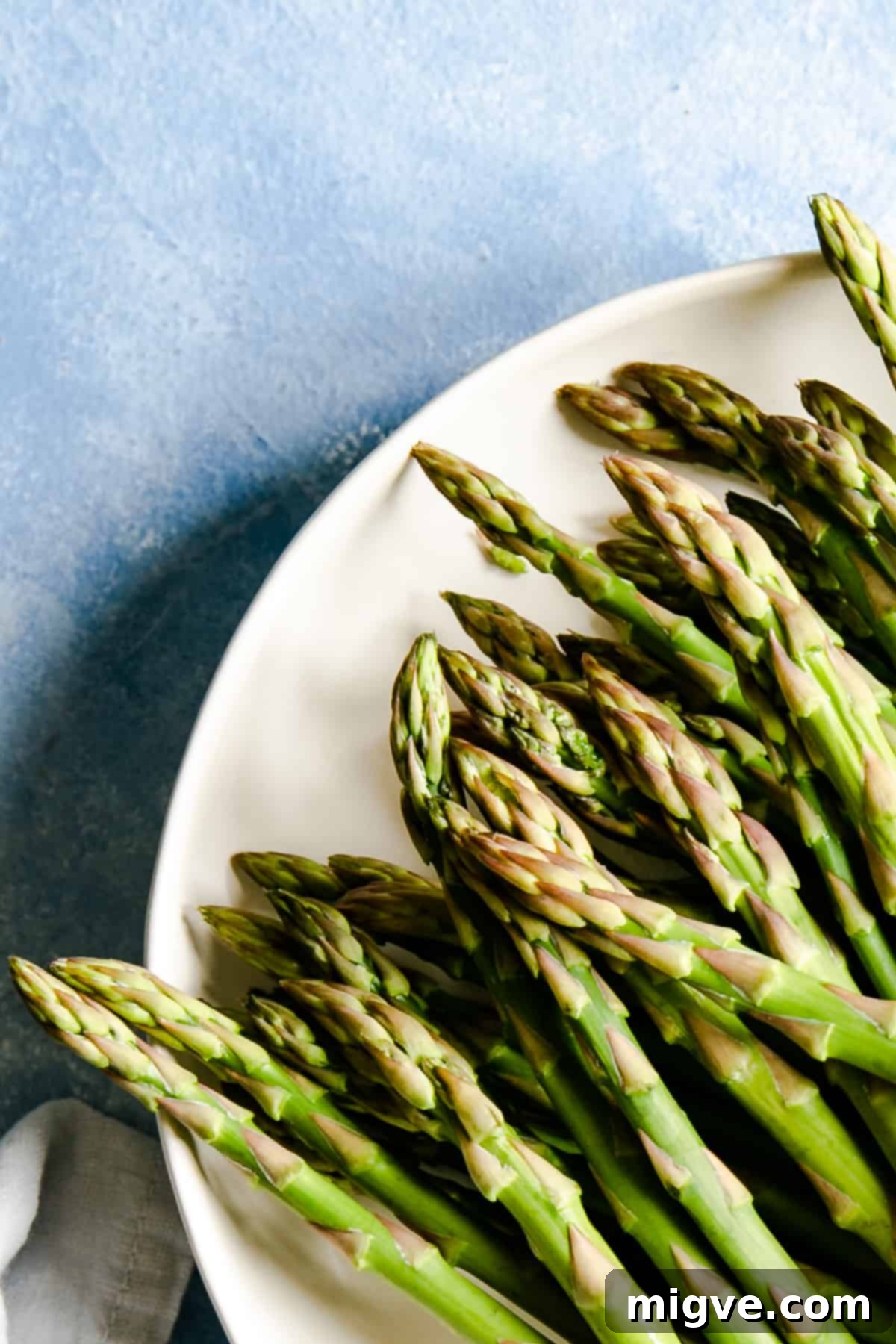
Asparagus: The Epitome of Spring Greenery
Complementing the wild garlic in our risotto is another herald of spring: asparagus. These tender green spears are a true seasonal delicacy, eagerly anticipated by chefs and home cooks alike. Asparagus season typically runs from April to June in the UK, making it the perfect partner for wild garlic. When selecting asparagus, look for firm, bright green spears with tightly closed, compact tips. Avoid any that appear limp or withered, as this indicates they are past their prime.
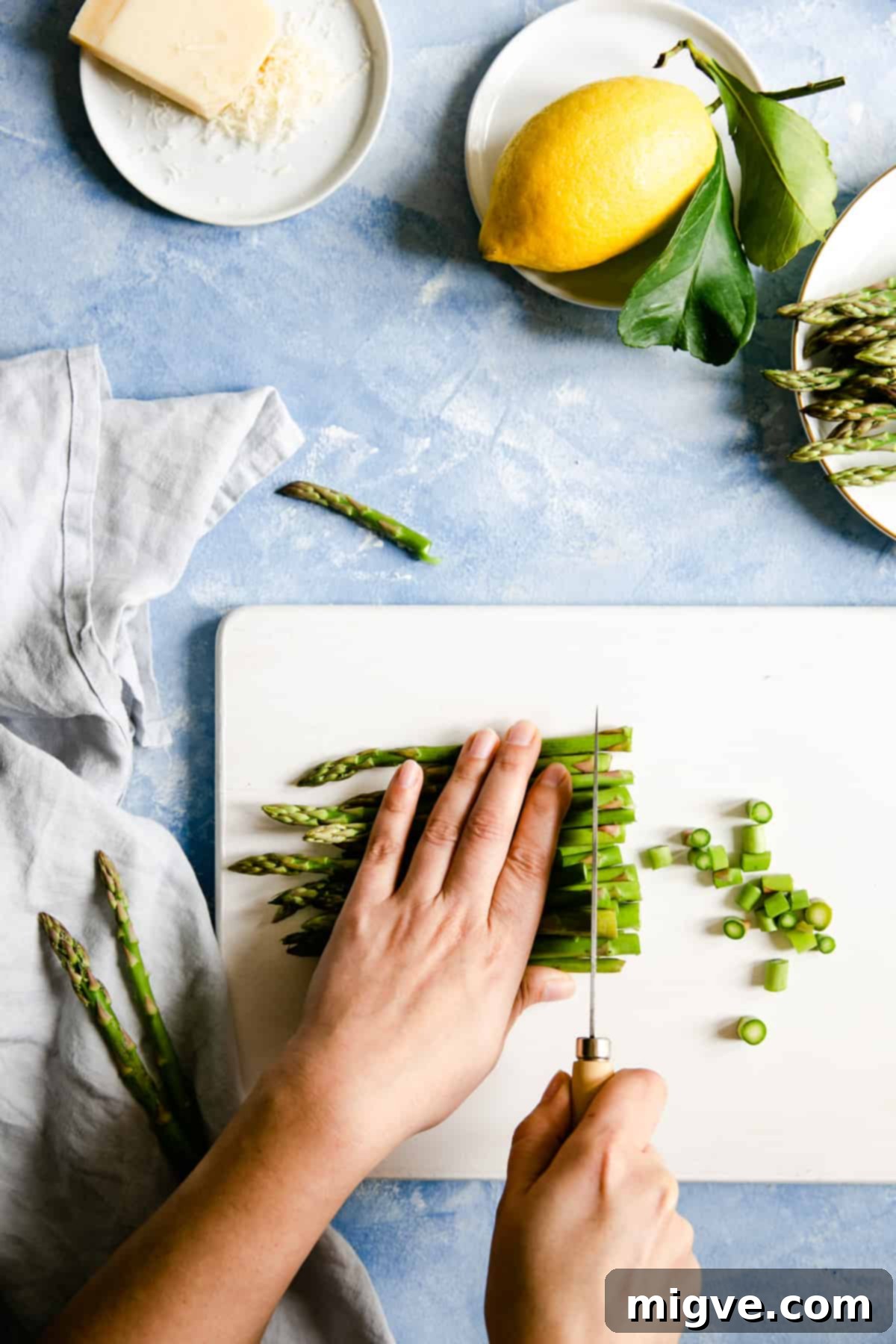
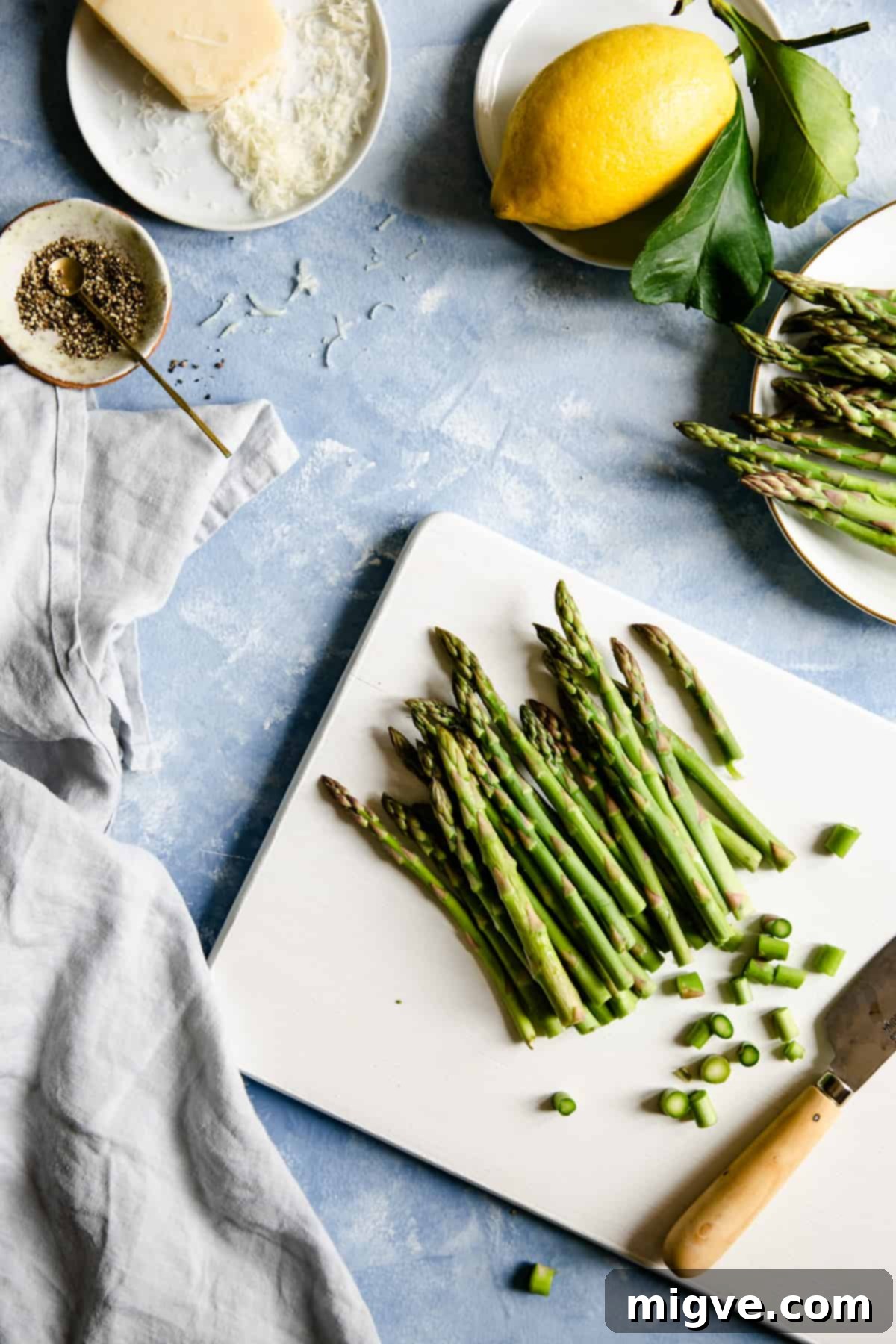
Beyond its delightful taste, asparagus offers a wealth of nutritional benefits. It’s an excellent source of vitamins K, A, C, and folate, as well as dietary fiber. It also contains powerful antioxidants and is known for its anti-inflammatory properties. Preparing asparagus is straightforward: simply snap off the woody ends (they will naturally break at the point where they become tender). For this risotto, we’ll chop the spears, but keep a few tips whole for a beautiful presentation, adding a touch of elegance to the finished dish.
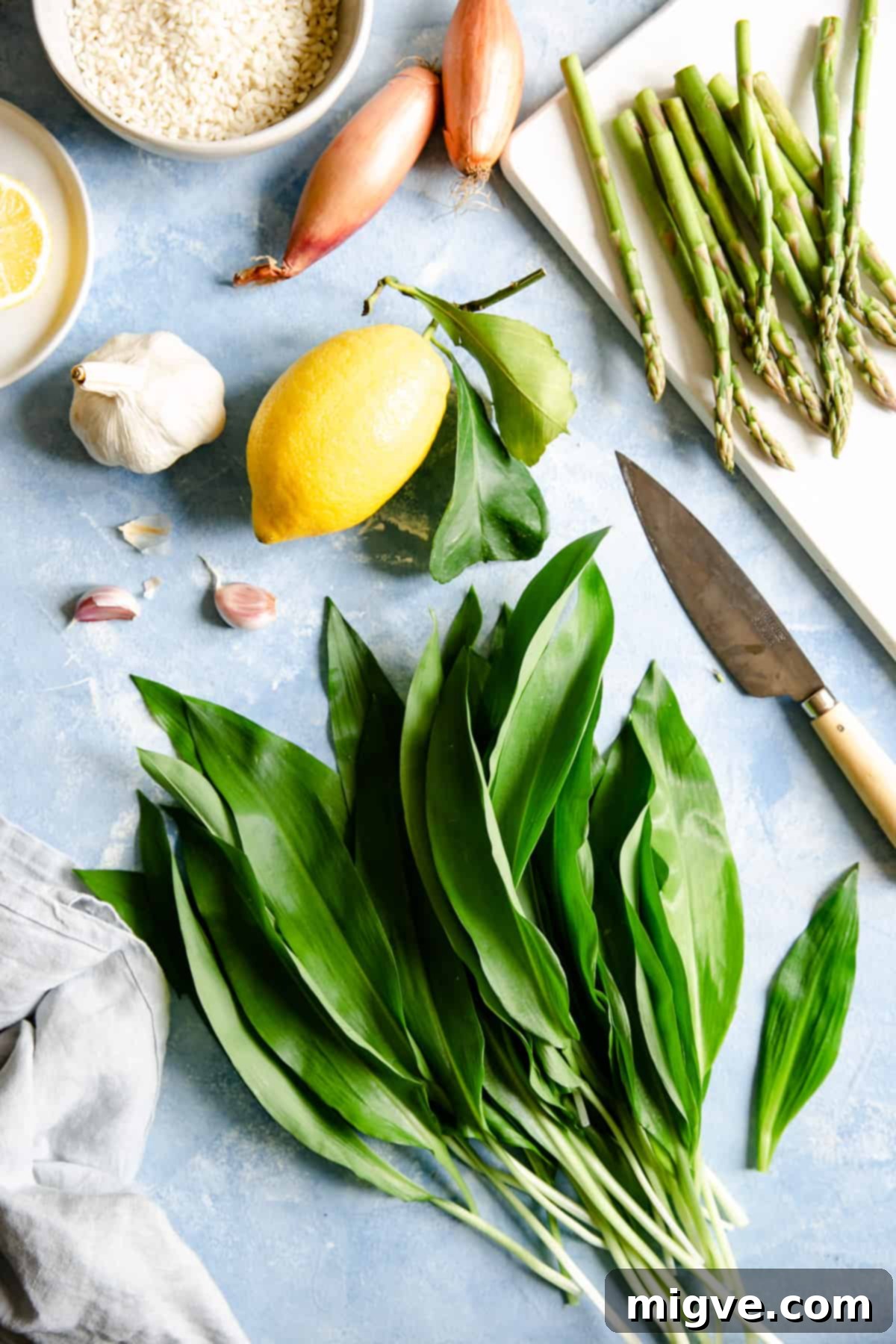
Crafting the Perfect Wild Garlic and Asparagus Risotto: Essential Ingredients
One of the beauties of this wild garlic and asparagus risotto recipe lies in its simplicity. It relies on a handful of fresh, high-quality ingredients, many of which you likely already have on hand. The magic happens when these humble components come together, each playing a crucial role in creating a dish that’s greater than the sum of its parts. If foraging for wild garlic isn’t an option, check your local farmers’ markets or specialty farm shops. In a pinch, fresh spinach can be used as a substitute, though it will impart a different, milder flavor profile to the final dish. Embrace the versatility, but nothing quite matches the unique essence of fresh wild garlic.
Here’s what you’ll need for this incredibly flavorful and creamy wild garlic and asparagus risotto:
- **Risotto Rice:** Arborio or Carnaroli rice is essential for that signature creamy texture. These short-grain rices release starch slowly, creating the luscious consistency we crave in a risotto.
- **Green Asparagus:** Fresh, vibrant spears are key. Remember to snap off the woody ends before chopping.
- **Wild Garlic:** The star of the show! Its garlicky, oniony notes are truly unique.
- **Vegetable Stock:** Use a good quality, flavorful vegetable stock. Warm stock is crucial for the risotto-making process, as it helps maintain the cooking temperature of the rice.
- **White Wine:** A dry white wine adds a layer of acidity and depth, deglazing the pan and contributing to the risotto’s complex flavor.
- **Vegan Hard Cheese (or Vegetarian/Parmesan):** Essential for that savory, umami richness and final touch of creaminess. For a fully vegan dish, opt for a good quality plant-based hard cheese. Non-vegans can use vegetarian Parmesan.
- **Shallots:** Milder and sweeter than onions, they provide a delicate aromatic base.
- **Garlic:** A couple of cloves to enhance the overall garlic flavor, complementing the wild garlic beautifully.
- **Olive Oil:** For sautéing the aromatics.
- **Vegan Butter:** Adds richness and a silken texture to the risotto.
For an extra burst of freshness and zing, I highly recommend adding the zest and juice of half a lemon. While optional, it elevates the flavors and provides a wonderful bright counterpoint to the richness of the risotto. Don’t skip it if you love bright, vibrant tastes!
The Art of Risotto: A Step-by-Step Guide to Perfection
Making a truly exceptional risotto is often considered an art, but it’s an art that is easily mastered with a little patience and attention to detail. The key to its signature creamy texture lies in the gradual addition of warm stock and continuous stirring, which encourages the rice grains to release their starches. There’s a long-standing debate among chefs: should the stock be added ladle by ladle, or all at once? While some advocate for the “all-at-once” method for convenience, the traditional, ladle-by-ladle approach, though requiring more engagement, truly allows for greater control over the texture and results in a superior, perfectly al dente risotto. For me, patience is indeed a virtue in the kitchen, especially when it comes to risotto.
Preparation is Key:
Before you begin cooking, ensure all your ingredients are prepped. Start by preparing your asparagus: snap off the tough, woody ends, then chop the spears into bite-sized pieces. Reserve a few asparagus tips whole to use as a garnish later. Next, finely chop your wild garlic leaves. Don’t forget to mince the shallots and garlic cloves. Having everything ready to go makes the cooking process much smoother and more enjoyable.
Building the Flavor Base:
Heat the olive oil and vegan butter in a large, heavy-bottomed pan or Dutch oven over a medium heat. Once the butter has melted and the oil is shimmering, add the finely chopped shallots. Sauté them gently for 3-4 minutes, stirring occasionally, until they become translucent and beautifully softened, releasing their sweet aroma. Be careful not to let them brown. Next, add the minced garlic cloves and cook for just one more minute. Garlic burns quickly, so keep a close eye on it to prevent any bitterness.
Toasting the Rice:
Now, add the risotto rice (Arborio or Carnaroli) to the pan. Stir it constantly for about 1-2 minutes, allowing each grain to become lightly toasted and coated in the oil and butter. This step, known as “tostatura,” is crucial as it helps the rice retain its shape and firm texture throughout the cooking process. You’ll notice the edges of the rice grains becoming translucent. Pour in the white wine and stir continuously. The wine will rapidly bubble and evaporate as it’s absorbed by the rice. Keep stirring until all the liquid has been fully absorbed – this deglazes the pan and adds a wonderful depth of flavor.
The Gradual Absorption:
This is where the patience comes in! Begin adding the warm vegetable stock, one ladleful at a time. Pour in the first ladle and stir gently but consistently until the rice has completely absorbed the liquid. Only then should you add the next ladle of stock. Continue this process, stirring frequently, for approximately 10 minutes. This method ensures that the rice cooks evenly, releasing its starches gradually to create that characteristic creamy texture.
Adding the Greens:
After about 10 minutes of adding stock, when the rice is halfway cooked, it’s time to introduce the asparagus and wild garlic. Incorporating them at this stage ensures they cook perfectly – tender-crisp asparagus and vibrant wild garlic that maintains its fresh, pungent flavor, without becoming mushy or losing its color. Continue adding stock, ladle by ladle, and stirring, until the rice is nearly cooked and has a slight bite (al dente).
Finishing Touches:
Once the rice is almost done, stir in the lemon juice and zest (if using), along with the grated vegan hard cheese. Give it a final stir to combine everything beautifully. At this point, the risotto should be creamy and flowing. Take the pan off the heat and immediately cover it with a lid. Allow it to stand for a few minutes – typically 3-5 minutes. This resting period, called “mantecatura,” allows the rice to absorb any remaining liquid and for the flavors to meld, resulting in an even creamier, more luxurious texture.
Serve and Enjoy:
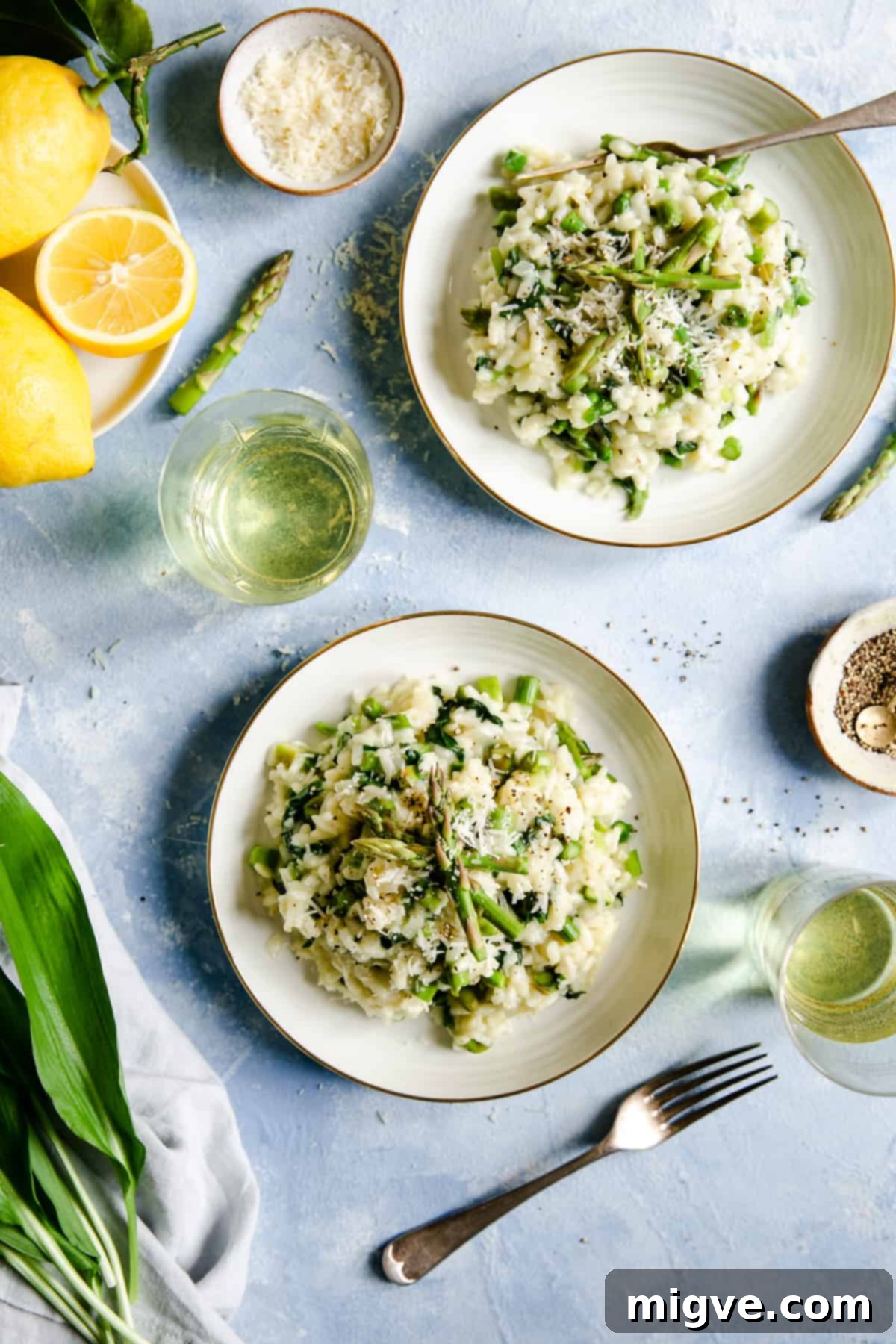
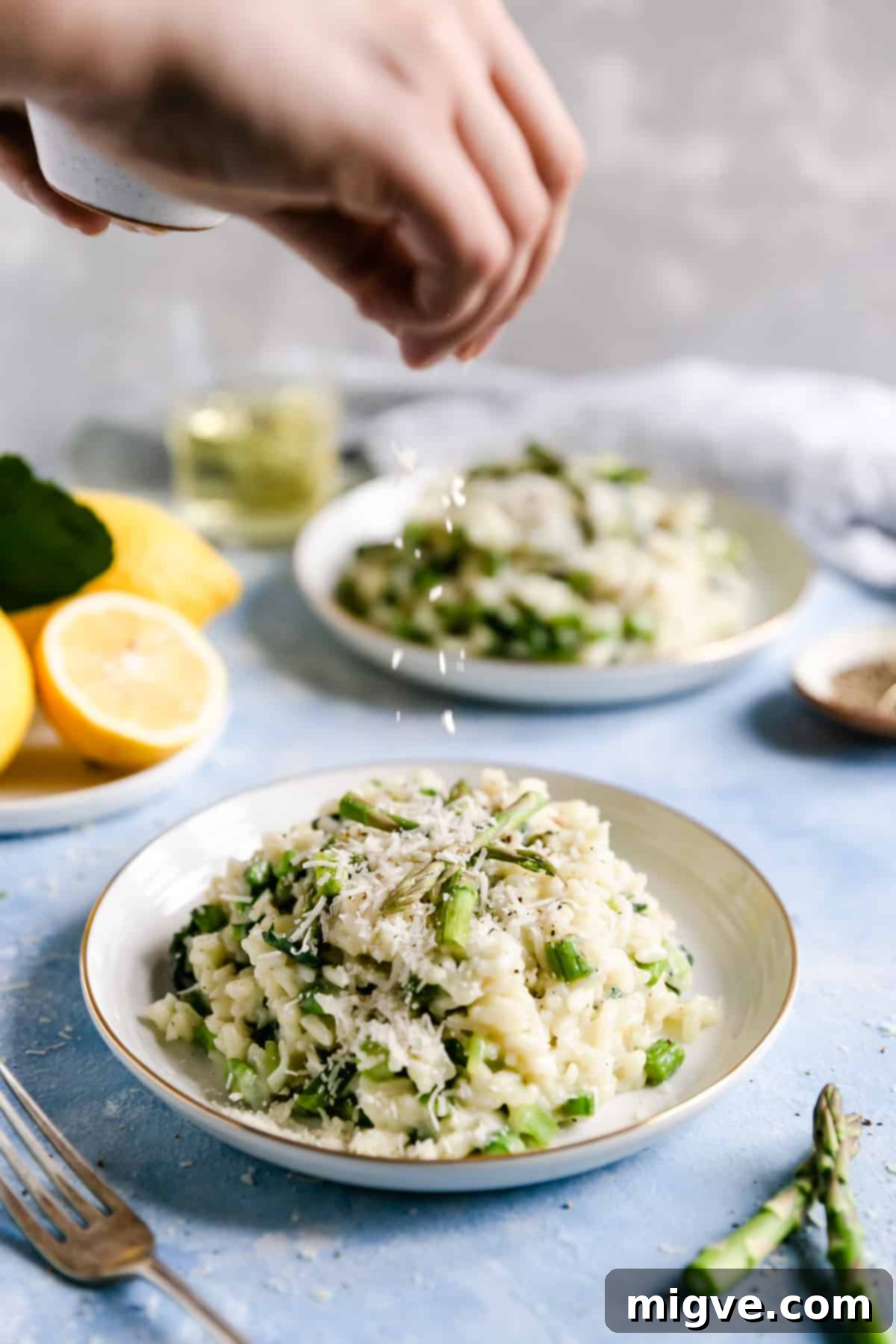
Uncover the risotto, give it one last gentle stir, then divide it into warm serving bowls. Garnish with a sprinkle of additional grated vegan cheese and those reserved asparagus tips. Serve immediately, as risotto is best enjoyed fresh off the heat when its creamy consistency is at its peak. Savor every spoonful of this delightful taste of spring!
Tips for Risotto Mastery
Achieving risotto perfection is easier than you think with a few key principles:
- **Warm Stock is Non-Negotiable:** Always keep your vegetable stock simmering gently in a separate saucepan. Adding cold stock will drastically drop the temperature of your risotto, extending cooking time and resulting in an unevenly cooked dish.
- **Constant, Gentle Stirring:** While you don’t need to stir every single second, consistent stirring is crucial. It prevents the rice from sticking to the bottom of the pan and, more importantly, encourages the starch to release, creating that beautiful creamy texture.
- **Don’t Overcrowd the Pan:** Use a wide, heavy-bottomed pan. This allows for even heat distribution and provides ample surface area for the liquid to evaporate, ensuring the rice cooks properly.
- **Al Dente is Best:** Risotto should be creamy but the rice grains should still have a slight resistance when bitten – “al dente.” Avoid overcooking, which results in mushy rice.
- **Taste as You Go:** Regularly taste your risotto throughout the cooking process. This allows you to adjust seasoning, ensure the rice is cooking correctly, and decide when it’s perfectly done.
- **The Importance of the “Wave”:** When you stir the finished risotto, it should create a slight “wave” in the pan, indicating it’s perfectly creamy and not too stiff. If it’s too thick, stir in a splash more warm stock.
Serving Suggestions and Creative Variations
Our Wild Garlic and Asparagus Risotto is a complete meal in itself, a delightful celebration of spring flavors. However, it pairs beautifully with a simple side salad dressed with a light vinaigrette to cut through the richness. For a complete dining experience, consider serving it alongside a crisp glass of white wine, perhaps a Sauvignon Blanc or a light Pinot Grigio, to complement the fresh, herbaceous notes.
Feeling creative? This recipe is wonderfully adaptable:
- **Add More Greens:** Fresh peas or broad beans would be fantastic additions, adding more vibrant color and subtle sweetness.
- **Mushroom Medley:** Sautéed wild mushrooms (like oyster or shiitake) or even cremini mushrooms can add an earthy depth.
- **Protein Boost:** For non-vegans, pan-seared scallops or grilled chicken breast would be excellent accompaniments. For a vegan protein, consider adding crumbled tofu or white beans earlier in the cooking process.
- **Herbaceous Twist:** A sprinkle of fresh parsley or chives at the end can enhance the fresh flavors.
- **Spicy Kick:** A pinch of red pepper flakes can add a subtle warmth if you enjoy a little heat.
Storage and Reheating
Risotto is truly best enjoyed immediately after cooking. Its creamy texture and al dente rice are at their peak. However, if you have leftovers, they can be stored in an airtight container in the refrigerator for up to 2-3 days. When reheating, gently warm on the stovetop over low heat, adding a splash of vegetable stock or water to restore its creamy consistency. Avoid reheating it too quickly or at too high a temperature, as this can dry out the rice.
Thank you for exploring the delightful world of spring cooking with me today! I hope this detailed guide inspires you to create your own batch of this glorious Wild Garlic and Asparagus Risotto. It’s a dish that truly embodies the freshness and vitality of the season. Please feel free to leave a comment below with your thoughts or a rating if you try this recipe. Your feedback is always appreciated!
Remember to connect with me on social media to stay updated on my latest culinary adventures: follow me on Instagram, Facebook, and Pinterest. I love seeing your creations!
Wishing you a wonderful, sunny week ahead, filled with delicious food and joyful moments!
📖 Recipe

Print Recipe
Wild Garlic and Asparagus Risotto
Beautifully creamy and full of flavour wild garlic and asparagus risotto. This easy dish is great celebration of the new, fresh produce that Spring has to offer!
Ingredients
- 2 medium shallots (finely chopped)
- 2 small garlic cloves (finely chopped)
- 1 tablespoon olive oil
- 2 teaspoon vegan butter
- 200 g risotto rice
- 100 ml white wine
- 500 ml vegetable stock
- 200 g green asparagus
- 70 g wild garlic
- ½ medium lemon (juice and zest)
- 50 g vegan hard cheese (grated)
Instructions
- In a large pan, heat the olive oil and butter, then add chopped shallots and fry for 3-4 minutes until they begin to soften. Add chopped garlic and fry for another minute.
- Add the risotto rice to the pan and pour in the white wine. Stir it all together and allow the wine to bubble until it evaporates, stirring often. Leave it on medium heat, and keep pouring the vegetable stock, one ladle at a time, stirring frequently and only adding another ladle of stock when the rice has absorbed all the liquid. After about 10 minutes, add the chopped asparagus and wild garlic.
- Add more stock and after another 5 minutes, when rice is just cooked but still has some bite to it, add the lemon juice and zest and grated cheese. Cover with lid, take off the heat and allow it to stand for a few more minutes, so the rice can absorb any extra liquid.
- Give it a stir, divide into serving bowls. Sprinkle with some more grated vegan cheese and enjoy!
Please note that all my recipes are developed and tested in metric grams. I recommend that you use digital scales for a more accurate result. I have provided a conversion to US customary in the recipe but please note that I haven’t tested using this method.

Did you make this?Tell me how you like it? Leave a comment or take a picture and tag @anna_wierzbinska on Instagram. I love seeing your take on my recipes!
If you would like to receive future posts and recipes straight to your inbox, make sure to subscribe to my mailing list!