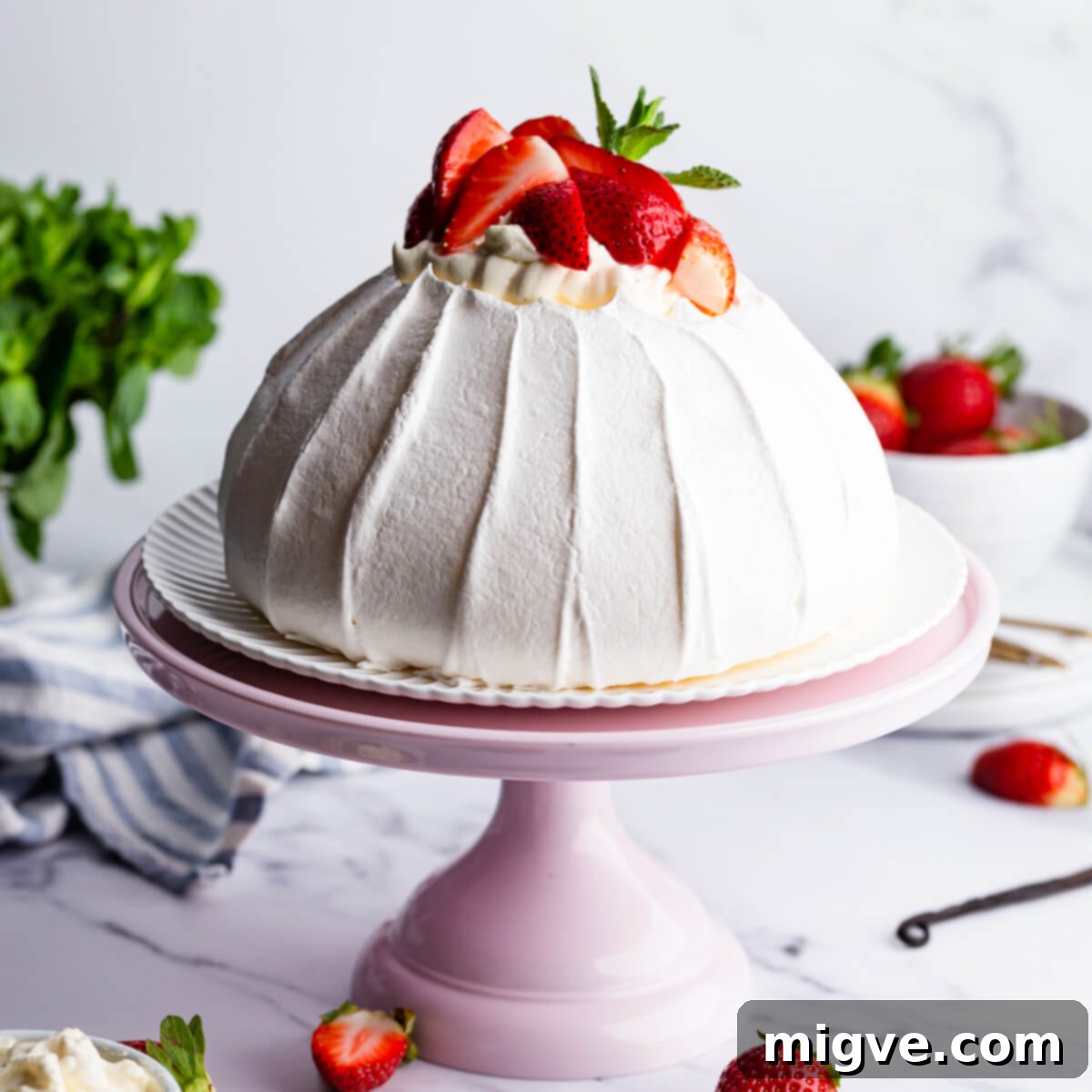
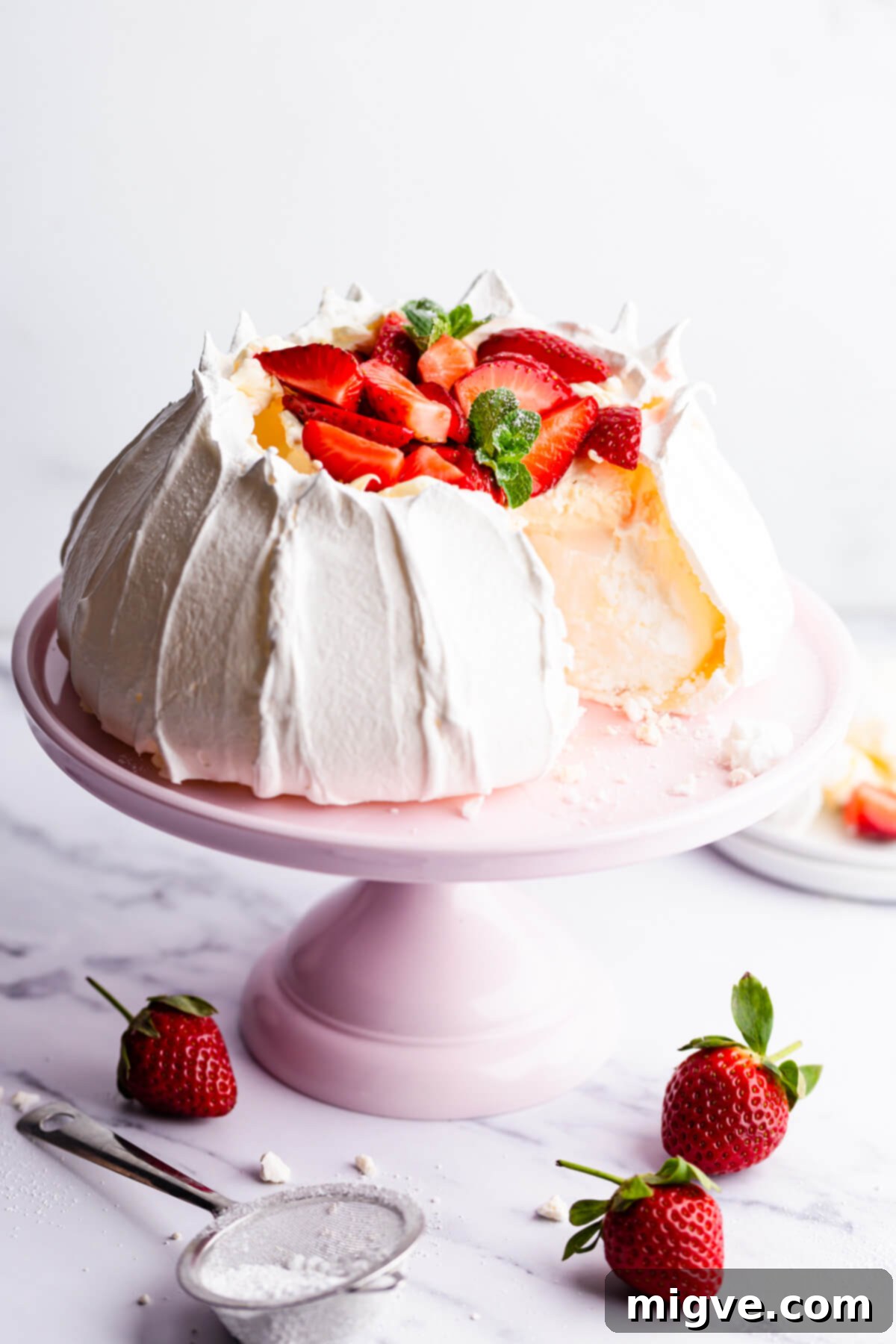
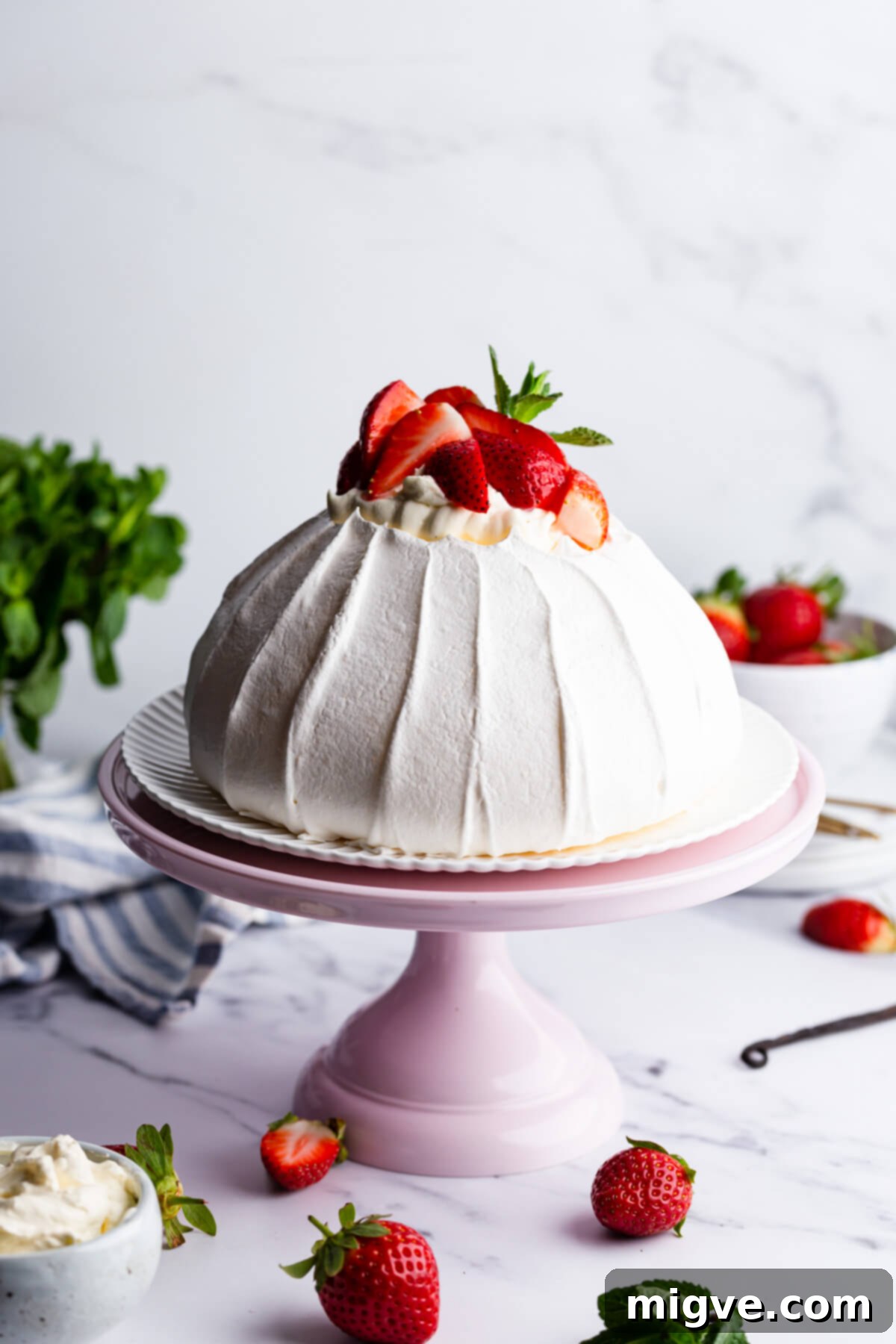
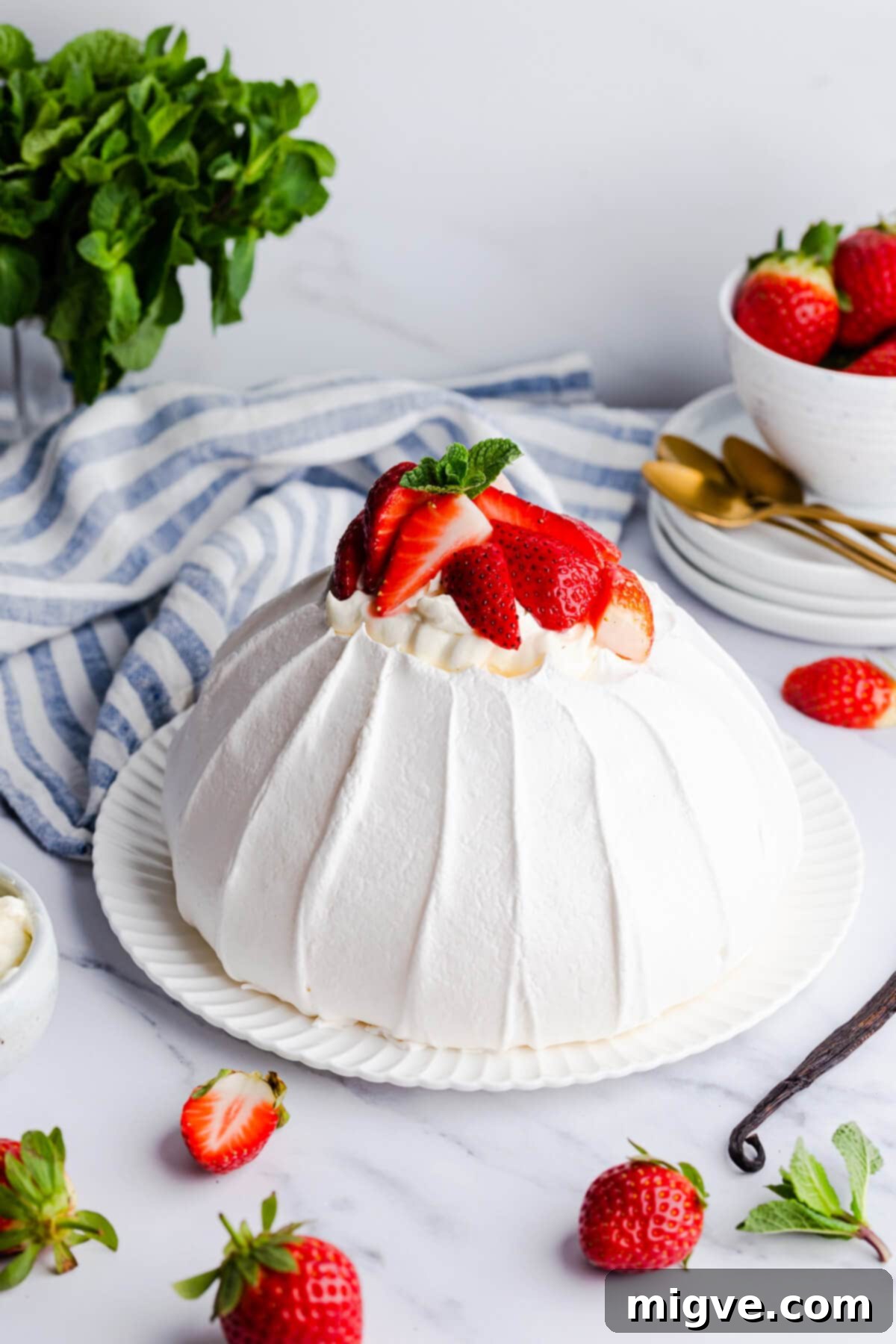
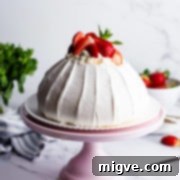
Welcome to the enchanting world of **Strawberry Pavlova**, a dessert that effortlessly combines elegance with irresistible flavor. This classic recipe delivers a truly impressive centerpiece for any gathering, featuring a miraculously light and airy meringue shell, beautifully contrasted with a soft, marshmallow-like interior. Crowned with billows of fresh whipped cream and vibrant, juicy strawberries, it’s a symphony of textures and tastes that will leave your guests utterly delighted and craving more.
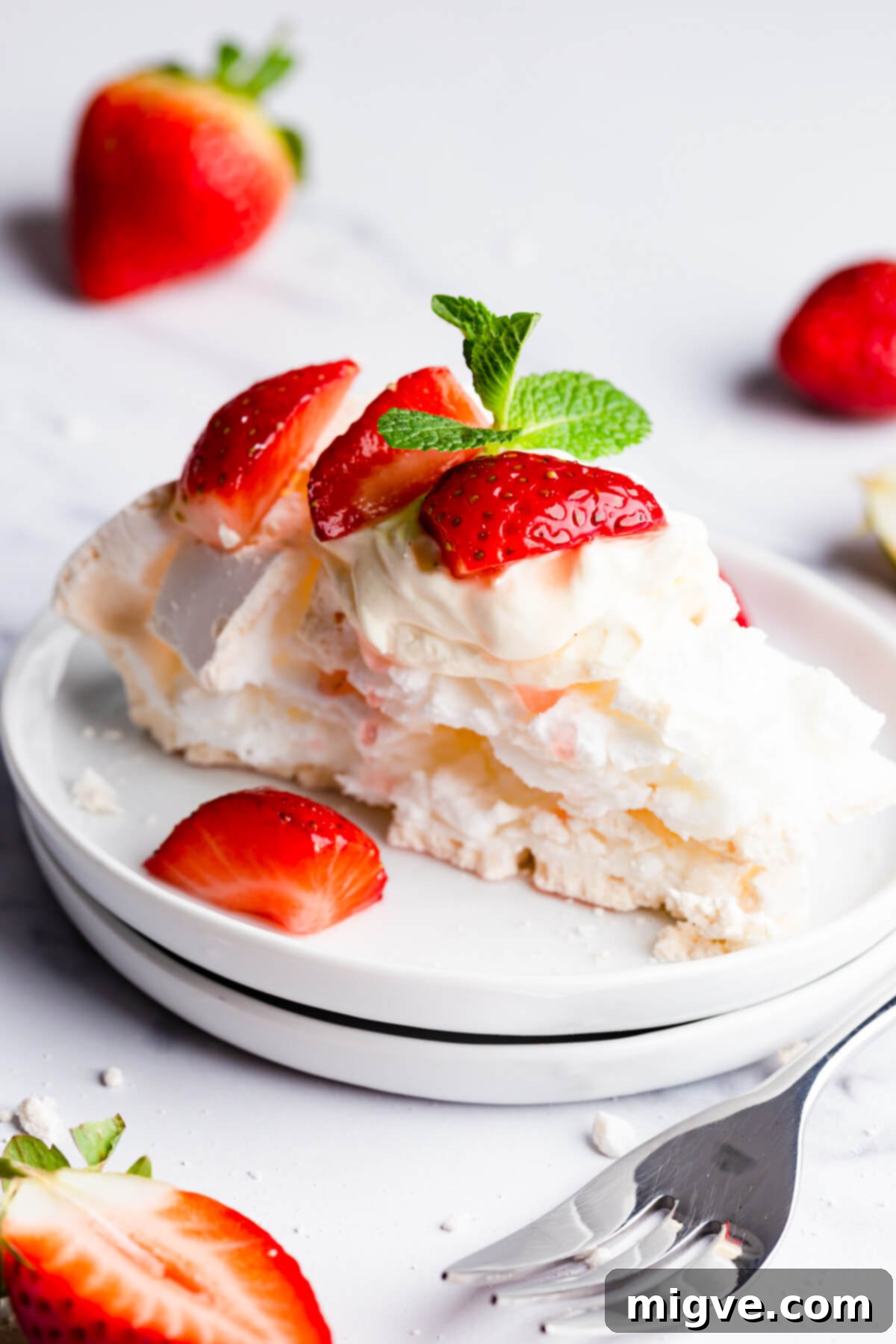
Pavlova is not just a dessert; it’s an experience. Its delicate structure boasts a **crispy exterior** that shatters with each bite, giving way to a **soft, fluffy, and wonderfully chewy marshmallow-like center**. This eye-catching bake is surprisingly simple to master, making it a perfect choice for birthdays, holidays, summer barbecues, or any special occasion where you want to serve something truly spectacular without endless fuss.
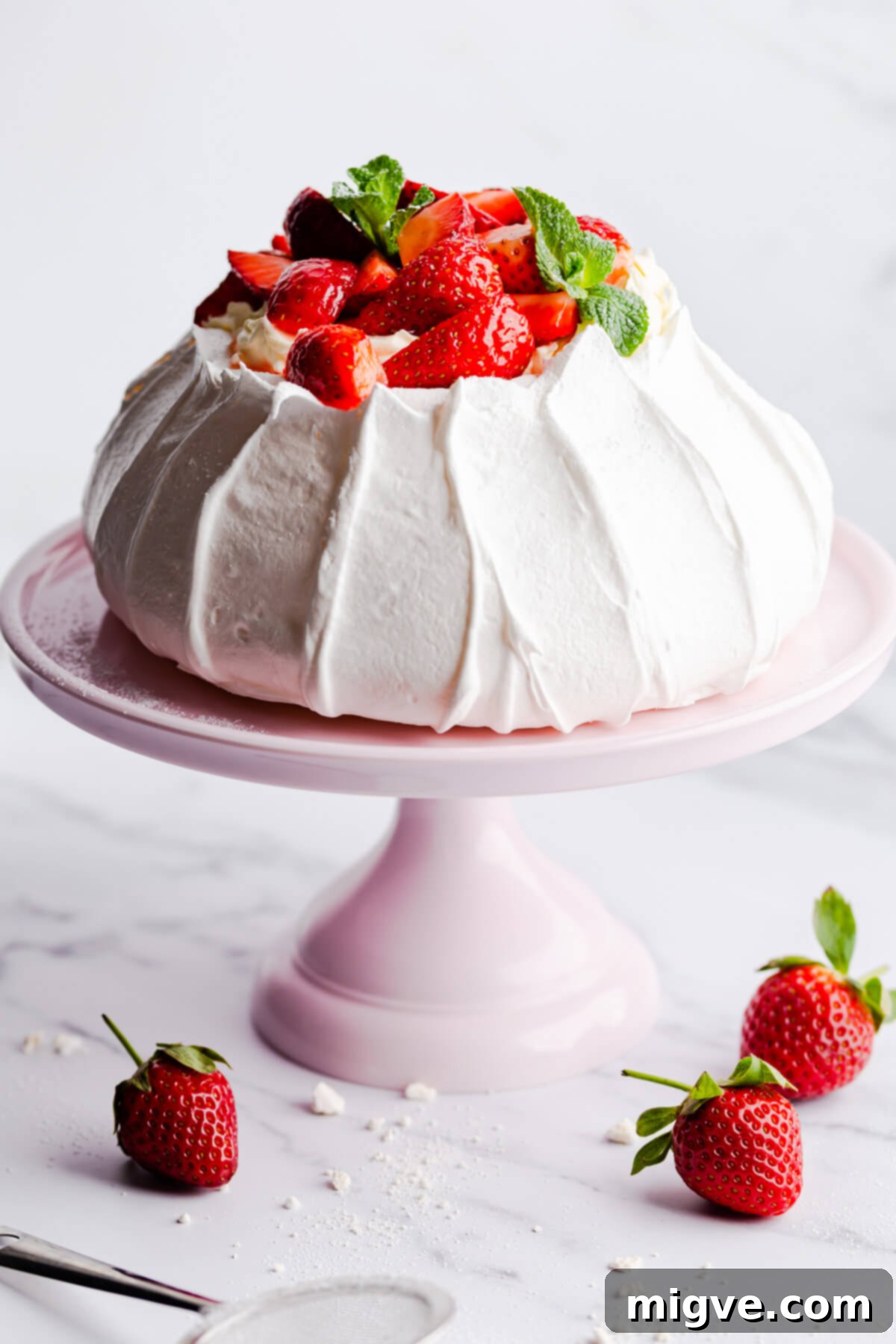
While often associated with sunny days and summer festivities, this **strawberry pavlova recipe** is a dessert for all seasons. Its inherent versatility means you can easily adapt it to whatever fresh fruit is abundant throughout the year. Imagine luscious berries in summer, tart kiwi and passion fruit in winter, or even caramelized pears in autumn. This adaptability ensures that the joy of a homemade pavlova can be savored year-round, always offering a fresh and exciting flavor profile.
The Magic of Pavlova: A Brief History
The pavlova holds a special place in culinary history, often sparking friendly debates between Australia and New Zealand over its origin. Both countries proudly claim this iconic dessert, named after the Russian ballerina Anna Pavlova during her tours to Australasia in the 1920s. Legend has it that a chef, inspired by her graceful, ethereal presence, created a dessert as light and airy as she was. Regardless of its exact birthplace, the pavlova has become a cherished part of celebrations and family gatherings worldwide, symbolizing elegance and culinary delight.
Ingredients for the Perfect Strawberry Pavlova
Crafting a truly spectacular pavlova begins with a careful selection of fresh, high-quality ingredients. Each component plays a vital role in achieving that signature crisp shell and soft, chewy center. Here’s a detailed look at what you’ll need for this delicious recipe, along with why each ingredient is important:
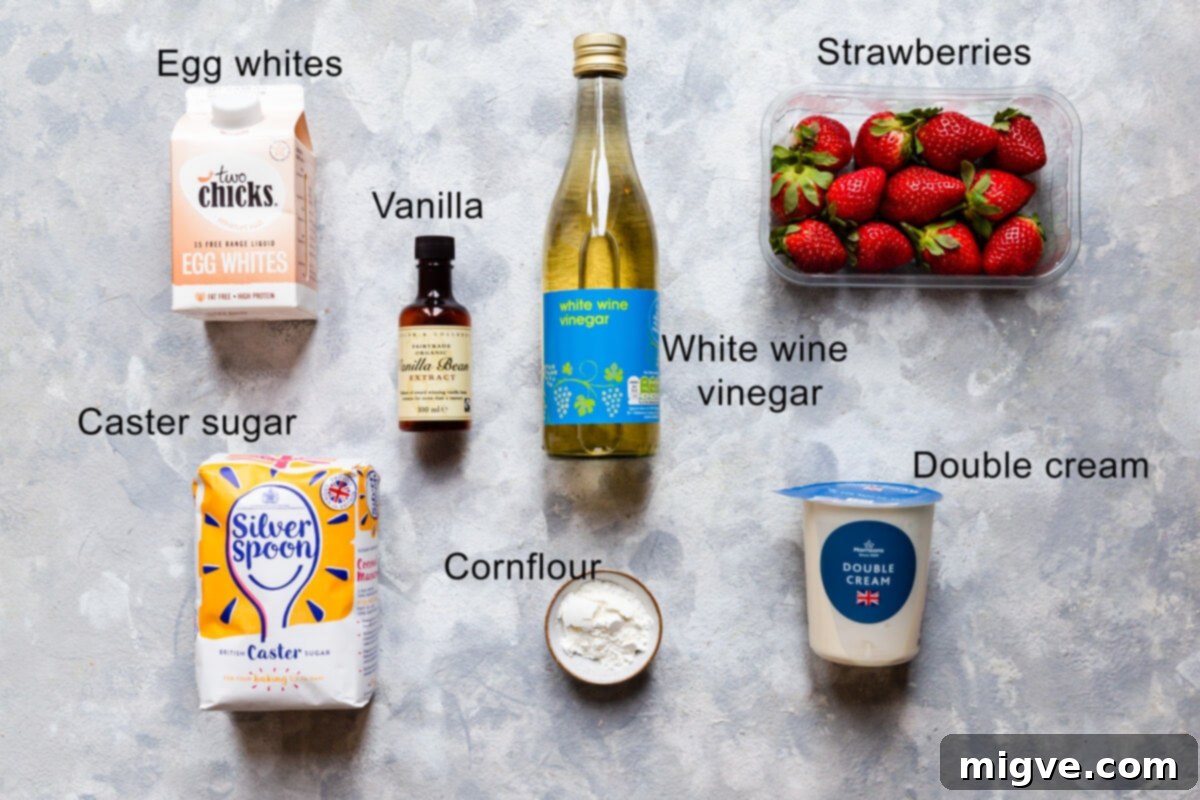
- Egg Whites: The foundation of any great meringue. We’re using 150 grams of fresh egg whites, which typically comes from about 4-5 large eggs. It’s crucial that your egg whites are at room temperature as this allows them to whip up to a greater volume and achieve a more stable foam. Save those yolks for a delicious custard or hollandaise sauce!
- White Caster Sugar: This superfine sugar is the preferred choice for pavlova. Its delicate grain dissolves much quicker and more completely into the egg whites, resulting in a smooth, grit-free meringue that holds its shape beautifully and prevents “weeping” (sugar syrup seeping out). Granulated sugar can be used in a pinch, but caster sugar yields superior results.
- Cornflour (Cornstarch): A small amount of cornflour is the secret to the pavlova’s signature soft, marshmallow-like interior. It helps to stabilize the meringue and prevents it from becoming too dry and brittle throughout, ensuring that delightful chewiness.
- White Wine Vinegar: A teaspoon of white wine vinegar (or an equivalent acid like lemon juice or cider vinegar) plays a critical role in stabilizing the meringue. It helps to acidify the egg whites, which strengthens their protein structure, preventing the meringue from collapsing and ensuring it retains its impressive volume and shape during baking.
- Vanilla Extract: Pure vanilla extract adds a beautiful aromatic depth to the pavlova, complementing the sweetness of the meringue and the freshness of the fruit.
- Fresh Strawberries: The star of our topping! Opt for ripe, vibrant red strawberries for the best flavor and visual appeal. Their natural sweetness and slight tartness perfectly balance the rich cream and sweet meringue.
- Fresh Double Cream or Whipping Cream: A generous dollop of rich, freshly whipped cream provides a luxurious, cooling contrast to the crunchy meringue. Ensure your cream is very cold before whipping for optimal volume and stiffness.
- Icing Sugar (Powdered Sugar): A couple of tablespoons of icing sugar are added to the cream to enhance its sweetness and help stabilize it as it’s whipped.
Step-by-Step Instructions for a Flawless Pavlova
For a visual guide to this recipe, be sure to watch the comprehensive video tutorial found in the recipe card below!
Pre-Baking Preparation: The Foundation of Success
Before you even think about cracking an egg, meticulous preparation is key to pavlova perfection. Start by ensuring all your equipment is impeccably clean and completely free of any fat residues. Even a tiny trace of grease can prevent your egg whites from whipping up properly. **Glass, metal, or copper bowls** are ideal as they are non-porous and easier to degrease than plastic bowls, which can sometimes harbor hidden fats. A time-honored trick is to **rub your mixing bowl with half a cut lemon** before wiping it thoroughly dry with a clean kitchen roll. This ensures a pristine surface for your egg whites.
One of my absolute top tips for making meringues is to **gently warm the sugar** before incorporating it. Warm caster sugar dissolves much quicker and more effectively into the egg whites, resulting in a wonderfully **grit-free mixture**. This gentle heat also helps to create a stronger, more stable bond within the egg whites, contributing to a robust and beautiful meringue.
Hint: Heating the Sugar: To achieve perfectly warmed sugar, preheat your oven to 190°C (170°C fan). Line a baking tray with baking paper and evenly spread the caster sugar across it. Place it in the preheated oven for just 5 minutes, or until you notice the edges just beginning to melt slightly. Remove it, transfer to a small bowl, and set aside. Crucially, remember to reduce your oven temperature to 120°C immediately after removing the sugar, allowing it to cool down to the correct baking temperature before the meringue goes in.
Whipping the Meringue: Precision is Key
- **Prepare Your Baking Surface:** Preheat your oven to 120°C (fan setting). Take a large baking sheet and line it with baking parchment. Using a pencil, trace a circle roughly 20 cm (8 inches) in diameter onto the parchment paper. Then, flip the paper over so the pencil mark is on the underside (this prevents lead from transferring to your meringue). Set this prepared tray aside.
- **Whip the Egg Whites:** Place your room temperature egg whites into the clean bowl of a stand mixer fitted with the balloon whisk attachment, or use a hand-held electric mixer. Begin whisking on medium to high speed for 3-4 minutes. You’re looking for the egg whites to transform into **stiff peaks** – when you lift the whisk, the meringue should hold its shape firmly without drooping.
- **Gradual Sugar Incorporation:** Once your egg whites have reached stiff peak stage, begin adding the warmed caster sugar very gradually, 1-2 tablespoons at a time, while the mixer continues to run on medium-high speed. This slow addition allows the sugar to fully dissolve and integrate into the egg whites without deflating them.
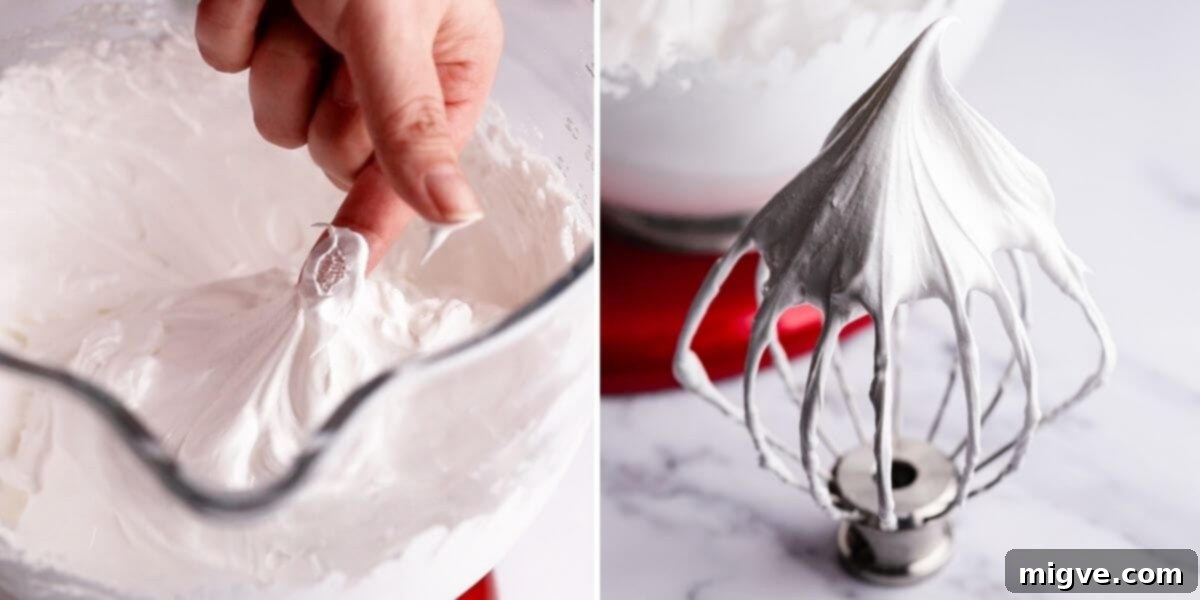
Continue whisking until all the sugar has been incorporated and the mixture is thick, shiny, and glossy, once again forming stiff, unmoving peaks. The meringue should feel completely smooth when rubbed between your fingers, indicating that the sugar has fully dissolved.
Hint: The “Grit Test”: To confirm the sugar is fully dissolved, take a tiny bit of the meringue between your thumb and forefinger and rub it. If you feel any grittiness, continue whisking at full speed for a few more minutes until it feels perfectly smooth. This step is vital to prevent a “weepy” meringue later.
- **Add Stabilizers and Flavor:** Finally, add the cornflour, vanilla extract, and white wine vinegar to the meringue mixture. Whisk briefly on low speed, just until these ingredients are fully combined. Avoid overmixing at this stage.
Shaping and Baking: The Transformation
- **Shape the Pavlova:** Carefully transfer the glossy meringue mixture onto the center of your prepared baking sheet, mounding it within the traced circle. Use the back of a spoon or a spatula to gently shape the meringue into a beautiful disc, creating a slight well or depression in the center. This well will later hold your delicious cream and fruit toppings. (For visual guidance on shaping, refer to the video in the recipe card!)
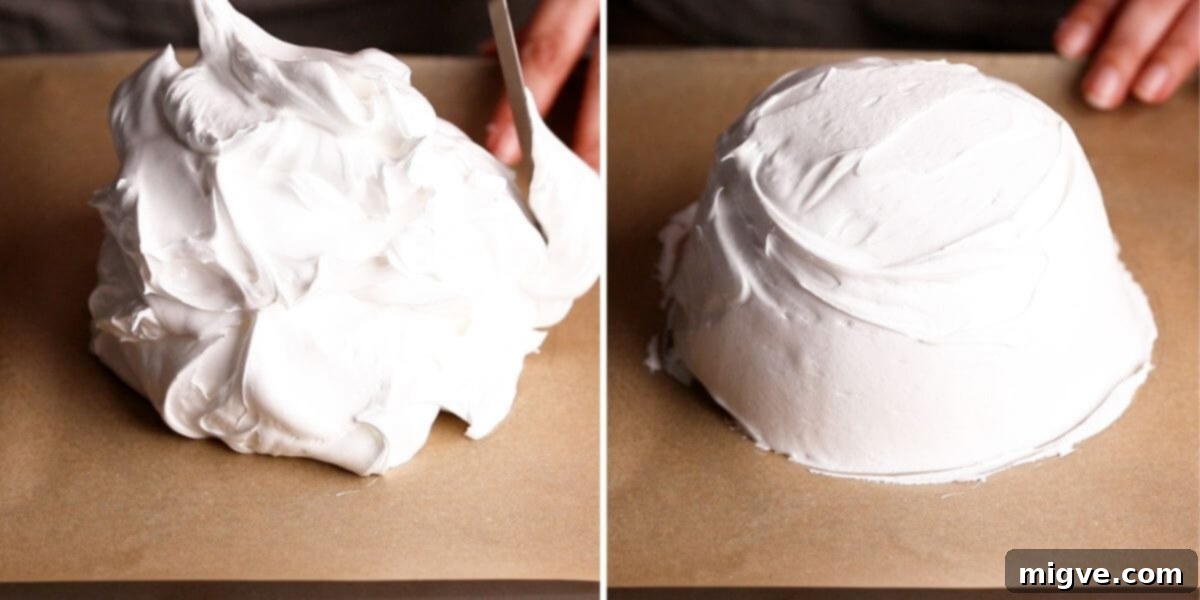
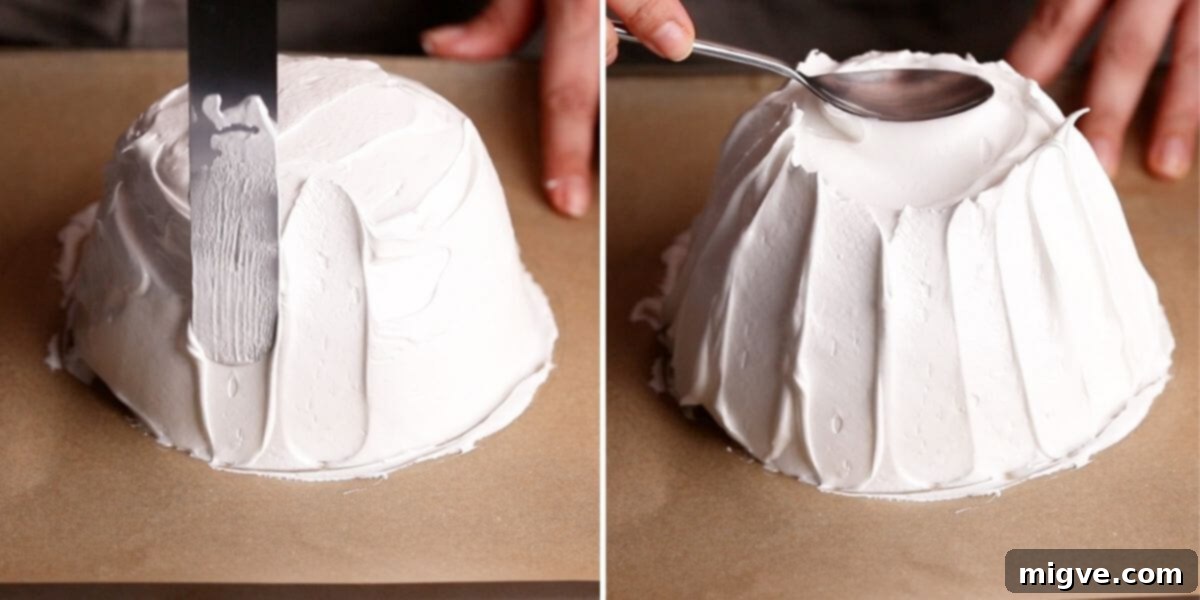
- **Bake to Perfection:** Place the baking sheet into your preheated oven at 120°C. Bake for 1 hour, then reduce the oven temperature to 100°C and continue baking for another 40 minutes. This two-stage baking process helps achieve the perfect balance of a crisp exterior and a soft, chewy interior.
- **Crucial Cooling:** Once the baking time is complete, **turn off the oven completely, but do not open the oven door**. This is perhaps the most critical step to prevent your pavlova from cracking and collapsing. Allow the meringue to cool down gradually inside the closed oven for at least a couple of hours, or ideally, overnight. This slow cooling process allows the meringue to stabilize and fully set.
Assembling and Serving: The Grand Finale
- **Prepare the Strawberries:** While the pavlova cools, prepare your fresh strawberries. Slice them into quarters or halves, depending on their size. Place them in a bowl and sprinkle with 1-2 tablespoons of caster sugar. Gently toss and set aside for 15-20 minutes to allow the sugar to draw out some of their delicious juices.
- **Whip the Cream:** Once the pavlova is completely cool, whip the double cream (or whipping cream) with 1-2 tablespoons of icing sugar until soft peaks form. Be careful not to over-whip, as it can quickly turn grainy.
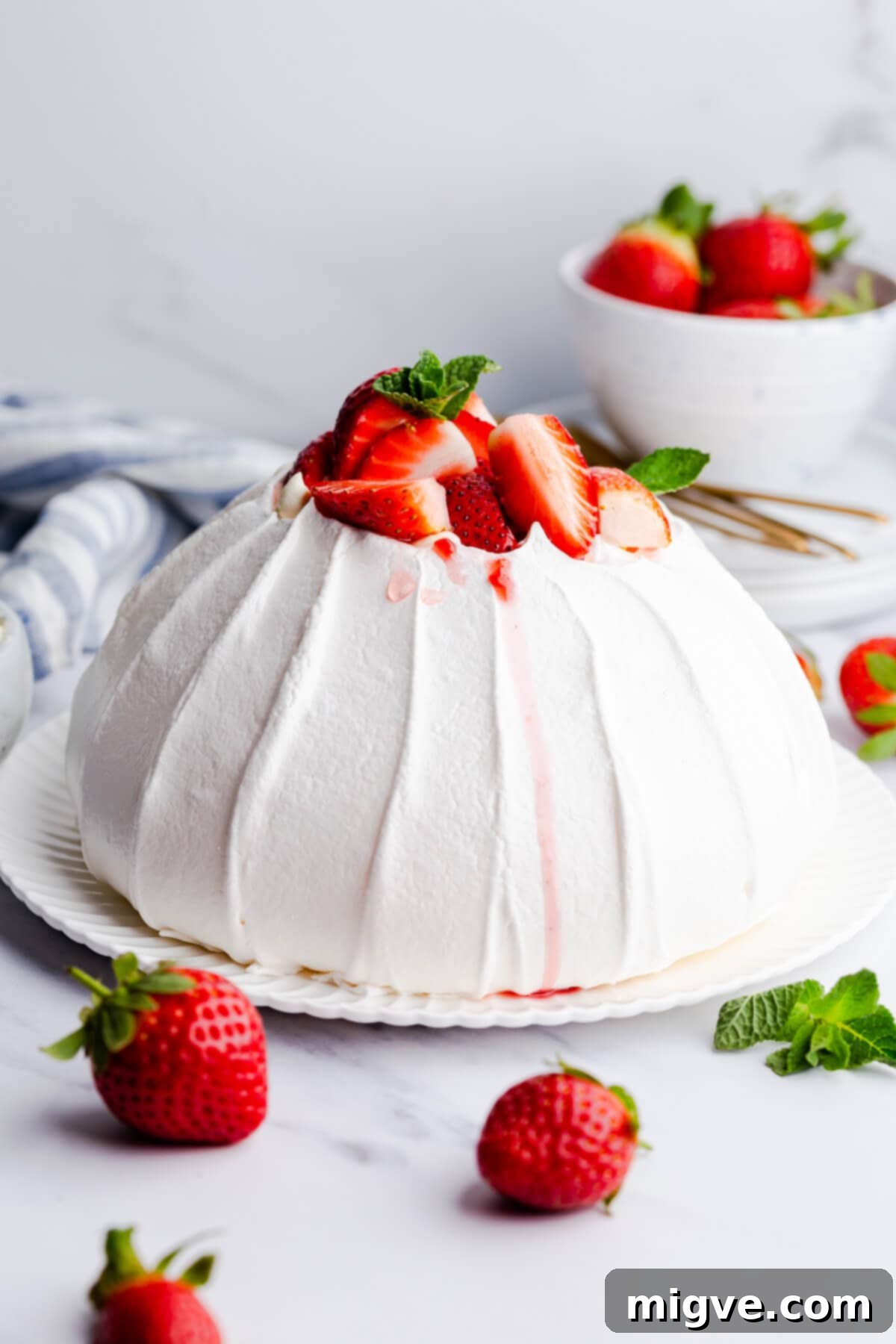
- **Assemble and Serve:** Gently transfer the cooled pavlova onto your serving plate. Spoon the freshly whipped cream into the center well, then generously pile the sugared strawberries on top. Drizzle any accumulated strawberry juices over the cream and fruit. Serve immediately and watch it disappear!
The Critical Role of Oven Temperature
Achieving the perfect pavlova hinges significantly on maintaining the **correct oven temperature**. This is arguably one of the most crucial aspects of the entire recipe. An oven that is too hot will cause your meringue to expand too rapidly, leading to unsightly cracks and a darker, often unevenly colored surface. Conversely, if the temperature is too low, the meringue simply won’t bake properly; it will remain raw and wet in the center, failing to develop that characteristic crisp crust.
Therefore, it is paramount to set your oven to the precise temperature specified before you even begin whisking. If you followed the optional step of heating the sugar beforehand, you absolutely **must allow the oven to cool down** to the correct baking temperature for the meringue. Many ovens, especially older models or fan-assisted ones, can run hotter or colder than their display indicates. This is why I highly recommend **using an oven thermometer** – a separate, dedicated thermometer provides the most accurate reading, overriding any potential inaccuracies of your oven’s built-in gauge. Since my fan-assisted oven tends to run hot, I often adjust my temperatures slightly lower to compensate. If you know your oven has similar quirks, adjust accordingly to prevent over-baking or cracking.
Substitutions and Alternative Ingredients
While sticking to the recommended ingredients often yields the best results, sometimes you need to make a swap. Here are some reliable substitutions for your pavlova:
- White Caster Sugar: As discussed, caster sugar is best. However, if unavailable, **granulated sugar** can be used, though it might require slightly longer whisking to fully dissolve. **Soft light brown sugar** will also work, but be aware that it will impart a light caramel flavor and result in a darker, off-white meringue. Some bakers have also had success with **icing sugar (powdered sugar)**, which dissolves easily but can sometimes lead to a slightly softer meringue.
- Cornflour: This can be easily replaced with an equal amount of **cornstarch**, **potato starch**, or **arrowroot powder**. All three act as excellent stabilizers for the meringue’s interior.
- White Wine Vinegar: The acidic component is crucial. You can substitute white wine vinegar with **cider vinegar**, **distilled white vinegar**, or even freshly squeezed **lemon juice**. All will provide the necessary acidity to help stabilize the egg whites.
Delicious Pavlova Variations
The beauty of pavlova lies in its adaptability. This base recipe is a canvas for endless creativity. Here are a few of my favorite ways to adapt and enjoy this delightful dessert:
- Mini Pavlovas: Instead of crafting one large pavlova, divide the meringue mixture into smaller, individual portions. Pipe or spoon them onto the baking sheet to create charming mini pavlovas, perfect for individual servings at a party or afternoon tea.
- Vegan Pavlova: For an egg-free alternative, explore recipes using aquafaba (the liquid from a can of chickpeas) to create a remarkably similar meringue. Check out my Vegan Berry Pavlovas recipe for a fantastic plant-based version!
- Lemon Curd Swirl: Elevate your pavlova by gently swirling a tablespoon or two of vibrant lemon curd into your whipped cream topping. The zesty tang of the lemon pairs beautifully with the sweet meringue and fresh strawberries. You can even make your own with my Homemade Lemon Curd recipe.
- Chocolate Indulgence: For chocolate lovers, transform your classic pavlova into a rich chocolate version. Simply sift a couple of tablespoons of high-quality cocoa powder into your meringue mixture before the final whisk, or gently fold in some melted and cooled dark chocolate. You might also find inspiration from this recipe for Double Chocolate Pavlova from Once Upon a Chef blog.
- Eton Mess or Fruit Fool: Even if your pavlova cracks or breaks during baking (which happens to the best of us!), don’t despair! Embrace the imperfection by smashing it up and layering the meringue pieces with whipped cream and fresh fruit to create a delightful Eton Mess or a simpler fruit fool. It’s just as delicious, perhaps even more charmingly rustic!
Essential Equipment for Pavlova Making
Having the right tools can make all the difference in the success and enjoyment of your pavlova-making journey:
- Hand-held Electric Mixer or Freestanding Mixer: A powerful mixer with a balloon whisk attachment is indispensable for whipping egg whites to the correct volume and consistency. It makes the process much quicker and less strenuous than whisking by hand.
- Large Baking Sheet / Baking Tray: You’ll need a sturdy baking sheet to accommodate your pavlova meringue.
- Baking Paper: Essential for lining your baking sheet, preventing the meringue from sticking, and making cleanup a breeze.
- Oven Thermometer: While optional, this tool is highly recommended. As discussed earlier, many ovens have inaccurate temperature displays. A separate oven thermometer will provide precise readings, ensuring your meringue bakes at the ideal temperature and minimizing the risk of cracks or under-baking. It’s a small investment that pays off in perfect pavlovas every time.
Storage and Freezing Tips for Pavlova
To preserve the delicate texture and fresh taste of your pavlova, proper storage is crucial:
- Best Eaten Fresh: A fully assembled strawberry pavlova, topped with whipped cream and fresh fruit, is undeniably **best eaten fresh** on the day it is made. The moisture from the cream and fruit will gradually soften the meringue over time.
- Storing Unfilled Meringue: If you plan to make it ahead, prepare the meringue shell just a few hours before serving. Once baked and completely cooled (following the overnight cooling method), store the unfilled meringue in an **airtight container** in a **cool, dry place** at room temperature. **Crucially, avoid storing the pavlova in the fridge before topping**, as the humidity can make the meringue soggy and sticky.
- Make-Ahead Method (Overnight): For ultimate convenience, bake your pavlova in the evening. Once baked, turn off the oven and leave the meringue inside the closed oven until the next morning. This slow, gradual cooling helps prevent cracks and ensures a perfectly crisp and stable shell.
- Freezing Unfilled Meringue: Baked and cooled pavlova shells can be frozen for up to a month. To do this, place the pavlova directly on a baking sheet and freeze it until solid. Once frozen, carefully wrap it in a double layer of cling film (plastic wrap) and then in aluminum foil to protect it from freezer burn. To defrost, remove it from the freezer 2-3 hours before you plan to serve it. Unwrap it and allow it to thaw at room temperature on your kitchen counter. Do not attempt to defrost in the microwave or oven.
Frequently Asked Questions (FAQs) About Pavlova
Here are answers to some common questions that arise when making pavlova:
What’s the difference between meringue and pavlova?
While pavlova is a type of meringue, there’s a key distinction. Traditional meringues are typically baked until they are dry and crispy throughout. Pavlova, on the other hand, is characterized by its signature contrast: a wonderfully crisp and crunchy exterior that gives way to a soft, fluffy, and delightfully marshmallow-like interior. This textural difference is achieved by adding cornflour and an acidic agent (like vinegar or lemon juice) to the egg white mixture and carefully controlling the baking and cooling process.
Can this recipe be made ahead?
Absolutely! The meringue shell itself can be prepared well in advance. You could bake it the evening before you plan to serve it. A fantastic make-ahead tip is to turn off the oven once the baking is complete and leave the pavlova inside the cooling oven until the next morning. This very slow cooling process helps prevent cracking and ensures the meringue is perfectly set and stable. Once cooled, store the unfilled meringue in an airtight container at room temperature. Assemble with cream and fruit just a few hours before serving.
Why did my pavlova crack?
Cracking is one of the most common issues with pavlova, but it doesn’t diminish the taste! Several factors can contribute to it:
- Incorrect Meringue Consistency: Ensure you whip the egg whites to firm, stiff peaks both before and after gradually adding the sugar. An under-whipped mixture is less stable.
- Oven Temperature Fluctuations: This is a major culprit. If the oven temperature is too hot, the pavlova expands too quickly, causing it to crack. Sudden changes in oven temperature (e.g., opening the oven door too early) also contribute to cracking. Always ensure your oven has cooled to the target temperature before baking, and follow the slow cooling method inside the turned-off oven.
- Opening the Oven Door: Resist the temptation to open the oven door while the meringue is baking! This introduces cool air and can shock the delicate structure, leading to cracks.
Why won’t my mixture stiffen or increase in volume?
If your egg whites aren’t whipping up as expected, consider these points:
- Grease Contamination: Even a tiny speck of grease (from egg yolk, oily fingers, or unwashed equipment) can prevent egg whites from aerating. Ensure your bowl and whisk are immaculately clean and grease-free.
- Room Temperature Egg Whites: Cold egg whites won’t whip to their full volume. Always use egg whites that have come to room temperature.
- Gradual Sugar Addition: The egg whites must be at stiff peaks before you start adding sugar. Adding sugar too quickly can “shock” the egg whites, causing them to collapse and preventing them from stiffening properly. Add it slowly, 1-2 tablespoons at a time.
Help, my pavlova is weeping!
Weeping (when sugar syrup oozes out of the meringue) usually indicates that the sugar wasn’t properly dissolved. To prevent this:
- Use Fine Sugar: Caster sugar is ideal because its fine grains dissolve readily.
- Warm the Sugar: As detailed in the instructions, gently warming the sugar helps it dissolve more completely into the egg whites.
- The Grit Test: Always perform the “grit test” to ensure no sugar crystals remain before adding the cornflour and vinegar.
Why is my pavlova chewy?
A chewy interior is actually a hallmark of a classic pavlova! While the outside shell should be light and crispy, the inside is intentionally soft, fluffy, and indeed, wonderfully marshmallow-like and chewy. This is what distinguishes it from a crisp meringue. If it’s *too* chewy and dense throughout, it might have been slightly underbaked or exposed to too much humidity during cooling or storage.
Top Tip: Embrace Imperfection!
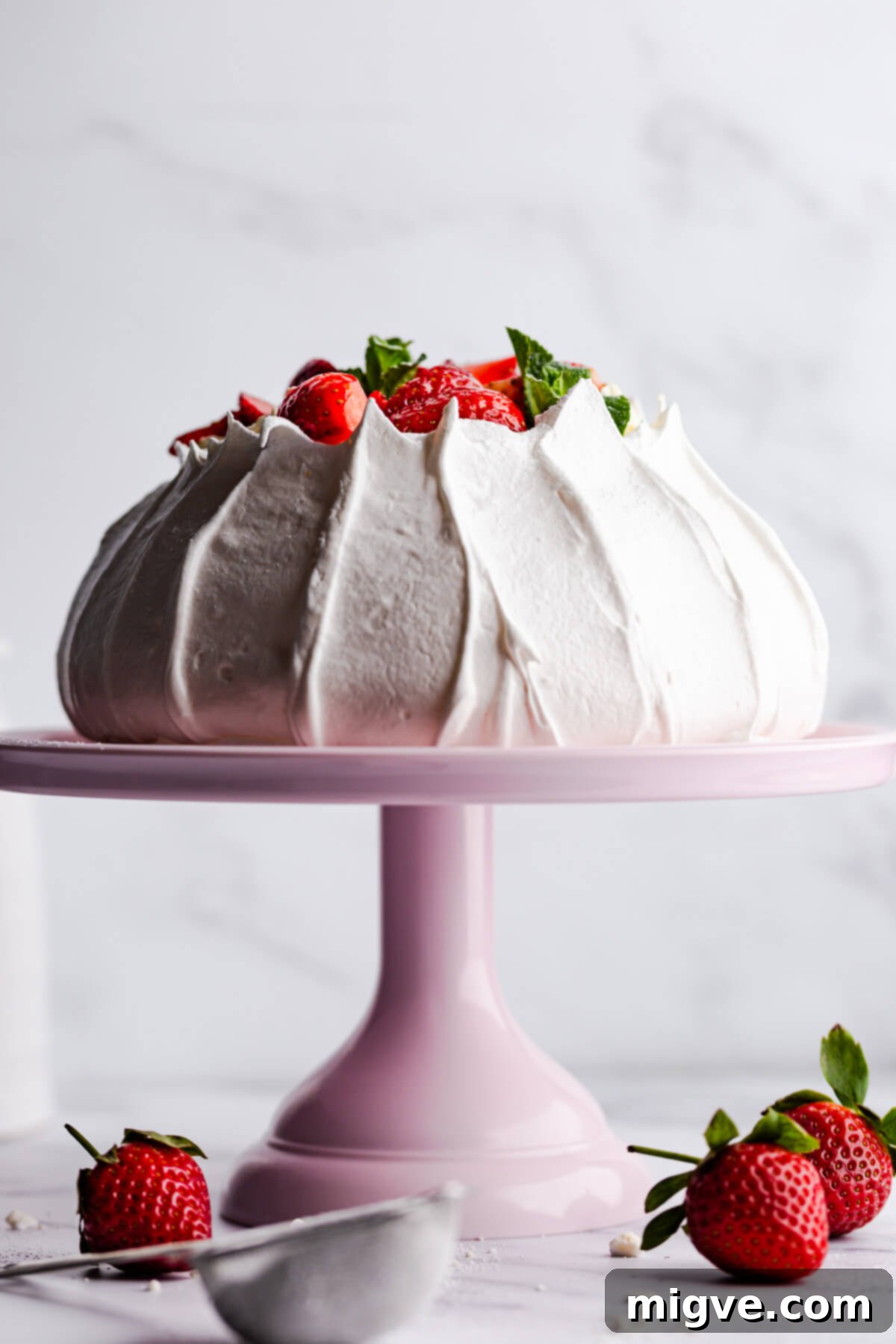
The true nature of this delicious strawberry pavlova recipe is that it often develops beautiful, rustic cracks or breaks in places during baking or cooling. These aren’t flaws; they add to its charming, homemade appeal! Even if your pavlova doesn’t look absolutely “perfect” or develops a few fissures, rest assured, it will still taste absolutely divine. The flavor and texture are what truly matter, so don’t let a few cracks dampen your spirits. After all, the whipped cream and strawberries will cover most of them anyway!
Remember to save this incredible recipe for later! You can easily pin it using the save button on the recipe card below, or by clicking on any of the stunning photos above.
If you try this recipe, or any other recipe from Anna Banana, please take a moment to rate it and/or leave a comment. Your feedback is invaluable, not only to me but also to other readers who are considering making the recipe!
📖 Strawberry Pavlova Recipe
Print Recipe
Pin Recipe
Strawberry Pavlova
Timeless classic, strawberry pavlova with a crispy shell and a soft, fluffy inside, crowned with whipped cream and fresh strawberries.
Prep Time: 20 mins
Cook Time: 1 hr 45 mins
Cooling time: 2 hrs
Total Time: 4 hrs 5 mins
Course: Dessert
Cuisine: British
Keyword: meringue, Pavlova, pavlova meringue, strawberry pavlova
Servings: 6 people
Calories: 376 kcal
Author: Anna Wierzbinska
Equipment
- 1 hand-held electric mixer or freestanding mixer with the balloon whisk attachment
- 1 large baking sheet or baking tray
- 1 baking paper
- 1 oven thermometer (optional, but highly recommended)
Ingredients
For the pavlova:
- 150 g egg whites (about 4-5 large eggs) room temperature
- 250 g caster sugar
- 1 teaspoon white vinegar
- 1 teaspoon cornflour or arrowroot powder
- 1 tsp vanilla extract
For the topping:
- 300 g fresh strawberries
- 300 ml double cream
- 2 tbsp icing sugar
Metric – US Customary
Instructions
- This step is optional: Preheat the oven to 190°C (170°C fan). Line a large baking tray with baking paper and place the caster sugar on it, spreading it evenly over the surface. Once the oven is hot, place the sugar inside for 5 minutes. Remove from the oven, transfer to a small bowl and set aside. Drop the oven temperature to 120°C.
- Preheat the oven to 120°C (fan). Using a plate roughly 20 cm in diameter, draw a circle with a pencil onto baking parchment, then flip it onto the other side and line the baking tray with it. Set aside.
- Using a handheld electric mixer or freestanding mixer with the balloon whisk attachment, start beating the egg whites on medium to high speed until they start to form stiff peaks. When the mixture turns into stiff peaks, **gradually** begin to add the caster sugar, 1-2 tablespoons at a time, until the meringue looks shiny and glossy. Rub some of the mixture between your fingers; it should feel smooth, without any sugar grit.
- Add 1 teaspoon of cornflour or arrowroot powder, 1 teaspoon of white vinegar, and 1 teaspoon of vanilla, and whisk again briefly to combine. Mound the meringue inside of the circle on the baking paper and smooth the top, creating a small well in the center. Bake in the oven for 1 hour at 120°C, then drop the temperature to 100°C and bake it for another 40 minutes.
- Turn off the oven **(do not open the oven door)**, and let the meringue sit in the cooling oven for at least a couple of hours (or overnight). It needs to cool down gradually; otherwise, it will break and collapse.
- Slice the strawberries into quarters and place them in a bowl. Sprinkle strawberries with 1-2 tablespoons of caster sugar and set aside to macerate slightly.
- Whip the double cream with 1-2 tablespoons of icing sugar until soft peaks form. Top the cooled meringue with whipped cream and strawberries, and drizzle with any accumulated strawberry juices. Enjoy!
Please note that all my recipes are developed and tested in metric grams. I recommend that you use digital scales for more accurate results. I have provided a conversion to US customary in the recipe but please note that I haven’t tested using this method.
Video
Please refer to the original source for the video tutorial.
Notes
- Use metal or glass bowls rather than plastic; they’re easier to keep clean and grease-free.
- Make sure to add sugar gradually. If you add it all too quickly, the meringue structure will collapse!
- Storage: This strawberry pavlova is best eaten fresh, on the day it was made. Once it is topped with whipped cream and strawberries, it should be eaten immediately.
- Make Ahead: You can bake the pavlova meringue shell the evening before and leave it in the turned-off oven overnight to cool. Store the unfilled shell in an airtight container in a cool, dry place. Assemble with toppings just a few hours before serving.
- Freezing: Unfilled meringue shells can be frozen for up to a month. Place it in the freezer on a baking tray until solid, then wrap in a double layer of cling film and store in the freezer. Thaw it at room temperature on the kitchen counter for 2-3 hours.
Nutrition
Serving: 50g | Calories: 376kcal | Carbohydrates: 50g | Protein: 4g | Fat: 19g | Saturated Fat: 12g | Polyunsaturated Fat: 1g | Monounsaturated Fat: 5g | Cholesterol: 69mg | Sodium: 62mg | Potassium: 157mg | Fiber: 1g | Sugar: 47g | Vitamin A: 741IU | Vitamin C: 30mg | Calcium: 43mg | Iron: 1mg
Did you make this?
Tell me how you like it? Leave a comment or take a picture and tag @anna_wierzbinska on Instagram. I love seeing your take on my recipes!