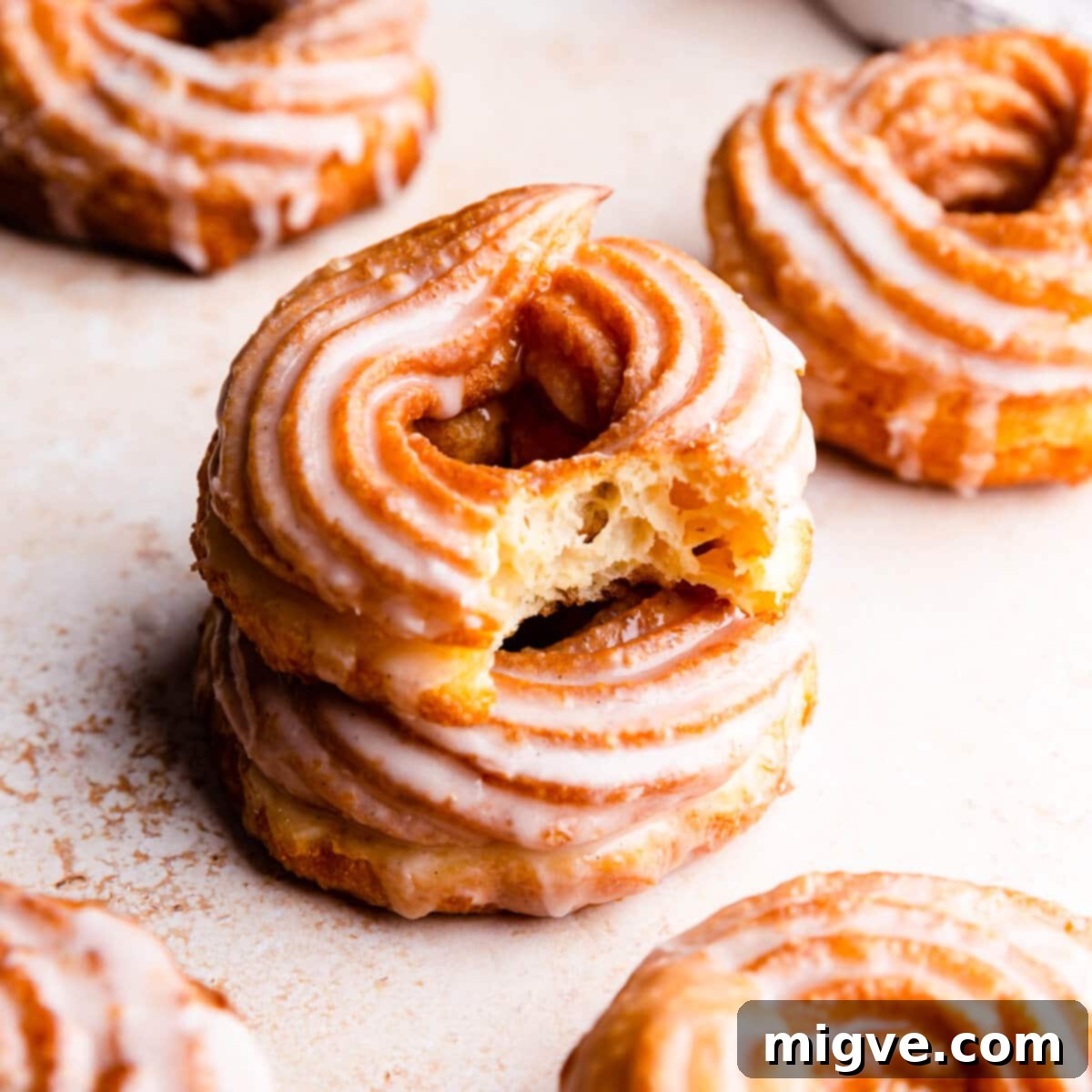
Welcome to the delightful world of homemade French Cruller Doughnuts! These elegant, light-as-air treats are surprisingly simple to master and utterly irresistible. Forget heavy, dense doughnuts; crullers offer a unique culinary experience with their delicate texture, golden-brown hue, and signature crispy exterior that gives way to an incredibly soft, airy interior. Drizzled with a sweet, simple glaze and enjoyed with your favorite cup of coffee, they transform any morning or afternoon break into a truly special occasion. Prepare yourself for a treat so delicious, it’s practically impossible to have just one!
What makes French Crullers so distinct is their foundation: choux pastry, also known as pâte à choux. This versatile dough, familiar to lovers of profiteroles and éclairs, is first cooked on the stovetop and then masterfully piped into beautiful fluted rings. These rings are then either deep-fried to golden perfection or baked until crisp, resulting in a hollow, ethereal structure. The beauty of crullers extends beyond their classic form; they are a blank canvas for creativity. Experiment with a myriad of glaze variations – from classic vanilla to zesty citrus or warm cinnamon – or elevate them further with luscious fillings like creamy custard, decadent pastry cream, or a tangy fruit curd.
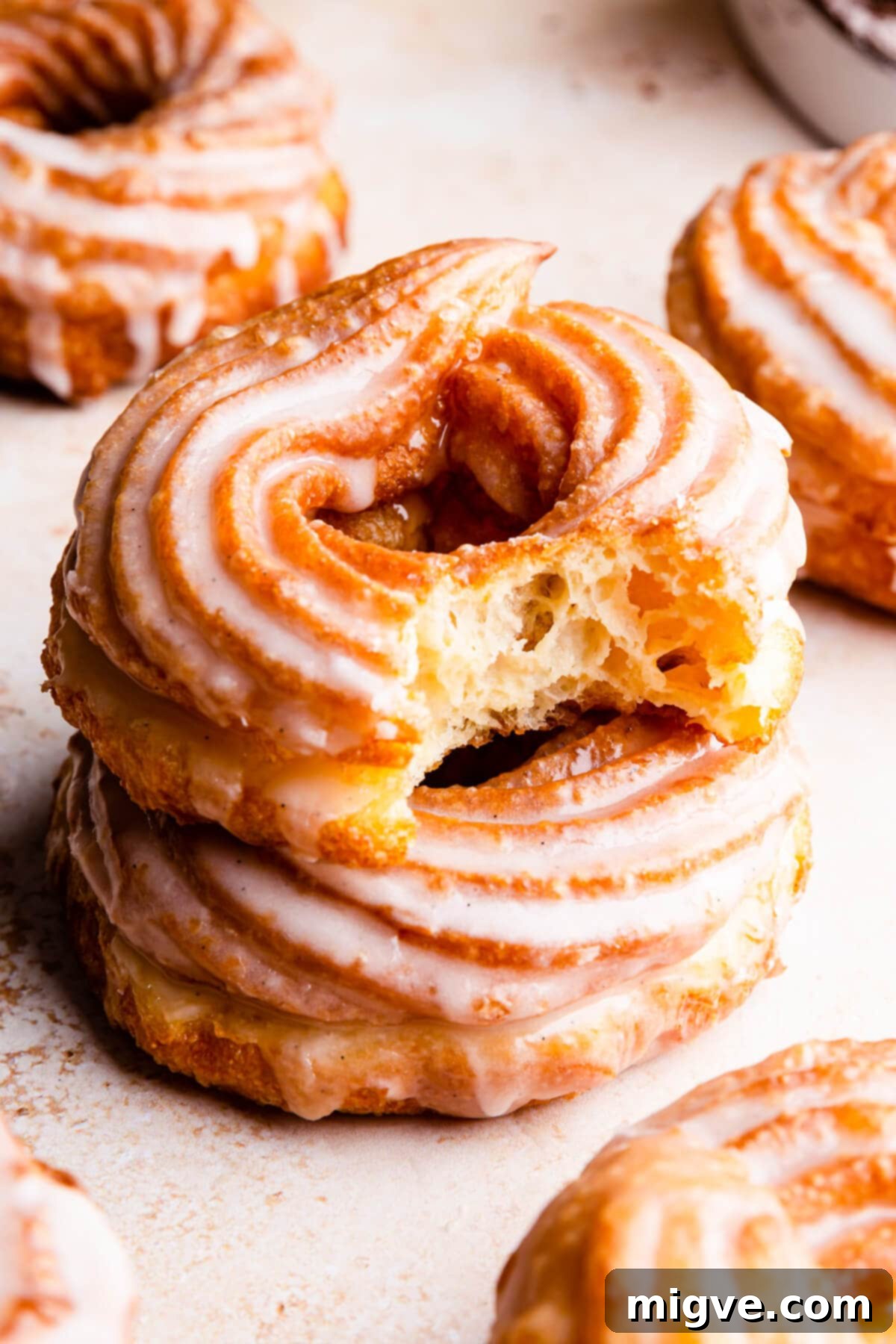
One of the most appealing aspects of French crullers is their relative ease and speed compared to traditional yeast-raised doughnuts. Unlike recipes that demand lengthy proving times and meticulous handling, such as small batch doughnuts or pumpkin spice doughnuts, these choux pastry delights require no yeast whatsoever. This means you can bypass the waiting game for dough to rise, making them a fantastic option for a spontaneous baking project or a quick breakfast treat. The choux pastry itself can even be prepared in advance and stored in the fridge, allowing you to whip up freshly fried, melt-in-your-mouth crullers whenever the craving strikes!
This comprehensive guide will walk you through every step of creating perfect French crullers at home, from preparing the silky choux pastry to achieving that ideal golden crispness, and finally, glazing them to perfection. We’ll cover essential tips, common pitfalls to avoid, and exciting variations to inspire your culinary creativity. Get ready to impress your friends and family with these exquisite, bakery-quality doughnuts!
What Exactly is a French Cruller Doughnut?
A French cruller doughnut, often simply called a “cruller” or sometimes a “chouxnut,” is a unique pastry that stands apart from its traditional cake or yeast-doughnut counterparts. At its heart lies choux pastry (pâte à choux), a dough renowned for its delicate structure and versatility in classic French patisserie. This is the very same dough used to create light-as-air profiteroles, elegant éclairs, and savory gougères, lending the cruller its signature texture.
The creation of a cruller involves a fascinating double-cooking process. First, the choux pastry is cooked on the stovetop, allowing the flour to hydrate and develop gluten, forming a cohesive dough. This initial cooking step is crucial for achieving the desired structure. After this, the pastry is piped into its distinctive fluted ring shape. The second cooking phase involves either deep-frying or baking. When deep-fried, the high heat causes the moisture within the dough to rapidly expand into steam, creating pockets that puff up the pastry and result in an incredibly airy, almost hollow interior. The exterior develops a beautiful golden-brown, crispy crust, while the inside remains wonderfully light and tender.
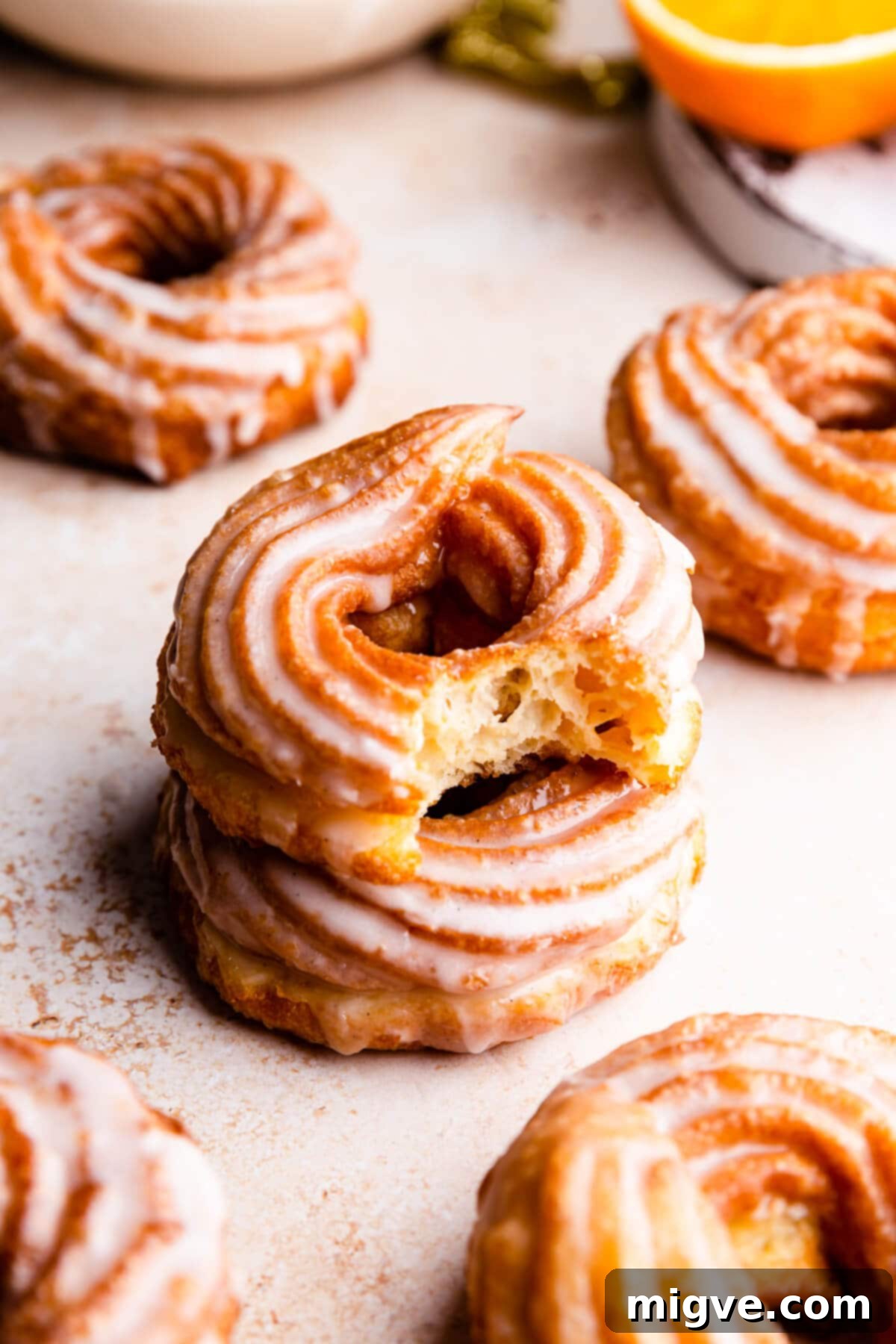
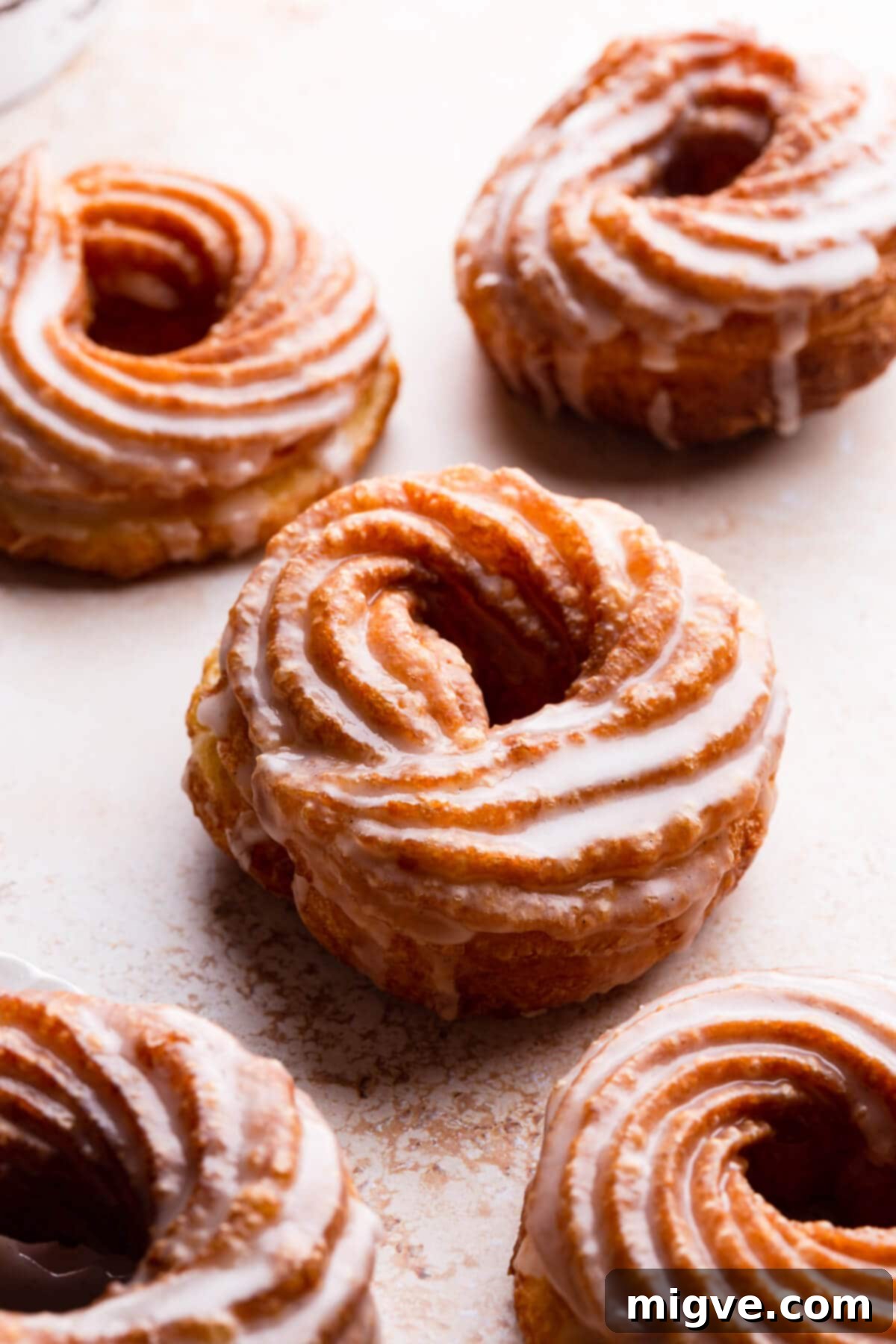
What truly sets crullers apart is their texture. They are significantly lighter and far more delicate than typical doughnuts. The choux pastry, when fried, expands dramatically, creating a labyrinth of air pockets that virtually melt in your mouth. The characteristic ridged edges of the piped cruller are not just for aesthetic appeal; they are perfectly designed to absorb copious amounts of sweet glaze, ensuring a burst of flavor with every bite. The ideal French cruller boasts a satisfyingly crispy outer shell and a super soft, airy, almost custardy interior, making for a truly unforgettable doughnut experience.
Essential Ingredients for Perfect French Crullers
Crafting these delicate chouxnuts requires only a handful of basic, readily available ingredients. The quality of each component plays a role in the final texture and flavor, so choosing fresh, good-quality ingredients is always recommended. Here’s a detailed look at what you’ll need:
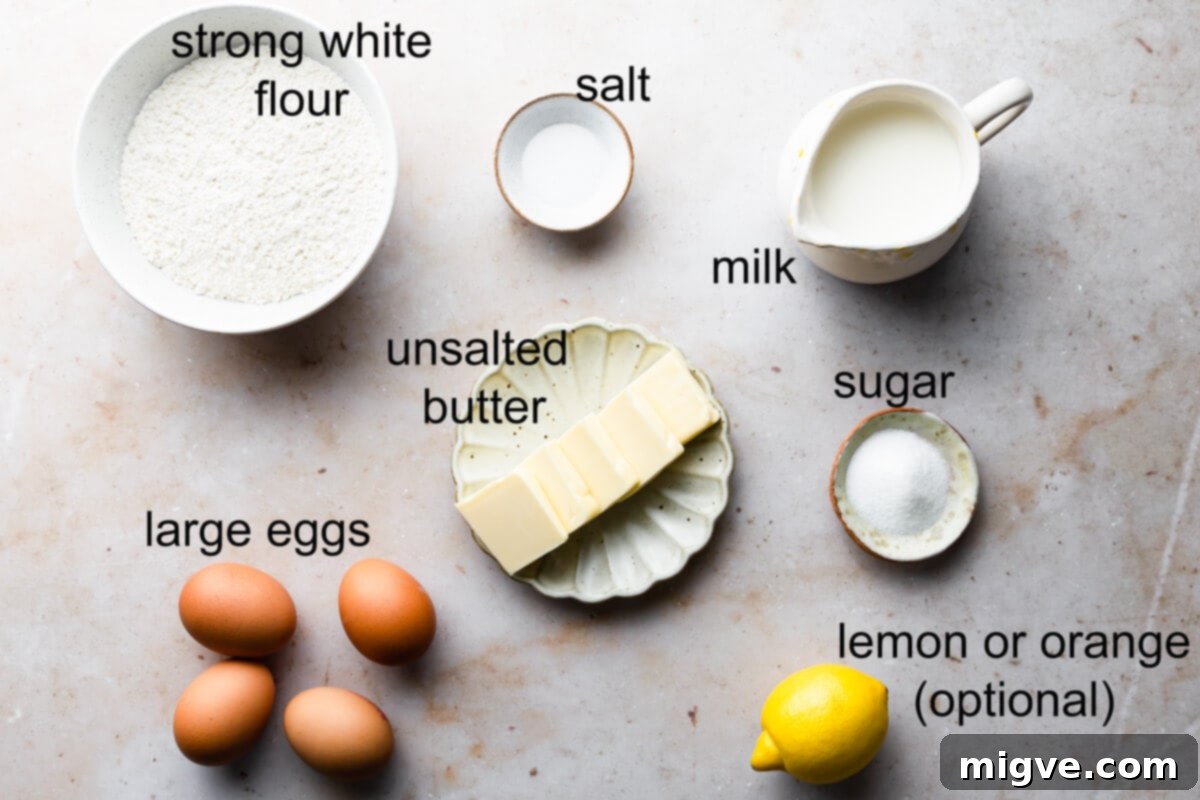
- Milk: Opt for full-fat or whole milk for the richest flavor and texture. The fat content contributes to a more tender dough. While semi-skimmed milk can be used, full-fat is ideal for a superior result.
- Butter: Unsalted butter is generally preferred for baking as it allows you to control the salt content precisely. If using salted butter, remember to reduce the amount of added salt in the recipe to ¼ teaspoon to avoid an overly salty taste. Butter adds richness and helps create the desired flaky texture.
- Sugar: Just a tablespoon of white caster sugar or granulated sugar is needed for the choux pastry. This isn’t primarily for sweetness, but rather to aid in browning and to slightly tenderize the dough. The main sweetness will come from the glaze.
- Salt: A small amount, typically ½ teaspoon of fine salt, is essential for seasoning the dough. It balances the flavors and enhances the overall taste, preventing the crullers from tasting bland.
- Flour: Strong white bread flour is highly recommended for choux pastry. Its higher protein content yields a stronger gluten structure, which is crucial for the dough to puff up correctly and hold its shape during frying, preventing collapse. All-purpose (plain) flour can also be used, but you might find the crullers slightly less sturdy.
- Eggs: You will need 4 large eggs in total: 3 whole eggs and one egg white. Eggs are vital for both leavening and enriching the choux pastry. They create steam during cooking, which makes the pastry rise, and also contribute to the beautiful golden color and custardy texture. The extra egg white helps achieve the perfect consistency for piping.
- Lemon or Orange Zest (Optional): A tablespoon of freshly grated lemon or orange zest adds a wonderful, bright citrus note to the crullers, complementing their sweetness without overpowering them. This is an optional but highly recommended addition for an extra layer of flavor.
- Vegetable Oil: Approximately 1 liter of neutral-flavored vegetable oil, such as canola, sunflower, or grapeseed oil, is needed for deep-frying the doughnuts. Choose an oil with a high smoke point to ensure even frying without burning.
- Icing / Powdered Sugar (for glazing): This fine sugar forms the base of your classic sweet glaze.
Step-by-Step Instructions for Homemade French Crullers
Making choux pastry might sound intimidating, but it’s actually a straightforward process that yields impressive results. Follow these instructions carefully for perfect homemade French crullers.
1. Preparing the Choux Pastry Base
Begin by combining the milk, butter, sugar, salt, and 120 ml of water in a medium saucepan. Place the saucepan over a low to medium heat, stirring continuously until the sugar fully dissolves and the butter melts completely. Once melted, increase the heat slightly and bring the mixture to a gentle boil. As soon as it reaches a boil, remove the saucepan from the heat.
Immediately add all 160g of flour into the hot liquid. Using a sturdy wooden spoon, stir vigorously and quickly until the flour is fully incorporated and the mixture forms a cohesive ball of dough that pulls away from the sides of the pan. Return the saucepan to a low heat and continue to cook the dough, stirring constantly for an additional 2 minutes. This crucial step, known as “drying out” the pastry, helps evaporate excess moisture, ensuring a light and crisp final product. You should notice a thin film forming at the bottom of the saucepan, indicating the dough is properly cooked. The mixture should be very thick, smooth, and shiny, with no visible lumps.
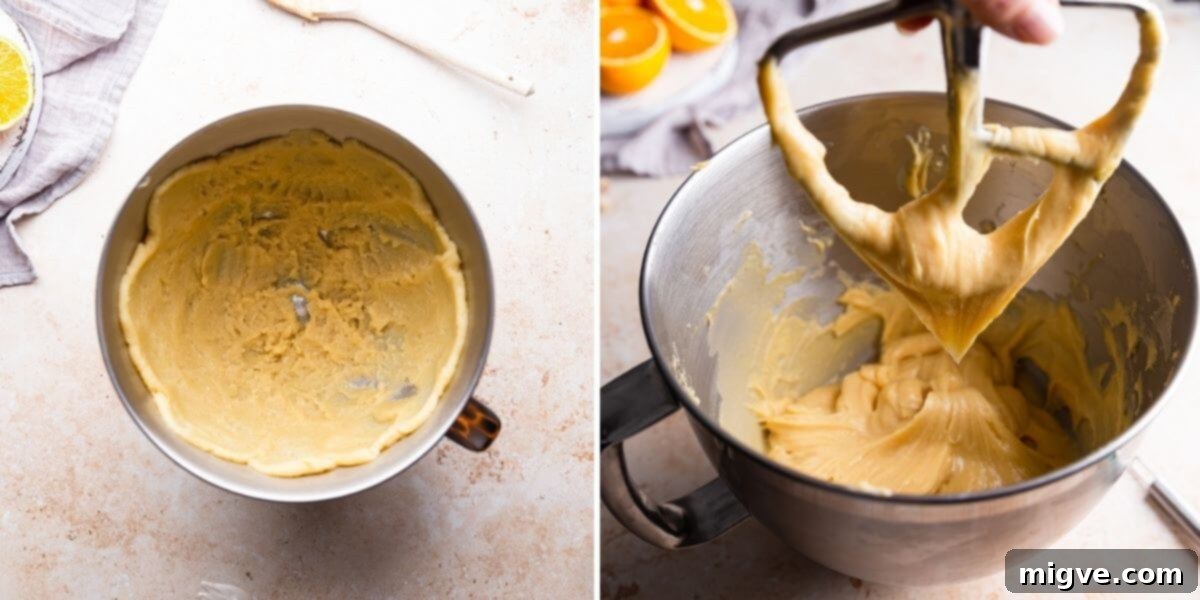
Transfer the cooked dough into the bowl of a standing mixer (or a large bowl if mixing by hand). Spread the dough into a thin layer along the sides and bottom of the bowl using a spatula. This increases the surface area, allowing it to cool down more quickly. Let it cool for 10-15 minutes, or until it reaches room temperature. This prevents the eggs from scrambling when added.
2. Incorporating the Eggs
Once the dough has cooled, fit your standing mixer with a paddle attachment. Scrape down any dough from the sides of the bowl. Add 2 of the beaten eggs into the dough. Mix on medium speed until the eggs are completely incorporated into the dough. The mixture might look separated or curdled at first, but keep mixing; it will eventually come together into a smooth, thick batter. You may need to stop the mixer and scrape down the sides of the bowl periodically to ensure even mixing.
Next, add the remaining single beaten egg and repeat the mixing process on medium speed until fully incorporated. Again, scrape the sides of the bowl as needed. Finally, gradually add the reserved egg white (and the optional lemon or orange zest, if using), a teaspoon at a time, mixing after each addition. The goal is to achieve a thick, shiny dough that forms a “V” shape and slowly drops off a spoon or paddle attachment when tapped lightly. You might not need all of the egg white; stop when you reach the correct consistency.
Expert Tip: The ‘V’ Test for Choux Pastry Consistency
To confirm your choux pastry has the perfect consistency, perform the classic ‘V’ test. Dip a rubber spatula or your mixer’s paddle attachment upright into the dough, stir it briefly, and then lift it. If the dough is ready, it should form a distinct ‘V’ shape (or a “bird’s beak”) at the end of the spatula or paddle, slowly dripping back into the bowl (as shown in the image above). If it clings too much, add a tiny bit more egg white; if it’s too runny, unfortunately, there’s no easy fix, but you’re likely on the right track if you added eggs gradually.
Scoop the prepared choux pastry into a large piping bag fitted with a large open star nozzle (or a large French star nozzle, which creates more pronounced ridges). Twist the top of the bag to secure the dough, and then place the entire piping bag in the fridge for at least an hour. Chilling the dough is essential for it to firm up, making it much easier to pipe and helping the crullers hold their distinctive shape during frying.
Mastering the Art of Piping Your Crullers
While your choux pastry chills in the fridge, take this time to prepare your parchment paper squares. Cut baking paper into 12 squares, each measuring approximately 9cm x 9cm (about 3.5 x 3.5 inches). On one side of each paper square, draw a perfect circle with a diameter of 7cm (about 2.75 inches). This will serve as your guide for piping consistent doughnut rings. Once drawn, flip each square over so the ink or pencil mark is on the underside; this prevents any transfer of marks to your food.
Next, prepare your frying setup. Half fill a deep-fat fryer or a large, heavy-based saucepan with about 1 liter of neutral-flavored vegetable oil. Place it over a medium heat and begin heating the oil. It’s crucial to use a cooking thermometer to monitor the oil temperature, aiming for a steady 180°C (350°F). Maintaining this precise temperature is key to perfectly cooked crullers that are golden, crispy, and not greasy.
Once the choux pastry is sufficiently chilled, remove the piping bag from the fridge. Hold the piping bag vertically over one of your prepared parchment squares, aligning the nozzle with the drawn circle. Begin to pipe an even, continuous circle of dough, ensuring the ends meet and connect seamlessly to form a closed ring. The star nozzle will create beautiful ridges, which are characteristic of French crullers and excel at catching glaze. Repeat this process with the remaining dough and parchment squares.
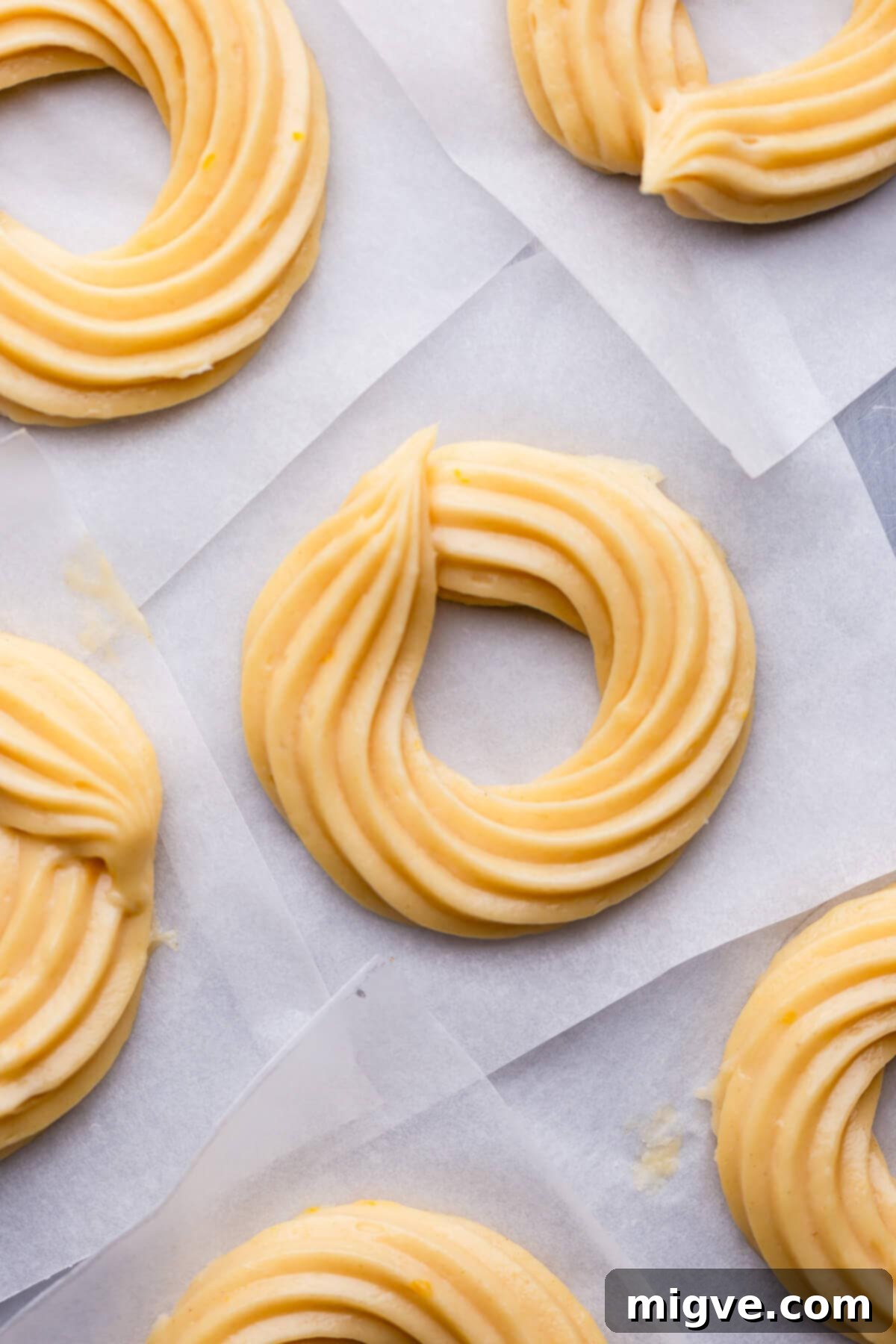
Helpful Hint: Preventing Burnt Edges
To prevent any fine points or edges of your piped cruller doughnuts from burning during frying, gently dip the tip of your finger in a little water and lightly tap down the apex (highest point) or any particularly sharp end points on the dough rings. This slight dampening helps them cook more evenly and prevents over-browning.
Frying Your French Crullers to Golden Perfection
Please exercise extreme caution during the frying process. The hot oil poses a significant safety risk. Ensure children and pets are kept away from the cooking area, and always have a fire extinguisher or baking soda (not water!) readily available for emergencies.
Once your oil has reached the precise temperature of 180°C (350°F), you are ready to fry. Carefully pick up a parchment square with a piped choux ring on it. Gently lower the entire square, cruller side down, into the hot oil. The parchment paper should be facing uppermost. In many cases, the cruller will detach itself from the paper naturally as it cooks. If not, don’t worry. Alternatively, you can place the parchment square with the cruller onto a slotted spoon and slowly submerge it into the oil. This method offers more control.
As the crullers begin to fry, the parchment paper will float free. Using metal tongs, carefully remove the parchment paper from the oil and discard it. Fry the cruller doughnuts for approximately 2-3 minutes on each side, or until they achieve a beautiful deep golden-brown color and have puffed up considerably. It is crucial to avoid overcrowding the pan; fry only 2-3 doughnuts at a time to maintain a consistent oil temperature. Overcrowding will cause the oil temperature to drop, leading to greasy, soggy crullers.
Flipping Safely:
When it’s time to flip the doughnuts, use a wooden skewer or a metal utensil. Avoid plastic utensils, as they can melt or warp in the high heat of the frying oil. Gently turn each cruller to ensure even cooking and browning on both sides.
Once cooked to a perfect golden crisp, use a slotted spoon to carefully remove the cruller doughnuts from the hot oil. Transfer them immediately to a wire cooling rack placed over a large plate lined with several layers of kitchen paper. The kitchen paper will absorb any excess oil, helping to keep your crullers wonderfully crisp. Repeat the frying process with all the remaining piped doughnut rings, ensuring the oil returns to 180°C (350°F) before adding the next batch. Allow the crullers to cool slightly on the rack before proceeding to the glazing step.
3. Glazing Your Crullers
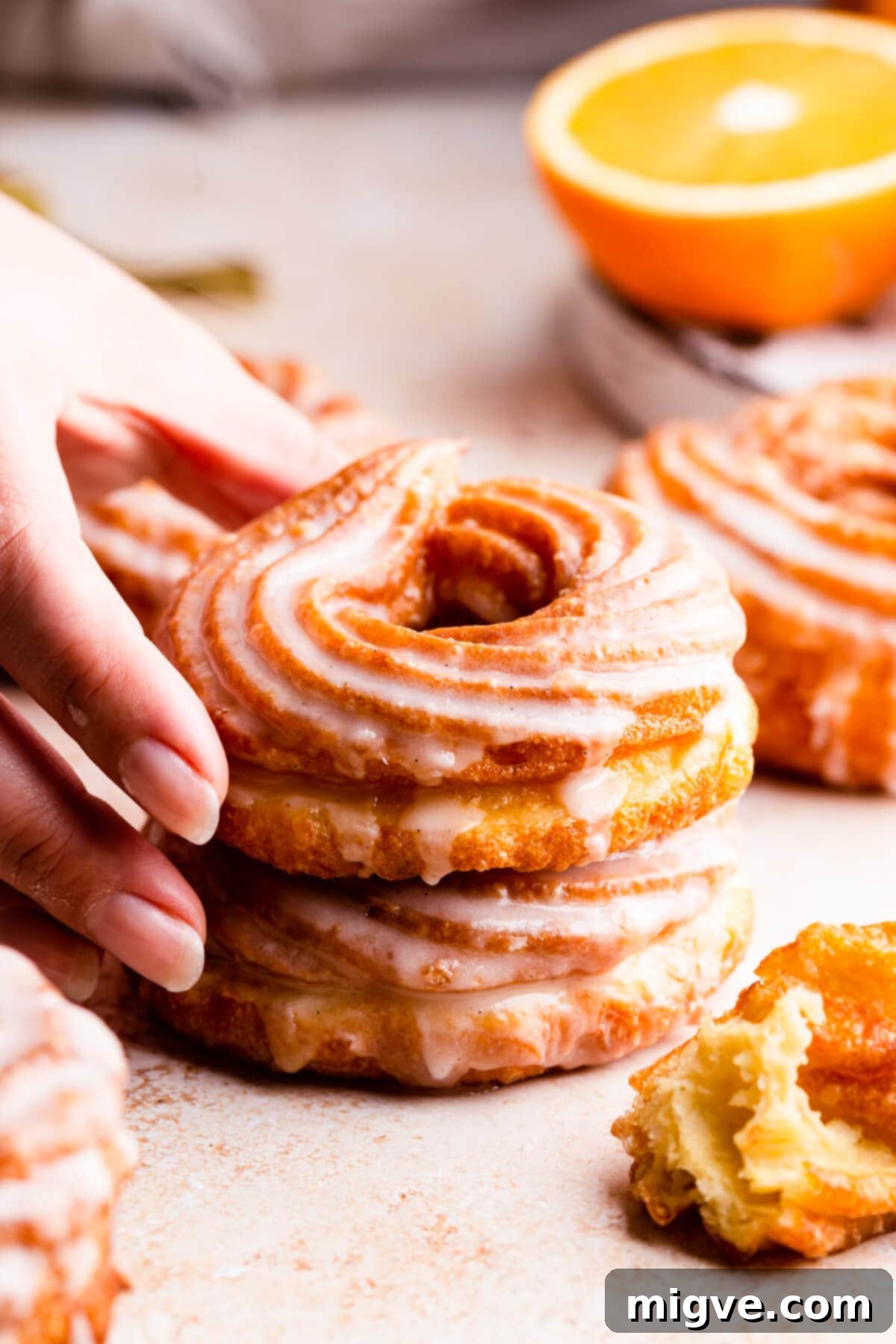
Once the crullers are cool enough to handle but still slightly warm, it’s time to glaze them. Prepare your desired glaze (instructions below in the recipe card, or see “Variations”). Dip each choux ring into the sweet glaze, ensuring an even coating. Lift the cruller, allowing any excess glaze to drip off, and return it to the cooling rack, dipped side uppermost, for the glaze to set. Serve immediately and enjoy!
Deep-Fried vs. Baked French Crullers: A Texture Comparison
While traditionally deep-fried, French crullers can also be baked, offering a delicious alternative for those who prefer to avoid frying or are seeking a slightly different texture. It’s important to note that the two methods yield distinctly different results in terms of crust and interior.
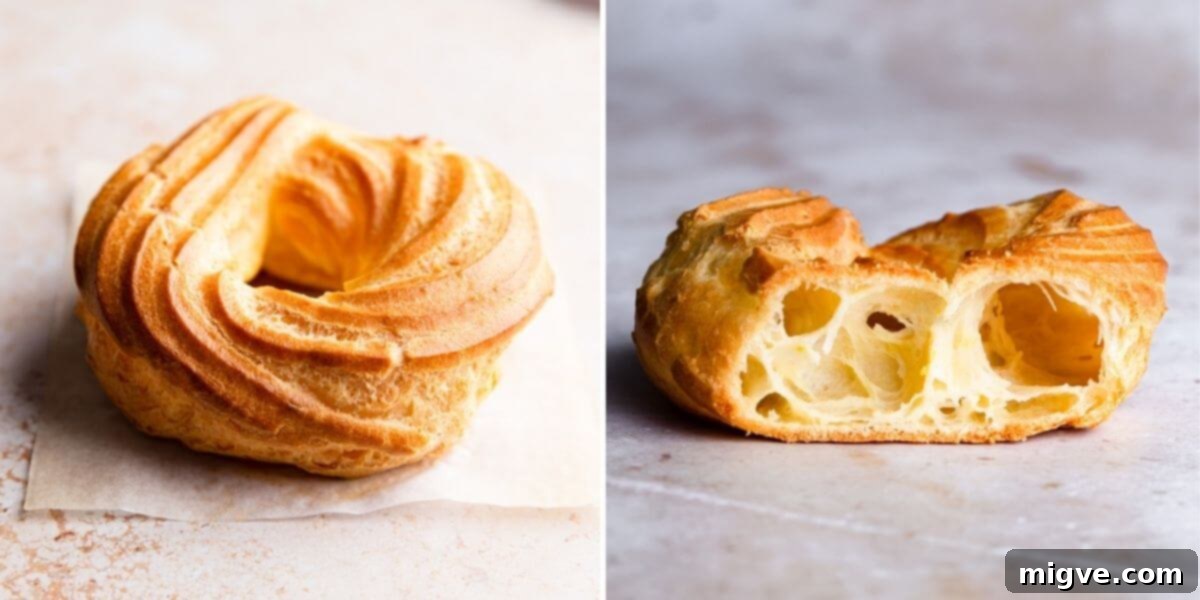
Baked Crullers: Firmer & Sturdier
When baked, the cruller doughnut develops a firmer crust. The oven’s dry heat encourages more moisture to evaporate from the dough, leading to an interior that is less gooey and less “squidgy” (soft and slightly elastic) than its fried counterpart. Instead, baked crullers tend to have a sturdier, almost bread-like crumb, while still maintaining that characteristic lightness. They retain their airy structure but with a slightly drier finish. Despite these textural differences, baked crullers are incredibly delicious and satisfy the craving for this unique pastry with a lighter feel.
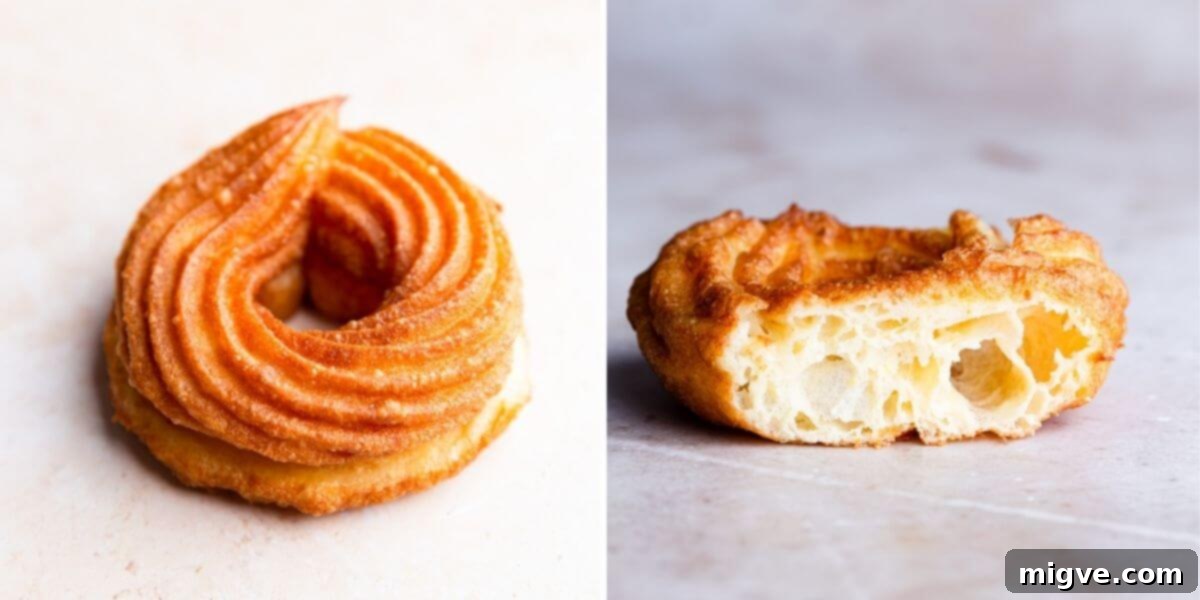
Deep-Fried Crullers: Crispy & Gooey
The deep-fried cruller, on the other hand, is the epitome of classic indulgence. Its crust is wonderfully crispy and golden, yet also distinctly softer than a baked cruller, with that satisfying shatter upon first bite. The interior is where the deep-fried version truly shines: it’s much softer, more ethereal, and notably “gooey” or custardy. The rapid cooking in hot oil creates a steam explosion within the choux pastry, resulting in larger, more open air pockets and a melt-in-your-mouth experience. The oil also contributes a richness and helps achieve that signature delicate crispness. Both methods are delicious, but if you’re seeking the quintessential airy, moist-inside, crispy-outside cruller, deep-frying is the way to go.
Baking Instructions:
For detailed instructions on how to bake your French crullers, please refer to the “Notes” section in the recipe card below. The process involves preheating the oven and adjusting temperatures to ensure they bake perfectly without deflating.
You might also consider using an air fryer for a method that combines some benefits of both baking and frying. While I haven’t personally tested an air-fried version, many recipes exist. For an example, you can explore this Air Fryer Pumpkin Spiced Crullers recipe from Recipes From a Pantry website as a starting point.
Essential Equipment for Your Cruller Making Adventure
Having the right tools can make all the difference in the success and enjoyment of your French cruller baking. Here’s a list of the kitchen equipment you’ll need:
- Medium Saucepan: For cooking the choux pastry base on the stovetop. A heavy-bottomed pan ensures even heat distribution and prevents burning.
- Freestanding Mixer with Paddle Attachment or Electric Hand Mixer: While choux pastry can be made by hand with a wooden spoon, a mixer makes the process of incorporating eggs much easier and more efficient, ensuring a smooth, lump-free dough.
- Large Piping Bag (Pastry Bag): Essential for piping the choux dough into perfect doughnut rings. Choose a strong, disposable or reusable bag.
- Large Open Star Nozzle or French Star Nozzle: This specific type of nozzle creates the iconic ridged texture of French crullers, which is not only beautiful but also ideal for holding glaze.
- Baking Paper: Cut into squares, this is crucial for piping the crullers onto, making it easy to transfer them safely into the hot oil.
- Deep-Fat Fryer or Heavy-Based Large Saucepan/Dutch Oven: For safely deep-frying the doughnuts. A deep fryer offers precise temperature control, while a heavy saucepan ensures stability and retains heat well.
- Kitchen/Cooking Thermometer: Absolutely vital for accurately monitoring the oil temperature. Maintaining a consistent 180°C (350°F) is the single most important factor for non-greasy, perfectly cooked crullers.
- Slotted Spoon or Spider: For gently lowering the crullers into the hot oil and safely removing them once fried.
- Metal Tongs: Useful for carefully removing the parchment paper from the hot oil and handling the crullers. Avoid plastic tongs.
- Wire Cooling Rack: For draining excess oil from the fried crullers and allowing the glaze to set. Place it over a plate lined with kitchen paper.
- Kitchen Paper/Paper Towels: To line the plate under the cooling rack and absorb any residual oil from the freshly fried doughnuts.
Creative Variations and Serving Suggestions
French crullers are wonderfully versatile, lending themselves to a multitude of flavors beyond the classic vanilla glaze. Here are some exciting ideas to customize your homemade crullers, ensuring there’s a perfect variation for every palate:
- Classic Vanilla Sugar Glaze: This timeless glaze is incredibly simple to prepare and perfectly complements the delicate flavor of the cruller. In a small bowl, whisk together 180g (about 1.5 cups) of icing/powdered sugar with 2-3 tablespoons of milk or water and 2 teaspoons of pure vanilla extract or vanilla bean paste until smooth and pourable, yet thick enough to coat.
- Golden Honey or Maple Glaze: For a naturally sweet and aromatic alternative, substitute some of the liquid in your glaze with runny honey or pure maple syrup. Combine 180g powdered sugar with 2-3 tablespoons of honey or maple syrup and enough milk or water to reach desired consistency. This adds a beautiful depth of flavor.
- Warm Spiced Glaze: Infuse your glaze with cozy spices. Combine icing sugar with 1 teaspoon of ground cinnamon for a classic cinnamon-sugar twist. Alternatively, try a pinch of nutmeg, cardamom, or a pumpkin spice blend for an autumnal treat. Adjust milk or water as needed.
- Zesty Citrus Glaze: Brighten your crullers with a vibrant citrus kick. Use fresh lemon juice, lime juice, or orange juice instead of milk or water in your glaze, combined with powdered sugar. For an extra punch, add a teaspoon of citrus zest.
- Berry Bliss Glaze: Create a fruity glaze by adding 2-3 tablespoons of homemade raspberry coulis, strawberry purée, or a berry reduction to your icing sugar and milk mixture. This adds a beautiful color and tangy sweetness.
- Decadent Chocolate Glaze: Melt 50g of good quality dark chocolate with 1-2 tablespoons of milk and a tablespoon of powdered sugar. Stir until smooth, then dip your crullers for a rich, indulgent finish.
- Creamy Fillings: Take your crullers to the next level by filling them! Once cooled, use a small round nozzle to pipe vanilla or chocolate crème pâtissière (pastry cream) into the crullers. Alternatively, inject them with your favorite fruit curd (lemon, passionfruit, or lime curd are excellent choices) for a delightful surprise with every bite.
- Gluten-Free Crullers: While this specific recipe has not been tested with gluten-free flour substitutions, the principles of choux pastry can be adapted. For those seeking a gluten-free option, I recommend consulting dedicated gluten-free baking resources, such as this recipe for gluten-free crullers from Gluten Free On A Shoestring website.
Storage and Freezing Tips for French Crullers
French cruller doughnuts are undeniably at their absolute best when enjoyed fresh, ideally on the very same day they are made. Their delicate, airy texture and crispy exterior are most pronounced immediately after preparation. However, should you find yourself with irresistible leftovers, or if you wish to prepare ahead, here’s how to properly store them:
Storing Leftovers
Any leftover glazed or unglazed crullers can be stored in an airtight container at room temperature for up to 2 days. While they will still be delicious, they may lose some of their initial crispness and airy quality. To attempt to revive some crispness, you can briefly warm them in a toaster oven or air fryer for a few minutes.
Freezing Instructions for Un-fried Crullers
For ultimate convenience, you can prepare the choux pastry and pipe the cruller rings in advance, then freeze them before frying. This allows you to enjoy freshly fried crullers whenever you desire with minimal effort.
- Pipe and Freeze: Pipe the choux rings onto individual parchment paper squares as per the instructions. Place these squares with the piped choux rings on a baking sheet, ensuring they are not touching.
- Flash Freeze: Transfer the baking sheet to the freezer and freeze until the piped crullers are solid. This usually takes about 1-2 hours.
- Store: Once frozen solid, carefully peel the parchment paper from the frozen crullers (they should pop off easily). Transfer the frozen choux rings to a freezer-friendly bag or an airtight container, separating layers with parchment paper if stacking. They can be stored in the freezer for up to a month.
- Frying from Frozen: When ready to cook, there’s no need to fully thaw them. Simply let them thaw slightly on the counter for about 10-15 minutes while your frying oil heats up. Proceed with frying as described in the recipe card, but be prepared to add an extra minute or two to the frying time to ensure they cook through evenly. Frying from frozen might result in a slightly longer cooking time and potentially a less pronounced rise, but they will still be delicious.
Frequently Asked Questions About French Cruller Doughnuts
Here are some common questions and troubleshooting tips to help you achieve cruller perfection:
- Can I use a small piping tip or nozzle to pipe the crullers?
- While technically possible to use a smaller piping nozzle, it’s generally not recommended for authentic French crullers. Using a small tip will result in much smaller, thinner doughnuts that lack the characteristic substantial texture and ridged structure. Moreover, piping continuous, even rings becomes significantly more challenging with a smaller nozzle, making it harder to achieve the desired shape and consistency. For proper-sized, beautifully ridged crullers, a large open star or French star nozzle is essential.
- How do I know when my crullers are cooked all the way through?
- Your crullers are perfectly cooked when they reach a deep, uniform golden brown color on both sides. This typically takes about 2-3 minutes of frying per side. The exterior should appear visibly crisp, and the doughnuts should feel light and hollow when gently lifted. If they appear dark on the outside but feel heavy, they might not be cooked through, or your oil temperature might be too high, browning the exterior too quickly.
- Why did my doughnuts collapse after frying?
- Several factors can contribute to crullers collapsing. One significant reason is the type of flour used. As mentioned, strong white bread flour creates a sturdier dough with a higher gluten content, which better holds its structure during frying. Plain (all-purpose) flour can sometimes lead to a softer, more prone-to-collapse dough. Another common cause is undercooking; if the interior isn’t fully set, the structure can weaken and collapse as the cruller cools. Ensure they are fried long enough to be deep golden brown and completely puffed up. An inconsistent oil temperature can also be a culprit; if the oil is too cool, the crullers absorb too much oil and can become heavy and prone to collapse.
- Why did my crullers split while frying?
- Crullers splitting during frying is usually an indication that the choux pastry was not adequately chilled before being introduced to the hot oil. Chilling allows the dough to firm up, creating a more stable structure that can withstand the rapid expansion caused by the steam during frying. Remember to let your dough chill in the fridge for at least an hour, or even two, before piping and frying. Additionally, ensuring your frying pan is sufficiently filled with oil (at least halfway) is important. If there isn’t enough oil, the crullers can stick to the bottom of the pan, causing them to tear or split when you try to move or flip them. Finally, an incorrect or fluctuating oil temperature can also contribute to splitting; maintain a steady 180°C (350°F) throughout the frying process.
Expert Tips for Cruller Success
Achieving perfect French crullers is all about understanding the nuances of choux pastry and managing the frying process. Here are some invaluable tips to ensure your homemade crullers turn out beautifully every time:
- Choose the Right Flour: For the most robust and consistently shaped crullers, I highly recommend using strong white bread flour instead of regular all-purpose (plain) flour. The higher protein content in bread flour develops a stronger gluten network, which is essential for creating a sturdier choux pastry. This stronger dough is far less likely to collapse or become soggy after frying, ensuring your crullers maintain their elegant, airy structure.
- Chill Your Choux Pastry: Do not skip the chilling step! Allowing the choux pastry to rest in the fridge for at least an hour (or even up to two) is crucial. Chilling firms up the dough, making it significantly less sticky and much easier to pipe into consistent, well-defined rings. More importantly, this firm structure helps the French cruller doughnuts hold their shape beautifully and prevents them from splitting or deforming when they hit the hot oil. A well-chilled dough is the secret to those perfectly puffed, ridged doughnuts.
- Maintain Consistent Oil Temperature: This is arguably the most critical factor for successful deep-frying. Always keep a close eye on your oil temperature using a reliable kitchen thermometer.
- If the temperature is too low (below 180°C / 350°F): The doughnuts will absorb too much oil, becoming greasy, heavy, and flat rather than light and airy. They will also brown inconsistently.
- If the temperature is too high (above 180°C / 350°F): The crullers will brown too quickly on the outside, creating a dark crust while the inside remains raw, doughy, or undercooked. This also increases the risk of splitting.
Adjust your heat source constantly to maintain a steady 180°C (350°F) throughout the entire frying process for optimal results. Fry in small batches to prevent temperature drops.
French Cruller Doughnuts Recipe
Print Recipe
Pin Recipe
Rated 4.91 out of 5 from 44 votes
French Cruller Doughnuts
Completely irresistible, super light, airy, and delicate choux pastry doughnuts with a sweet glaze.
| Prep Time | Cook Time | Total Time |
|---|---|---|
| 1 hr 45 mins | 15 mins | 2 hrs |
Course: Dessert
Cuisine: British
Keyword: choux pastry doughnuts, chouxnuts, crullers
Servings: 12 doughnuts
Calories: 472 kcal
Author: Anna Wierzbinska
Equipment
- Medium saucepan
- Freestanding mixer with paddle attachment or electric hand mixer
- Large piping bag
- Large open star piping nozzle or large French star piping nozzle
- Baking paper
- Deep fryer or heavy based pan/saucepan
- Cooking thermometer
- Slotted spoon
- Metal tongs
- Kitchen paper
Ingredients
For the Dough:
- 120 ml full fat milk
- 120 ml water
- 115 g unsalted butter
- 1 tablespoon caster sugar
- ½ teaspoon salt
- 160 g strong white bread flour or plain flour
- 3 large eggs
- 1 large egg white
- 1 tablespoon grated lemon or orange zest (optional)
- 1 liter vegetable oil for frying
For the Glaze:
- 180 g icing sugar
- 2-3 tablespoon milk
- 2 teaspoon vanilla extract or vanilla bean paste (optional)
Note: All recipes are developed and tested in metric grams. Digital scales are recommended for accuracy. US customary conversions are provided but not tested.
Instructions
- Place the milk, butter, sugar, salt, and water in a medium saucepan over medium heat. Stir until the sugar has dissolved and the butter has melted. Bring to a gentle boil, then remove from heat.
- Immediately tip in all 160g of flour, stirring vigorously with a wooden spoon until well combined and the mixture forms a ball. Return to low heat and cook, stirring constantly for 2-3 minutes, until a thick film forms at the bottom of the pan.
- Transfer the dough to a standing mixer bowl, spreading it into a thin layer to cool for about 15 minutes until room temperature.
- Fit the mixer with a paddle attachment. Scrape the bowl sides and add two beaten eggs. Mix on medium speed until fully incorporated, scraping sides as needed.
- Add the third beaten egg and mix on medium speed until fully incorporated. Add the egg white and lemon zest (if using) and stir again on medium speed until the mixture is thick, shiny, and forms a V-shape when lifted with a spoon (the ‘V’ test).
- Scoop the dough into a large piping bag fitted with a large open star nozzle and refrigerate for at least an hour.
- Half fill a deep-fat fryer or heavy-based saucepan with vegetable oil and heat to 180°C (350°F). Maintain this temperature throughout frying.
- Cut 12 squares of parchment paper (9×9 cm). Draw a 7cm diameter circle on one side of each, then flip the paper. Pipe a continuous dough circle onto each square, connecting the ends.
- Carefully lower crullers into the hot oil with parchment paper facing up (it will often detach). Fry 2-3 doughnuts at a time for 2-3 minutes per side until deep golden brown. Use metal tongs to remove parchment paper.
- Remove cooked doughnuts with a slotted spoon and place on a wire rack over kitchen paper to drain excess oil. Repeat for remaining crullers.
- For the glaze, mix icing sugar, milk, and vanilla (if using) until runny but thick enough to coat. Dip cooled crullers into the glaze and return to the cooling rack for the glaze to set. Serve and enjoy!
Notes
- Using strong white bread flour in choux pastry makes sturdier crullers, less likely to collapse after frying.
- Chilling the dough for at least an hour makes it easier to work with and helps prevent splitting during frying.
- Monitor oil temperature constantly; it should not exceed 180°C (350°F). Too low, crullers absorb oil and become soggy. Too high, they brown too quickly and remain raw inside.
- The choux pastry can be made up to 2 days ahead and stored in the fridge.
- To bake (instead of deep frying): Heat oven to 220°C (fan) / 425°F. Place crullers on a baking tray with 3-4 cm space. Bake for 5 minutes, then reduce heat to 160°C (fan) / 325°F and bake for another 15 minutes. Turn off the oven, open the door slightly, and let crullers sit for 10 minutes. Remove and glaze.
- Doughnuts are best served and eaten on the same day they are made.
- Store any leftover crullers in an airtight container at room temperature for up to two days.
- Freezing instructions: Freeze piped choux rings on a baking tray until solid. Transfer to a freezer-friendly bag or container for up to a month. Thaw slightly while oil heats. Add a couple of minutes to frying times if cooking from frozen.
Nutrition
Serving: 50g | Calories: 472kcal | Carbohydrates: 13g | Protein: 2g | Fat: 46g | Saturated Fat: 9g | Polyunsaturated Fat: 24g | Monounsaturated Fat: 11g | Trans Fat: 1g | Cholesterol: 34mg | Sodium: 63mg | Potassium: 28mg | Fiber: 1g | Sugar: 8g | Vitamin A: 164IU | Vitamin C: 1mg | Calcium: 13mg | Iron: 1mg
This recipe was originally published in June 2019. It has been updated with new photos, a revised recipe, and enhanced tips in January 2022 to provide the most comprehensive guide for making perfect French Cruller Doughnuts.