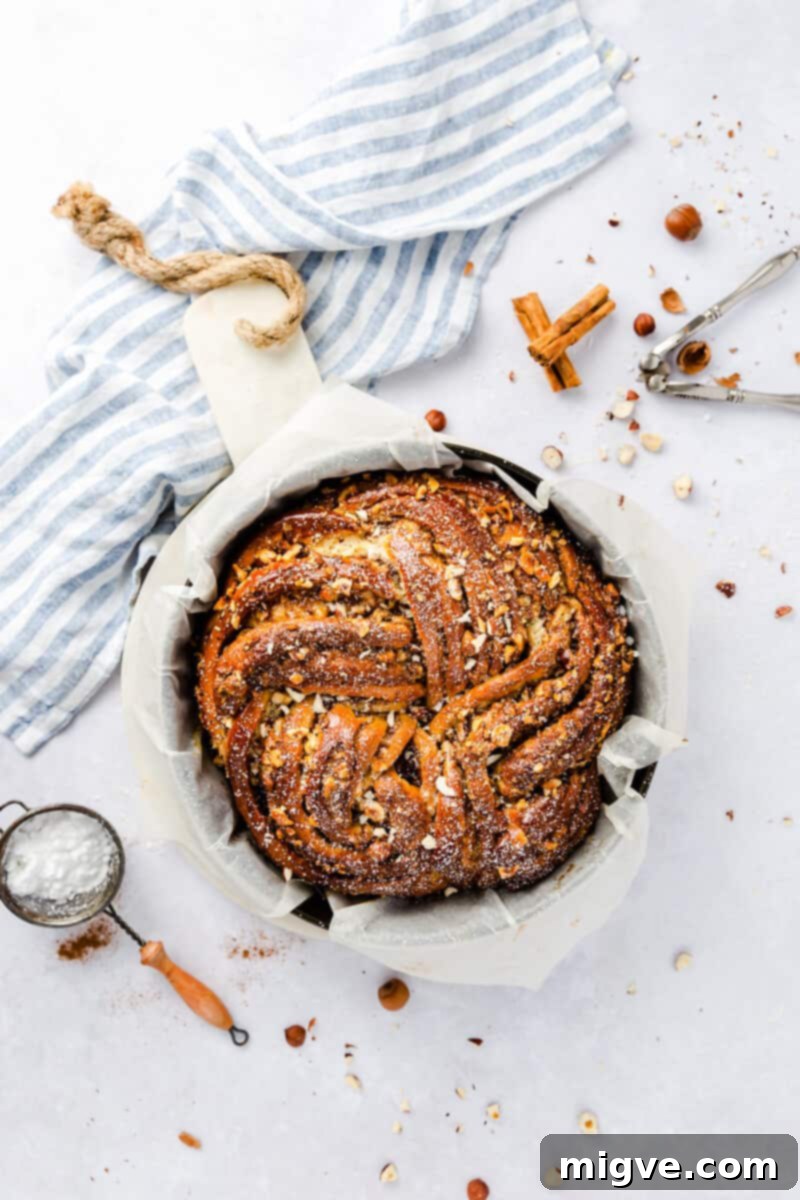
Indulge in the Ultimate Twisted Cinnamon and Hazelnut Bread: A Recipe for Unforgettable Flavor
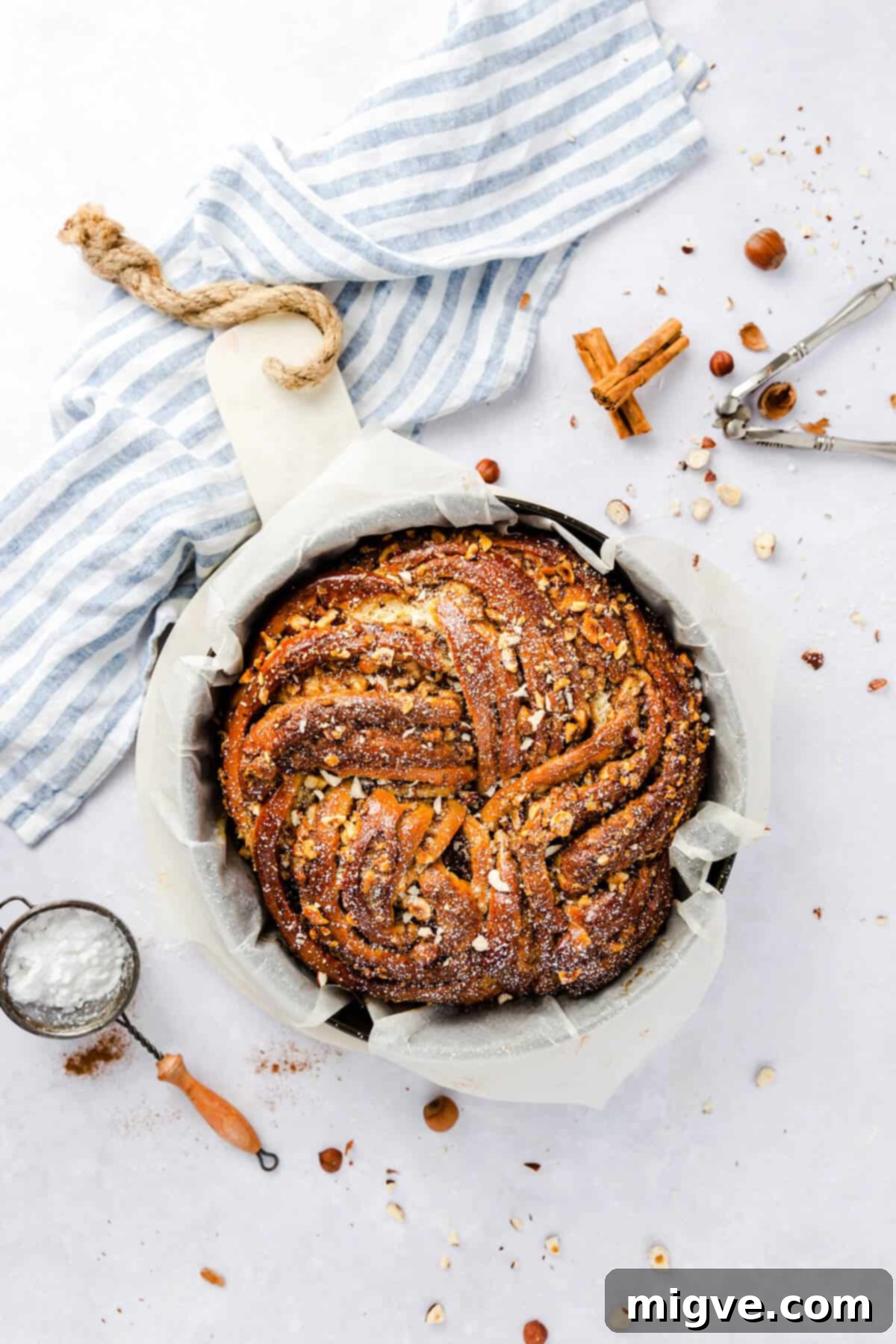
Prepare to be enchanted by this incredible Twisted Cinnamon and Hazelnut Bread, a culinary masterpiece crafted from an exceptionally soft and airy dough. Each delectable twist is generously layered with aromatic cinnamon butter and perfectly toasted hazelnuts, creating a symphony of textures and flavors. Finished with a delicate dusting of icing sugar, this visually stunning loaf is not just a treat for the palate, but also a magnificent centerpiece that will elevate any festive gathering or family brunch.

Why This Twisted Cinnamon Hazelnut Bread Recipe Is a Must-Try
Following the immense popularity of my Twisted Cinnamon Buns, I’ve developed this larger-scale adaptation to bring even more joy to your baking endeavors. This recipe takes everything you loved about the buns and transforms it into a show-stopping loaf, perfect for sharing (or not!).
Imagine biting into a soft, fluffy, and utterly moreish dough, where every strand is infused with fragrant cinnamon butter and studded with crunchy, toasted hazelnuts. That’s precisely the experience this recipe delivers. This twisted cinnamon bread isn’t just a pastry; it’s an experience. It rises beautifully high, boasting a tender and airy texture that quite literally melts in your mouth with every single bite. The rich, sweet dough, combined with the warm spice of cinnamon and the earthy crunch of hazelnuts, creates a perfectly balanced flavor profile that’s both comforting and exciting.
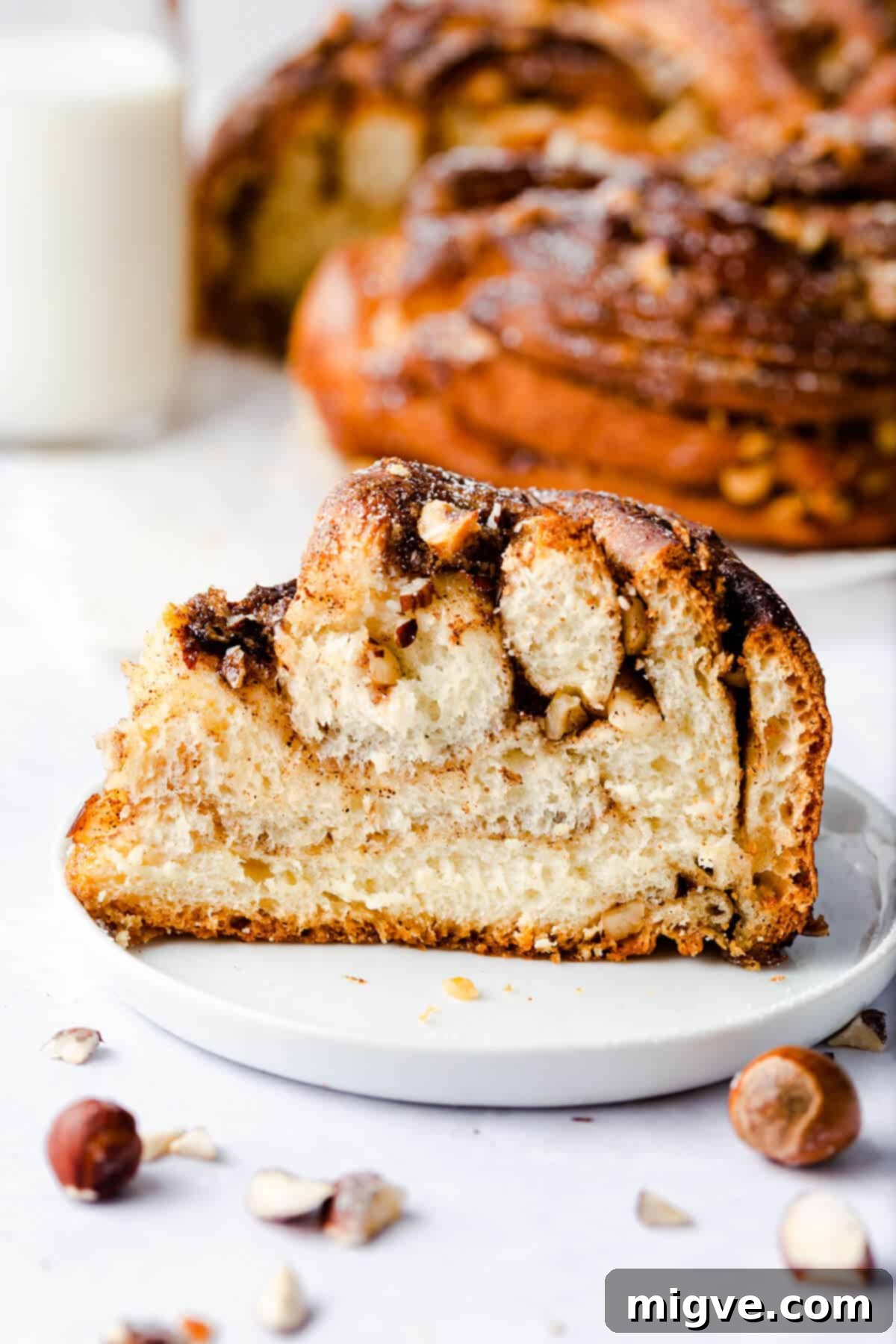
The foundation of this impressive cinnamon hazelnut loaf is my well-loved and thoroughly tested brioche-style dough. Its consistent softness and subtle sweetness provide the perfect canvas for the star of the show: the filling. A decadent blend of sweet, fragrant cinnamon butter harmonizes exquisitely with the distinct, slightly bitter crunch of perfectly toasted hazelnuts. This combination ensures a burst of flavor and texture in every single bite, making it an irresistible treat.
Beyond its deliciousness, this recipe is surprisingly easy to follow. While it requires a bit of patience and a gentle touch, the steps are straightforward and the shaping technique, though impressive, is actually quite simple and fun to master. Don’t let its elegant appearance intimidate you; this is a bake that’s accessible to home bakers of all skill levels, promising a rewarding experience and a truly spectacular result.
Crafting the Perfect Dough for Your Twisted Bread
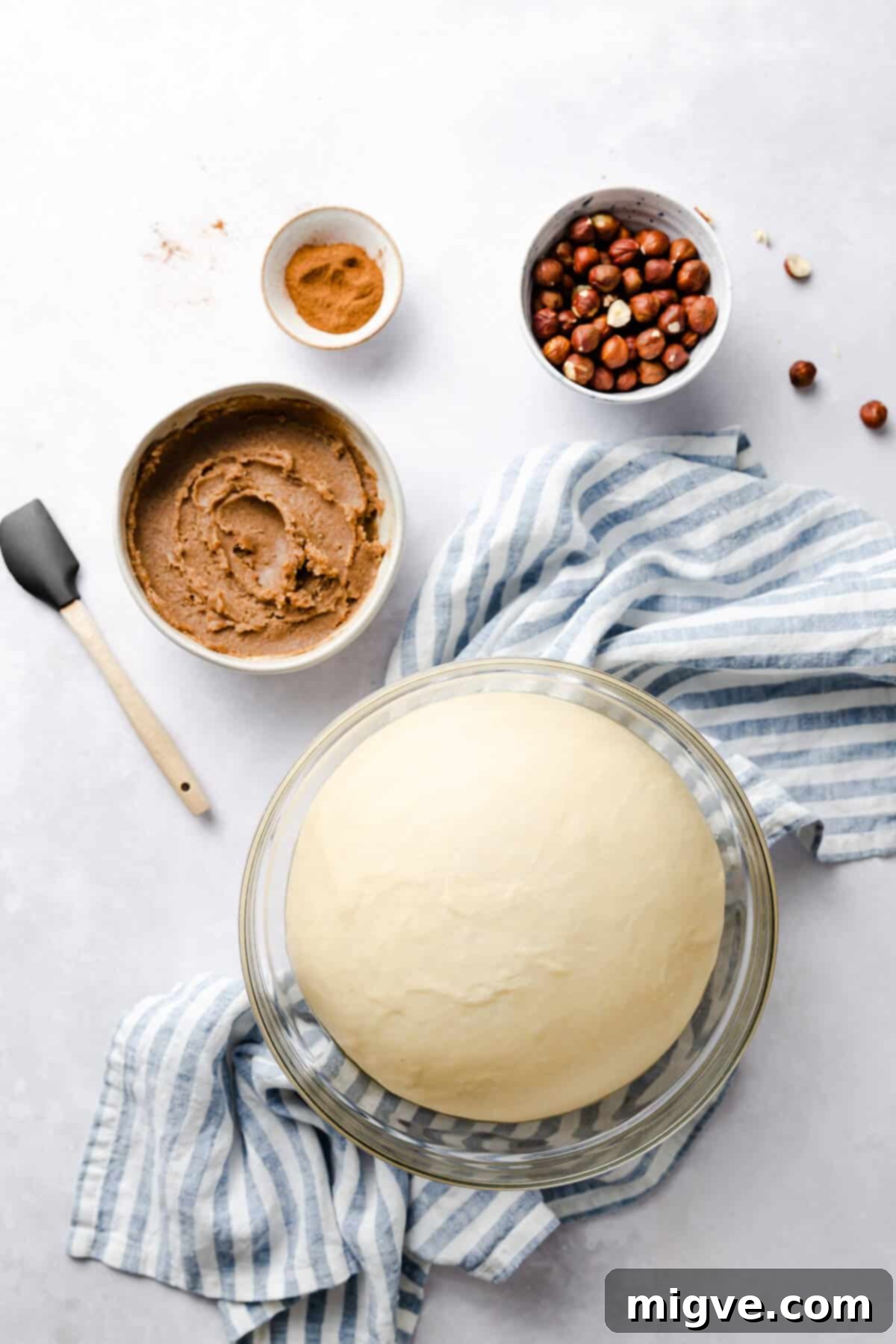
The journey to an exceptionally fluffy and flavorful twisted cinnamon and hazelnut bread begins with the dough. My tried-and-true recipe uses a blend of strong white bread flour, yeast, sugar, salt, milk, butter, and egg to create a rich, elastic, and easy-to-handle base. Achieving the right consistency in your dough is paramount for that melt-in-your-mouth texture. Ensuring your milk is lukewarm and your butter is fully melted helps in creating a smooth, cohesive mixture. Adequate kneading, either by hand or with a stand mixer, develops the gluten structure, which is what gives the bread its signature chewiness and allows it to rise beautifully. This initial rise, where the dough doubles in size, is crucial for developing flavor and creating a light, airy crumb.
After its first proofing, your dough will be wonderfully pliable and ready for shaping. Gently deflate the risen dough on a lightly floured surface. This step is important for releasing excess air without overworking the dough. Use your hands to press it into a small, rough rectangle, preparing it for the next stage of rolling.
How to Roll and Shape the Dough for Twisted Cinnamon Bread
Once your dough has completed its first proof and has doubled in size, it’s time for the exciting part: rolling and shaping! Transfer the soft, airy dough onto a lightly floured surface. Gently press out the air with your fingertips to create a small, rough rectangular shape. This initial shaping helps in achieving an even final rectangle.

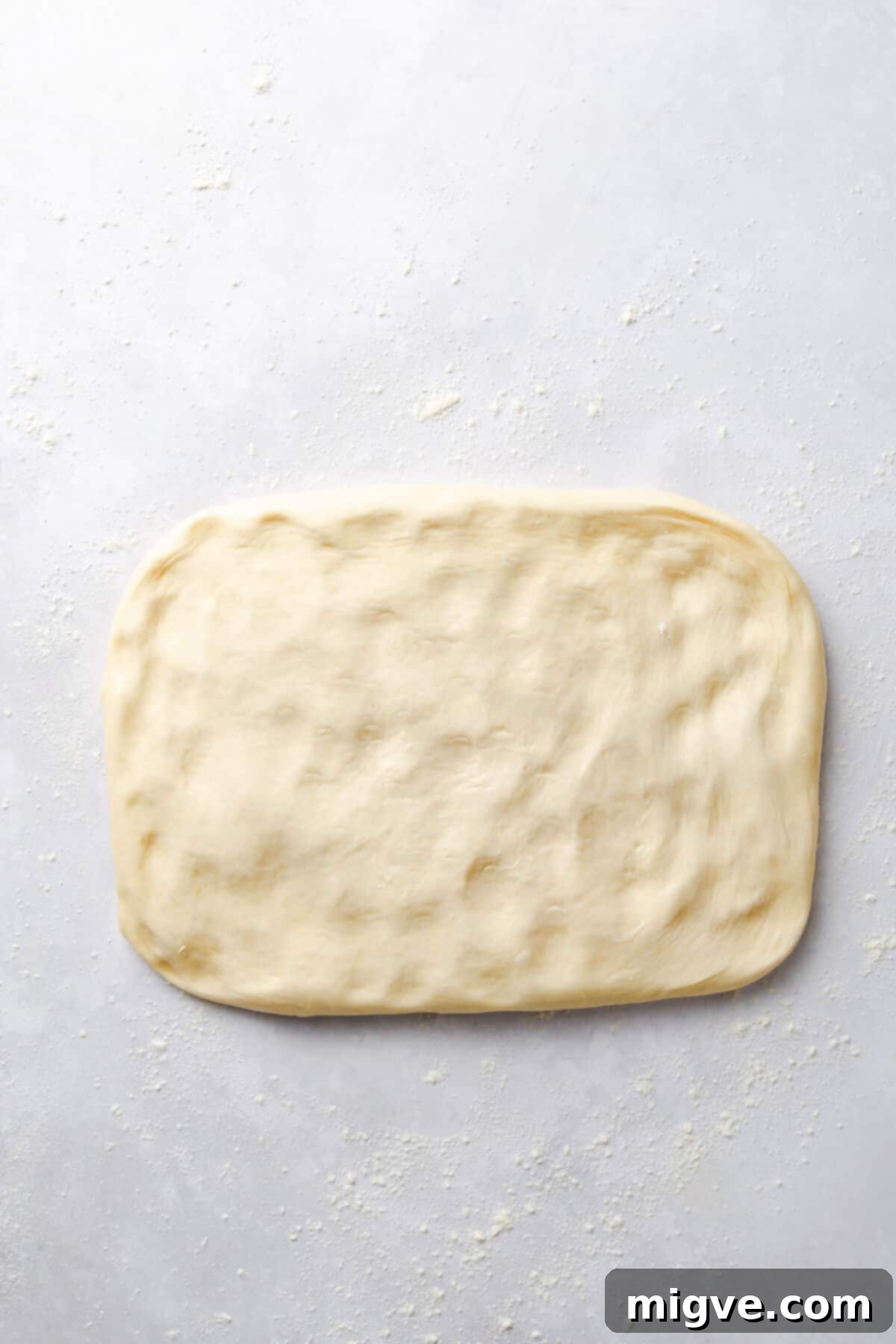
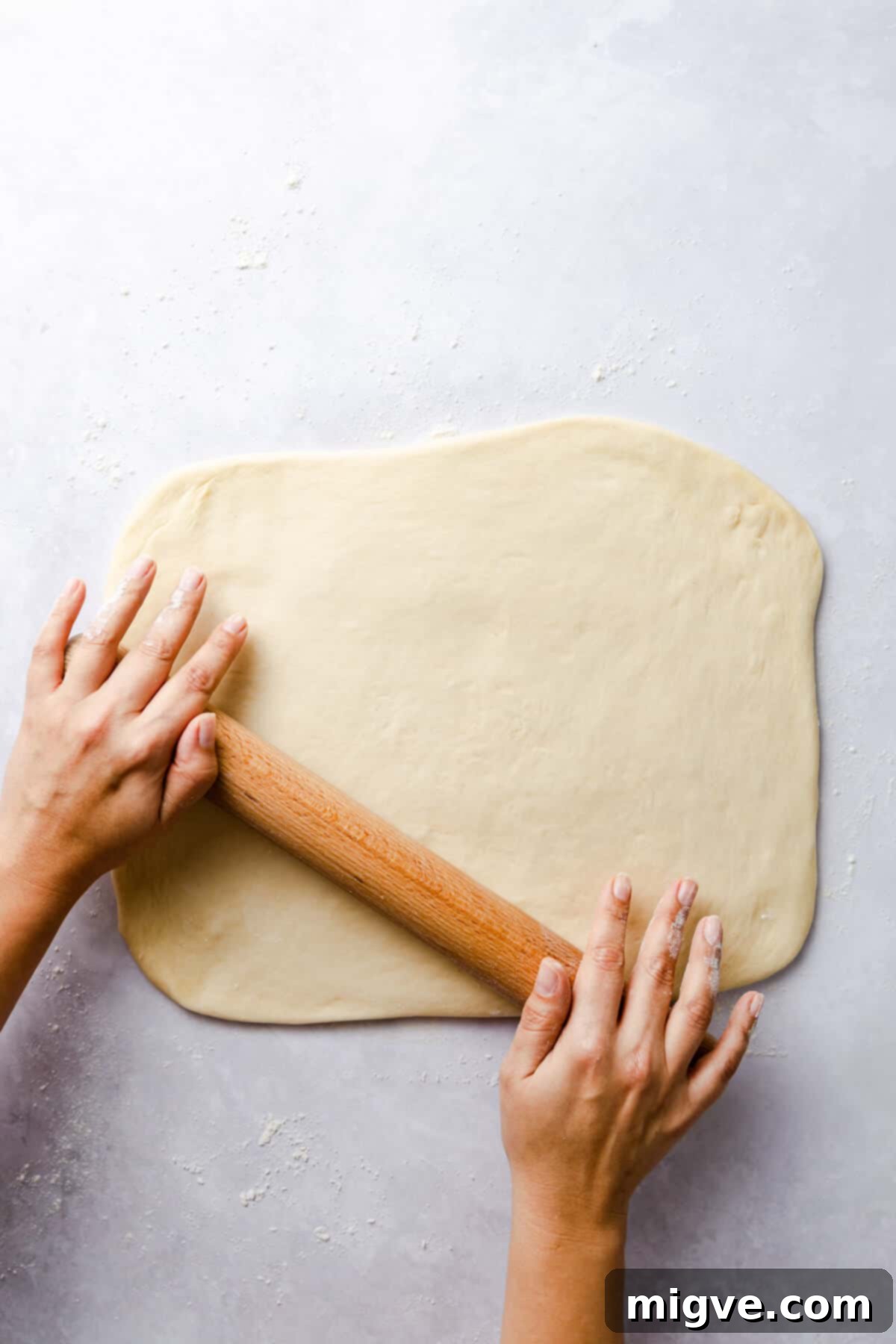
Now, with your rolling pin, gently and steadily roll the dough into a large rectangle. Precision isn’t overly critical here; aim for a measurement of approximately 35 x 50 cm (about 14 x 20 inches). Don’t fret if it’s slightly smaller or larger – the beauty of homemade bread lies in its rustic charm!
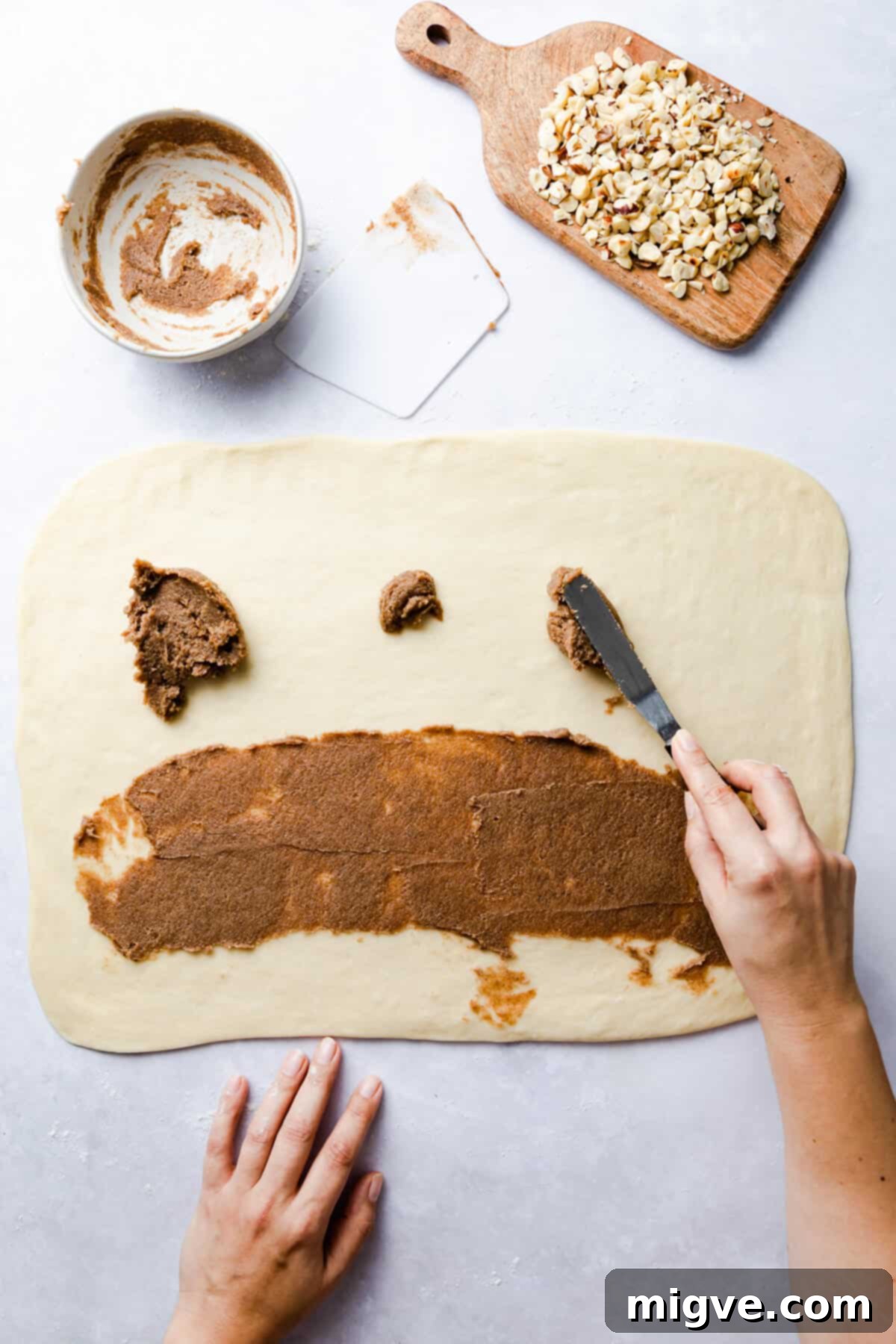
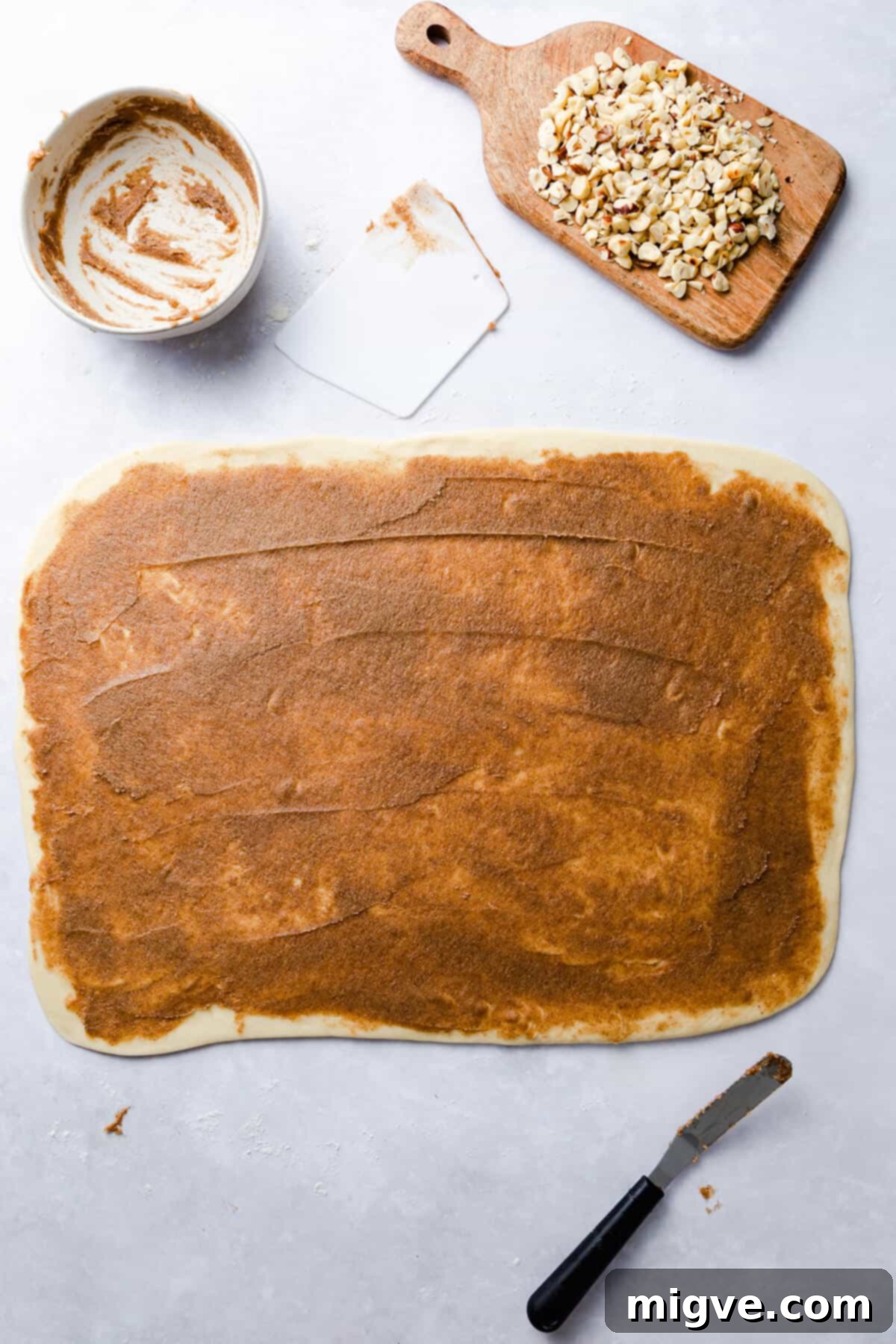

Once your dough rectangle is ready, it’s time for the star filling! Evenly spread the luscious cinnamon butter all over the top surface of the dough, ensuring every inch is covered. Then, sprinkle the chopped toasted hazelnuts in an even layer across the butter. This meticulous layering ensures that every bite of your twisted cinnamon hazelnut bread is bursting with flavor.
Next, carefully roll the dough into a tight log or spiral. Start from the longer edge facing you and roll it up as snugly as possible. A tight roll helps create those beautiful, distinct swirls when the bread is baked.
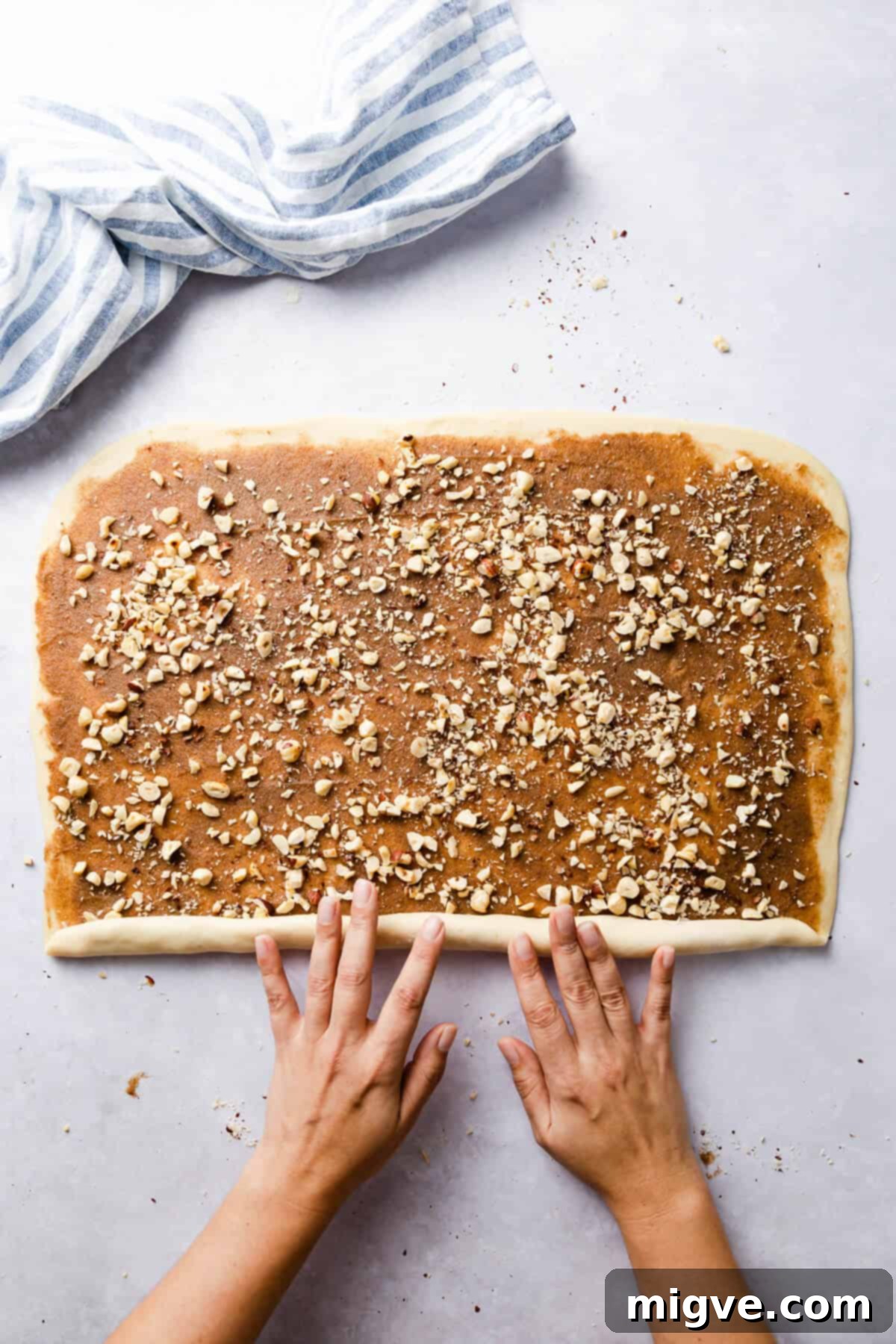

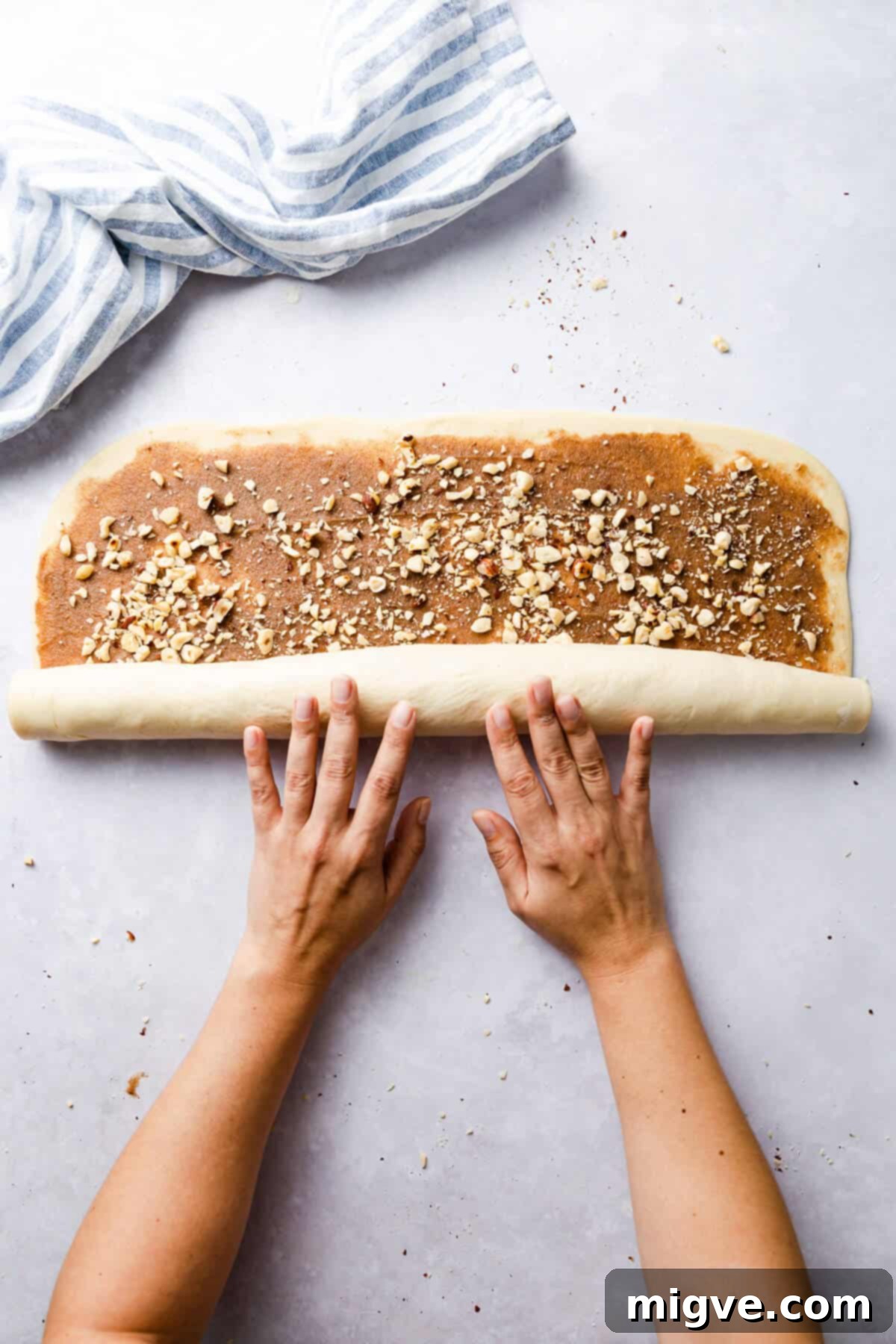
This next step, while optional, comes with my highest recommendation for a perfectly shaped twisted cinnamon bread. Once the log is rolled, transfer it onto a large baking tray lined with baking paper and refrigerate it for at least an hour. This chilling period is a game-changer. It allows both the dough and the butter filling to firm up considerably, making the log much easier to handle, slice, and twist without the filling oozing out or the dough tearing. This results in a cleaner, more defined twist and a more visually appealing final bake.
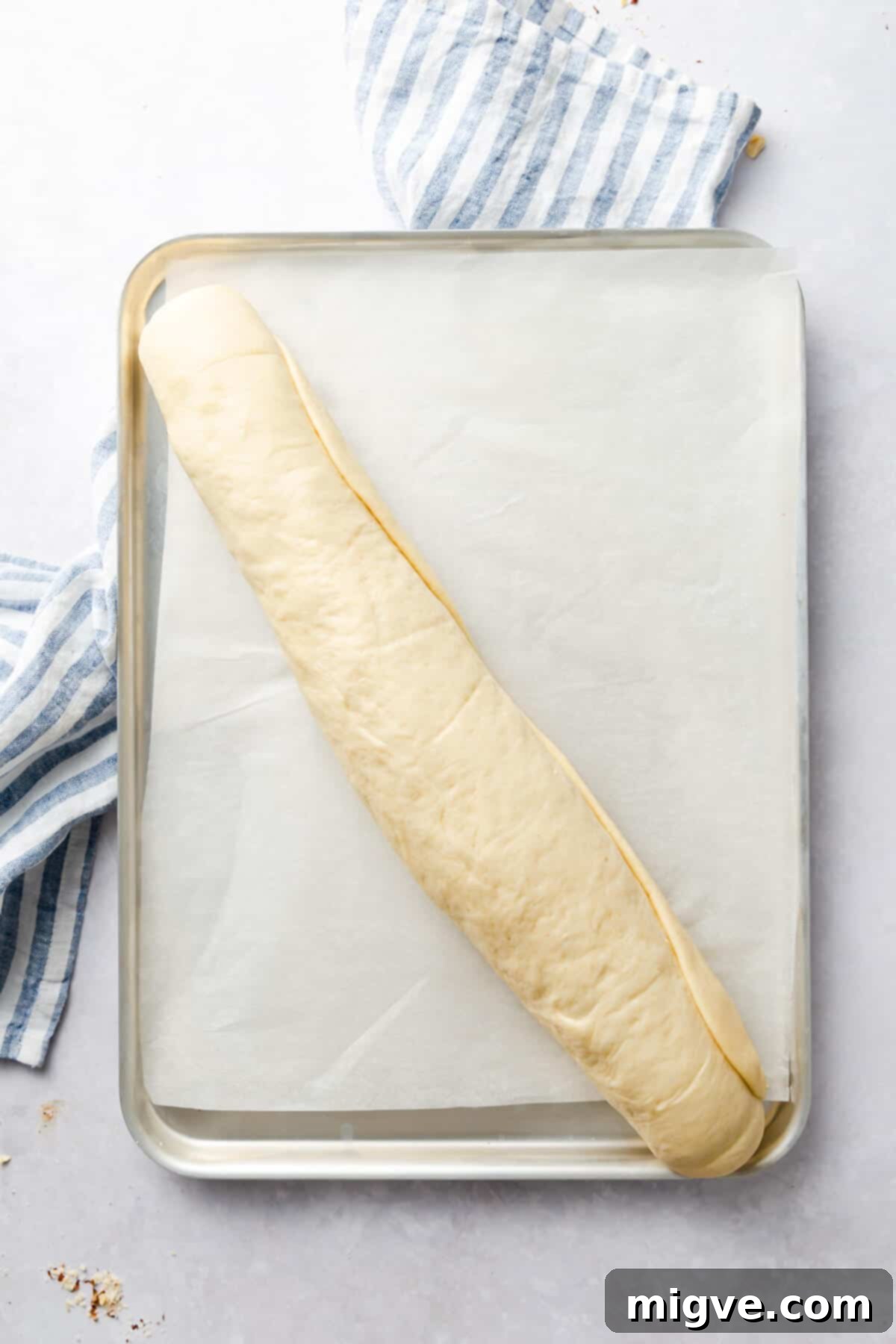


Once the dough has chilled sufficiently, carefully remove the log from the fridge and place it on a lightly floured surface. Using a very sharp knife, slice the log in half lengthwise. It’s crucial to leave a small section at one end intact, so the two halves remain connected. This little hinge is essential for the twisting process.
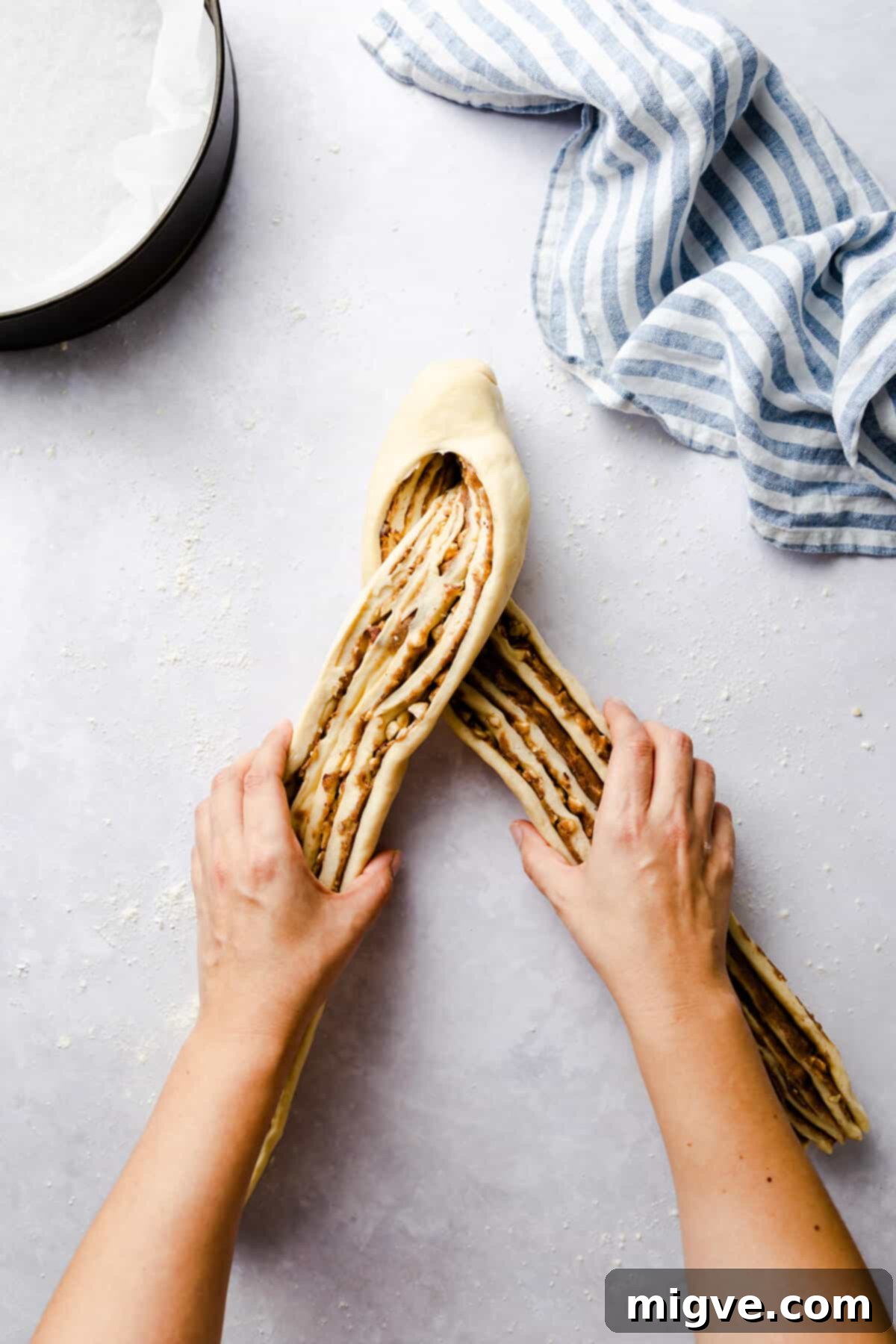
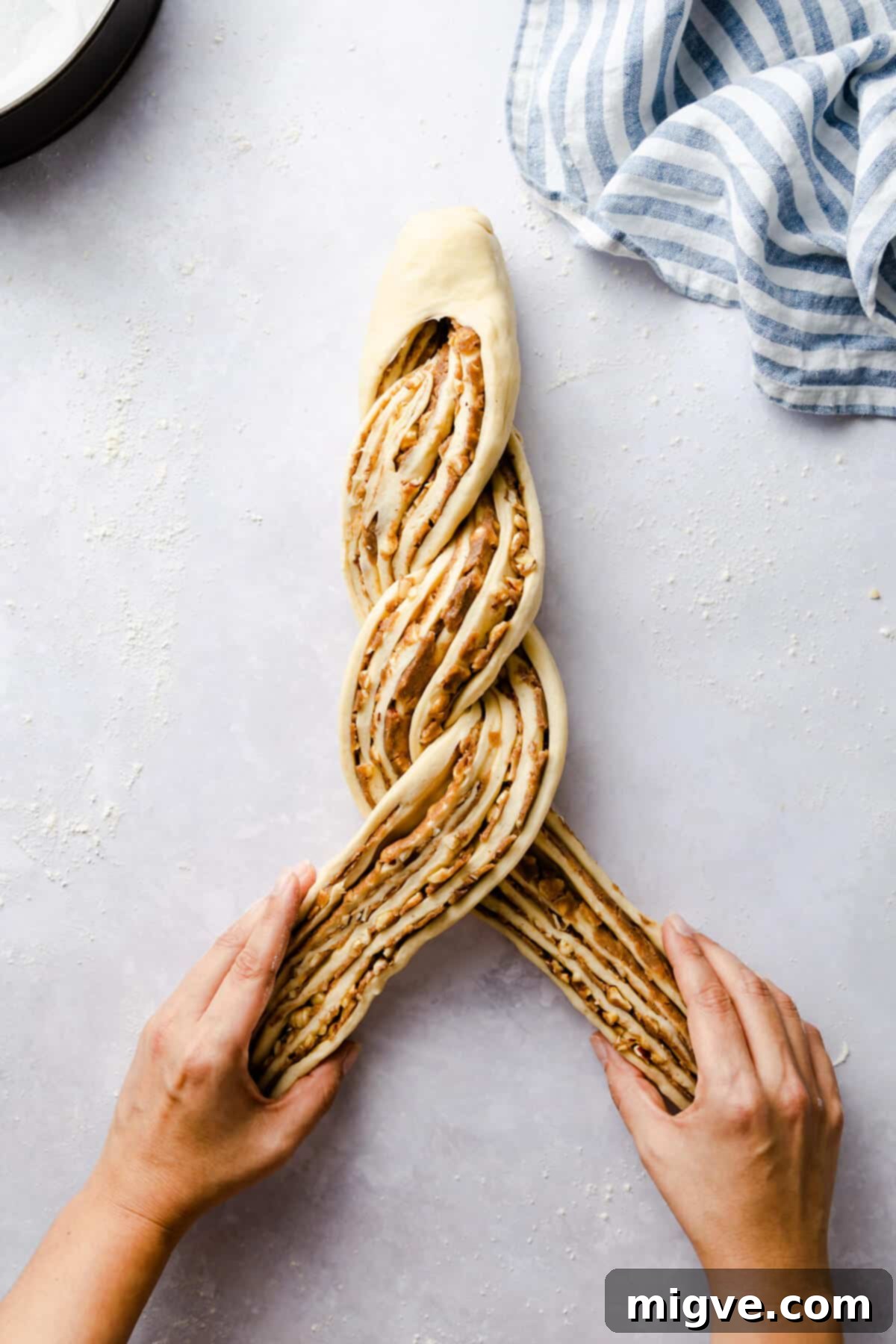
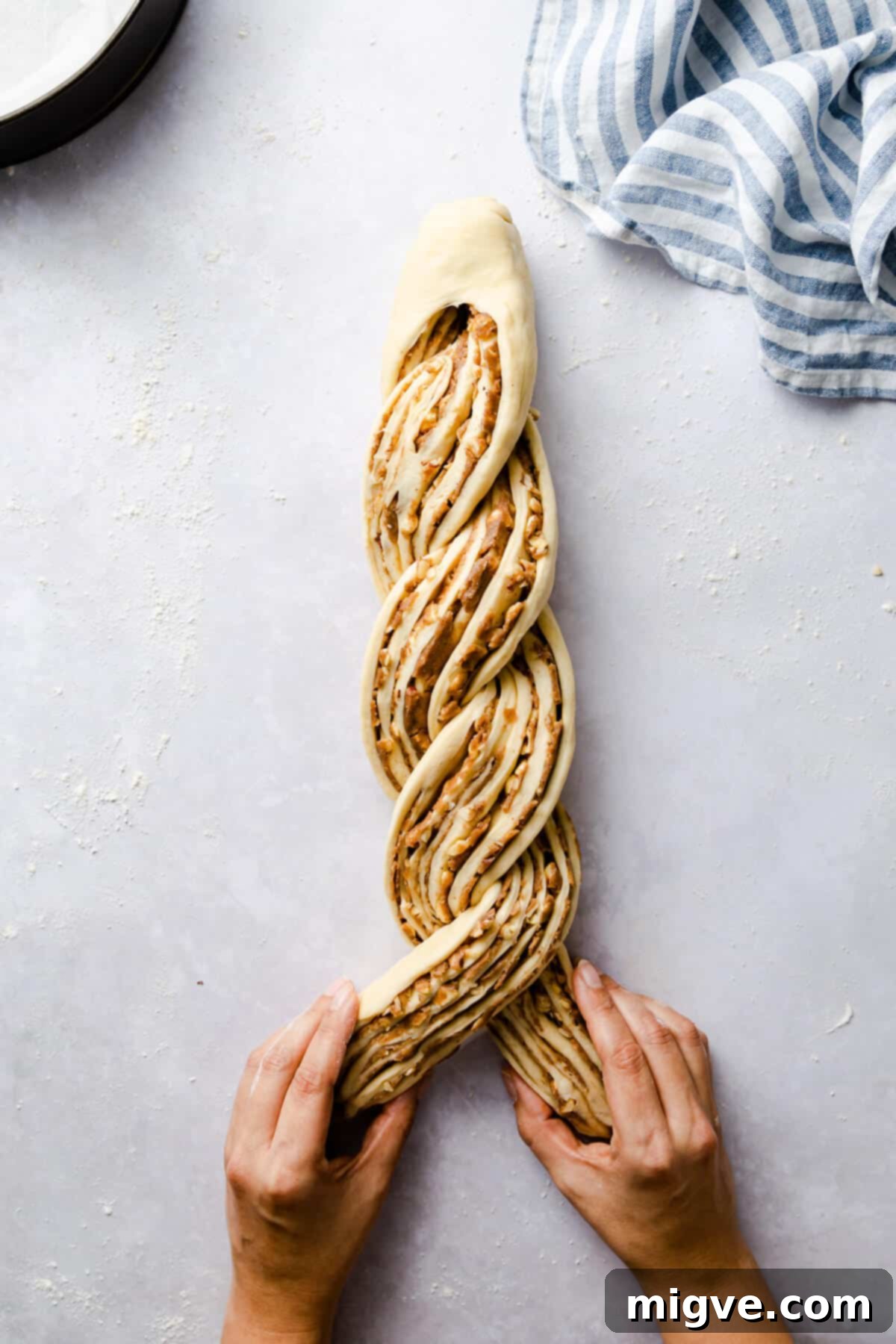
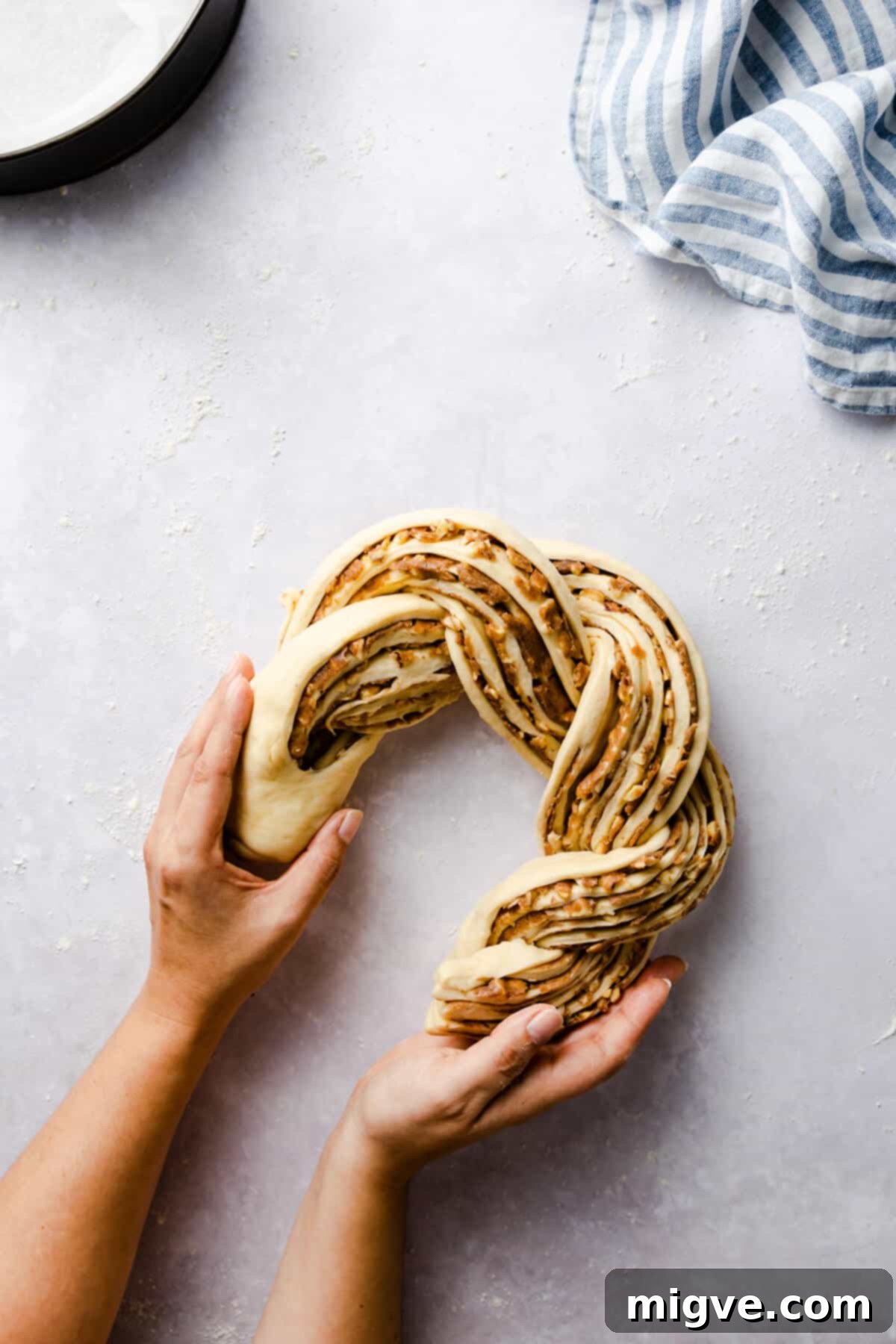
With the two halves carefully splayed open, filling-side up, begin the mesmerizing twisting process. Simply cross one half over the other, repeating this simple twisting pattern all the way down the length of the dough. The exposed cinnamon and hazelnut filling will create a beautiful striped effect. Once you’ve twisted the entire length, bring both ends of the twist together to form a beautiful, round knot, tucking the ends neatly underneath to secure the shape. Carefully transfer this artistic creation into your prepared round baking tin, cover it with a clean kitchen towel, and let it prove for another 45 minutes to 1 hour. This final rise allows the bread to become even more light and tender before baking, ensuring that perfect fluffy texture.

The Secret to Flavor: Why Toast Your Hazelnuts?
Before you even think about chopping your hazelnuts for this delightful twisted cinnamon bread, take an extra moment to toast them. This isn’t just a suggestion; it’s a game-changer! Toasting hazelnuts dramatically enhances their natural, sweet, and nutty flavor, intensifying it to a whole new level. Beyond flavor, it also adds an irresistible extra crunch that complements the soft, fluffy bread perfectly. This small, additional step is 100% worth the effort, I promise!
You have the option to use either blanched hazelnuts (skins already removed) or those with their skins still on. When toasted, most of the skins on unblanched hazelnuts will naturally loosen and fall off. While I personally don’t mind the skins – they add a rustic touch and a hint of extra flavor – some people find their taste slightly bitter. Feel free to choose whichever suits your preference for your homemade cinnamon hazelnut bread.
The process is incredibly simple. Just add your hazelnuts to a hot, clean frying pan over medium-high heat. Keep them moving by tossing or stirring for a few minutes until they become wonderfully fragrant and appear slightly darker in color. Be vigilant, as nuts can burn quickly! Once toasted to perfection, immediately remove them from the pan and transfer them onto a clean kitchen towel. Roll them around vigorously within the towel to remove any loose skins (if using unblanched nuts). Finally, give them a good chop to your desired size, and they’re ready to be folded into your cinnamon bread filling, adding depth and crunch to every bite.
Can This Twisted Cinnamon Bread Be Made Ahead?
One of the many appealing aspects of this twisted cinnamon hazelnut bread is its flexibility. You can certainly bake it fresh on the day you plan to serve it, or, for added convenience, prepare it a day in advance. If you’re opting for same-day baking, simply follow the recipe instructions for the final proofing period before baking.
If you wish to get a head start and prepare it ahead of time, you can complete all the steps up to the final proofing (step 9 in the recipe card). After shaping the knot and placing it in the baking tin, instead of letting it rise at room temperature, cover it securely with plastic wrap or cling film and place it in the refrigerator overnight. This slow, cold proofing allows the flavors to deepen and the dough to develop slowly.
The next morning, when you’re ready to bake your beautiful hazelnut cinnamon bread, take the tin out of the fridge and let it rest at room temperature for about 30 minutes. This allows the dough to warm up slightly and resume its final rise. Once it has warmed up a bit, brush it with the egg wash and then bake it in the oven according to the instructions in step 9. This make-ahead method is perfect for holiday mornings or special occasions, allowing you to enjoy a fresh, warm homemade sweet bread with minimal fuss in the morning.
Extra Tips for Baking Success
To ensure your twisted cinnamon and hazelnut bread turns out perfectly every time, here are a few additional tips:
- Verify Your Yeast: The type and activity of your yeast are critical for a successful rise. Always double-check that you are using fast-action dried yeast, and if you’re unsure, or using a different type, make sure to activate it according to package instructions before adding it to your dry ingredients. Crucially, ensure your yeast is not expired; old yeast will result in a flat, dense loaf. Fresh, active yeast is the key to that soft, fluffy texture.
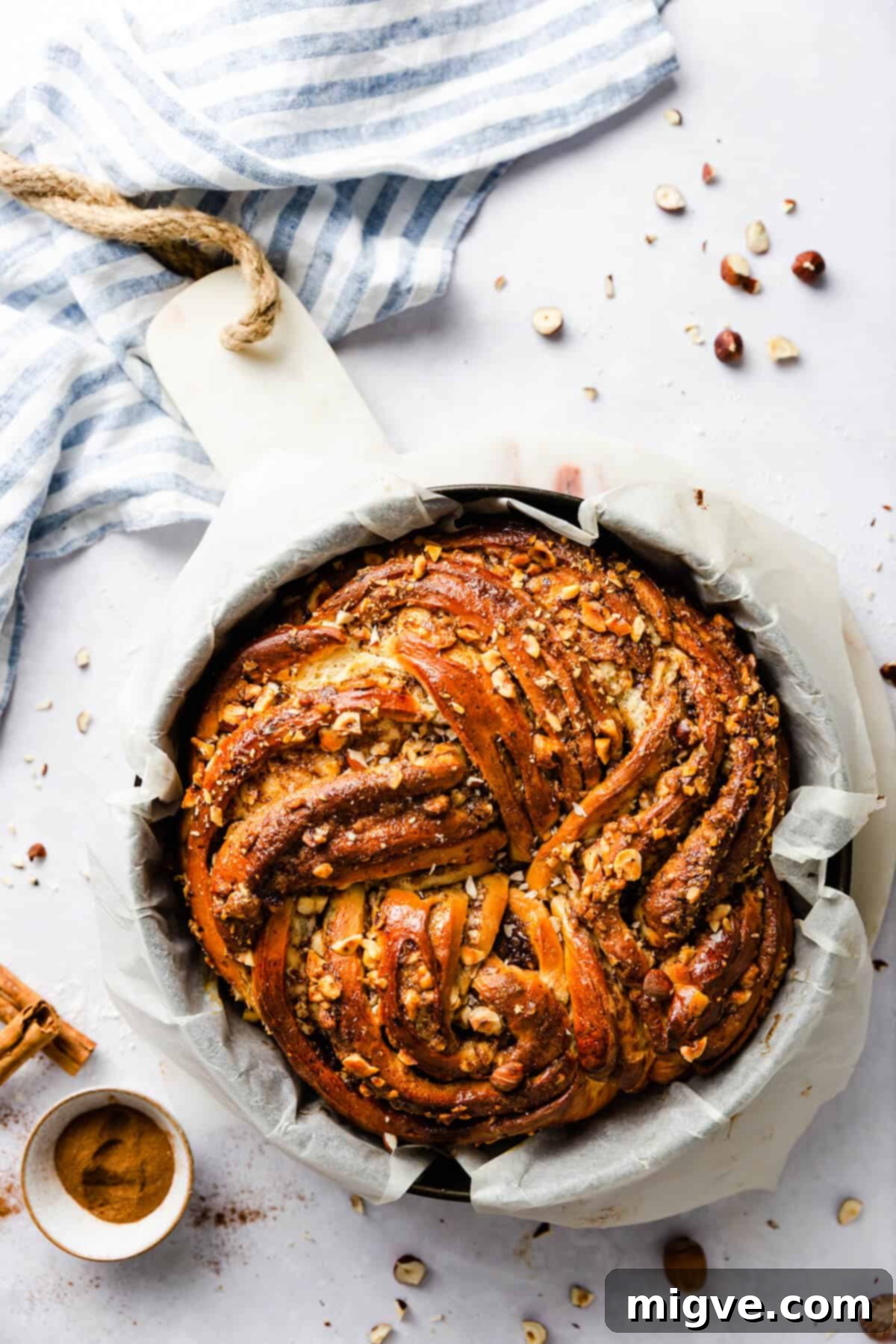
- Choose the Right Baking Vessel: When baking this twisted bread, it’s essential to use a deeper dish, such as a round baking tin, a cast-iron skillet, or an ovenproof dish with at least 2-3 inches of depth. This isn’t just about shaping; it serves a practical purpose. The high sides of the tin will prevent the delicious, buttery filling from leaking out as the bread bakes and puffs up, keeping your oven cleaner and ensuring all that flavorful goodness stays within the bread. It also helps the bread maintain its beautiful twisted shape as it expands, resulting in a tall, impressive loaf.
- For an Irresistible Shine and Extra Sweetness: This step is entirely optional but highly recommended for an extra touch of bakery-quality finish. To achieve a beautiful glossy sheen and a boost of sweetness, prepare a simple sugar syrup. Combine 50 ml of water with 2 tablespoons of caster sugar in a small saucepan and bring it to a boil, stirring until the sugar dissolves. Once you’ve removed your golden-brown twisted cinnamon bread from the oven, brush this warm syrup generously all over the surface while the bread is still hot. The syrup will be absorbed, creating a wonderfully moist crust with a delightful shine and an added layer of sugary goodness.

How to Store Your Delicious Twisted Cinnamon Bread
This twisted cinnamon and hazelnut bread is truly at its peak when enjoyed fresh and still slightly warm from the oven, filling your home with its irresistible aroma. However, if you find yourself with any delicious leftovers (a rare occurrence, I’m sure!), proper storage will help maintain its quality for a couple of days.
To keep it as fresh as possible, allow the bread to cool completely before storing. Then, cover it tightly with plastic wrap, cling film, or place it in an airtight container. Store it at room temperature, away from direct sunlight or heat, for up to 2 days. While the bread will remain perfectly edible and enjoyable beyond this point, its texture may start to become a little drier.
Even if it does dry out slightly, don’t despair! It will still taste absolutely delicious, especially when paired with a comforting warm cup of tea or coffee – perfect for a cozy afternoon treat. And here’s a little secret for embracing “day-old” bread: it makes THE BEST French toast you will ever have! The slightly drier texture actually absorbs the eggy custard beautifully, transforming into an incredibly rich and decadent breakfast or brunch. You can also warm slices in the microwave for a few seconds or toast them gently to revive some of that fresh-baked warmth.
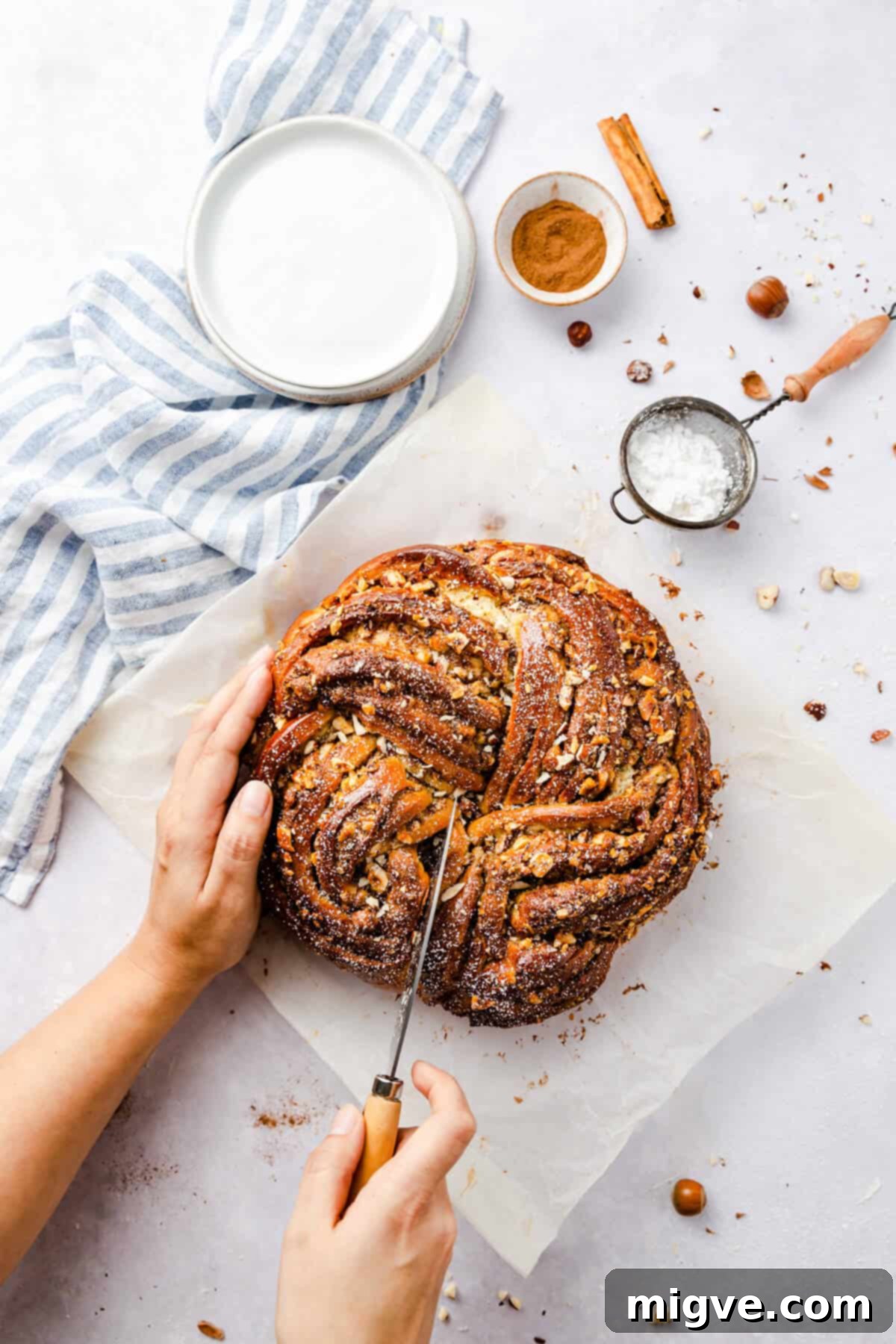

As always, thank you for stopping by and reading today’s post. Your interest and enthusiasm mean the world to me. If you decide to try this delightful Twisted Cinnamon and Hazelnut Bread recipe, or any of my other creations, I would absolutely LOVE to hear your feedback! There’s nothing more rewarding than seeing your baking successes.
Please feel free to connect with me and share your culinary adventures on my social channels. You can find me on Instagram, where I share daily inspiration, on Pinterest for more recipe ideas, and on Facebook. Don’t forget to tag me so I can see your wonderful creations!
📖 Recipe

Print Recipe
Pin Recipe
Twisted cinnamon and hazelnut bread
Equipment
- freestanding electric mixer
- mixing bowl
- small saucepan
- baking paper
- 10′ (25 cm) round baking tin (skillet or ovenproof dish will also work)
- large baking tray
- sharp knife
Ingredients
For the dough:
- 250 ml milk any
- 60 g unsalted butter cubed
- 500 g strong white bread flour
- 8 g fast-action dried yeast
- 100 g white caster sugar
- 1 teaspoon salt
- 1 large egg
For the filling:
- 125 g unsalted butter softened and cubed
- 100 g soft light brown sugar
- 1 tablespoon ground cinnamon
- 100 g hazelnuts toasted and chopped
- 2 tablespoon icing sugar for dusting
- 1 large egg beaten
Instructions
- Place the milk in a small saucepan and heat up until it is lukewarm. Add cubed butter and take of the heat. Swirl the saucepan few times, to encourage the butter to melt. Set aside and allow all the butter to melt.
- In a large bowl of a freestanding electric mixer, mix together the flour, sugar, yeast and salt. Make a well in the middle, and add lukewarm milk and melted butter and large egg. With mixer running on low speed, combine these ingredients together for 2 minutes. Increase the speed to medium- high and mix for further 6-8 minutes until you have smooth and elastic dough, that no longer sticks to the sides of the bowl. Remove the dough from the bowl, and using your hands shape it into a ball.
- Lightly grease a large bowl with some olive oil, then place the dough in the bowl and cover with clean kitchen towel, cling film or shower cup. Set aside (ideally, somewhere warm), and let it rise for 2 hours or until double in size.
- To make the filling, place the softened, cubed butter, brown sugar and cinnamon in a bowl of a standing mixer fitted with paddle attachment and beat until well combined and fluffy, about 3 minutes. Set aside. Line the 10′ round baking tin or dish with baking paper and set aside. Line the large baking tray with baking paper and set aside too.
- Remove the dough from the bowl into a lightly floured surface. Using your fingertips, gently knock the air out of the dough and stretch it into a small, rectangular shape. Using the rolling pin, roll the dough into a large rectangle, about 35 x 50 cm. With the longer edge of the rectangle facing you, spread the cinnamon butter over the whole surface of the dough. Top with chopped, toasted hazelnuts.
- Starting from the edge closest to you, roll the dough into a tight log. Transfer the log into a large baking tray lined up with baking paper and place it in the fridge for 1 hour.
- Remove the dough from the fridge and place it onto a lightly floured surface. Using a sharp knife, cut the dough log in half, lengthwise, leaving a small section in tact/ still attached at one end. Turn the halves carefully, filling side up. Cross the dough halves over each other, repeating until you have a long, twisted piece of dough.
- Cross one end of the twist over the other, tucking the ends underneath and forming a knot. Transfer the knot into the lined up round baking tin/ dish, cover with clean kitchen towel and allow it to rise for 45 minutes- 1 hour.
- Pre heat the oven to 180 C (170C fan). Brush the dough with egg wash and bake for 45- 55 minutes, until golden brown. If the top starts to brown up too much, cover it with some kitchen foil for the last 10 minutes of the bake. Remove from the oven and allow to cool slightly. Serve while still warm, enjoy!
Please note that all my recipes are developed and tested in metric grams. I recommend that you use digital scales for a more accurate results. I have provided a conversion to US customary in the recipe but please note that I haven’t tested using this method.
Nutrition
If you would like to receive any future recipes straight to your inbox, make sure to sign up to my mailing list for more delightful baking inspiration!