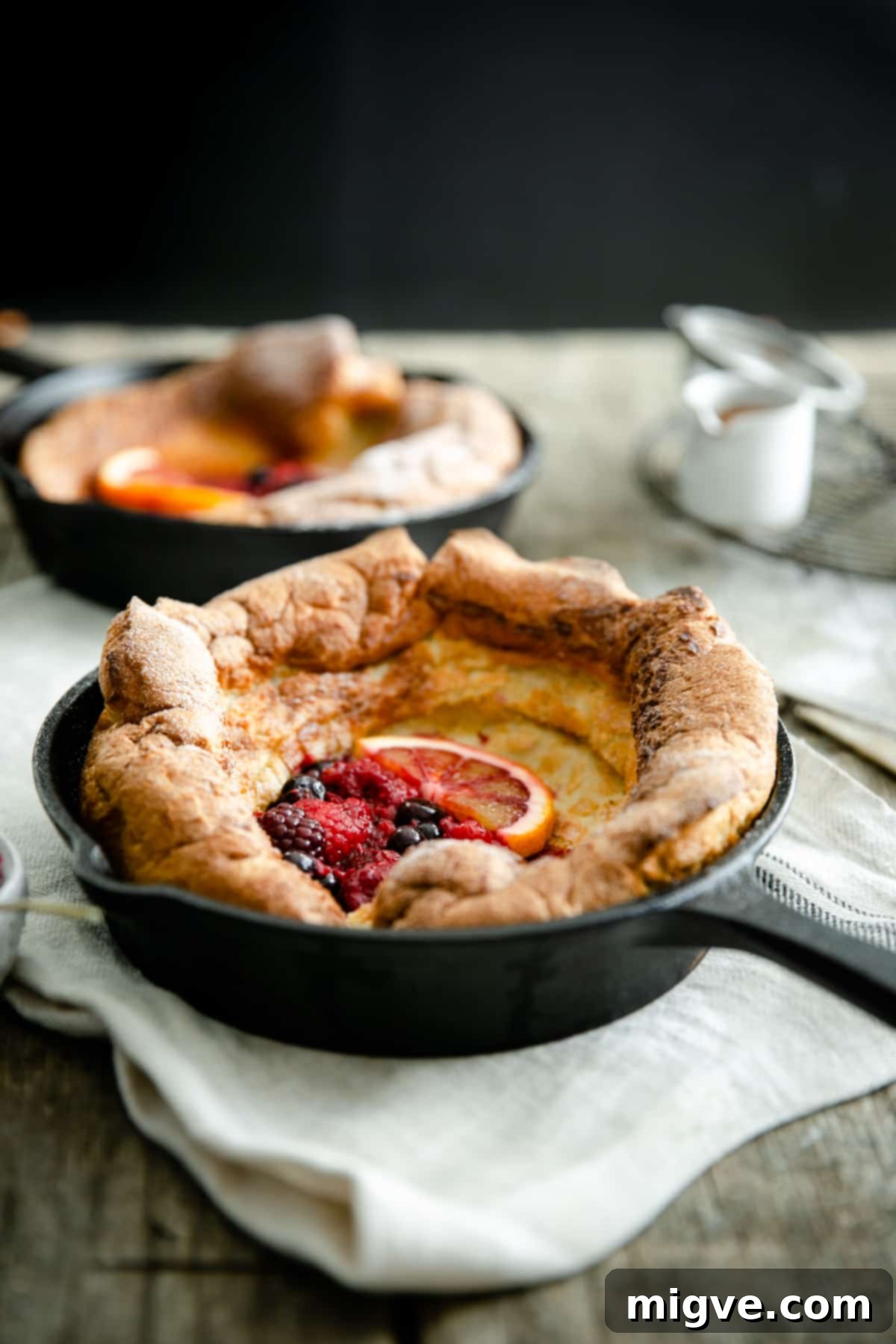
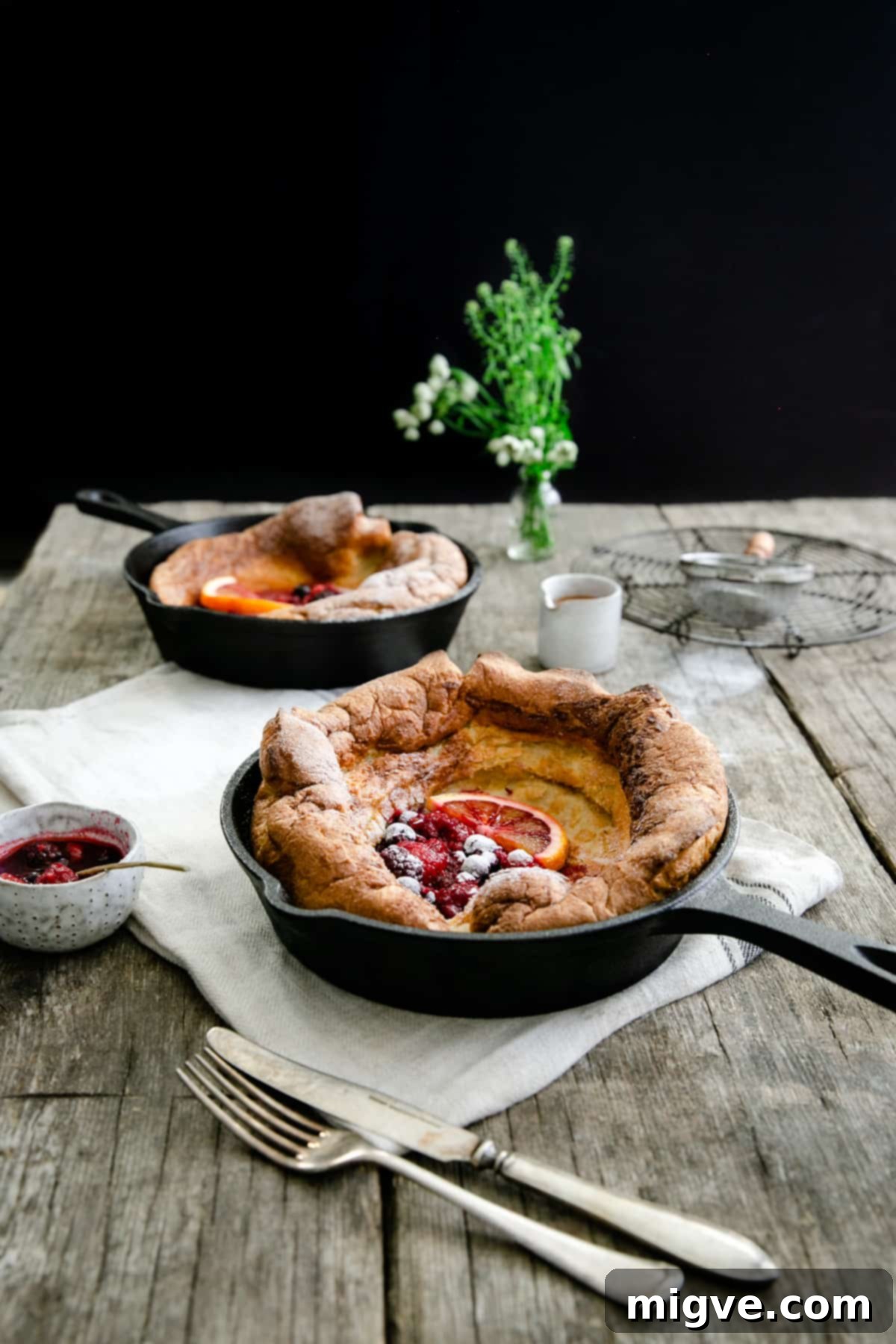
This mixed berry Dutch baby is an absolute must-try for your next weekend breakfast or brunch! Imagine a beautifully golden, impressively puffy pancake, emerging dramatically from the oven, then generously topped with a cascade of warm, vibrant berries and finished with a delicate drizzle of honey. It’s a showstopper that’s surprisingly simple to create, promising a delightful start to any day.
Happy new year, wonderful folks! I hope the festive season brought you immense joy, relaxation, and precious moments with your loved ones. It feels like an age since my last post, but I’ve been relishing every moment of a truly wonderful festive break, completely immersed in the company of family and friends. And now, I’m back, refreshed and eager to share something truly special.
As January unfolds, the air is typically filled with resolutions, detoxes, and ambitious new diets. While I admire the drive for self-improvement, I’ve decided to steer clear of the pressure this year. January can be challenging enough without adding strict regimens to the mix. Instead of punishing ourselves with deprivation, I propose a gentler approach: embrace comfort, savor wholesome, delicious food (it is winter, after all!), and focus on small, achievable goals that nurture both body and soul throughout the year. And speaking of ultimate comfort food, that brings us perfectly to today’s star: the magnificent Dutch Baby!
What Exactly is a Dutch Baby Pancake?
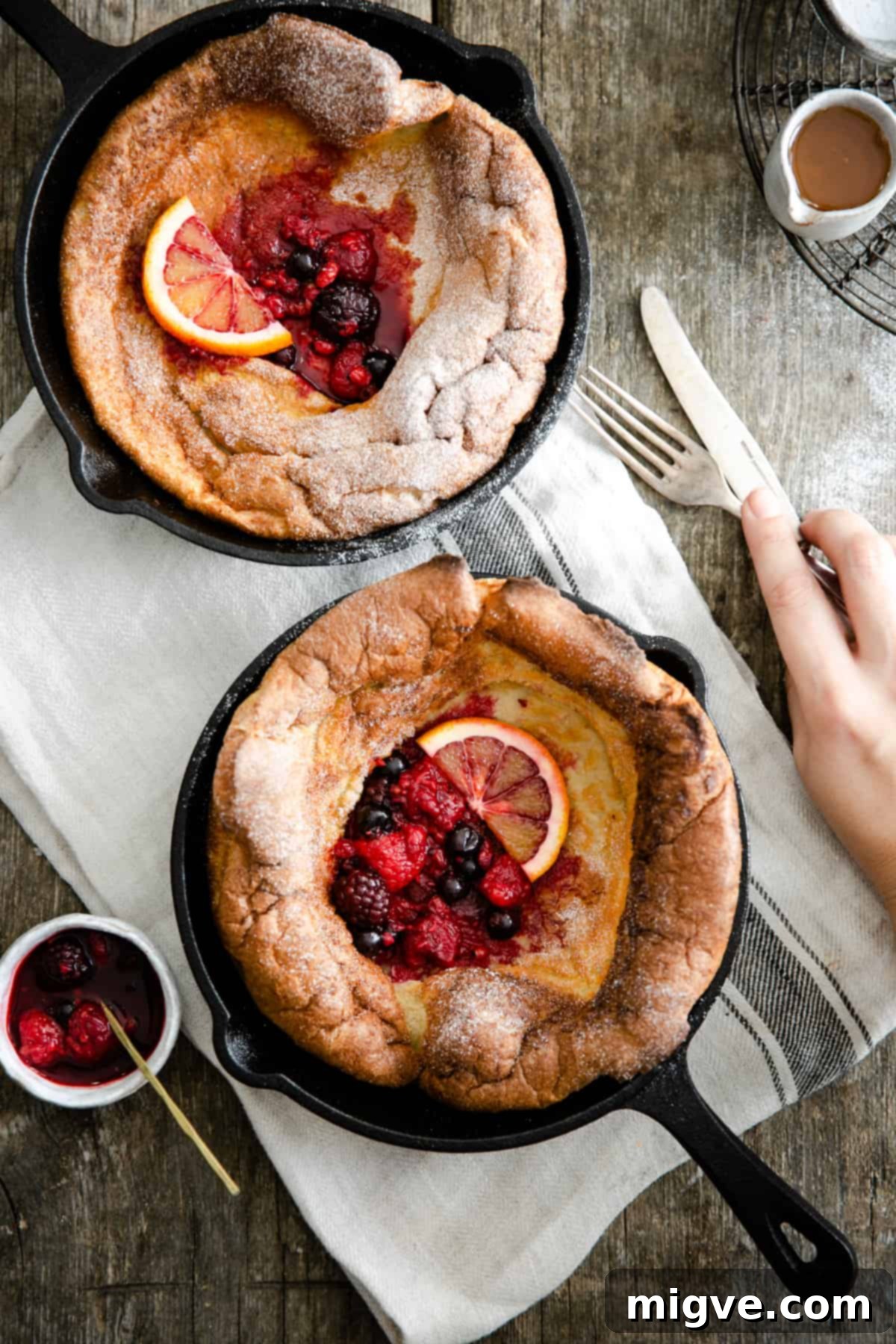
If you’re unfamiliar with this culinary marvel, you’re in for a treat! Often described as a delightful hybrid between a pancake, a popover, and a crêpe, a Dutch baby is an oven-baked pancake renowned for its impressive, dramatic puff. As it bakes, the edges rise high and crisp, creating a beautiful golden ‘bowl’ while the center remains soft and custardy. It’s also known by other charming names like German pancake or Dutch puff, hinting at its European roots and airy texture.
Despite its name, the Dutch baby didn’t originate in the Netherlands. Its creation is famously attributed to Manca’s Cafe, a family-run restaurant in Seattle, Washington, during the first half of the 20th century. The ‘Dutch’ in its name is actually a corruption of ‘Deutsch,’ referring to the Pennsylvania Dutch, descendants of German immigrants who settled in Pennsylvania in the 17th and 18th centuries. These immigrants brought with them many traditional German recipes, including a form of large, oven-baked pancakes. The owner’s daughter at Manca’s Cafe playfully coined the term “Dutch baby,” and the name stuck, capturing the whimsical and comforting nature of this unique dish.
Unlike traditional flat griddle pancakes, a Dutch baby is a true spectacle, transforming simple ingredients into a puffed-up masterpiece right before your eyes in the oven. Its light, airy texture and rich, eggy flavor make it an irresistible choice for a special breakfast or a relaxed brunch gathering. The magic lies in the high heat of the oven and the perfectly prepared batter, which combine to create an impressive visual and gastronomic experience.
Distinguishing the Dutch Baby: Why Not Just Call It a Pancake?
While often referred to as a “pancake,” the Dutch baby stands in a league of its own, distinguished by several key characteristics that set it apart from its griddle-cooked cousins. The most significant difference lies in its preparation and ingredients. Traditional pancakes typically rely on leavening agents like baking powder or baking soda to achieve their fluffy texture. In contrast, the Dutch baby contains absolutely no artificial leavening agents. Its incredible, dramatic puff comes purely from the power of well-beaten eggs and the rapid expansion of steam within the batter when exposed to intense heat.
Furthermore, the cooking method is entirely different. Standard pancakes are cooked on a griddle or in a frying pan on the stovetop, resulting in individual, flat, and usually circular cakes. The Dutch baby, however, is baked in a hot oven, typically in a cast-iron skillet or other oven-safe heavy-bottomed pan. This high-heat oven baking is what allows the batter to climb dramatically up the sides of the pan, creating its signature impressive, bowl-like shape with wonderfully crisp, caramelized edges and a soft, tender interior.
The texture also differs considerably. While regular pancakes are soft and fluffy throughout, a Dutch baby offers a delightful contrast: crispy edges that almost shatter, giving way to a rich, eggy, and custardy center. This unique texture combination is a hallmark of the Dutch baby experience. To achieve this perfect result, the right pan is crucial. A well-seasoned cast-iron skillet is ideal because it retains heat exceptionally well and distributes it evenly, ensuring that the pancake cooks uniformly and puffs up beautifully. I often use two smaller 20cm (approximately 8-inch) skillets to make individual servings, but a single larger pan works just as well for a family-style presentation. If you don’t have cast iron, any heavy-bottomed, oven-proof dish will do, provided it has no plastic elements that could melt under high oven temperatures.
Mastering the Art of Making a Perfect Dutch Baby
Creating a show-stopping Dutch baby pancake is surprisingly straightforward, requiring just a few simple steps and a keen eye for detail. The key to its signature puff lies in the preparation of the pan and the batter. Here’s a detailed guide to help you bake your best Dutch baby yet:
- Preheat with Purpose: Begin by pre-heating your oven to a scorching 220°C (425°F), or 200°C (400°F) if you’re using a fan-assisted oven. Crucially, place your cast-iron skillet (or oven-safe pan) directly into the oven as it preheats. The pan absolutely needs to be screaming hot when the batter is poured in. This extreme heat is what creates the instant steam that causes the pancake to puff up dramatically. If the pan isn’t hot enough, your Dutch baby might end up flat and disappointing, lacking its characteristic rise.
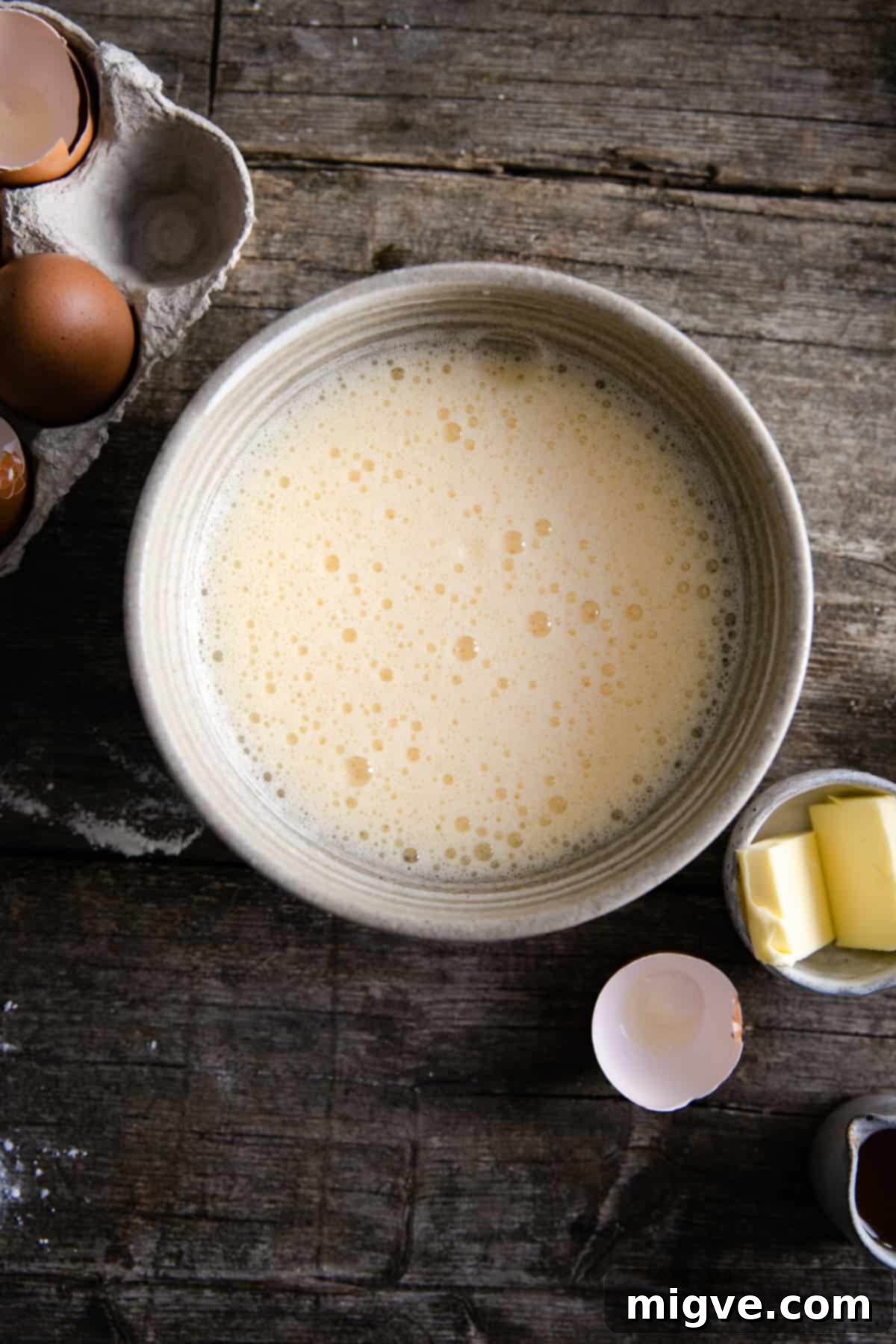
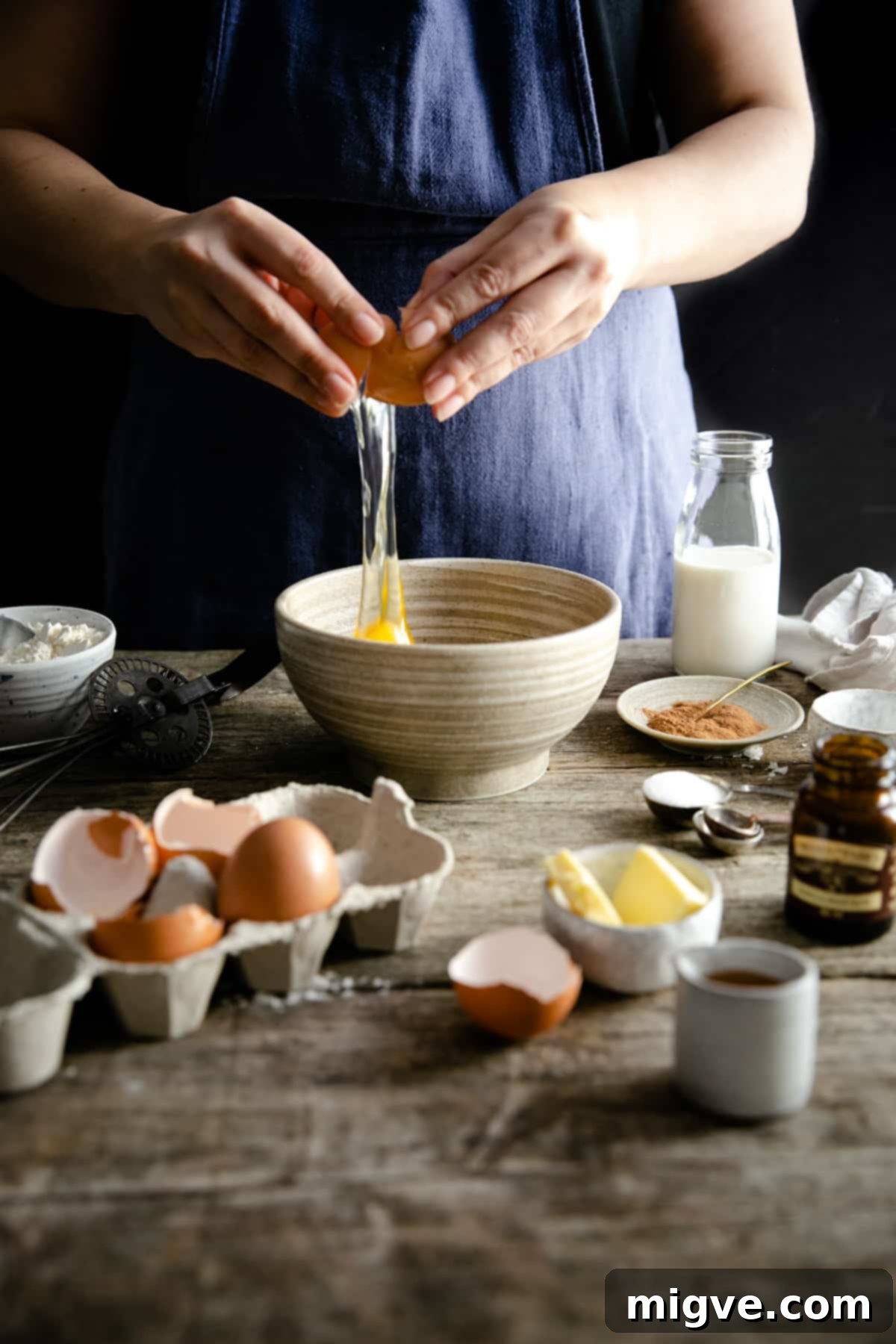
- Whip Up the Batter: In a medium-sized mixing bowl, combine the eggs and caster sugar. Using an electric mixer is highly recommended here, as it makes the process quicker and ensures a light, airy result. Beat the mixture vigorously for 2-3 minutes until it becomes visibly pale and frothy. This aeration is vital for the pancake’s structure and rise. Once you’ve achieved this texture, add the milk, all-purpose flour, vanilla paste (or extract), a small pinch of salt, and cinnamon. Continue to beat until the batter is completely smooth and free of lumps. The consistency should be similar to a traditional pancake batter but perhaps just a touch thinner, allowing it to spread easily in the hot pan.
- The Crucial Pour: With your oven mitts securely on, carefully and quickly remove the intensely hot pan from the oven. Immediately add a teaspoon of butter or vegetable oil to the pan. Swirl it around rapidly to melt the butter and coat the entire surface and a bit up the sides. The butter should sizzle upon contact, indicating the pan is at the right temperature. Without delay, pour the prepared batter into the hot pan. The edges of the batter will likely start to cook instantly.
- Bake to Perfection: Quickly but gently transfer the pan back into the preheated oven. Bake for approximately 18-20 minutes. Resist the urge to open the oven door during this time, as any sudden drop in temperature can cause your beautiful puff to deflate. Watch through the oven window as your Dutch baby magically transforms, puffing up dramatically around the edges and turning a gorgeous golden-brown. It will appear impressively tall and golden when ready.
- Prepare Your Topping: While your Dutch baby is performing its magic in the oven, take this time to prepare your mixed berry topping. Place your fresh or frozen mixed berries into a small saucepan over medium heat. Cook them for 2-4 minutes, stirring occasionally, until they are hot, softened, and slightly bubbly. If using frozen berries, they will release more liquid; if using fresh, you might want to add a tiny splash of water (about a tablespoon) to prevent them from scorching.
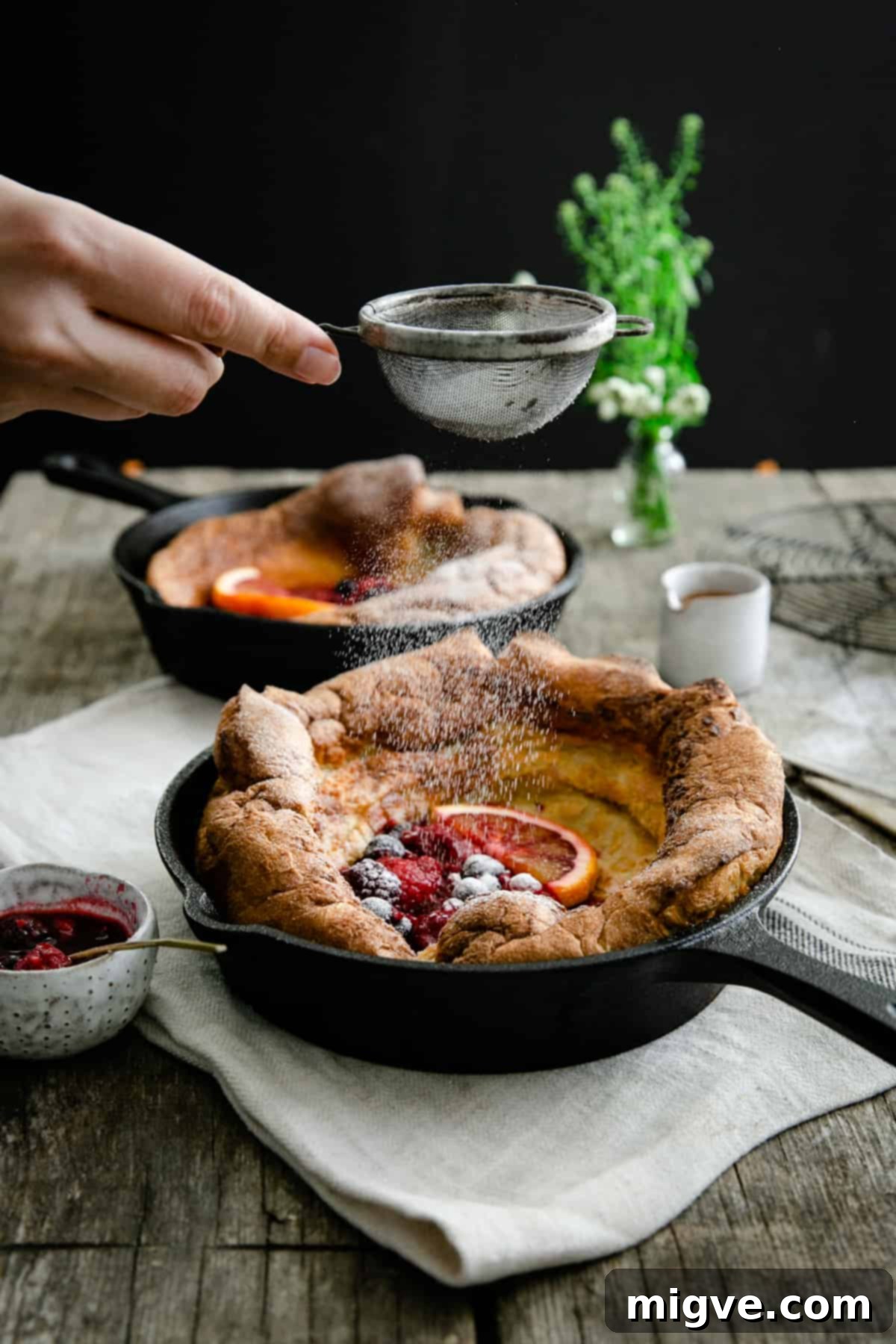
- Serve Immediately: Once baked, carefully remove the Dutch baby from the oven (remember those mitts!). The impressive puff will begin to gently deflate as it cools, so serve it immediately to enjoy its full dramatic effect. Top generously with the warm mixed berries, a light dusting of icing sugar (optional, but adds a lovely touch), and a sweet drizzle of honey or maple syrup. Enjoy this extraordinary breakfast delight!
These Puffy Pancakes are Super Easy to Customise!
One of the most appealing aspects of a Dutch baby is its incredible versatility. This recipe serves as a fantastic base, easily adaptable to suit your personal preferences and whatever seasonal ingredients you have on hand. Don’t feel limited to mixed berries – the possibilities for customization are truly endless!
For sweet variations, swap out the berries for other fruits that bake beautifully. Sliced apples, pears, peaches, or even bananas can create equally delightful results. Consider pairing these with complementary spices; instead of cinnamon, try a pinch of nutmeg, cardamom, or a warm pumpkin spice blend for an autumnal feel. A sprinkle of lemon zest can add a bright, zesty note, especially with lighter fruits. You can also experiment with different sweeteners beyond honey, such as maple syrup, agave nectar, or a dusting of powdered sugar.
But why stop at sweet? The Dutch baby’s blank canvas is perfect for savory interpretations. Simply omit the caster sugar from the batter recipe, and you’re ready to explore a world of savory toppings. Imagine a hearty breakfast Dutch baby adorned with sautéed mushrooms and fresh herbs like thyme or rosemary. Or perhaps a vibrant green version with wilted spinach and garlic, topped with crumbled feta cheese. For a truly satisfying meal, try adding some crispy bacon or sausage, or even a fried egg and a generous grating of sharp cheddar cheese. The savory possibilities are boundless, making it a fantastic option for any meal of the day, not just breakfast. This adaptability ensures that your Dutch baby can be a unique culinary adventure every time you bake it.
If you enjoy exploring different kinds of pancakes, why not give these Poffertjes (mini Dutch pancakes) a try? They offer a different texture and experience that’s equally delightful.
As always, I’d love to hear about your culinary adventures! If you try this mixed berry Dutch baby recipe, or any of my other recipes, please share your thoughts in the comments below. Your feedback and experiences truly make my day!
Have a fantastic week,
A.
📖 Recipe

Mixed Berry Dutch Baby
This big, puffy pancake is super easy to make and perfect for a weekend breakfast or brunch.
Prep Time: 10 mins | Cook Time: 18 mins | Total Time: 28 mins
Course: Breakfast | Cuisine: Vegetarian | Keyword: Dutch baby, Dutch puff, German pancake
Servings: 2 people
Author: Anna
Ingredients
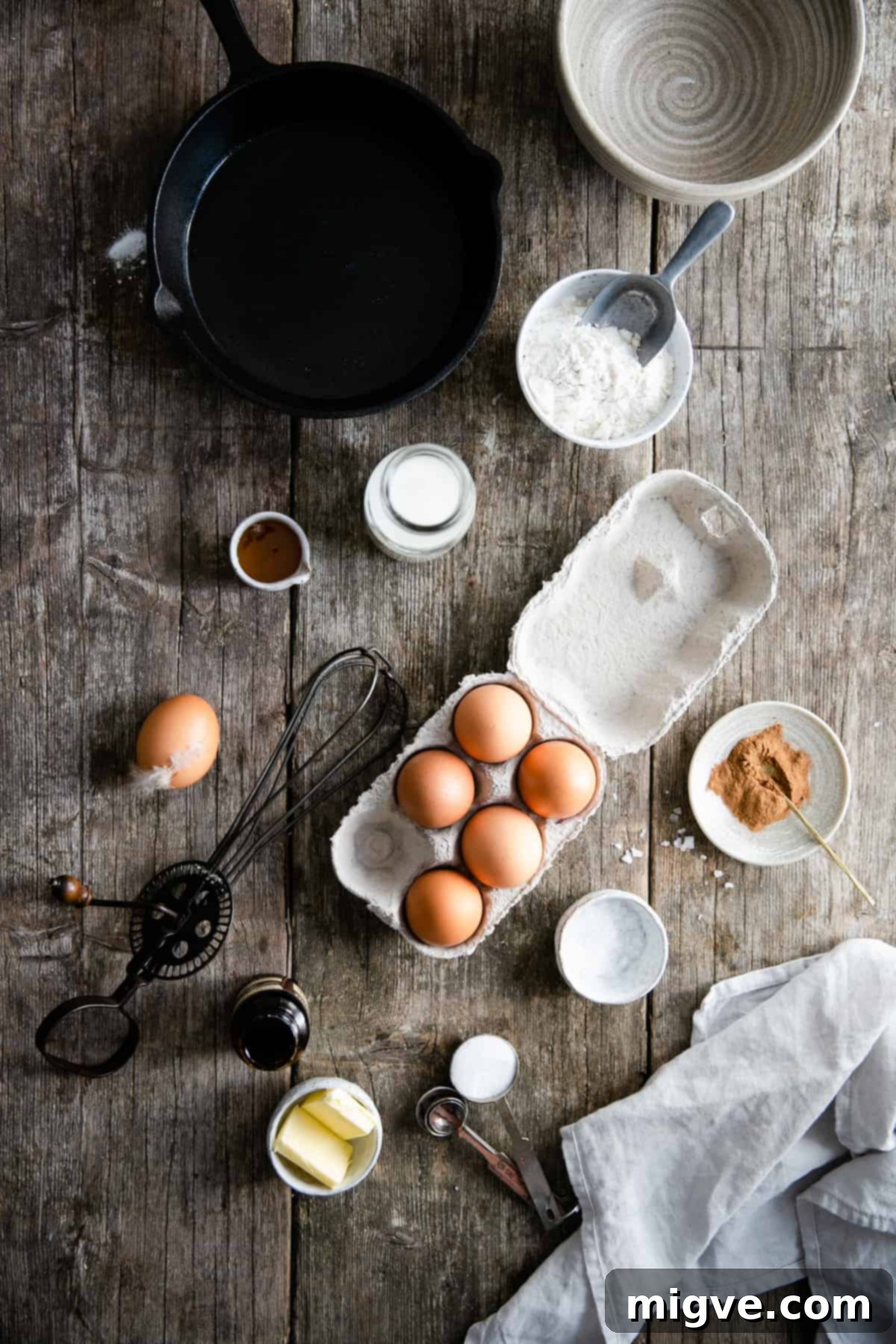
- 3 large eggs
- 1 tablespoon caster sugar
- 150 ml milk of choice
- 100 g all-purpose flour
- 1 teaspoon vanilla paste or vanilla extract
- 1 small pinch of salt
- ½ teaspoon cinnamon
- 2 teaspoon butter or vegetable oil
- 2-4 tablespoon mixed berries (frozen or fresh)
- 1-2 teaspoon icing sugar (optional)
- 1 tablespoon honey or maple syrup
Instructions
- Start by pre-heating the oven to 200°C (400°F) for fan-assisted ovens (220°C / 425°F for conventional ovens). Place the pans straight into the oven to heat thoroughly.
- In a medium bowl, using an electric mixer (or by hand), beat together eggs and sugar until the mixture is pale and frothy, typically about 2-3 minutes.
- Add your milk of choice, all-purpose flour, vanilla, salt, and cinnamon. Beat until you have a smooth batter. The consistency should be slightly thinner than typical pancake batter.
- Quickly and carefully remove your hot pans from the oven. Add a teaspoon of butter or vegetable oil to each pan and swirl it around, allowing it to melt and coat the surface. Divide the batter evenly between the two pans and quickly place them back into the oven. Bake for approximately 18 minutes, or until the Dutch babies are golden brown and dramatically puffed up.
- While the Dutch babies are baking, prepare the mixed berry topping. Place the berries in a small saucepan over medium heat for 2-4 minutes until they are hot and bubbly. You may add a splash of water to prevent the berries from sticking if using fresh ones.
- Remove the puffed pancakes from the oven (remember to wear oven gloves!). Top them generously with the warm mixed berries, a dusting of icing sugar (if desired), and a drizzle of honey or maple syrup. Serve immediately and enjoy!
Please note that all my recipes are developed and tested using metric grams for accuracy. I recommend using digital scales for the best results. While I have provided approximate conversions for US customary measurements, please be aware that I have not specifically tested the recipe using these conversions.
Did you make this? Tell me how you liked it! Leave a comment below or take a picture and tag @anna_wierzbinska on Instagram. I love seeing your take on my recipes!
If you would like to be the first one to know when new recipes and posts are published, make sure to sign up to my mailing list!