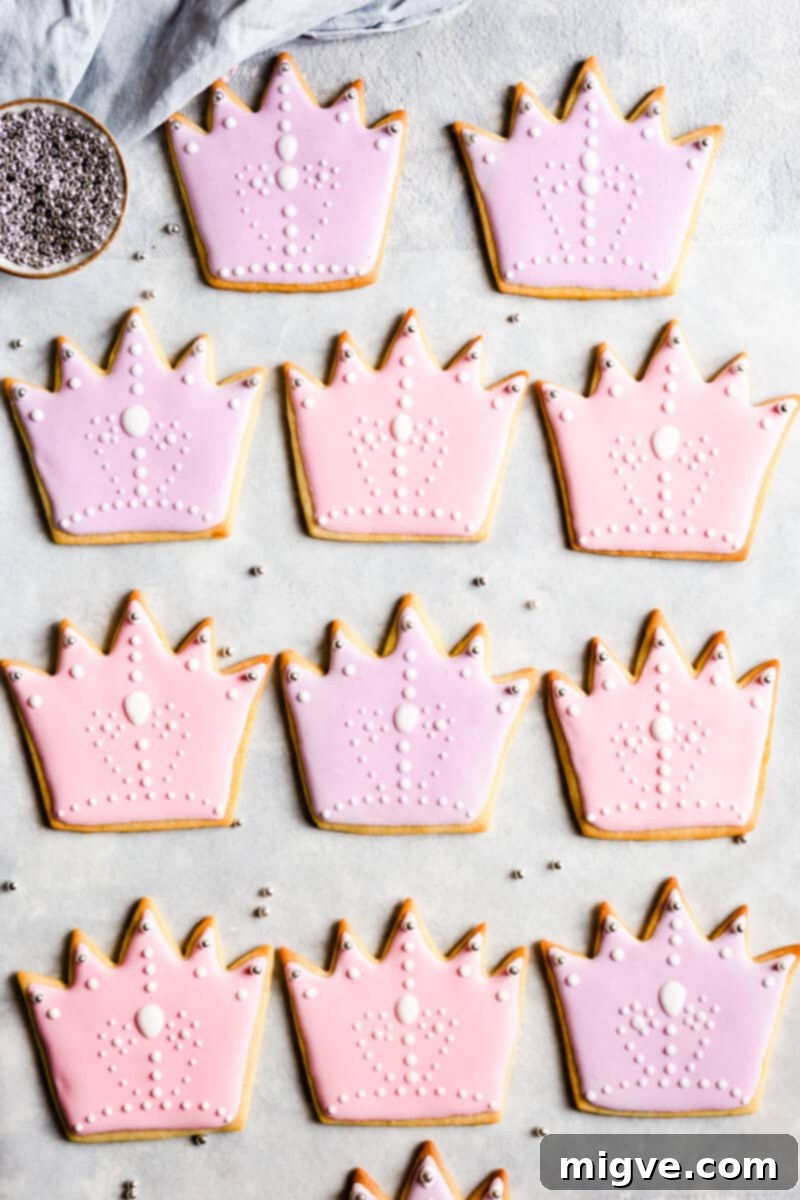
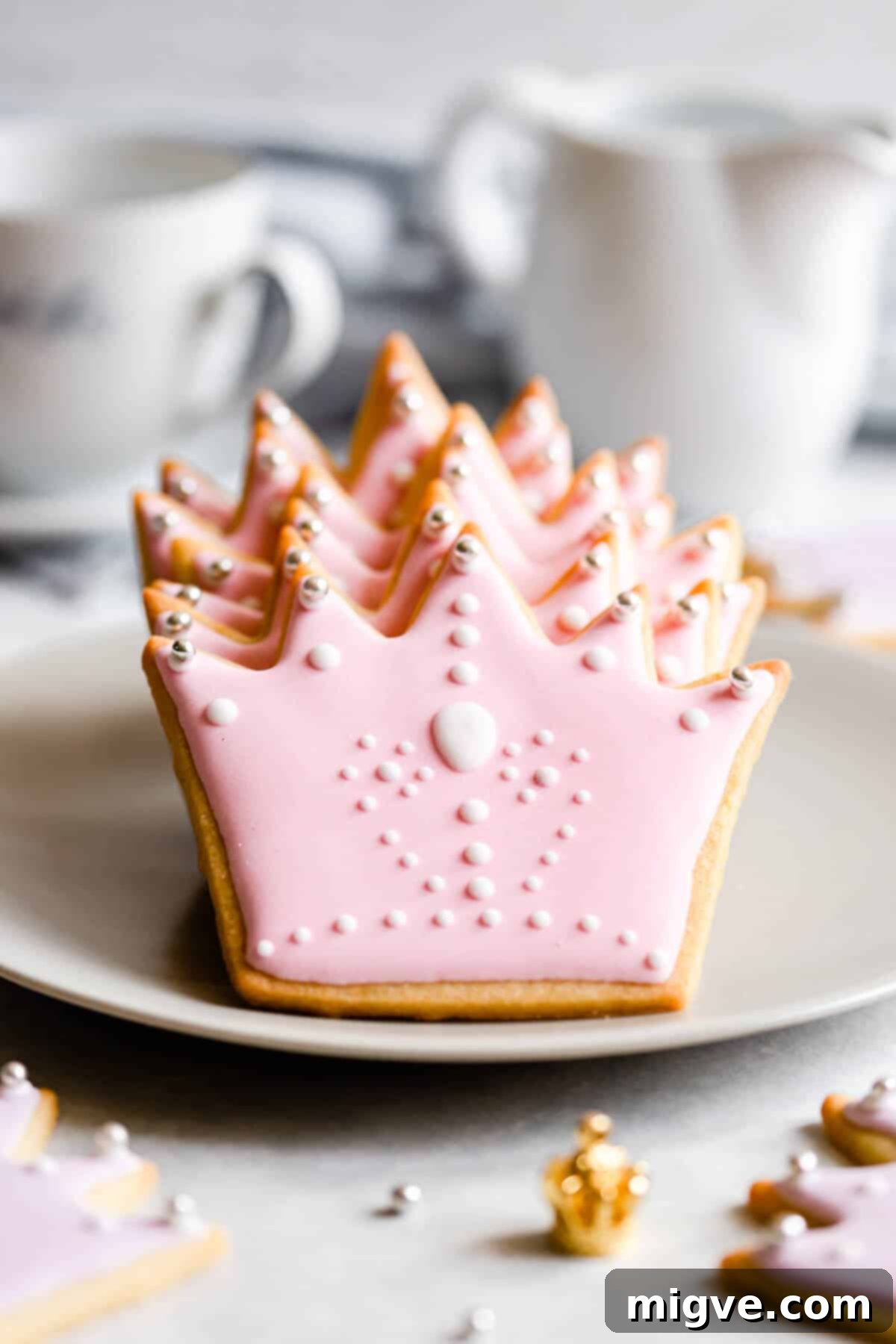
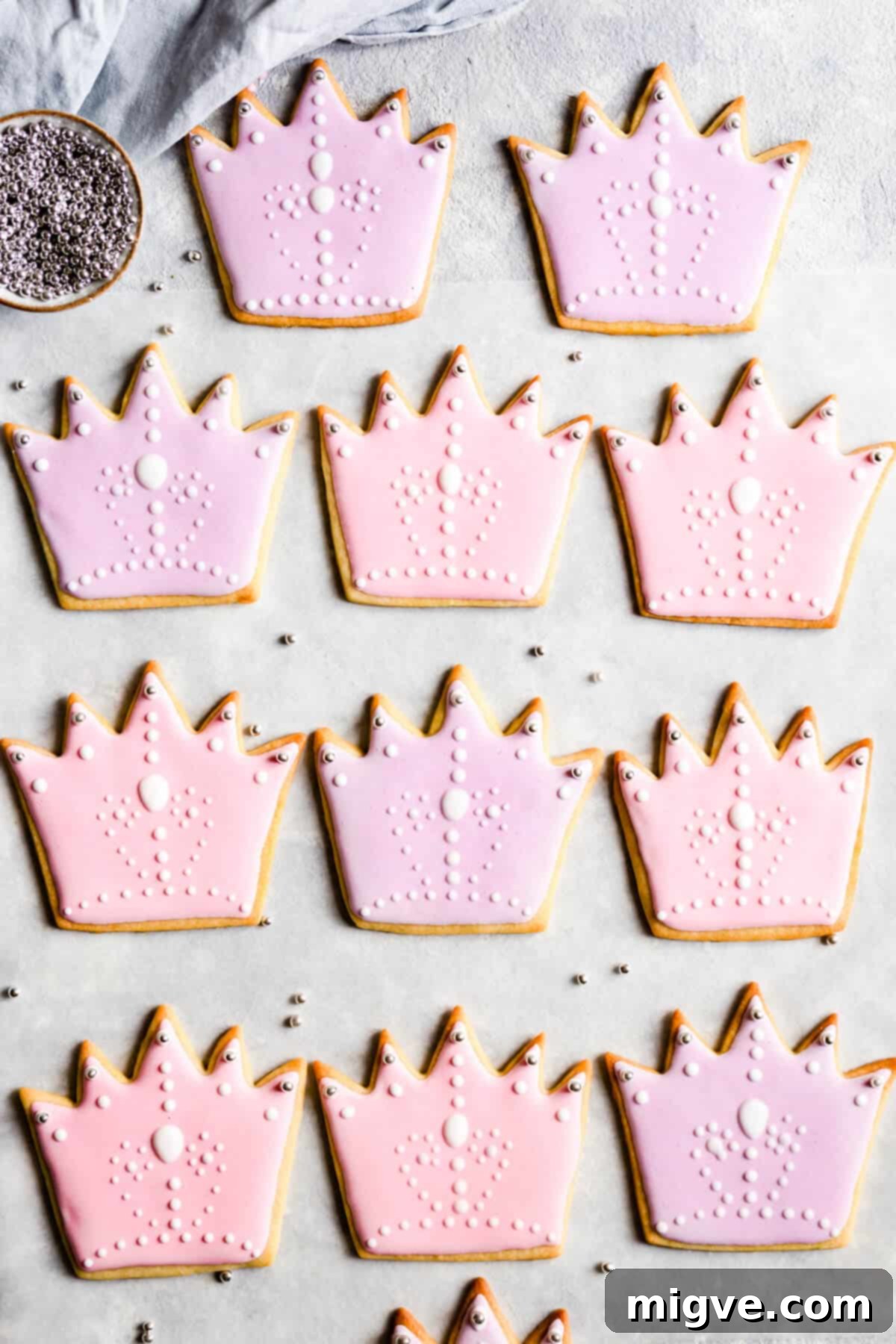
Delight your loved ones with these incredibly easy-to-make Birthday Sugar Cookies, perfectly adorned with elegant royal icing. Each bite offers a delightful contrast of crispy edges and tender, soft centers, bursting with sweet, buttery flavor. These homemade treats are more than just a dessert; they’re a heartfelt gesture, ideal for a special birthday gift or a charming addition to any celebration.
This post is a part of paid collaboration with Tate & Lyle Sugars. All thoughts and opinions are my own.
In a world where routines are constantly evolving, one joyous constant remains: birthdays! While celebrations may look a little different these days, the essence of making someone feel cherished on their special day endures. These exquisite Birthday Sugar Cookies are designed to be the ultimate expression of affection, serving as a thoughtful gift or a beautiful centerpiece for any gathering, whether it’s an intimate family moment or a slightly larger get-together.
Why Choose Sugar Cookies for Your Special Occasions?
As a seasoned baker and a dedicated enthusiast, I can confidently say that sugar cookies hold a special place in the baking world, especially for holidays and unique celebrations. Their popularity isn’t just a trend; it’s a testament to their incredible versatility, delightful taste, and the sheer joy they bring to both the baker and the recipient. These cookies aren’t just easy to bake; they transform into edible canvases, inviting endless creative decoration possibilities. Imagine designing cookies that perfectly match a birthday theme or personalizing them for a loved one – the potential is limitless.
Beyond their aesthetic appeal, sugar cookies boast a fantastic texture profile: a satisfying crispness around the edges that gives way to a soft, melt-in-your-mouth center. This perfect balance ensures every bite is a delightful experience. Furthermore, their sturdy nature makes them excellent for gifting. Wrapped individually or presented in a decorative box, they make a charming and personal present that truly conveys thoughtfulness. What makes them even more appealing for busy lives is the ability to prepare them well in advance, allowing you to spread the baking and decorating process over several days without compromising on freshness or quality. This makes them a stress-free option for any busy celebrator.
Much like my beloved Heart Sandwich Cookies or festive Easter Sugar Cookies, this birthday sugar cookie recipe calls for only a handful of fundamental ingredients. You won’t need any specialized, fancy equipment beyond basic cookie cutters and a reliable mixer. This simplicity ensures that anyone, regardless of their baking experience, can achieve beautifully crafted, delicious results right in their own kitchen.
The Magic of Seven Ingredients and One Bowl
Creating these perfect birthday sugar cookies requires just seven essential ingredients, each playing a crucial role in achieving that ideal balance of flavor and texture. You’ll need butter, sugar, egg, vanilla extract, all-purpose flour, baking powder, and a pinch of salt. The beauty of this recipe lies in its simplicity: all components come together effortlessly in a single bowl of an electric mixer. Whether you use a sturdy freestanding mixer or a versatile handheld one, the process is streamlined and mess-free, making baking a joyful endeavor.
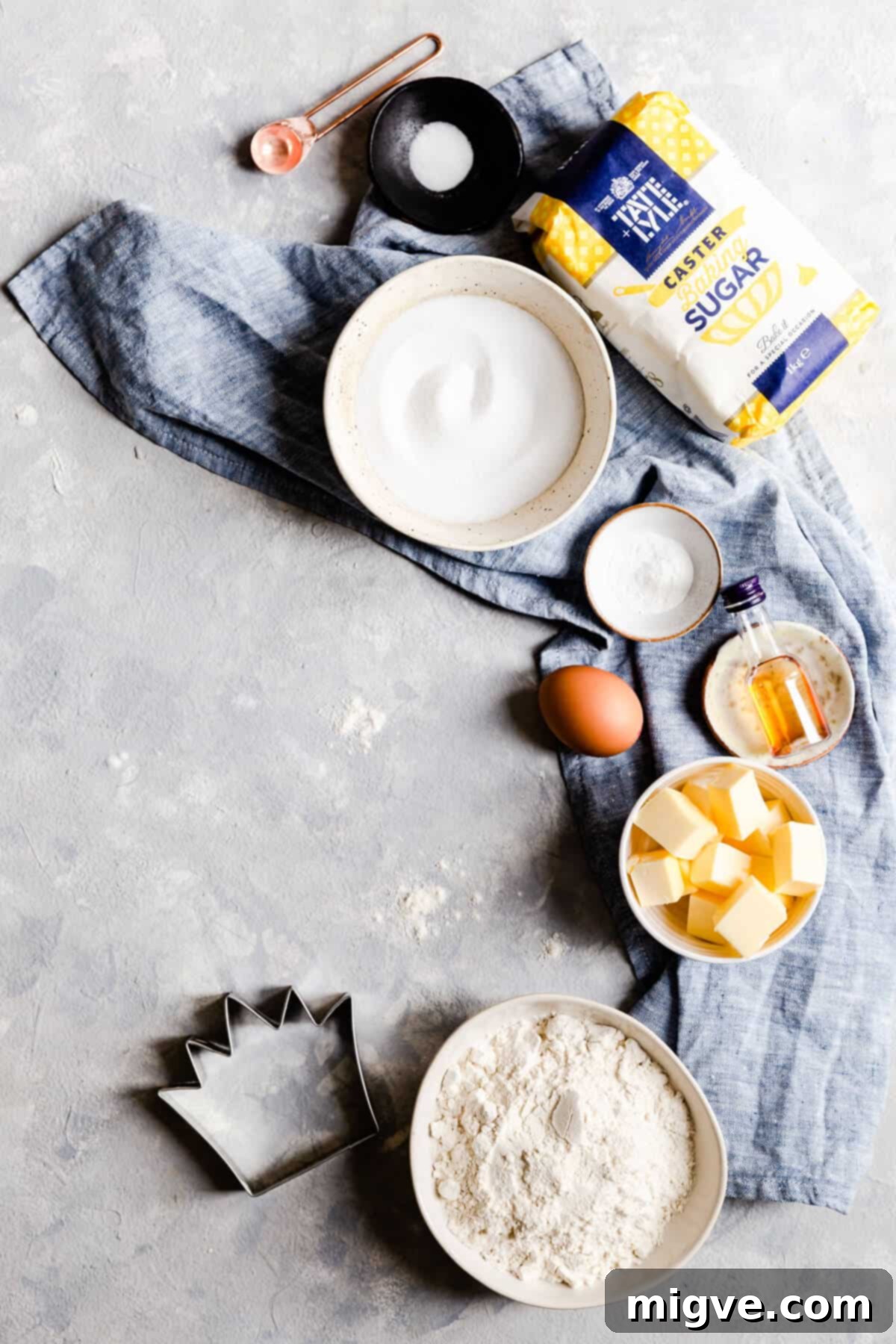
Each ingredient contributes uniquely to the cookie’s character. Softened butter provides richness and tenderness, contributing to the desirable melt-in-your-mouth quality. Caster sugar not only sweetens but also plays a role in the crispy edges. The egg acts as a binder, ensuring the cookies hold their shape, while vanilla extract infuses them with a warm, comforting aroma. All-purpose flour forms the structural backbone, and a touch of baking powder gives them a slight lift without puffing them up excessively. Finally, salt balances the sweetness, enhancing all the other flavors.
For best results, I highly recommend preparing your cookie dough at least a day in advance and allowing it to chill thoroughly in the refrigerator overnight. This chilling period is not merely a suggestion; it’s a critical step for achieving impeccable sugar cookies. Well-chilled dough becomes much firmer and significantly easier to handle, making the rolling and cutting process a breeze. More importantly, cold dough prevents the cookies from spreading too much during baking, ensuring that intricate designs from your cookie cutters remain sharp and defined. This is especially vital when aiming for beautifully shaped cookies that truly stand out.

Mastering Royal Icing: Your Guide to Perfect Cookie Decorations
Royal icing is the secret weapon for professional-looking, intricately decorated sugar cookies. Its unique properties allow for crisp lines, smooth surfaces, and vibrant colors that dry to a hard, durable finish. Traditionally, royal icing is crafted from egg whites (or meringue powder) and powdered sugar, often stabilized with a touch of cream of tartar. This combination yields a stable, firm icing that holds fine details beautifully, making it the preferred choice for elaborate cookie designs.
If you have access to specialized royal icing sugar, feel free to use it as directed on its packaging, often allowing you to skip the separate egg whites and cream of tartar. However, if you’re looking for a simpler approach, a perfectly delicious and functional icing can be made using just powdered sugar and a touch of milk or water. While this simpler version might not achieve the exact same professional sheen or hardness as traditional royal icing, it still tastes fantastic and allows for lovely decorations.
When working with any powdered sugar-based icing, whether traditional royal icing or a simpler alternative, mastering consistency is key. You’ll typically want two main consistencies:
- Thicker Icing for Borders: This firmer consistency is used to create an outline around your cookie’s edges. This border acts as a protective dam, preventing the more liquid “flood” icing from spilling over. It should be thick enough to hold its shape when piped but still flow smoothly.
- Looser Icing for Flooding: Once your borders are set, you’ll need a slightly thinner, more flowing icing to fill in the outlined areas. This “flood” consistency spreads easily and smoothly, creating a perfectly even surface. Achieve this by gradually adding small amounts of water or milk to your thick border icing until it reaches a consistency where a piped line disappears back into the icing within 10-12 seconds.
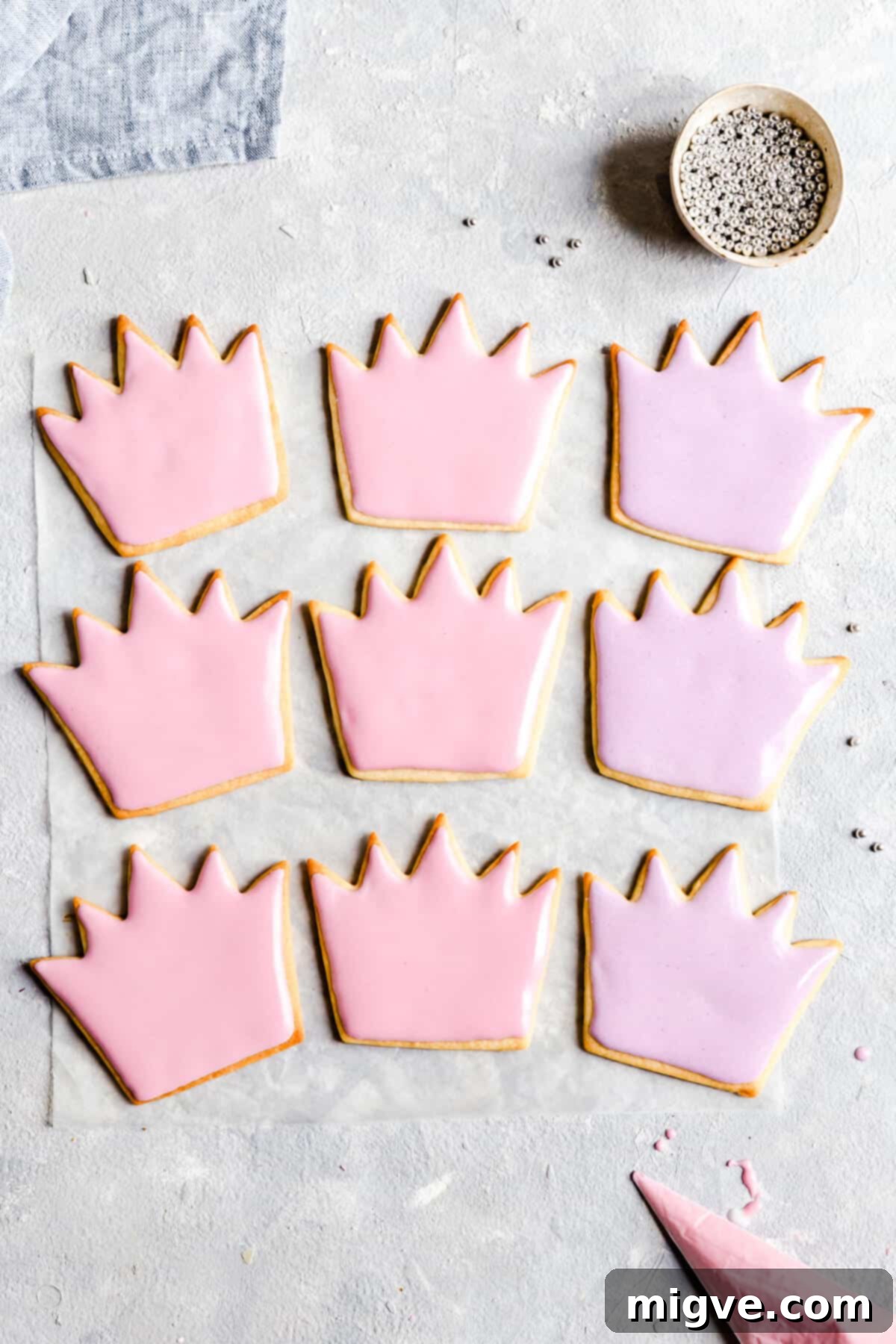
Incorporating food coloring into your icing is a fantastic way to elevate your cookies from delicious to visually stunning. While optional, a spectrum of colors can bring your designs to life. For the most vibrant and consistent results, I highly recommend using gel food coloring. Unlike liquid food coloring, gels are highly concentrated, meaning you need only a tiny amount to achieve rich, deep hues without significantly altering your icing’s consistency. Always add gel coloring incrementally, a tiny drop at a time, mixing thoroughly until you reach your desired shade. Remember to continuously check your icing’s consistency as you add color, as even small amounts of gel can slightly thin it.
The Smart Way to Roll Dough: Before Chilling!
This brilliant baking hack, which I first learned from the renowned Sally’s Baking Addiction, is a game-changer for sugar cookie enthusiasts. The key to perfectly shaped cookies that maintain their intricate details is to always roll out your dough immediately after preparing it, and then chill it. Many bakers make the mistake of chilling the dough in a lump and then attempting to roll it, only to find it too hard and difficult to manage.
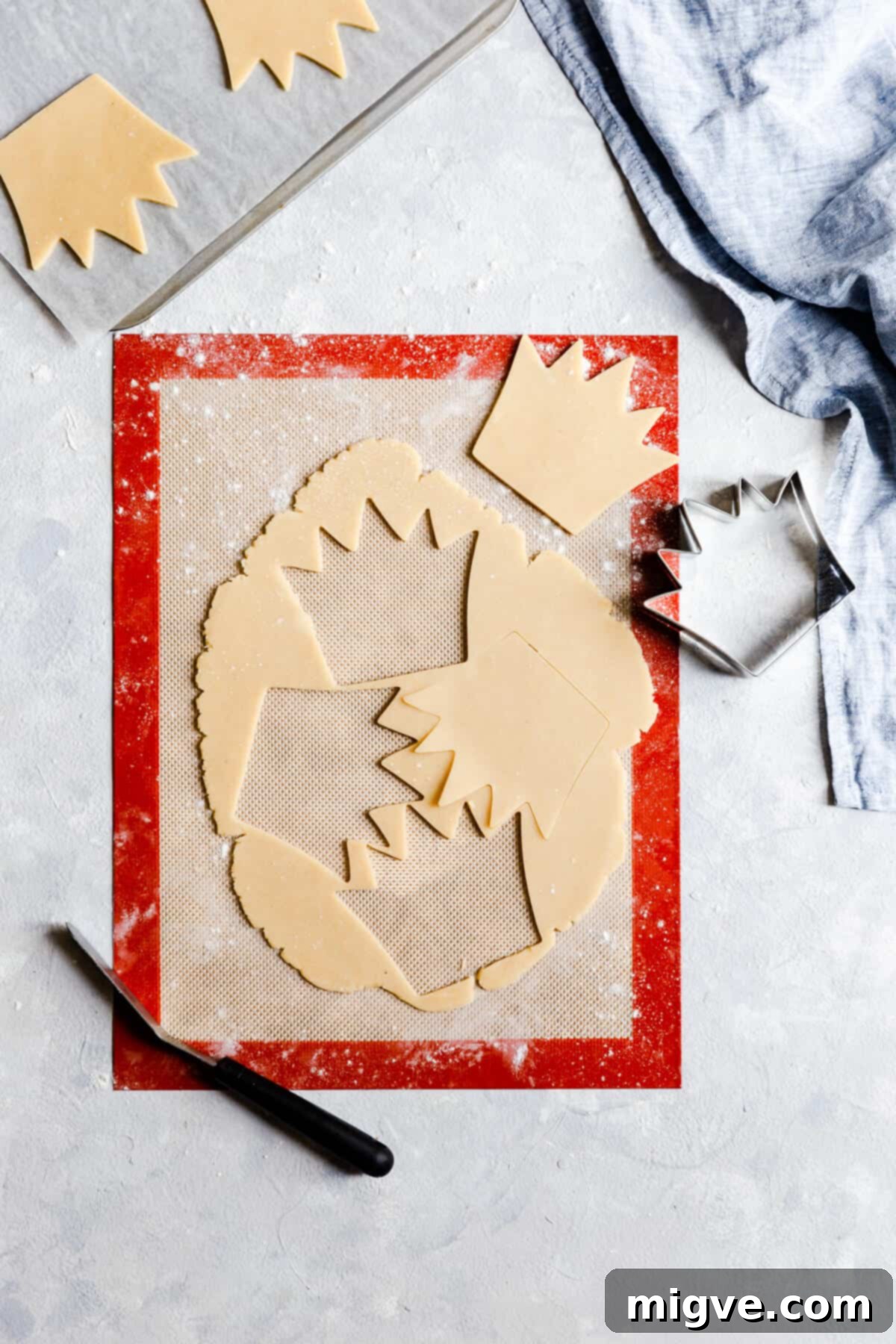
By rolling the dough first, you achieve an even thickness while the dough is still pliable. Then, when you chill it, the butter solidifies in its rolled-out state, locking in that shape. This cold, firm dough resists spreading during baking, which is absolutely crucial for preserving sharp edges and defined cut-out designs. When you’re ready to bake, you simply take the pre-rolled, chilled dough from the fridge, cut your shapes, and transfer them directly to the baking sheet. This method saves time and frustration, ensuring consistently beautiful cookies every time.
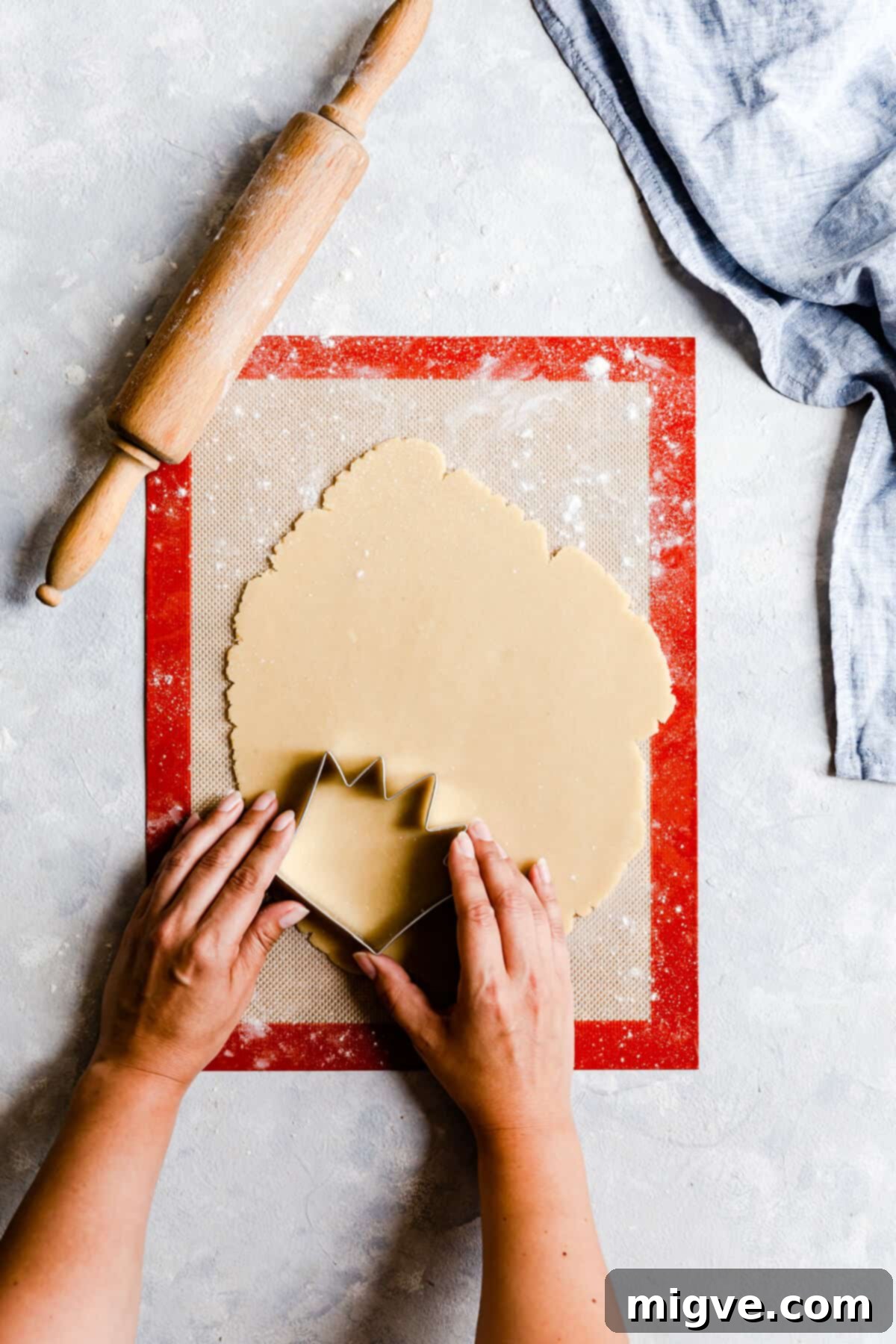
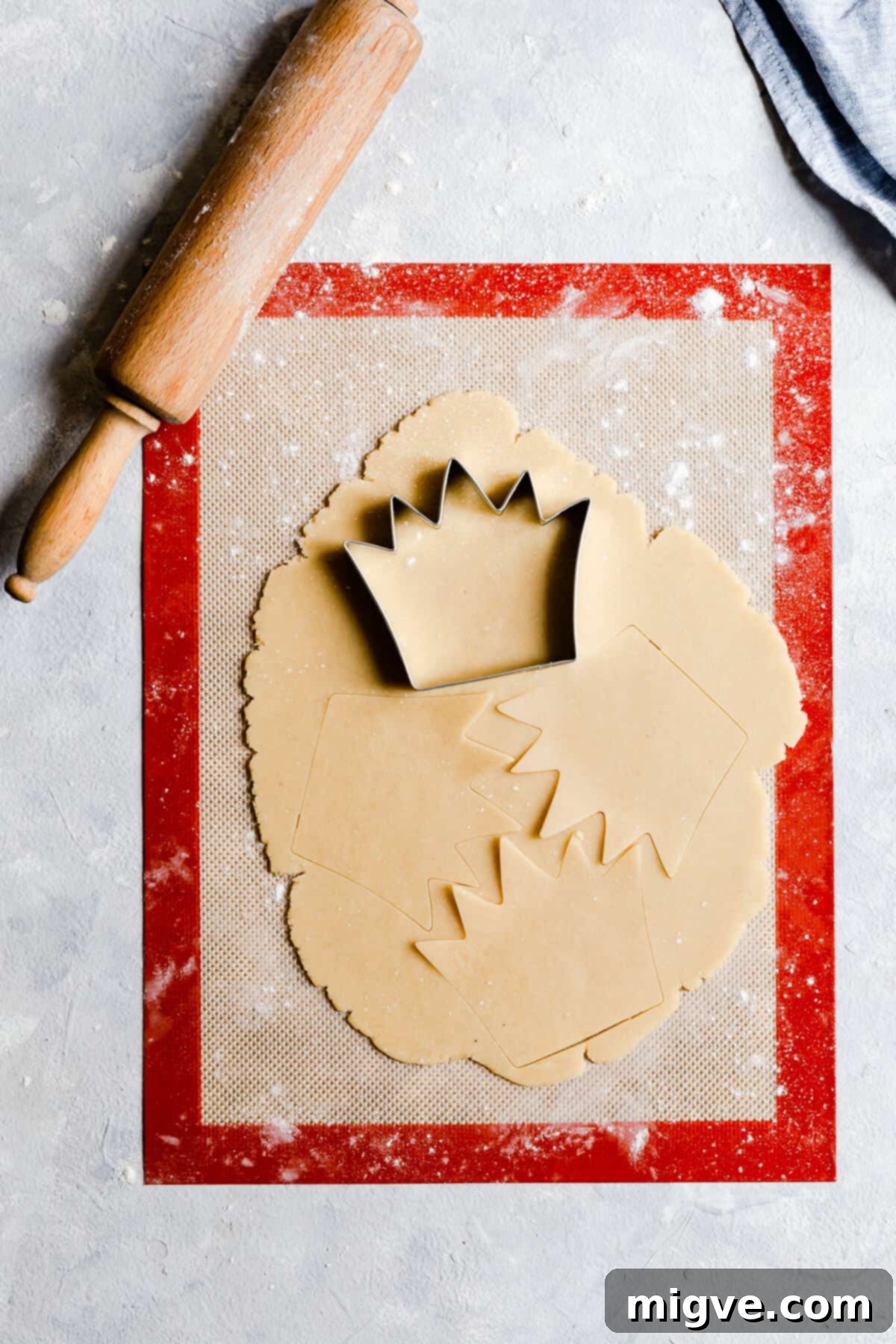
For easier handling, I always recommend dividing your freshly made dough into two manageable portions. Place each portion on a piece of non-stick baking paper or a silicone baking mat. Using a rolling pin, roll the dough evenly to a thickness of about a £1 coin (approximately ¼ inch or 6mm). Rolling directly on parchment or a silicone mat has a dual benefit: it prevents sticking and makes transferring the rolled dough to a baking tray for chilling, and subsequently to the oven, incredibly easy. This eliminates the need to lift and potentially distort raw cookie shapes, streamlining your baking process.

Make-Ahead and Storage Tips for Effortless Baking
One of the many benefits of sugar cookies is their excellent make-ahead potential, allowing you to prepare various components long before your special occasion. Both the cookie dough and the royal icing can be prepared and frozen for up to three months, making your baking process incredibly flexible and stress-free. This capability is particularly useful for holiday baking or large events, where spreading out tasks can significantly reduce last-minute pressure.
To freeze the cookie dough, divide it into halves or quarters, then wrap each portion tightly with cling film or a reusable kitchen wrap. While you can freeze the dough as a ball, I find that pre-rolling it (as discussed earlier) before wrapping and freezing can save even more time later. When you’re ready to bake, transfer the frozen dough to the refrigerator to thaw overnight. Once thawed, allow it to sit at room temperature for about an hour until it’s pliable enough to work with, but still cold to maintain its shape.
For freezing royal icing, transfer it into zip-top freezer bags. Make sure to press out as much air as possible before sealing the bag tightly. Lay the bags flat on a shelf in your freezer to freeze evenly. To use, thaw the icing in the refrigerator overnight. Before decorating, bring it to room temperature and give it a gentle stir or knead the bag to re-incorporate any separated liquid, ensuring a smooth, workable consistency.
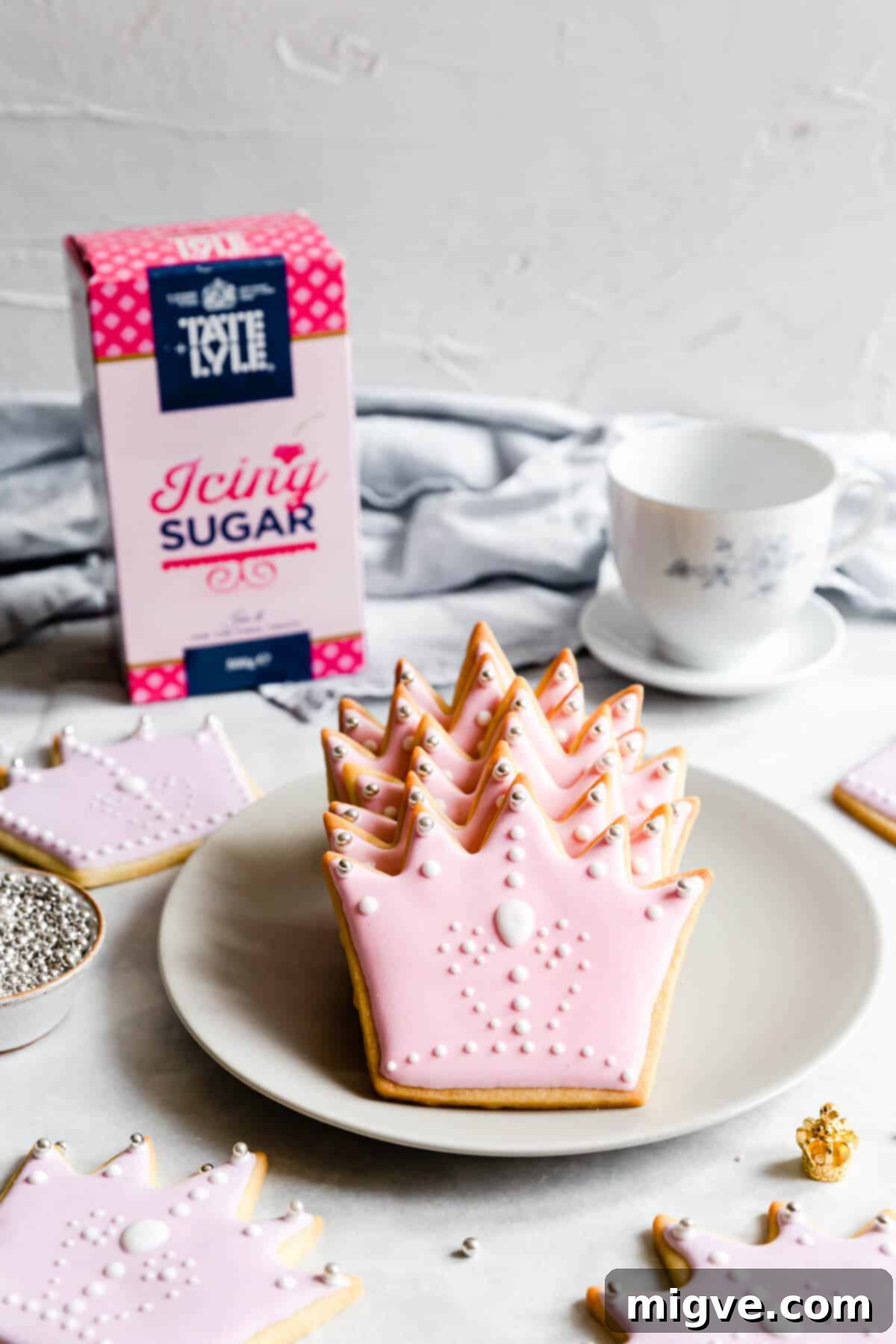
Baked sugar cookies, whether plain or elaborately decorated, also freeze beautifully for up to three months. The crucial step for decorated cookies is to ensure the royal icing has completely dried and set, which can take several hours or even overnight, depending on humidity. Once fully dry, stack the cookies in a freezer-friendly airtight container, separating each layer with sheets of baking paper to prevent sticking and damage. When you’re ready to enjoy them, simply thaw the cookies in the refrigerator or at room temperature. They will retain their delicious flavor and appealing texture, ready to impress.
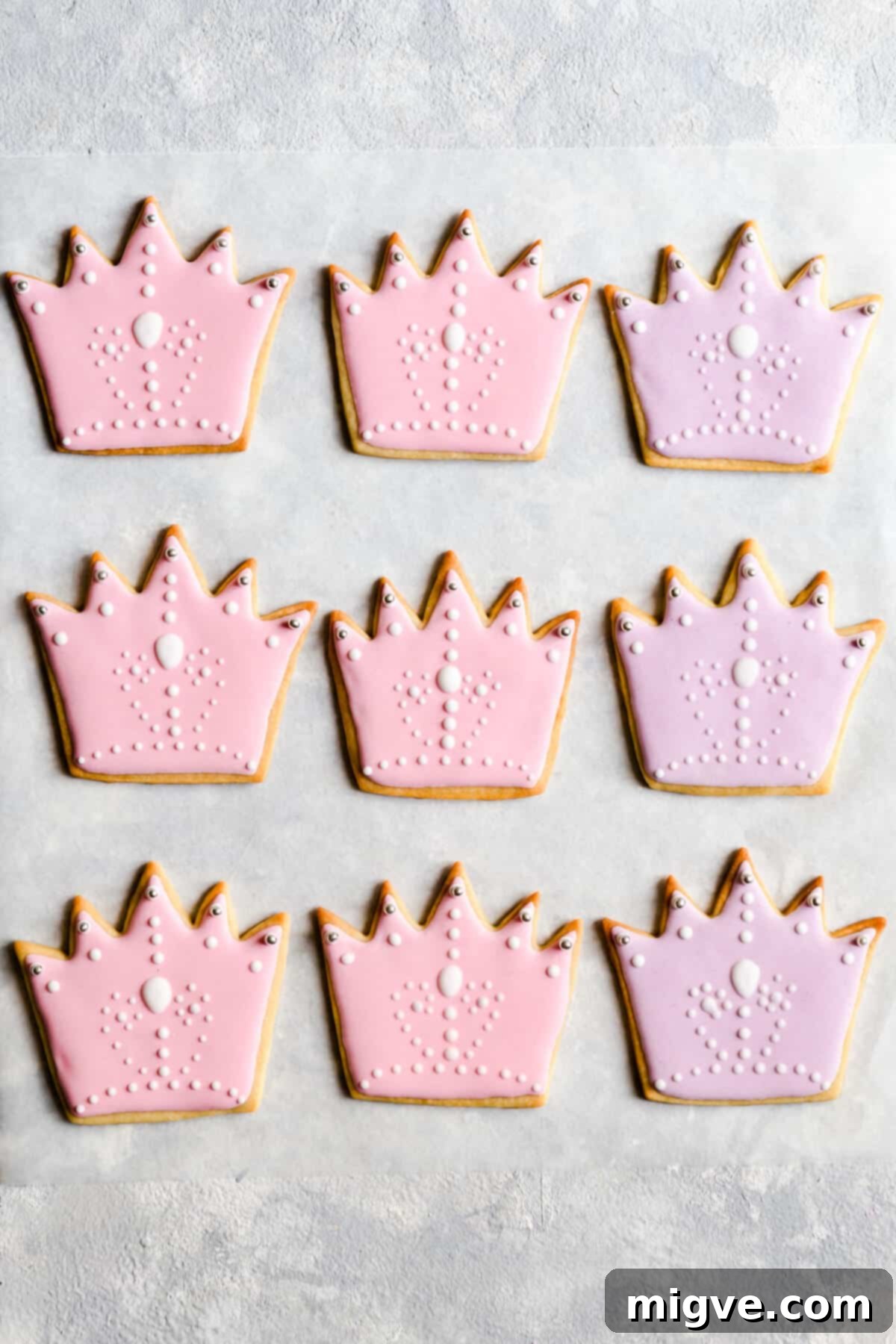

Thank you for joining me on this delicious journey to create perfect birthday sugar cookies. Baking is an act of love, and sharing these sweet treats with those you care about is one of life’s simplest pleasures. I truly hope you enjoy making and gifting these delightful cookies as much as I do. Your feedback means the world to me, so please don’t hesitate to leave a comment or a rating if you’ve tried this recipe or any other from my collection! I love seeing your beautiful creations, so remember to tag me on my social channels – Instagram, Pinterest, and Facebook – so I can admire your take on my recipes! Happy baking!
📖 Recipe

Print Recipe
Pin Recipe
Birthday Sugar Cookies with Icing
Equipment
- Crown shaped cookie cutters
- Baking parchment or silicone baking mat
- Baking trays
- Electric mixer
- Rolling pin
- Piping bags
Ingredients
For the cookies:
- 280 g plain flour
- ½ teaspoon baking powder
- ¼ teaspoon salt
- 170 g unsalted butter softened
- 150 g Tate & Lyle pure cane caster sugar
- 1 large egg
- 1 teaspoon vanilla extract
For the icing:
- 2 large egg whites
- 1 teaspoon cream of tartar
- 500 g Tate & Lyle icing sugar
- 2 tubes gel food colouring (optional)
Instructions
For the sugar cookies:
- In a large bowl, whisk together the flour, baking powder, and salt. Set aside.
- In the bowl of an electric mixer fitted with a paddle attachment, beat the softened butter on medium-high speed until it’s lightened in color and fluffy, which usually takes about 2 minutes. Gradually add the caster sugar and continue to cream the mixture for another 2 minutes until well combined. Incorporate the egg and vanilla extract, beating on high speed until everything is thoroughly mixed. Be sure to scrape down the sides and bottom of the bowl with a spatula to ensure all ingredients are evenly incorporated.
- Gradually add the dry flour mixture to the butter and sugar mixture, mixing on low speed until just combined. Be careful not to overmix. If the dough appears too sticky to handle, add an additional tablespoon of flour. Divide the dough into two equal portions. Roll each portion on a lightly floured silicone mat or a sheet of baking paper to a uniform thickness of approximately ¼ inch (similar to the thickness of a £1 coin). Transfer the rolled dough, still on its mat or paper, onto a baking tray and refrigerate for a minimum of 2 hours. If chilling overnight, cover the dough with cling film or a reusable wrap to prevent it from drying out.
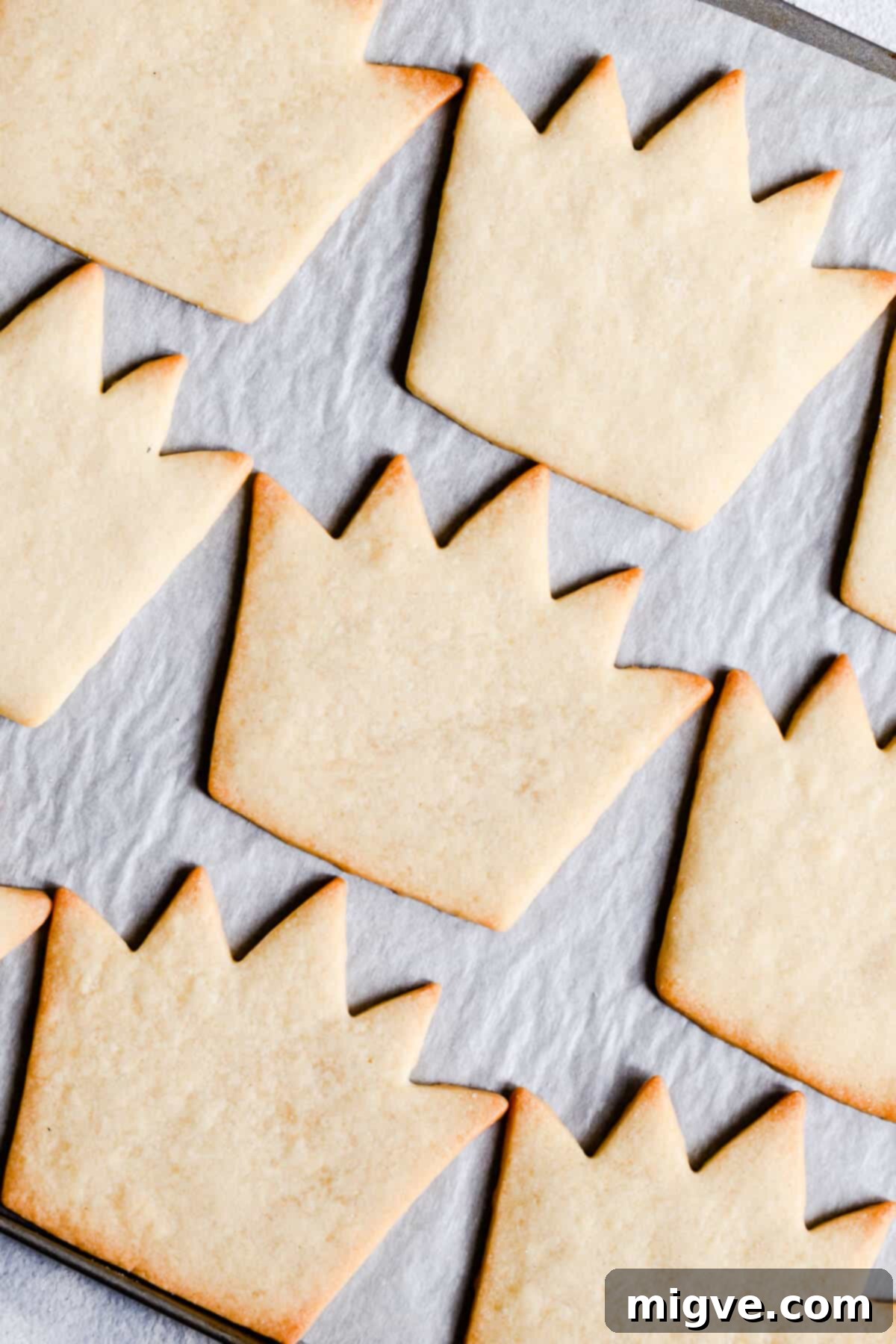
- Preheat your oven to 170°C (fan-assisted). Line several baking trays with fresh baking parchment. Remove one of the pre-rolled dough pieces from the refrigerator. Using your chosen cookie cutters, cut out desired shapes from the chilled dough and carefully transfer them to the prepared baking trays. Gather any dough scraps, gently re-roll them, and cut out more cookies until all the dough is used.
- Bake the cookies on the middle shelf of the preheated oven for approximately 8-10 minutes, or until the edges begin to turn a very light golden color. For even baking, rotate the baking tray halfway through the baking time. Once baked, remove the cookies from the oven and allow them to cool on the baking trays for about 5 minutes before carefully transferring them to a wire cooling rack to cool completely. This crucial cooling step ensures they firm up and are ready for decorating.
To make icing:
- In the bowl of a standing mixer fitted with a whisk attachment (or using an electric mixer with beaters), combine the egg whites and cream of tartar. Beat on medium-high speed until soft peaks form, which typically takes around 2 minutes.
- Sift in the icing sugar into the egg white mixture. Start beating on low speed for another 2 minutes until fully incorporated. With the mixer still running on low, gradually add water, one tablespoon at a time, until the icing reaches your desired consistency. For a good “flood” consistency, when you lift the whisk, the icing should drizzle down and any lines drawn with the dripping icing should smoothly disappear within 10-12 seconds. If you prefer a thinner icing, add more water; for a thicker icing, incorporate more icing sugar.
- If you plan to use food coloring, divide the prepared icing into separate bowls, one for each color. Mix in gel food coloring, adding just a tiny bit at a time until you achieve your desired shade. Remember to check the consistency of each colored icing, as gel food coloring can slightly thin it. Transfer each color of icing into individual piping bags. Snip a very small portion off the tip of each piping bag to create a fine opening for precise decorating. Once your cookies are completely cool, you can begin the fun process of decorating them.
Please note that all my recipes are developed and tested using metric grams for the most accurate results. I highly recommend using digital scales. While I have provided a conversion to US customary in the recipe, please be aware that I have not personally tested this method, and results may vary.
Video
Notes
- The final quantity of cookies will vary depending on the specific size and shape of the cookie cutters you use.
- While not strictly necessary, you can fit your piping bags with small piping nozzles for even finer detail work.
- If you opt not to use piping nozzles, ensure you snip a very tiny opening at the very end of each piping bag. A small opening allows for a thin, controlled flow of icing, which is crucial for intricate designs.
- It is absolutely essential that your baked cookies have cooled down completely to room temperature before you begin decorating them with icing. Warm cookies will cause the icing to melt or slide off.
- For multi-layered or detailed icing designs, allow each layer of icing to dry and set completely before applying the next. This prevents colors from bleeding and ensures clean lines.
- If you have royal icing sugar on hand, you can certainly use it as an alternative to standard icing sugar. Simply follow the instructions provided on the royal icing sugar packaging for the best results.
- Making royal icing with meringue powder is another excellent option. For detailed instructions on this method, please refer to this recipe for comprehensive guidance.
Nutrition
If you would like to receive any future recipes straight to your inbox, make sure to sign up to my weekly newsletter!