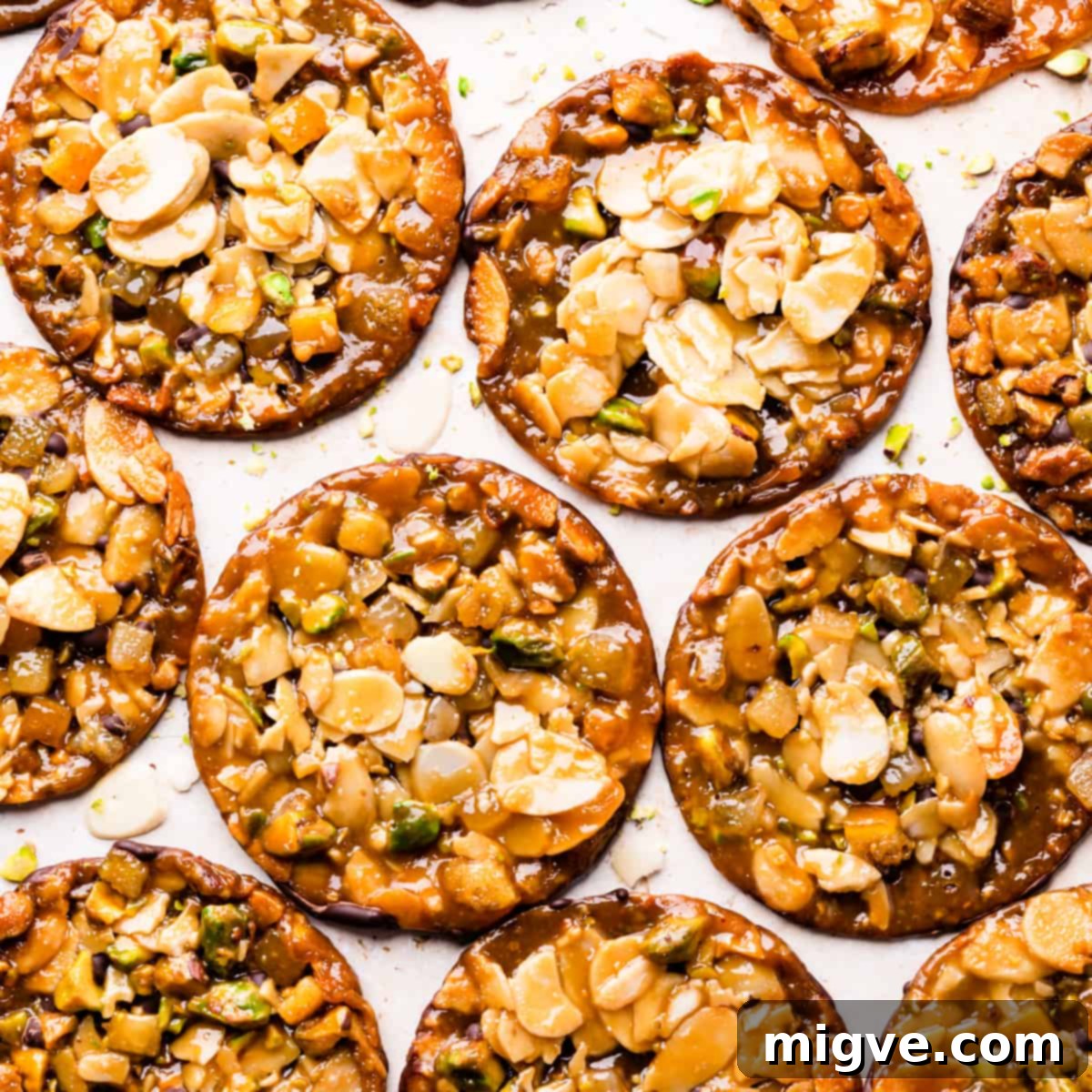
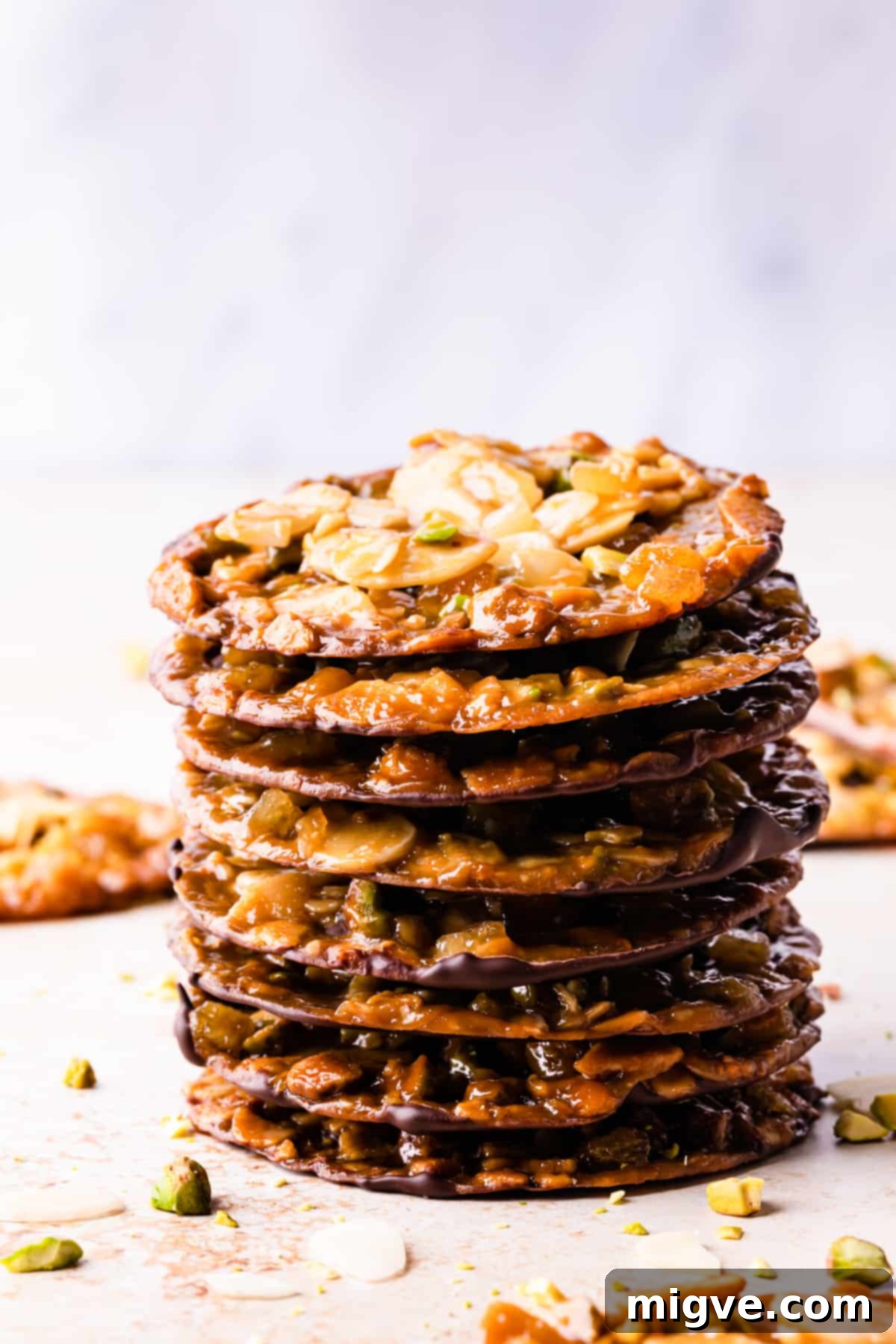
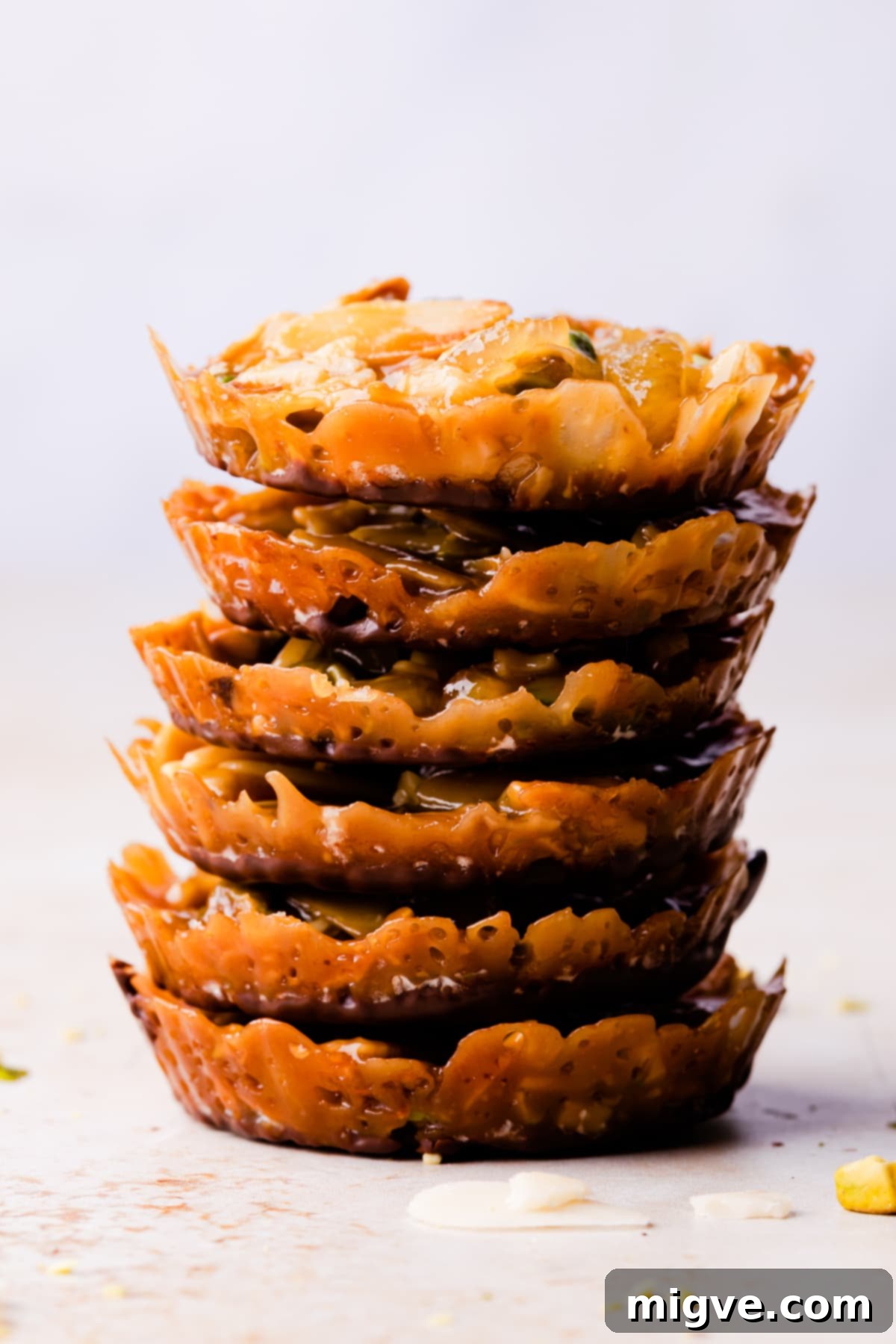
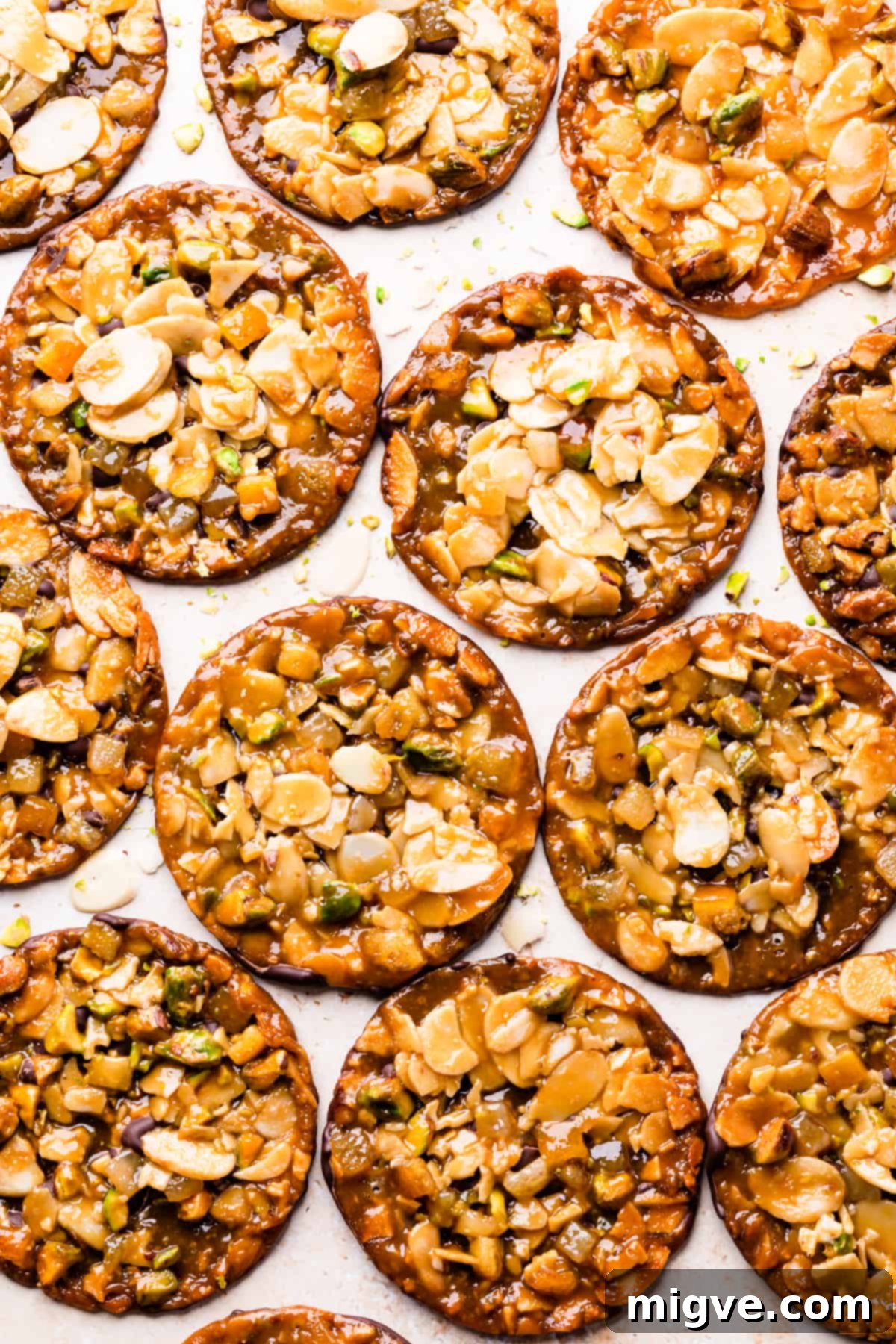
Almond florentines are truly a culinary masterpiece, celebrated for their exquisite blend of textures and deeply satisfying flavors. Imagine delicate, golden-brown discs crafted from perfectly flaked almonds, encased in rich, caramelized sugar, and brightened by a subtle hint of fragrant citrus peels. Each thin, crispy disc is then artfully dipped in a luscious layer of dark chocolate, creating a symphony of taste and an irresistible contrast between crisp, chewy, and smooth. These elegant florentine cookies boast a profound nutty character, a harmonious balance of sweetness, and an intricate interplay of textures that makes them utterly captivating from the very first bite.
Despite their sophisticated appearance, these easy homemade almond florentines are surprisingly simple and quick to prepare, requiring no specialized equipment and minimal baking time. Whether you’re a seasoned baker or a kitchen novice, you’ll find the process straightforward and rewarding. These crisp, wonderfully chewy, and intensely satisfying treats are destined to become a staple in your baking repertoire, guaranteed to leave you and your guests completely hooked!
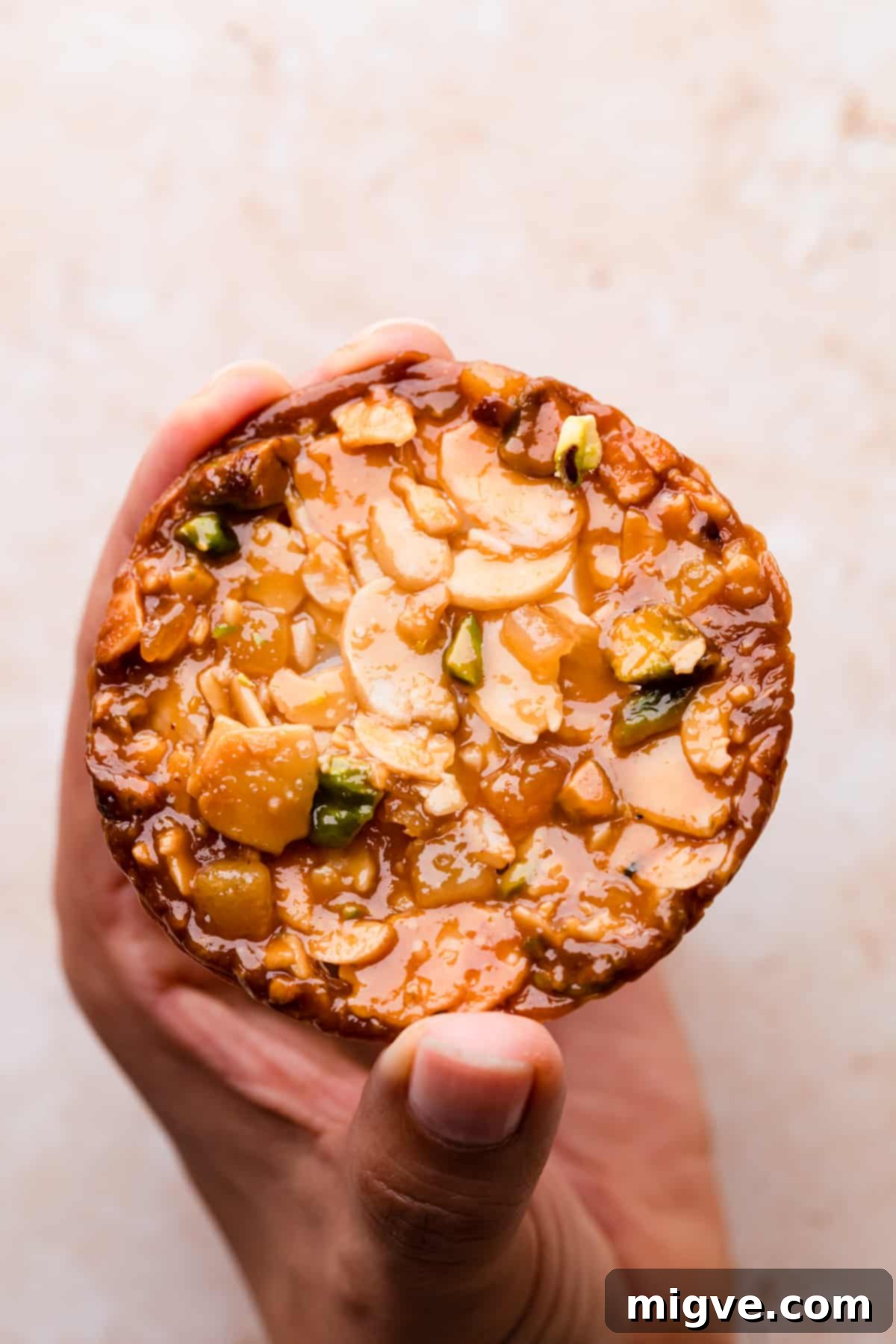
What Exactly Are Florentine Cookies?
If you’ve never had the pleasure of tasting florentine cookies before, envision a delightful hybrid—a delectable cross between a crunchy cookie and a rich, chewy candy. They share a delicate crispness similar to traditional lace cookies but stand apart with their robust inclusion of nuts, butter, sugar, and often fragrant candied fruits. While the core ingredients remain consistent, the specific additions can vary, allowing for a wide range of delicious interpretations. Our recipe, however, focuses on maximizing the irresistible appeal of classic almond florentines, elevated with hints of citrus and a rich chocolate finish.
The Allure of Almond Florentines
These thin, crunchy, and nutty almond florentines are renowned for their elegant and indulgent character. They make an exceptional accompaniment to any afternoon tea, adding a touch of refined sweetness to your spread. With their rich blend of nuts, aromatic citrus, and candied fruits, almond florentines are particularly perfect for gifting, especially during the festive Christmas season. Much like Cranberry Biscotti or Gingerbread Macarons, these florentine cookies will make a truly lovely and impressive addition to any holiday cookie box, delighting friends and family with their gourmet charm.
Beyond their festive appeal, these versatile cookies are a fantastic choice for any special occasion or simply when you desire an elevated treat. Their intricate flavors and captivating textures provide a unique dessert experience that is both memorable and satisfying. The delightful crunch followed by the chewy caramel and smooth chocolate creates a sensory journey that is hard to resist, making them a perennial favorite for those who appreciate fine confectionery.
Essential Ingredients for Perfect Florentines
Crafting delicious almond florentine cookies requires only a handful of readily available ingredients. The beauty of this recipe lies in its adaptability; while we provide a classic combination, you can easily customize it by swapping in your favorite nuts or fruits. Below, you’ll find a detailed list of the core ingredients along with helpful substitution suggestions to inspire your own creative variations.
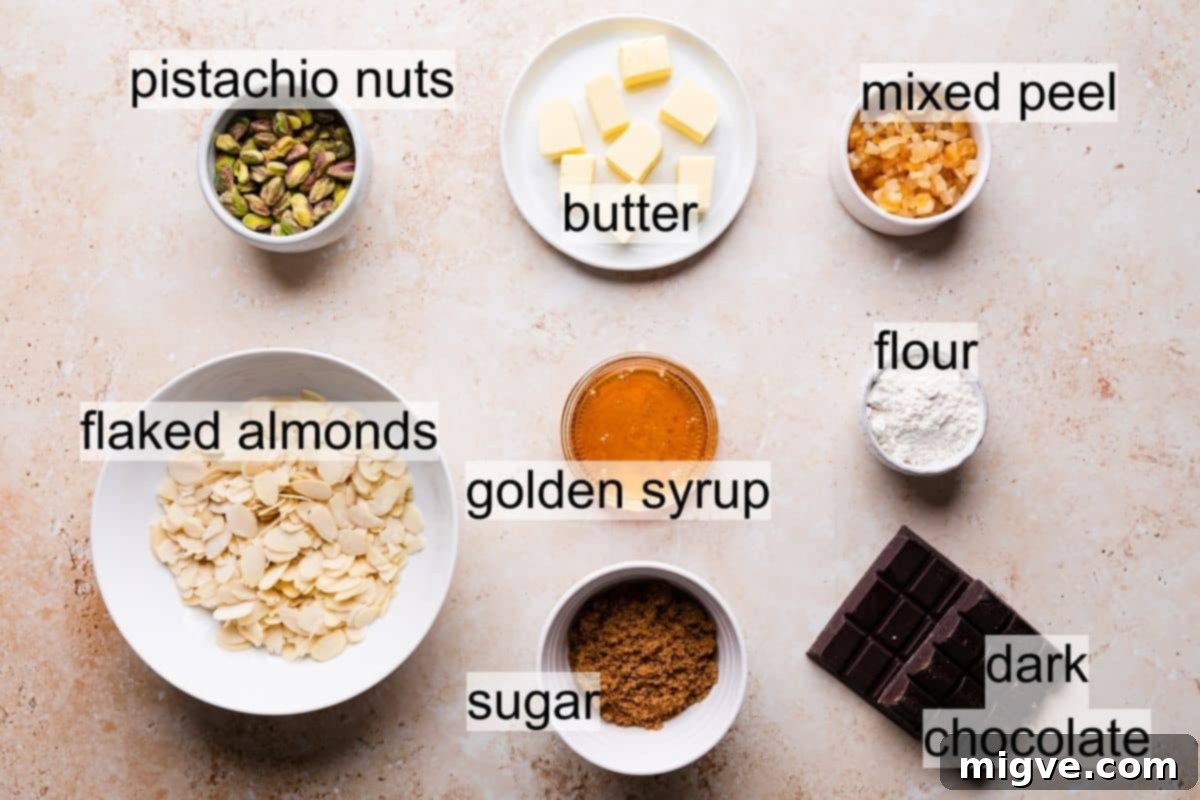
- Flaked Almonds: These are the star of the show, providing the signature nutty flavor and a significant portion of the delightful crunch. Flaked almonds are essentially blanched almonds that have been thinly sliced, making them ideal for even distribution and crisp texture. You can typically find them in the baking aisle or nuts section of most grocery stores. While blanched flaked almonds are common, skin-on flaked almonds can also be used for a slightly more rustic appearance and a touch of extra fiber.
- Pistachios (Optional): I personally love adding chopped pistachio nuts to my florentines. They introduce an additional layer of vibrant color, a subtly distinct flavor, and an extra satisfying crunch that elevates the overall experience. If pistachios aren’t your preference or readily available, feel free to omit them and increase the quantity of flaked almonds, or experiment with other finely chopped nuts like hazelnuts, walnuts, or pecans for a different, yet equally delicious, profile.
- Candied Citrus Peel: A blend of candied orange and lemon peels imparts a beautifully festive and bright flavor to these cookies. When baked, these sweet, fragrant bursts of citrus transform the caramel base with their zesty aroma and tender chewiness. You can conveniently purchase ready-made citrus peels from specialty stores or the baking aisle. For an even fresher and more personalized touch, consider making your own; my Zesty Lemon Cake recipe includes easy instructions for preparing them. Alternatively, glacé cherries or sultanas (golden raisins) make excellent substitutes for a different fruity note.
- Vegan Butter: To keep this easy florentine recipe entirely vegan, I opt for unsalted vegan butter. This ensures the buttery caramel flavor remains prominent without any dairy. However, you can use either salted or unsalted butter, whether vegan or dairy-based, depending on your dietary preferences and desired flavor profile.
- Flour: Only a very small amount of plain flour (all-purpose flour) is needed in this recipe. Its primary role is to act as a binder, helping to hold all the ingredients together and provide a stable structure for the cookies. For those seeking gluten-free florentines, simply swap the plain flour for a suitable gluten-free flour blend.
- Sugar: For florentines, I find that brown sugars truly enhance the flavor with their inherent buttery and rich caramel notes. Light muscovado sugar or soft light brown sugar are my top choices, as they contribute a deeper, more complex sweetness. However, demerara, turbinado, or even standard caster (granulated) sugar will also yield delicious results, albeit with slightly different caramelization characteristics.
- Golden Syrup: This ingredient is crucial for achieving the characteristic chewiness and helps bind all the nutty and fruity elements into the rich caramel matrix. Golden syrup is naturally vegan and contributes to the beautiful golden hue and distinctive flavor. Rice malt syrup is another excellent vegan alternative that functions similarly. If you don’t require the recipe to be vegan, honey can also be used, though it will impart a different flavor and texture.
- Chocolate: Dark chocolate florentines are undeniably the most popular choice, offering a perfect counterpoint to the sweetness of the caramel and nuts. Its slight bitterness creates a sophisticated balance. However, don’t hesitate to experiment! You can easily swap dark chocolate for creamy milk chocolate or sweet white chocolate. Just remember to choose a vegan variety if you are adhering to a plant-based diet.
For your convenience, the complete recipe card with precise measurements and detailed steps can be found at the bottom of this post.
Step-by-Step Instructions for Crafting Almond Florentines
You have a couple of options when it comes to baking your florentine cookies: either directly on lined baking sheets for a classic thin and crispy result, or within individual silicone cupcake cases for a smaller, thicker, and chewier cookie. My personal preference leans towards the crispy and thin version, but the choice is entirely yours, depending on your desired texture.
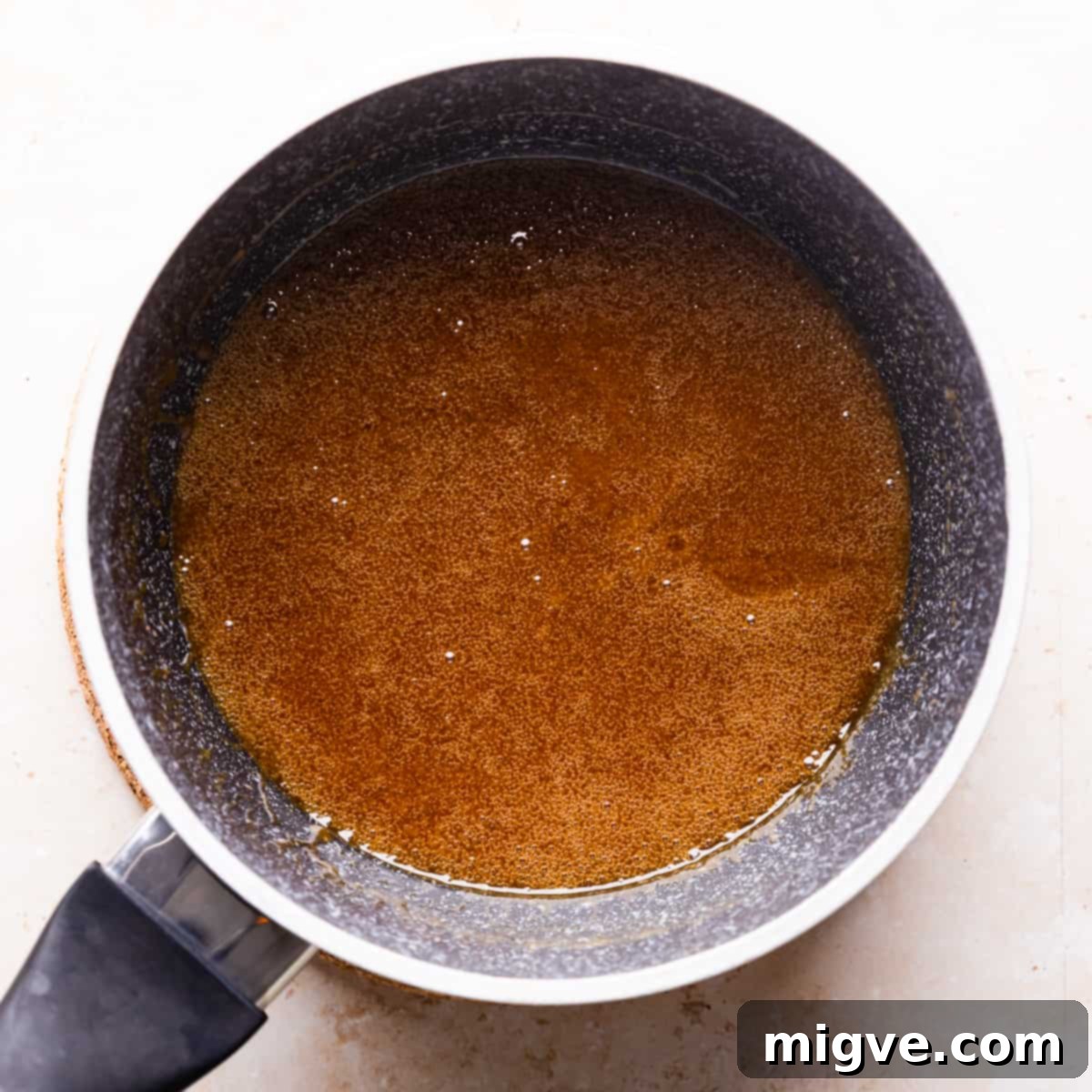
Step 1: Create the Caramel Base. In a medium saucepan, combine the butter, sugar, and golden syrup. Place the saucepan over medium heat and gently melt the ingredients together, stirring continuously until the mixture is smooth and fully combined. Be careful not to let it boil vigorously; a gentle simmer is sufficient.
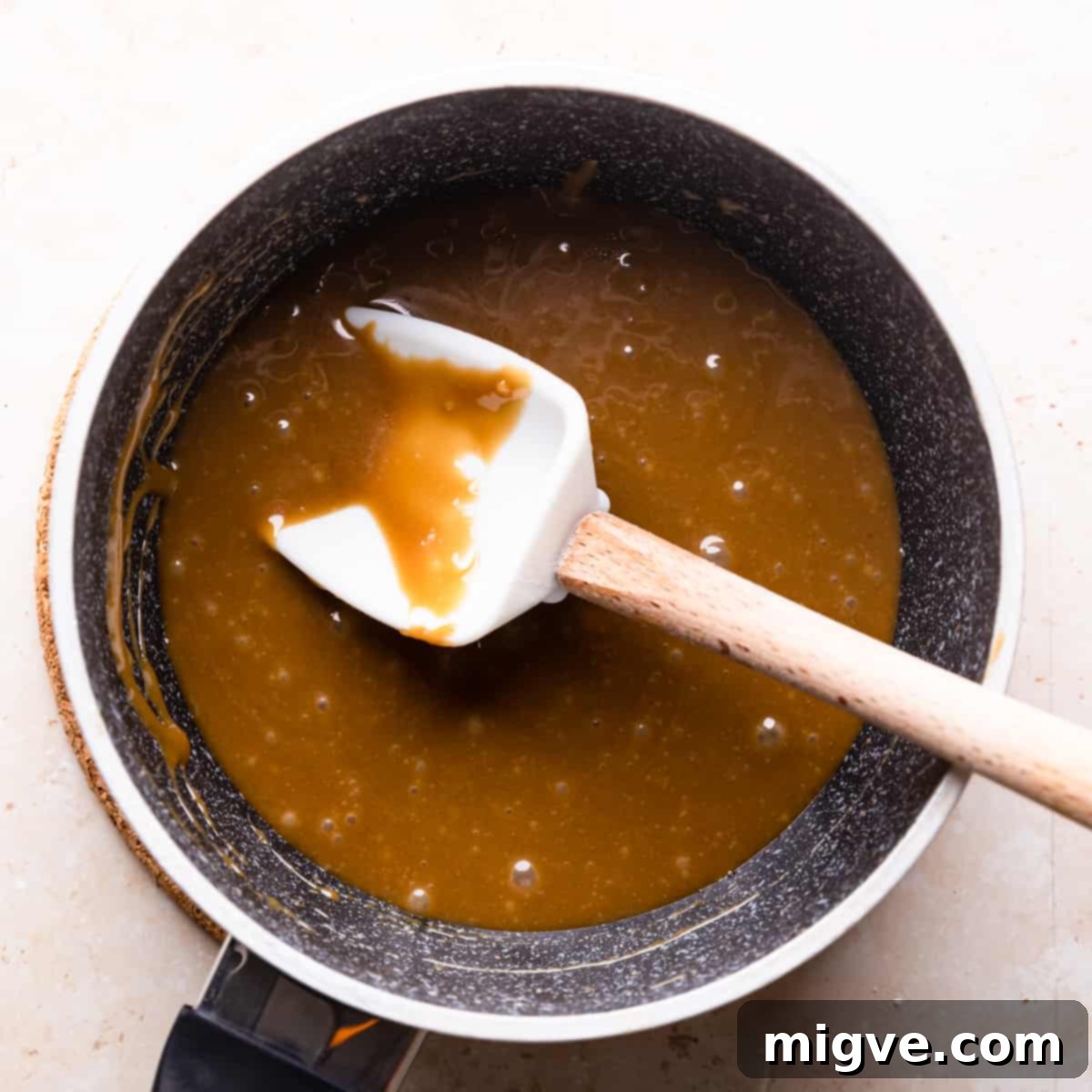
Step 2: Thicken the Mixture. Once the butter, sugar, and syrup are melted and cohesive, remove the saucepan from the heat. Add the plain flour to the warm mixture and stir vigorously with a spatula or whisk. Continue stirring until you achieve a smooth, thick, and glossy batter-like consistency. This step is crucial for binding all the subsequent ingredients.
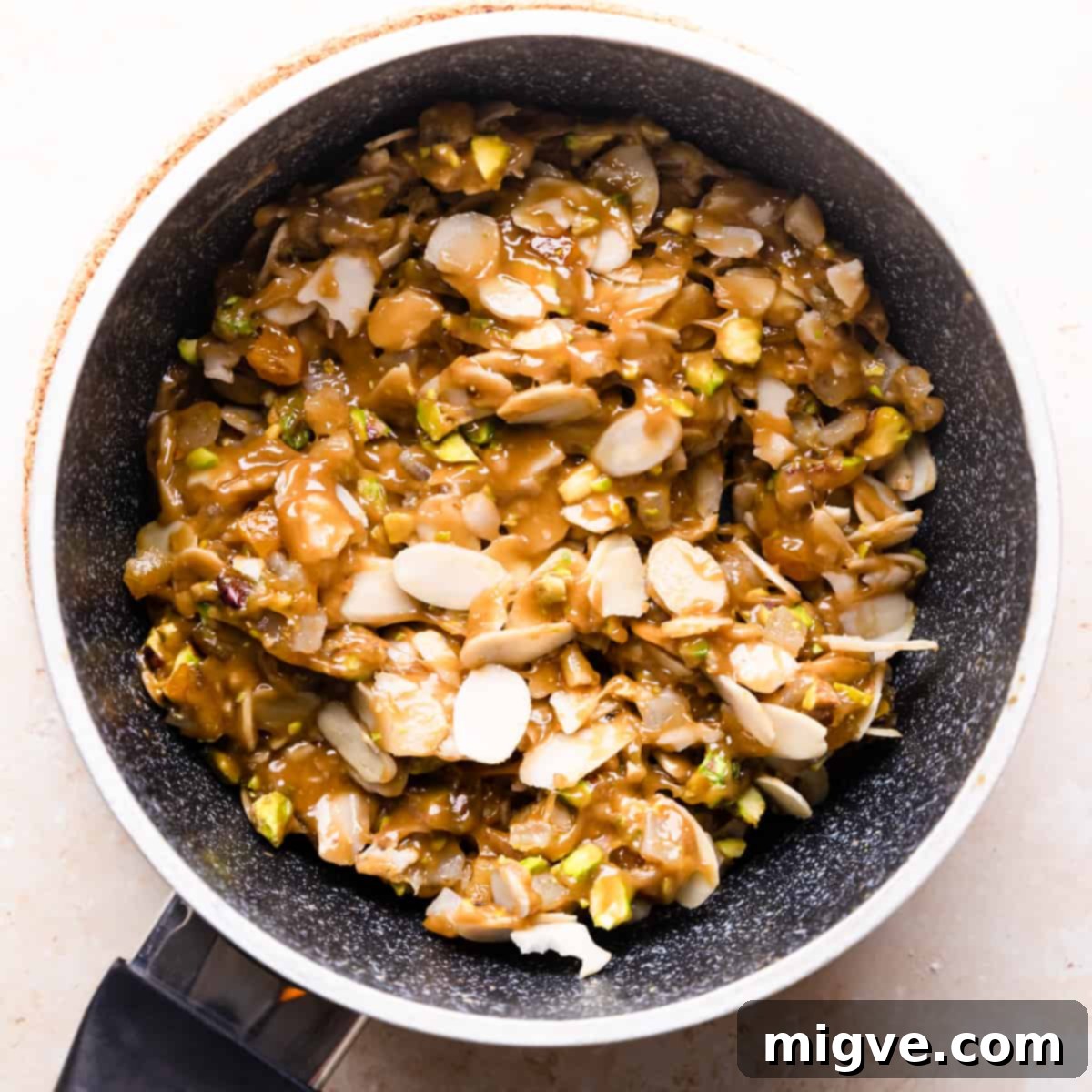
Step 3: Incorporate Nuts and Fruit. Gently fold the flaked almonds, chopped pistachios (if using), and candied citrus peels into the smooth caramel batter. Mix until all the nutty and fruity elements are evenly distributed throughout the sticky, golden mixture. Ensure everything is well coated.
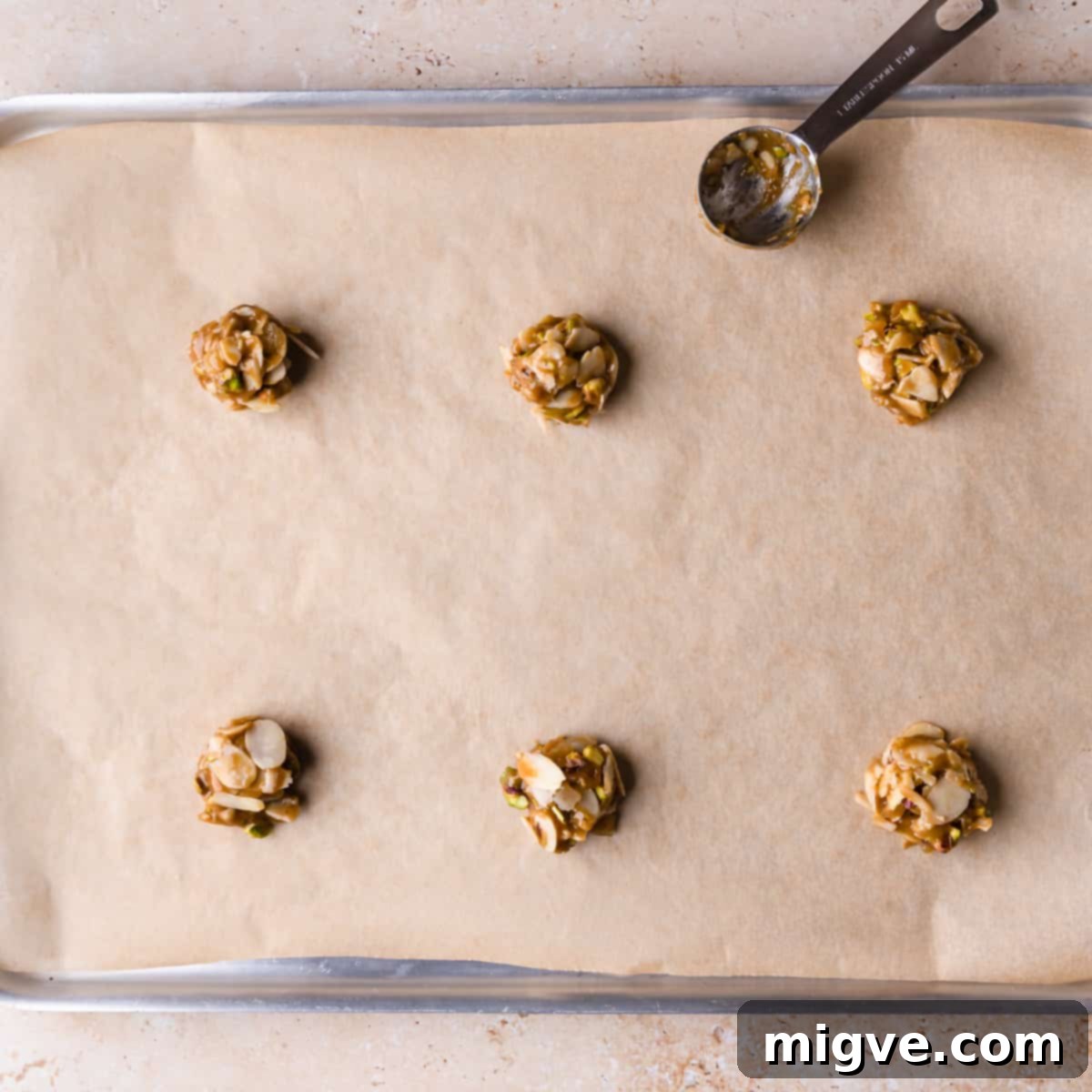
Step 4: Portion and Shape. Preheat your oven to 160°C (320°F) and line two baking sheets with baking parchment or a silicone baking mat. Using a measuring tablespoon, scoop out portions of the florentine mixture. Roll each portion into a small ball between your palms, then place them onto the prepared baking sheet, ensuring ample space (about 10cm or 4 inches) between each, as they will spread considerably during baking.
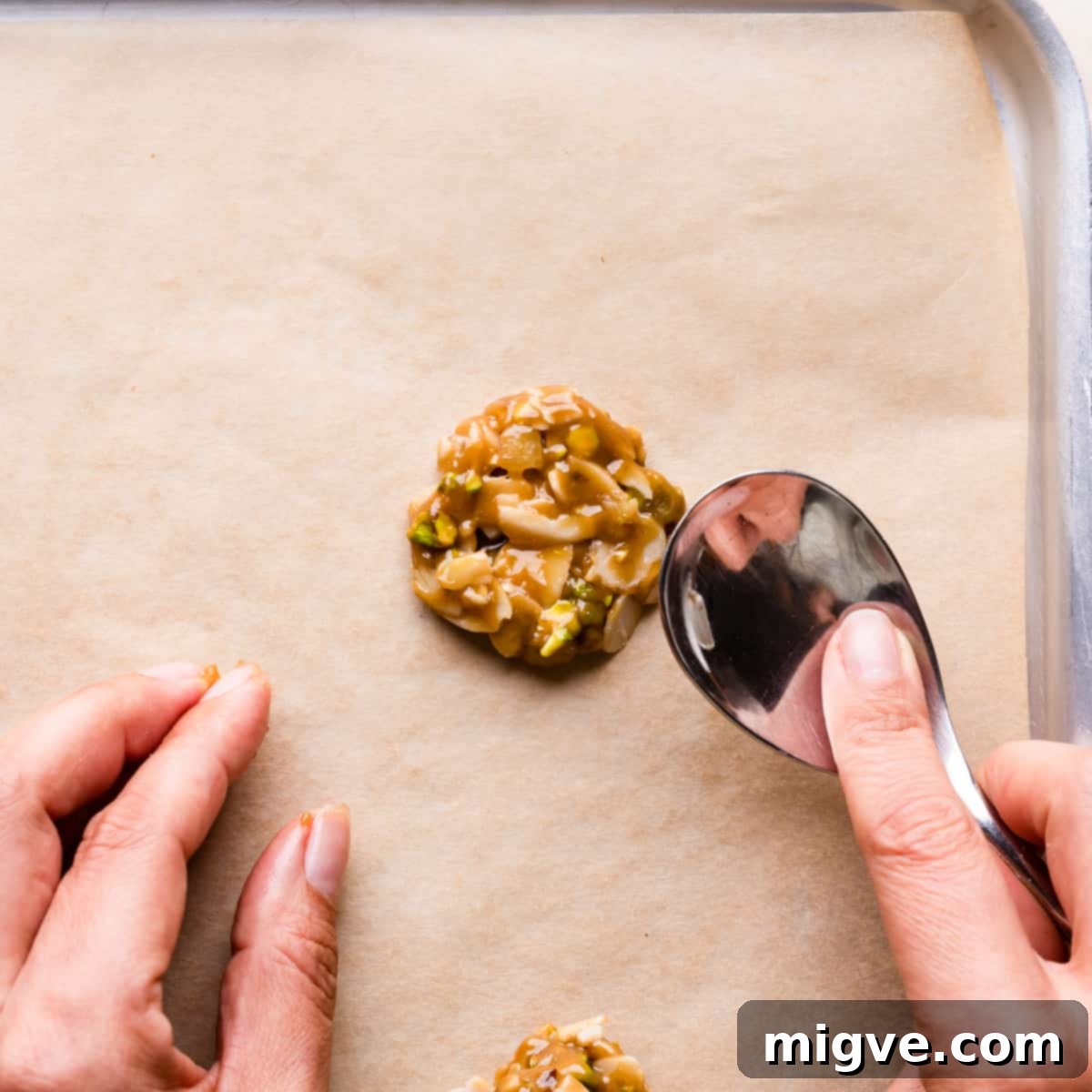
Step 5: Flatten the Discs. With the back of a spoon, gently press each ball of cookie mixture into a flatter disk, aiming for a diameter of roughly 5cm (2 inches). This helps ensure even baking and a beautiful, thin shape.
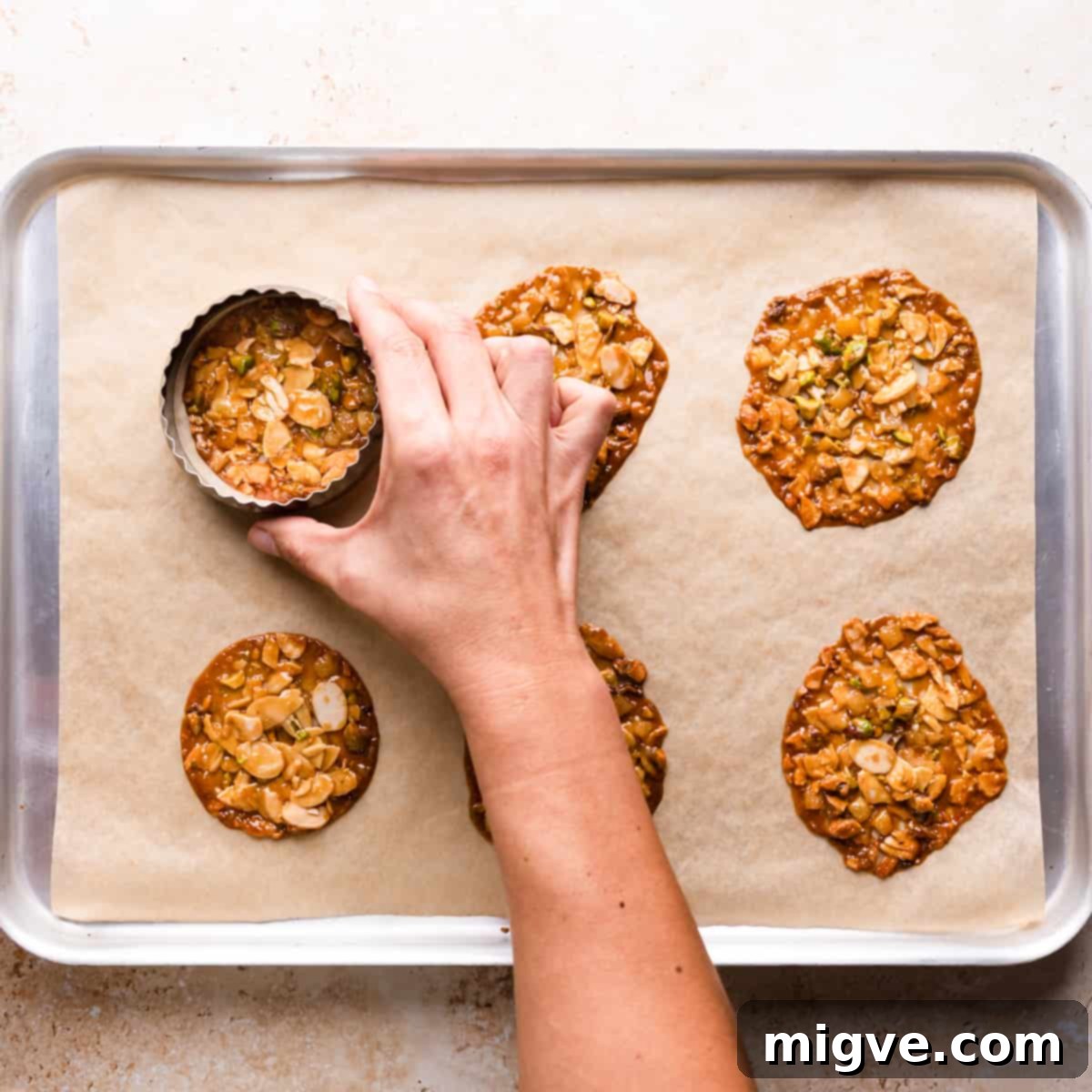
Step 6: Bake and Reshape. Bake the florentines in the preheated oven for 8-10 minutes, or until they achieve a deep golden-brown color, indicating optimal caramelization and crispness. Remove them from the oven. While still hot and pliable, gently reshape them into perfect rounds by nudging the edges with a knife or a round cookie cutter. This ensures a neat, uniform appearance.
💭Tip: For perfectly neat and uniform florentine cookies, have a plain round cookie cutter ready. Immediately after taking the baking sheet out of the oven, use the cookie cutter to press the edges of each biscuit into a tidy, round shape while the mixture is still hot and soft. This makes a significant difference in presentation.
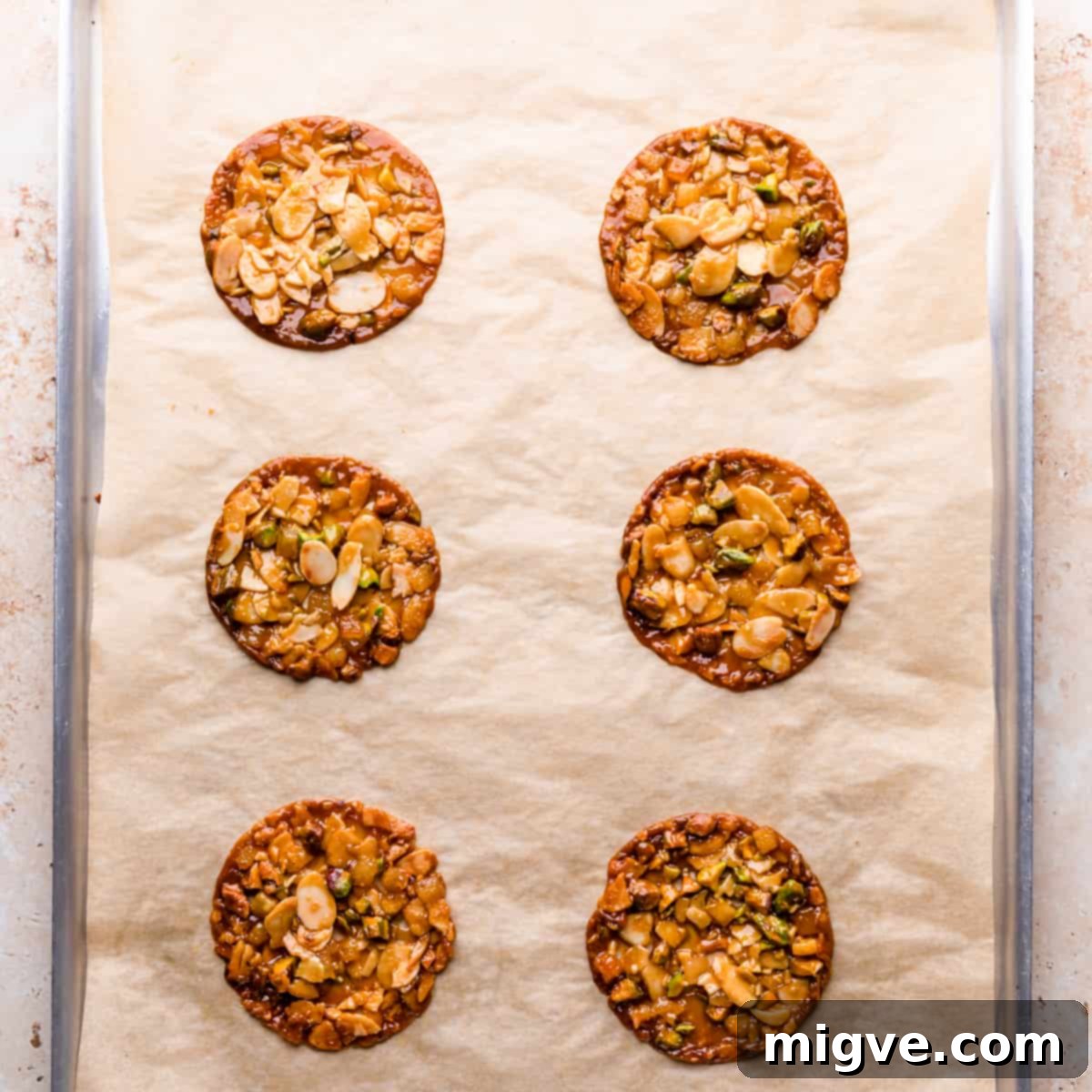
Step 7: Cool the Florentines. Allow the baked florentines to cool on the baking sheet for 5-10 minutes. They will be very fragile when hot, so this cooling period allows them to firm up sufficiently before you attempt to move them. Once firm enough, carefully transfer them to a wire rack to cool completely. This ensures maximum crispness.
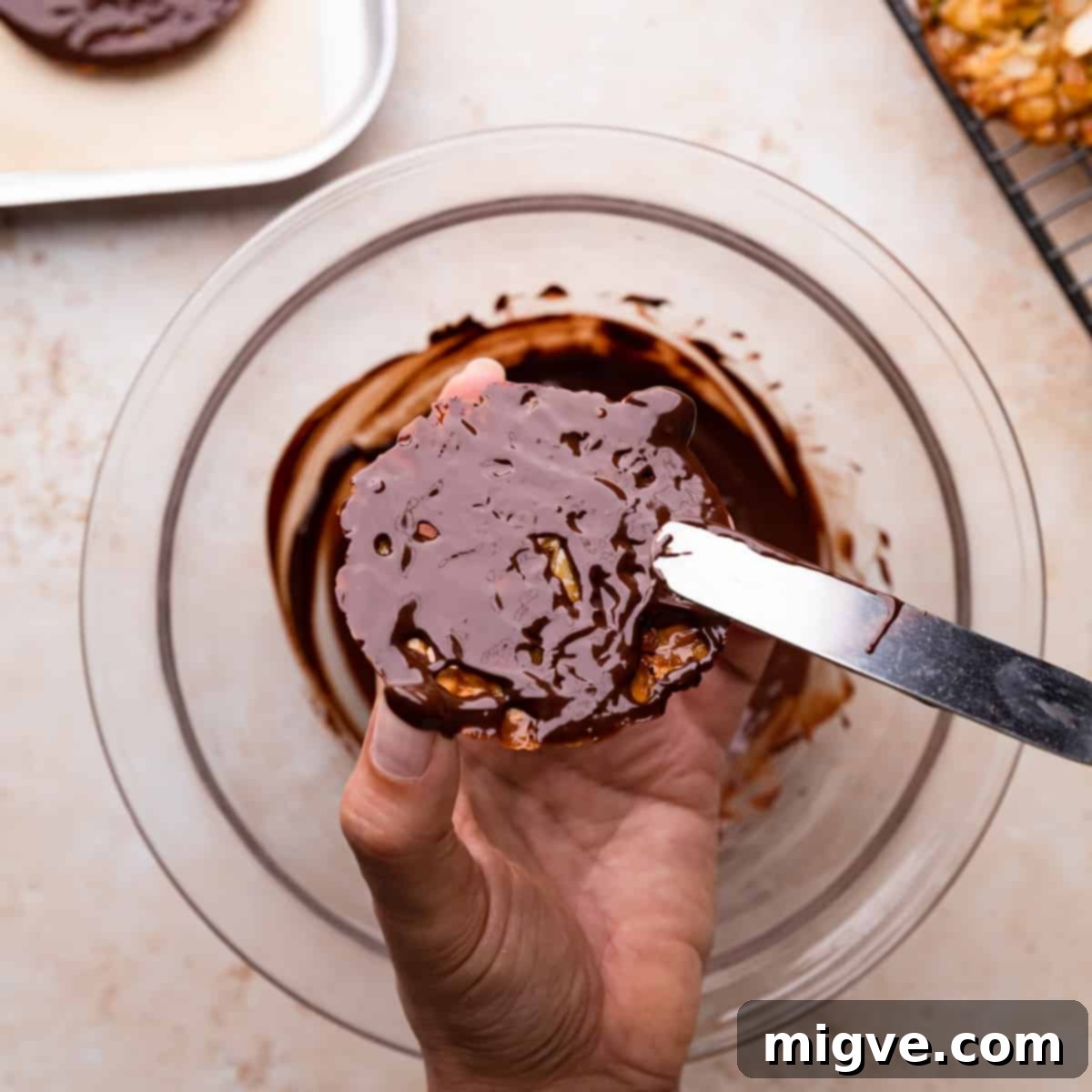
Step 8: Dip in Chocolate. Once the florentines are completely cool, melt your chosen dark chocolate using a double boiler or microwave. Dip the bottom of each florentine cookie into the melted chocolate. Use a small palette knife or the back of a spoon to spread the chocolate into a smooth, even layer, ensuring the entire bottom surface is coated. Place the cookies chocolate-side-up back on the baking sheet (lined with parchment) or on a cooling rack to allow the chocolate to set completely. Once set, your perfect almond florentines are ready to enjoy!
Alternative Method: Baking Florentines in Silicone Cups
For those who prefer a slightly thicker, chewier florentine with a more contained shape, baking them in silicone cupcake cases or a silicone muffin pan is an excellent alternative. This method prevents the cookies from spreading as much, resulting in a different but equally delightful texture. Below are the specific instructions for this approach:
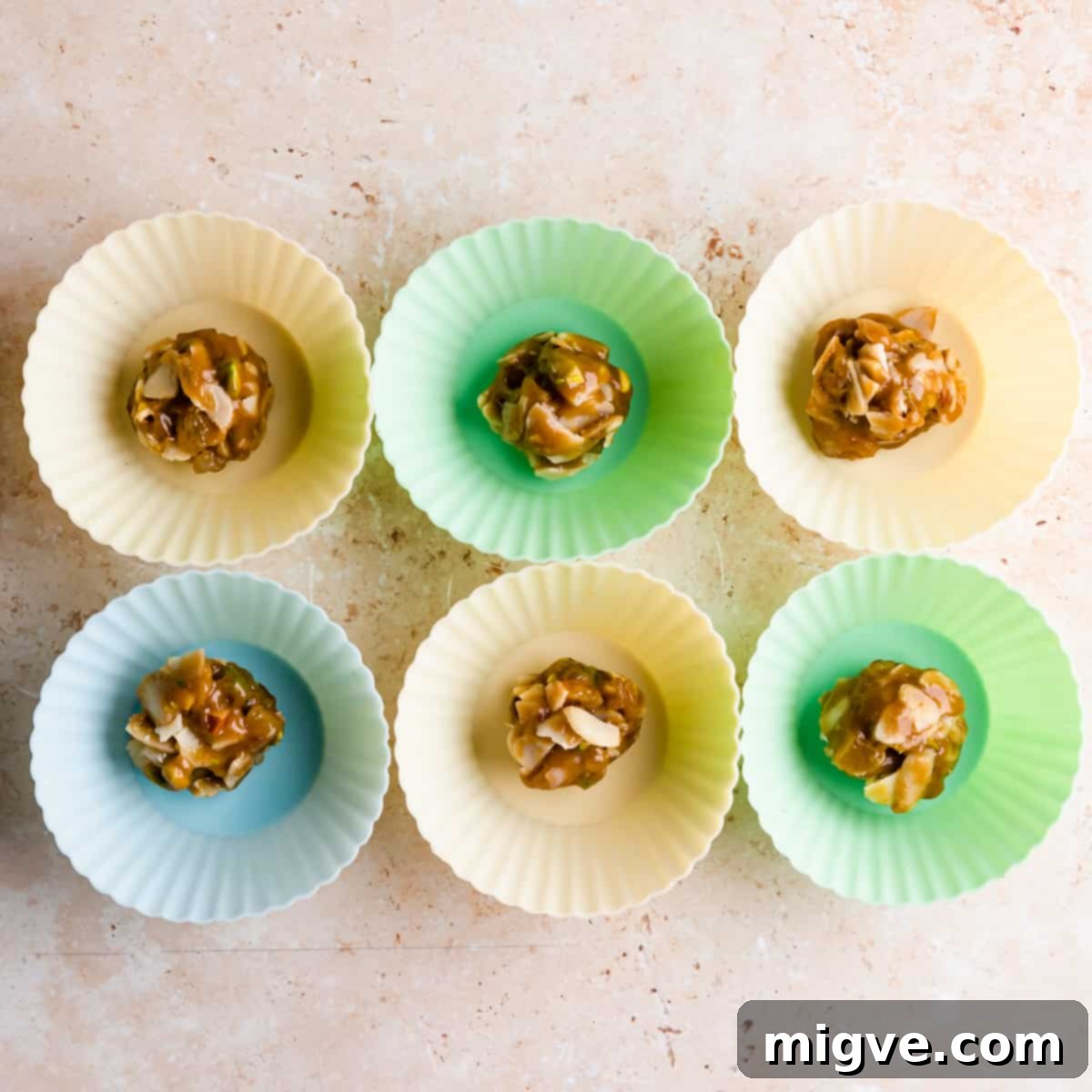
Step 1: Portion into Cases. Once your florentine mixture is prepared as per the main instructions, scoop approximately two-thirds of a tablespoon of the mixture into each silicone cupcake case. There’s no need to flatten them as they will naturally spread to fill the base of the cup. Place the filled cases on a baking sheet for stability.
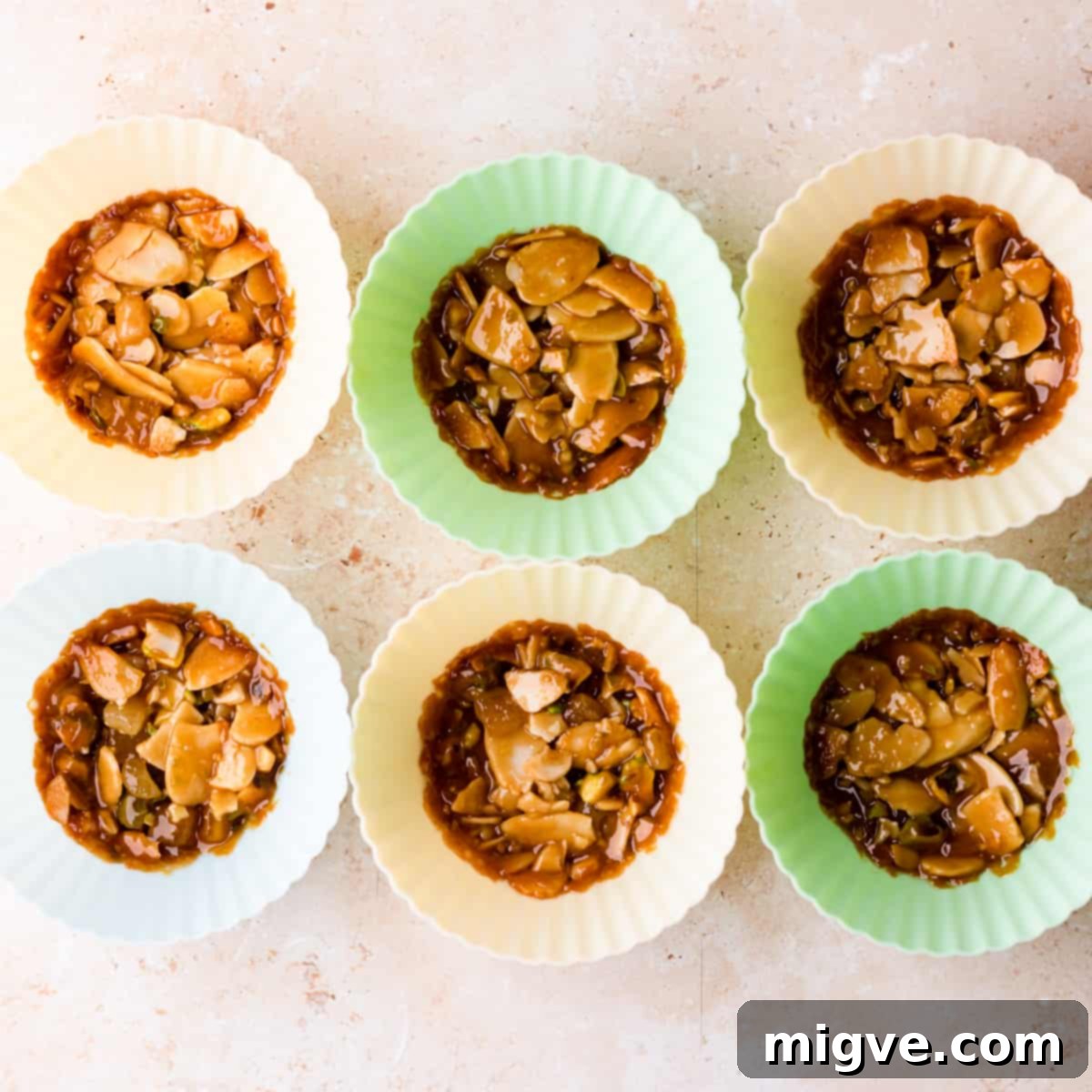
Step 2: Bake. Bake the florentines in the preheated oven (160°C/320°F) for 8-10 minutes, or until the edges are golden brown and the centers are set. The confined space of the silicone cases will result in less spread and a slightly thicker cookie. Remove them from the oven and allow them to cool within their cases for about 5-10 minutes.
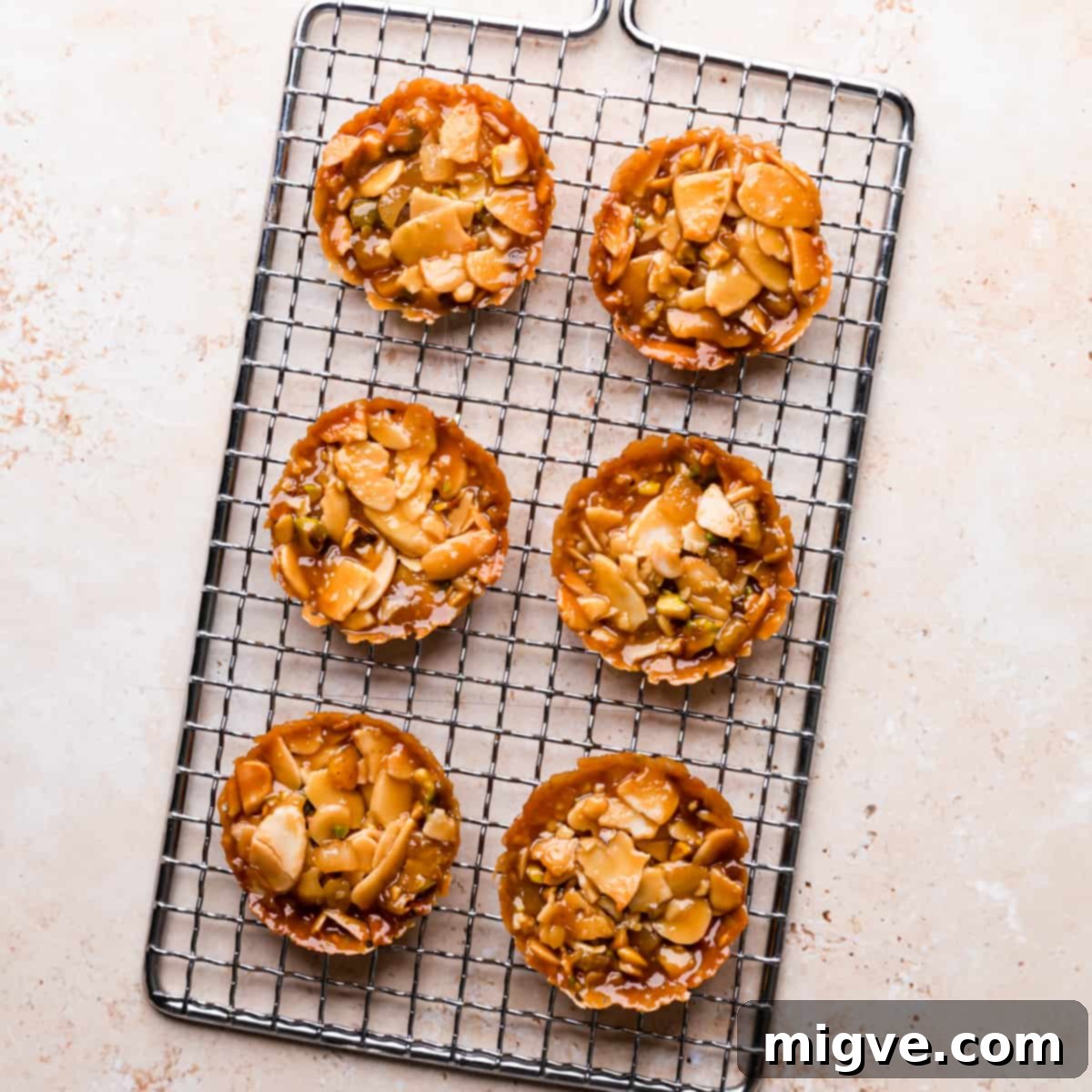
Step 3: Remove and Cool. After the initial cooling period in the silicone cases, carefully pop the florentines out. They should release easily due to the non-stick nature of silicone. Transfer them to a wire rack to cool completely. This ensures they maintain their shape and develop a pleasant texture.
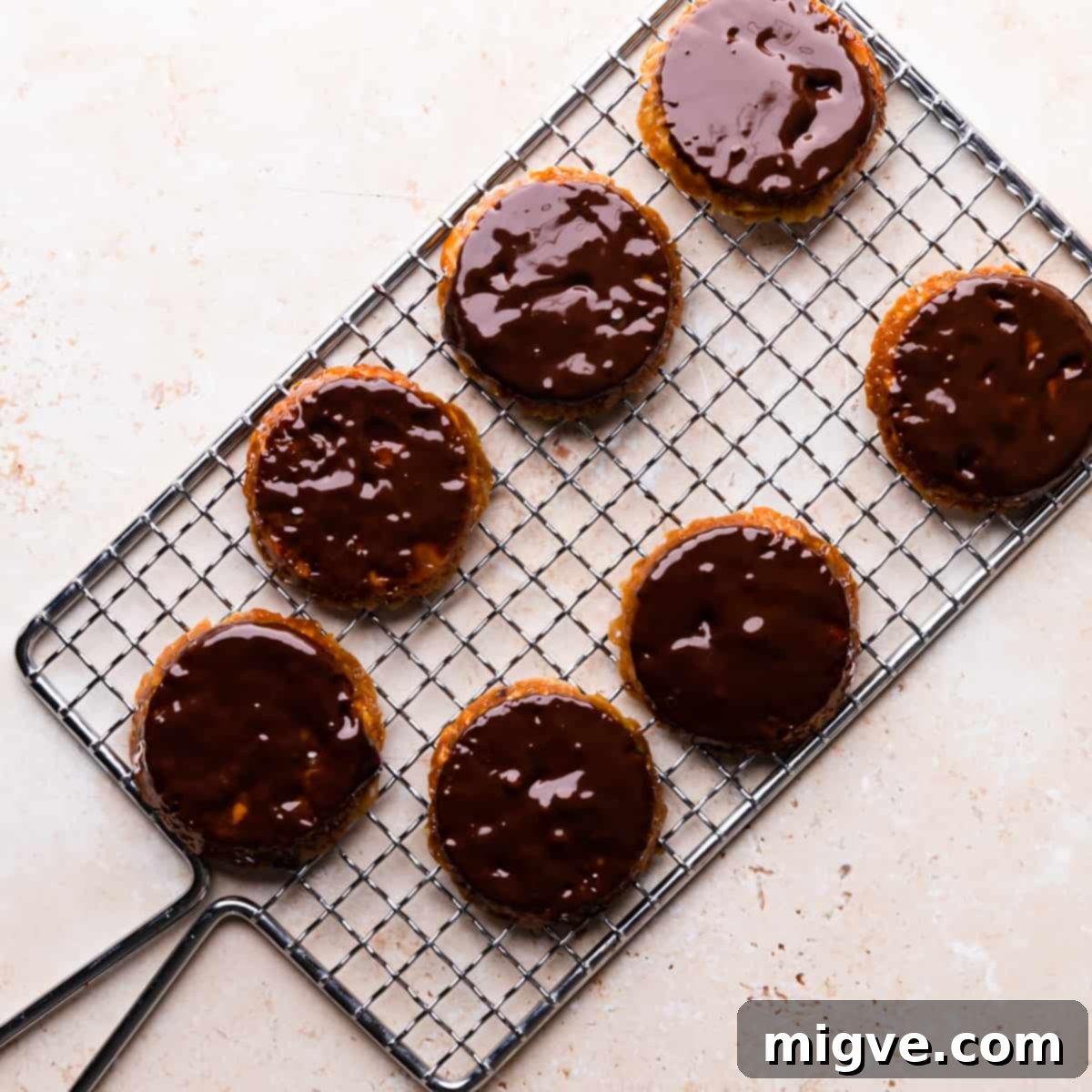
Step 4: Chocolate Coating. Melt your dark chocolate. Dip the bottom of each almond florentine into the melted chocolate, using a palette knife to spread an even layer. This time, place the cookies back on the wire rack with the chocolate-coated side facing upwards, allowing the chocolate to set beautifully and evenly. Once firm, they are ready to serve and impress!
Creative Variations for Your Almond Florentines
One of the most appealing aspects of this easy almond florentines recipe is its incredible versatility. It provides a fantastic canvas for you to unleash your creativity and tailor the cookies to your personal taste preferences or whatever ingredients you have on hand. Here are some inspiring suggestions for delicious variations:
- Experiment with Different Dried Fruits: While candied citrus peel offers a classic, vibrant flavor, florentines are wonderfully adaptable to various dried or candied fruits. Glacé cherries are a very common and popular choice, adding a beautiful ruby-red hue and a sweet, slightly tart chew. However, you could also try sultanas (golden raisins) for a more subtle sweetness, finely diced dried apricots for a tangy bite, dried cranberries for a festive touch, or even candied ginger for a warm, spicy kick. Chop them finely to ensure even distribution and adhesion within the caramel.
- Explore Other Nuts: The recipe calls for flaked almonds and optional pistachios, but don’t hesitate to incorporate your favorite nuts for added variety and complex flavors. Finely chopped pecans will lend a rich, buttery depth, walnuts offer an earthy, slightly bitter counterpoint, hazelnuts provide a warm, roasted aroma, and cashews add a creamy, mild sweetness. You can also simplify things by using only almonds, without any additional nuts, for a pure almond experience.
- Boost the Citrus Zest: For an even more pronounced and aromatic citrus burst, consider adding a tablespoon of finely grated orange or lemon zest to the caramel mixture along with the candied peels. The natural oils in the zest will infuse the cookies with an incredible freshness and brightness.
- Non-Vegan Florentines with Cream: If you’re not concerned about keeping your florentine cookies vegan, you can introduce a richer, chewier texture by adding a couple of tablespoons of double cream (heavy cream) to the butter, sugar, and golden syrup mixture as it melts. This addition will create a slightly more mellow, softer, and notably chewier florentine, perfect for those who enjoy a less crisp bite.
- Gluten-Free Almond Florentines: To make a gluten-free version of this delightful treat, simply substitute the plain flour with an equal amount of your preferred gluten-free all-purpose flour blend. Many florentine recipes even omit flour entirely, relying solely on the caramel and nuts for structure, so experimenting with a flour-free approach is also an option for a naturally gluten-free cookie.
- Change the Chocolate Type: Dark chocolate provides a lovely bittersweet balance to the sweet caramel, but don’t limit yourself! Why not try dipping your florentines in creamy milk chocolate for a sweeter, more familiar flavor, or elegant white chocolate for a delicate, luxurious finish? Remember to select a vegan chocolate variety if maintaining a plant-based diet.
Essential Equipment for Making Florentine Biscuits
You’ll be pleased to know that you don’t need any highly specialized or expensive equipment to create these beautiful florentine biscuits. Most of the tools required are likely already in your kitchen. Here’s a list of a few key items that will simplify the process and help you achieve the best results:
- Medium Saucepan: This is essential for melting the butter, sugar, and golden syrup to create the crucial caramel base. A medium-sized pan allows for easy stirring and prevents the mixture from boiling over.
- Measuring Spoon: While not strictly necessary, using a precise measuring tablespoon (which differs from a standard large spoon or dessert spoon) is highly recommended. It will help you scoop uniform portions of the florentine mixture, ensuring that all your cookies are similar in size and bake evenly, leading to a more professional and appealing finish.
- Baking Sheets or Silicone Cupcake/Muffin Cases: You have options here. You can bake the florentines directly on baking trays lined with parchment paper (or a reusable silicone baking mat). This method tends to produce thinner, crispier cookies. Alternatively, you can scoop the cookie mixture into individual silicone cupcake cases or a silicone muffin pan. This yields smaller, thicker, and chewier florentines. If baking directly on a baking tray, remember to leave ample room—approximately 10cm (4 inches)—between each cookie, as they will spread significantly during baking. You may need to bake them in batches depending on the size of your tray.
- Round Cookie Cutter (Optional): This isn’t a mandatory item, but it is incredibly handy if you desire perfectly neat and uniform round florentines. As soon as the cookies come out of the oven, while they are still warm and pliable, you can gently use the cookie cutter to press and reshape the edges into a pristine circular form.
- Heatproof Bowl: This is needed for melting your chosen chocolate. You can melt chocolate using a bain-marie (setting the heatproof bowl over a pan of simmering water, ensuring the bottom of the bowl does not touch the water) or by carefully microwaving it in short bursts, stirring frequently to prevent burning.
Storage Solutions for Your Homemade Almond Florentines
Proper storage is key to maintaining the delightful crispness and fresh flavor of your easy vegan florentines. These cookies store exceptionally well, allowing you to enjoy them over an extended period or prepare them in advance for special occasions.
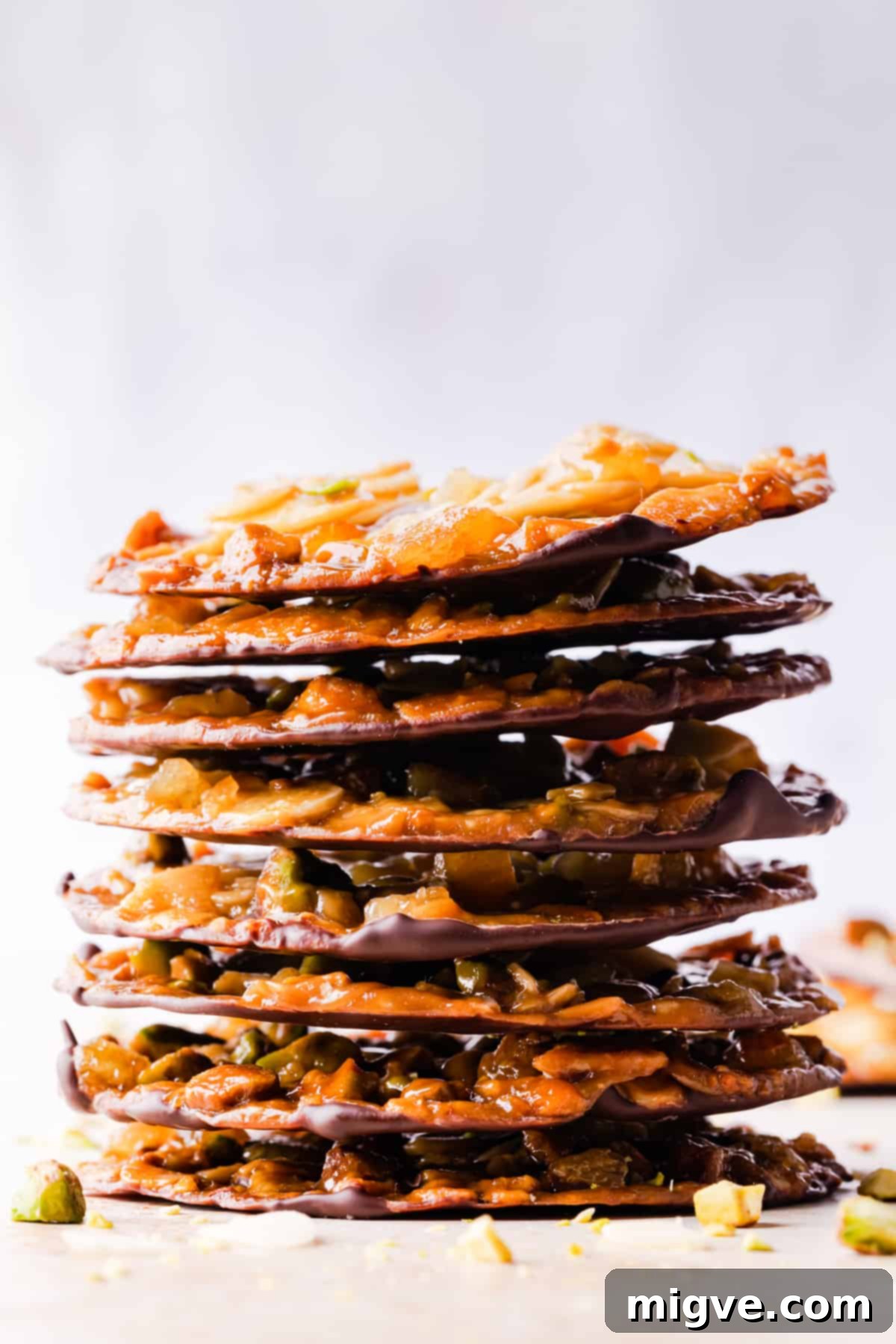
Store your almond florentines in an airtight container at room temperature for up to 2 weeks. For even better preservation and to keep them crisp, they can also be stored in the fridge for the same duration. Ideally, you want to store them in a single layer within the container to prevent them from sticking together. However, if you need to stack the cookies, always place a layer of baking paper (parchment paper) or wax paper between each layer. This simple step is crucial for preventing the caramel from adhering the cookies to one another, making them easy to separate without damage.
Florentines are also excellent candidates for freezing, extending their shelf life considerably. You can freeze them for up to 3 months without compromising their quality. To freeze effectively, first wrap the individual cookies or small stacks (separated by parchment paper) in a double layer of cling film (plastic wrap). Then, wrap them again with a layer of aluminum foil. This double-layer protection helps prevent freezer burn and keeps unwanted odors out. When you’re ready to enjoy them, simply thaw the frozen florentines overnight in the fridge. Once thawed, they’ll be almost as good as freshly baked!
Expert Tips for Perfect Almond Florentines Every Time
- Chop Additional Ingredients Finely: If you decide to include any extra nuts or dried fruits beyond what’s specified, it’s crucial to chop them into smaller, uniform pieces. Smaller pieces integrate much more effectively into the caramel mixture, ensuring they stick together well and prevent the cookies from crumbling or falling apart during baking and handling. This also contributes to a more delicate texture.
- Utilize a Measuring Tablespoon for Consistency: For perfectly sized and uniformly round florentines, always use a measuring tablespoon to scoop out the cookie mixture. This simple technique ensures that each cookie contains roughly the same amount of batter, leading to consistent baking times and a professional-looking final product.
- Ensure Ample Spacing on Baking Sheets: Florentine cookies spread quite a bit while baking due to their high sugar and fat content. To prevent them from merging into one giant cookie, leave generous space between each portion on the baking sheet—approximately 10cm (4 inches) apart. Depending on the size of your baking sheet, you might need to bake them in batches of 5-6 cookies at a time. Patience with spacing is key to individual, beautifully formed florentines.
- Reshape While Warm for Neatness: If you desire super neat and perfectly round almond florentines, keep a plain round cookie cutter or a spatula handy. Immediately after removing the baking sheet from the oven, while the cookies are still hot and pliable, use the cookie cutter or the edge of a spatula to gently push the edges of each biscuit into a neat, round shape. This trick helps define their form before they fully set. Alternatively, baking in silicone cupcake cases or greased paper liners will naturally produce contained, round shapes.
- Allow Adequate Cooling on the Tray: It’s vital not to lift your baked florentines too soon from the baking tray. When they first come out of the oven, they are extremely delicate and fragile, prone to breaking. Allow them to cool on the baking sheet for a minimum of 5-10 minutes, or until they have firmed up sufficiently to be safely transferred to a wire rack for complete cooling. Rushing this step can lead to broken cookies.
Frequently Asked Questions About Almond Florentines
Despite their name, florentine cookies are generally believed to originate from France, not Florence, Italy. The charming name is thought to be a nod to the “Florin,” a gold coin first minted in Florence during the 13th century. These Florins became a standard currency across Europe for centuries, known for their elegance and value. The name “florentine” was likely bestowed upon these cookies to evoke a sense of richness, luxury, and delicate craftsmanship, much like the famous gold coins. They are a true testament to the culinary artistry that transcends geographical boundaries.
Absolutely! This recipe is incredibly flexible and can be easily scaled up or down. The quantities provided in the recipe card are designed to yield approximately 18-20 delicious almond florentine cookies, which is a perfect batch for sharing or enjoying over a few days. If you’re planning for a larger gathering, holiday gifting, or simply want to stock up, feel free to double all the ingredient measurements. Conversely, if you desire a smaller, more intimate batch, you can just as easily halve the recipe to make about 9-10 cookies. Just ensure you have enough baking sheets to accommodate the spread if you’re doubling the recipe!
It’s normal for florentine cookies to be very soft and pliable when they first come out of the oven; they firm up and develop their characteristic crispness as they cool completely. If your florentines remain on the softer side even after they’ve cooled down, it’s likely that they weren’t baked for quite long enough. While they will undoubtedly still be delicious with a chewier texture, for a truly crisp cookie, you want them to reach a deeper golden-brown color during baking. This deeper hue indicates that the sugars have caramelized sufficiently, which is essential for that signature Florentine snap. Next time, try extending the baking time by a minute or two until they achieve a richer, more uniform golden-brown hue across the entire surface.
To easily save this incredible recipe for later, simply use the ‘Pin Recipe’ button available on the recipe card below or hover over any of the beautiful photos above to pin them directly to your Pinterest board.
If you try this recipe for almond florentines, or any other recipe from Anna Banana, please take a moment to rate the recipe and/or leave me a comment with your feedback. I absolutely love hearing from you and seeing your culinary creations, and your reviews also greatly assist other readers who are considering making the recipe!
Full Recipe Details: Easy Vegan Almond Florentines
These delightful almond florentine cookies are a sweet, nutty, and buttery treat, brimming with hints of fragrant citrus and deep notes of toffee and caramel. They come together incredibly fast, ready in under 30 minutes, and wonderfully, require no chilling time!
Yields: 20 cookies
Prep Time: 15 minutes | Cook Time: 10 minutes | Total Time: 25 minutes
Course: Dessert | Cuisine: British, Dairy-Free, French | Keyword: almond florentines, florentine cookies, florentines, vegan florentines
Calories: 111 kcal per serving
Equipment:
- Medium saucepan
- Baking paper or silicone baking mat
- Baking sheets
- Measuring tablespoon (optional, for uniform size)
- Round cookie cutter (optional, for shaping)
- Heatproof bowl (for melting chocolate)
Ingredients:
- 50 g unsalted vegan butter
- 50 g light brown or light muscovado sugar
- 40 g golden syrup
- 30 g plain flour (or gluten-free flour blend)
- 75 g flaked almonds
- 50 g pistachio nuts, chopped (optional)
- 50 g mixed candied citrus peel
- 150 g dark chocolate, melted (vegan if necessary)
Instructions:
- Prepare for Baking: Preheat your oven to 160°C (320°F). Line two baking sheets with baking parchment paper or a silicone baking mat and set them aside. Alternatively, you can use individual silicone cupcake cases or a silicone muffin pan for thicker cookies.
- Create the Caramel Base: In a medium saucepan, combine the vegan butter, light brown sugar, and golden syrup. Place over low heat and melt, stirring frequently until smooth and well combined. Once melted, remove from the heat and whisk in the plain flour until you have a smooth, thick, and shiny batter.
- Add Nuts and Fruit: Fold the flaked almonds, chopped pistachio nuts (if using), and mixed candied citrus peel into the caramel mixture. Stir well until all ingredients are evenly coated and combined.
- Scoop and Shape: Scoop out approximately a tablespoonful of the mixture for each cookie. Place these portions onto your prepared baking sheet (or directly into silicone cupcake cases), ensuring at least 10cm (4 inches) of space between each as they will spread. Gently flatten each portion with the back of a spoon into rough 5cm (2-inch) discs.
- Bake and Cool: Bake the florentines for 8-10 minutes, or until they turn a deep golden brown color. For a softer, chewier cookie, bake for about 6-8 minutes. Remove from the oven. While still hot and pliable, use a knife or a round cookie cutter to gently reshape the edges into neat rounds. Allow them to cool on the baking sheet for 5-10 minutes until firm enough to transfer. Carefully move the cookies to a wire rack to cool completely.
- Dip in Chocolate: Once completely cooled, melt the dark chocolate. Dip the bottom of each florentine cookie into the melted chocolate. Use a small palette knife or the back of a spoon to spread the chocolate evenly across the bottom. Place the cookies chocolate-side-up (face down if they are on a cooling rack) on a baking sheet lined with parchment paper, or back on a wire rack, and allow the chocolate to set fully before serving. Enjoy your delicious homemade almond florentines!
Please note that all my recipes are developed and tested using metric grams for precision. I highly recommend using digital scales for the most accurate results. While I have provided a conversion to US customary measurements within the recipe, please be aware that I have not personally tested the recipe using these conversions.
Notes:
Storage and Freezing:
- Store these vegan almond florentines in an airtight container at room temperature or in the fridge for up to 2 weeks to maintain freshness.
- When storing, ideally arrange them in a single layer. If stacking, place a layer of baking parchment paper between each cookie to prevent sticking.
- Florentines can be frozen for up to 3 months. Wrap them tightly in a double layer of cling film (plastic wrap), separating layers with parchment paper if stacking, and then wrap again in aluminum foil to prevent freezer burn. Thaw overnight in the fridge before serving.
Recipe Tips:
- If adding extra nuts or dried fruits, chop them finely. This helps them adhere better to the caramel and prevents the cookies from crumbling.
- Use a measuring tablespoon for scooping the mixture to ensure consistent cookie sizes and even baking.
- Leave generous space (about 10cm or 4 inches) between cookies on the baking sheet, as they spread significantly. Bake in batches if necessary.
- For perfectly round florentines, gently press the edges with a large round cookie cutter or a spatula immediately after they come out of the oven, while still warm.
- Do not remove warm florentines from the baking tray too soon; they are fragile. Let them cool for 5-10 minutes until firm enough to transfer to a wire rack.
Nutrition Information (per cookie):
Serving: 5g | Calories: 111kcal | Carbohydrates: 11g | Protein: 2g | Fat: 7g | Saturated Fat: 3g | Polyunsaturated Fat: 1g | Monounsaturated Fat: 3g | Trans Fat: 0.1g | Cholesterol: 6mg | Sodium: 20mg | Potassium: 95mg | Fiber: 1g | Sugar: 8g | Vitamin A: 75IU | Vitamin C: 0.1mg | Calcium: 20mg | Iron: 1mg
This recipe was originally published in November 2016. It has been extensively updated in January 2023 with new photos, a video tutorial, a revised and improved recipe, and additional helpful tips, reflecting our continuous effort to provide you with the best culinary experience.