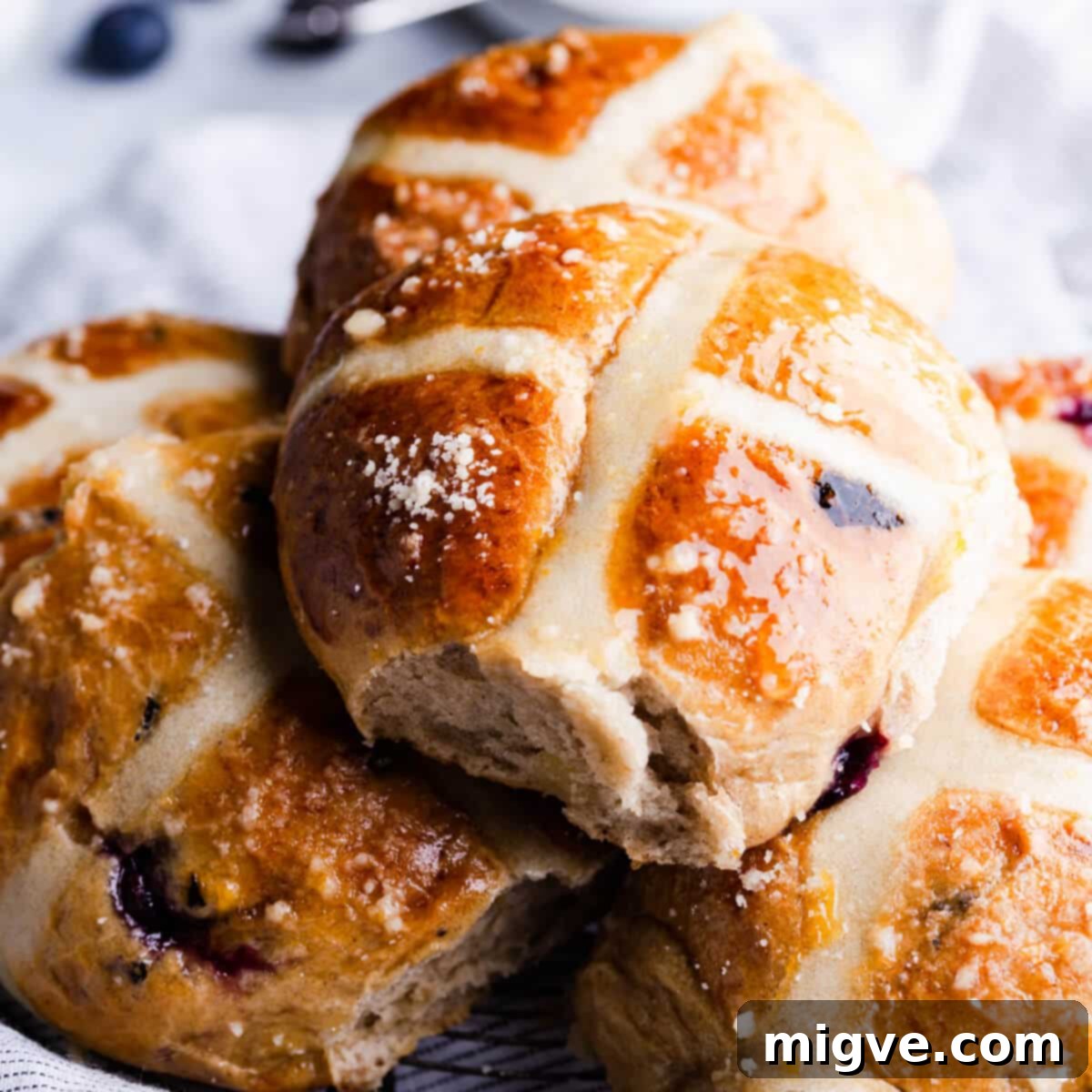
Welcome to the ultimate guide for baking the most incredibly soft and fluffy blueberry hot cross buns you’ve ever tasted! These delightful Easter treats are brimming with aromatic spices, bursting with sweet and juicy blueberries, and accented by the subtle chew of candied fruit peel. Each bun is gracefully adorned with its iconic cross, lovingly glazed with a shiny apricot jam, and finished with an optional, delectable crumble topping for a truly modern and irresistible twist on a classic.
There’s nothing quite like the warmth and aroma of freshly baked hot cross buns filling your home. While shop-bought versions offer convenience, they simply can’t compare to the superior texture, flavor, and immense satisfaction of a batch made from scratch. These homemade blueberry hot cross buns are not only easy to make, but they also taste even better the following day when lightly toasted and generously spread with butter. Once you experience the joy of baking your own, you’ll likely never look back!
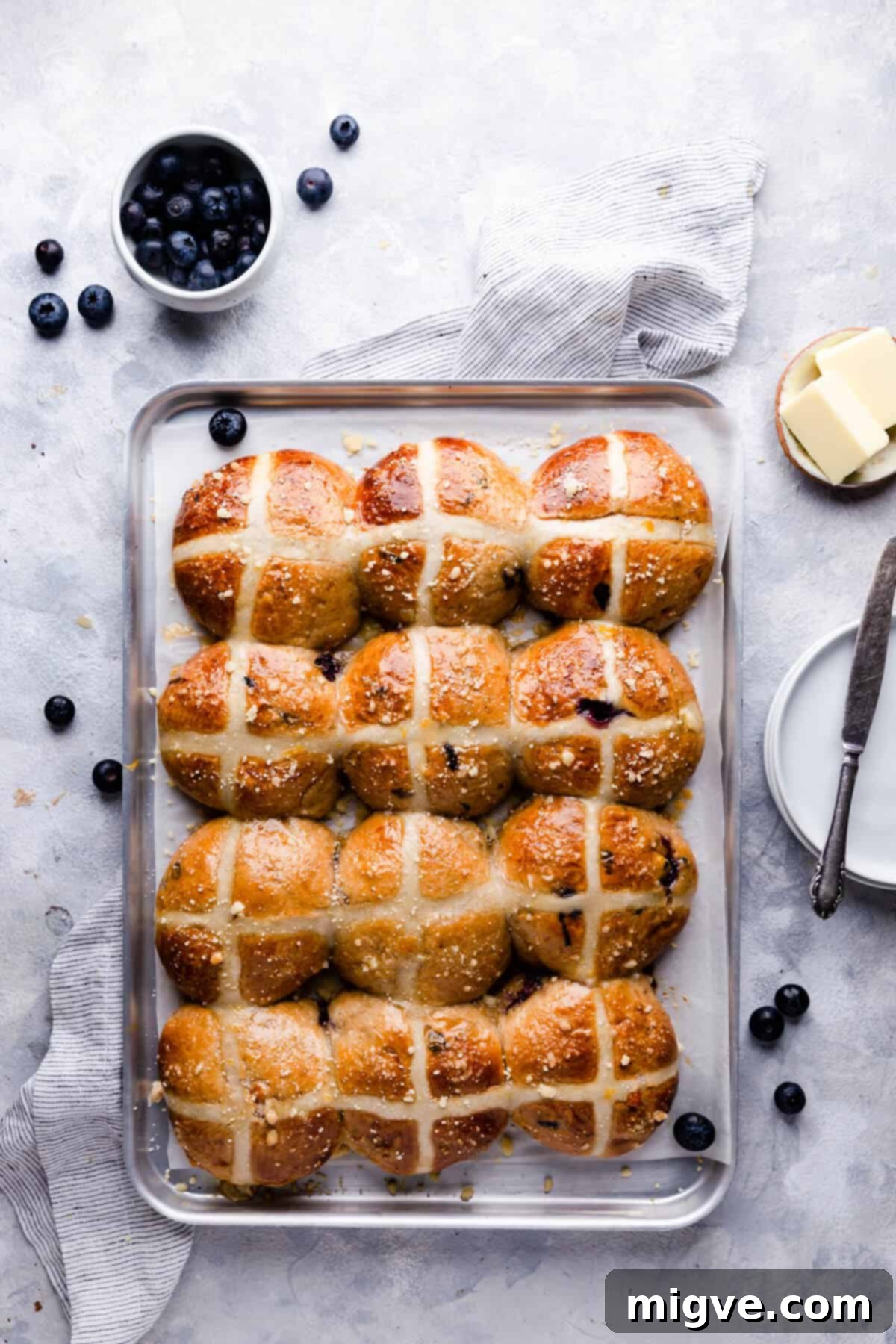
Hot cross buns are a cherished tradition, particularly around the Easter holidays, symbolizing the end of Lent and the arrival of spring. Their rich history and comforting flavors make them a perfect centerpiece for family gatherings. Just like our popular Chocolate Chip Hot Cross Buns, this blueberry variation is ideal for sharing and will make a splendid, festive addition to any Easter breakfast, brunch, or even an afternoon tea spread. Imagine the delight on your guests’ faces as they bite into these tender, fruit-filled creations!
For those looking to complete their Easter celebration with a variety of sweet treats, you might also enjoy exploring our Mini Egg Easter Blondies, which bring a playful touch of chocolate, or our aromatic Twisted Cinnamon Buns for another delightful pastry option. These recipes are designed to add extra joy and flavor to your festive table.
The Heart of the Bun: Key Ingredients and Smart Substitutions
Crafting these delicious blueberry hot cross buns requires a few staple ingredients, most of which you probably already have in your pantry. Let’s delve into each component and how it contributes to the perfect bun, along with some helpful substitution tips.
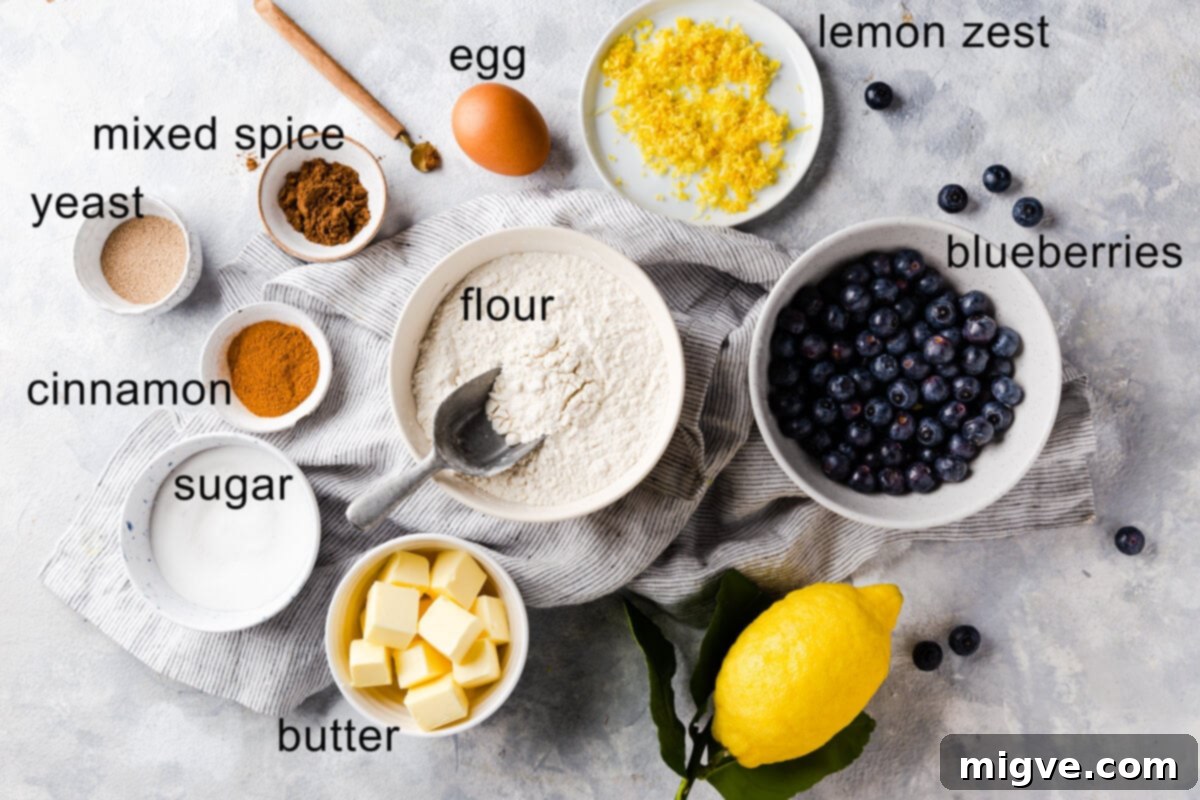
- Yeast: The Essential Leavening Agent – For the lightest, fluffiest buns, yeast is paramount. I typically reach for fast-action dried yeast due to its convenience and reliability. However, any type of yeast will work effectively. Understanding the different types of yeast and how to properly activate them is crucial for success, so be sure to check our dedicated section on yeast below for detailed tips.
- Caster Sugar: For Sweetness and Tenderness – Caster sugar is my go-to for baking because its super-fine texture dissolves rapidly and evenly, resulting in a tender crumb. If you don’t have caster sugar, regular granulated sugar can be used in the same quantity; just ensure it’s fully dissolved during the mixing process. Sugar not only sweetens the buns but also feeds the yeast and helps tenderize the dough.
- Butter: Richness and Flavor – Whether you use salted or unsalted butter, it will add wonderful richness and flavor to your buns. Butter contributes to the soft texture and helps create a beautiful golden crust. For best results, ensure your butter is softened before incorporating it into the dough, which aids in even distribution.
- Milk: Hydration and Softness – Full-fat milk is highly recommended for dough-based recipes. Its higher fat content contributes to a richer flavor and a remarkably soft, tender crumb. While full-fat milk yields the best results, you can certainly use any type of milk you have on hand, including skimmed or plant-based alternatives, though the texture might vary slightly.
- Egg: Structure and Enrichment – A single large egg plays a vital role in enriching the dough, adding moisture, and providing structure. It helps create a more tender and flavorful bun while contributing to the beautiful golden color of the crust.
- Spices: The Aromatic Heart of Hot Cross Buns – The traditional flavor profile of hot cross buns comes from a blend of warm spices. Cinnamon and mixed spice are classic choices, infusing the buns with their signature aroma. Don’t hesitate to experiment with your favorite spices! Nutmeg, cardamom, or cloves can also be added for a personalized touch, enhancing the overall fragrant experience.
- Flour: The Foundation of the Dough – For chewier, more structured buns, strong bread flour is ideal due to its higher gluten content. This gluten develops during kneading, creating an elastic dough that can trap air effectively, leading to a light and airy texture. If strong bread flour isn’t available, all-purpose or plain flour can be used in the exact same quantity, though the buns might be slightly less chewy.
- Lemons: Zesty Brightness – You’ll need only the zest from lemons to add a bright, fresh citrus note that beautifully complements the spices and blueberries. Whenever possible, opt for unwaxed lemons. If lemons are unavailable, orange zest makes an excellent alternative, offering a slightly sweeter, equally vibrant flavor.
- Blueberries: Juicy Bursts of Flavor – The star fruit of these buns! You can use either fresh or frozen blueberries. If using frozen, there’s no need to defrost them beforehand; simply toss them directly into the dough. Dried blueberries can also be used for a more concentrated sweetness and chew. Blueberries add delightful bursts of juicy flavor and a beautiful color to the buns.
- Fruit Peel: Traditional Sweetness (Optional, but Recommended) – Candied fruit peel, often a mix, is an optional but highly recommended addition. It provides a traditional touch of sweet and tangy flavor, along with a pleasant chewy texture that enhances the overall bun experience. Feel free to use a mixed peel or your favorite single type of candied fruit.
- Apricot Jam: The Signature Glaze – Apricot jam is used to brush the baked buns, creating that characteristic shiny, slightly sticky glaze. It adds a subtle sweetness and a beautiful finish. If apricot jam isn’t handy, a simple sugar syrup (made from sugar and water), corn syrup, or golden syrup can be used as a substitute for a similar glossy effect.
Understanding Yeast: Your Key to a Perfect Rise
Yeast is a living organism, a type of fungus that ferments sugars in the dough, producing carbon dioxide and causing the dough to rise. Understanding the different types available and how to use them is fundamental to successful baking. There are three primary types of baking yeast:
- Fresh Yeast (Compressed Yeast): This yeast comes as a creamy-colored block and must be stored in the refrigerator, ideally used within a few days of purchase. Fresh yeast requires ‘activation’ before use; it’s typically crumbled into a small amount of warm water or milk (around 105-115°F / 40-46°C) with a pinch of sugar, then left for 5-10 minutes until foamy. This foamy appearance confirms the yeast is active and ready to be added to your wet ingredients.
- Active Dried Yeast: Available in dried, granular form, active dried yeast can be stored in an airtight container at room temperature for up to a year. Like fresh yeast, it also needs to be activated. Blend it with a little warm water or milk (again, 105-115°F / 40-46°C) and a pinch of sugar, and wait for it to become bubbly before combining it with your other wet ingredients. This step ensures the yeast is alive and potent.
- Instant Dried Yeast (Easy Blend, Easy Bake, or Fast Action): This is the most convenient form of yeast, often sold in small sachets or ‘envelopes.’ Instant yeast is powdered and has smaller granules, allowing it to dissolve quickly. Crucially, it can be added directly to your dry ingredients without the need for prior activation in a liquid. This saves a step and makes it a favorite for many home bakers.
It’s important to remember that rising times can vary significantly depending on the type of yeast you use, as well as the ambient temperature of your kitchen. Always allow your dough enough time to double in size for the best texture.
Hint: When substituting one type of yeast for another in a recipe, a good general rule of thumb to remember is: use half as much dried yeast as fresh yeast, and half as much again of instant yeast. For instance, if a recipe calls for 30g of fresh yeast, you would use approximately 15g of active dried yeast or about 7g of instant dried yeast. This conversion ensures optimal leavening regardless of your yeast type.
Crafting Your Blueberry Hot Cross Buns: A Step-by-Step Guide
Making homemade hot cross buns is a truly rewarding experience, and it’s simpler than you might think. While a freestanding mixer significantly streamlines the process and is my preferred method for its efficiency, it’s absolutely possible to prepare this delicious dough by hand with a little extra effort and patience. Follow these steps for perfect results:
- Prepare the Dough: Begin by gently warming the milk and melting the butter. Ensure this mixture cools to a lukewarm temperature (around 105-115°F / 40-46°C) before adding the egg and whisking until combined. In a large mixing bowl (or the bowl of your stand mixer), combine the strong white bread flour, caster sugar, fast-action dried yeast, ground mixed spice, ground cinnamon, salt, lemon zest, and mixed fruit peel. If using active dried or fresh yeast, activate it first according to the instructions in the ‘Types of Yeast’ section, then add it with the wet ingredients. Incorporate the wet ingredients into the dry, mixing until a shaggy dough forms.
- Knead to Perfection: Transfer the dough to your stand mixer fitted with a dough hook, or to a lightly floured surface if kneading by hand. Knead for approximately 5-8 minutes in a stand mixer, or 10-15 minutes by hand. The goal is to achieve a smooth, elastic dough that is no longer sticky. Once kneaded, gently fold in the blueberries until they are evenly distributed throughout the dough, being careful not to crush them.
- First Rise (Proving): Lightly grease a clean, large bowl with olive oil. Transfer the kneaded dough into the bowl, turning it once to coat lightly. Cover the bowl with plastic wrap or a clean kitchen towel and let it rise in a warm, draft-free place for 1-2 hours, or until the dough has proudly doubled in size. This first rise is crucial for developing flavor and a light texture.
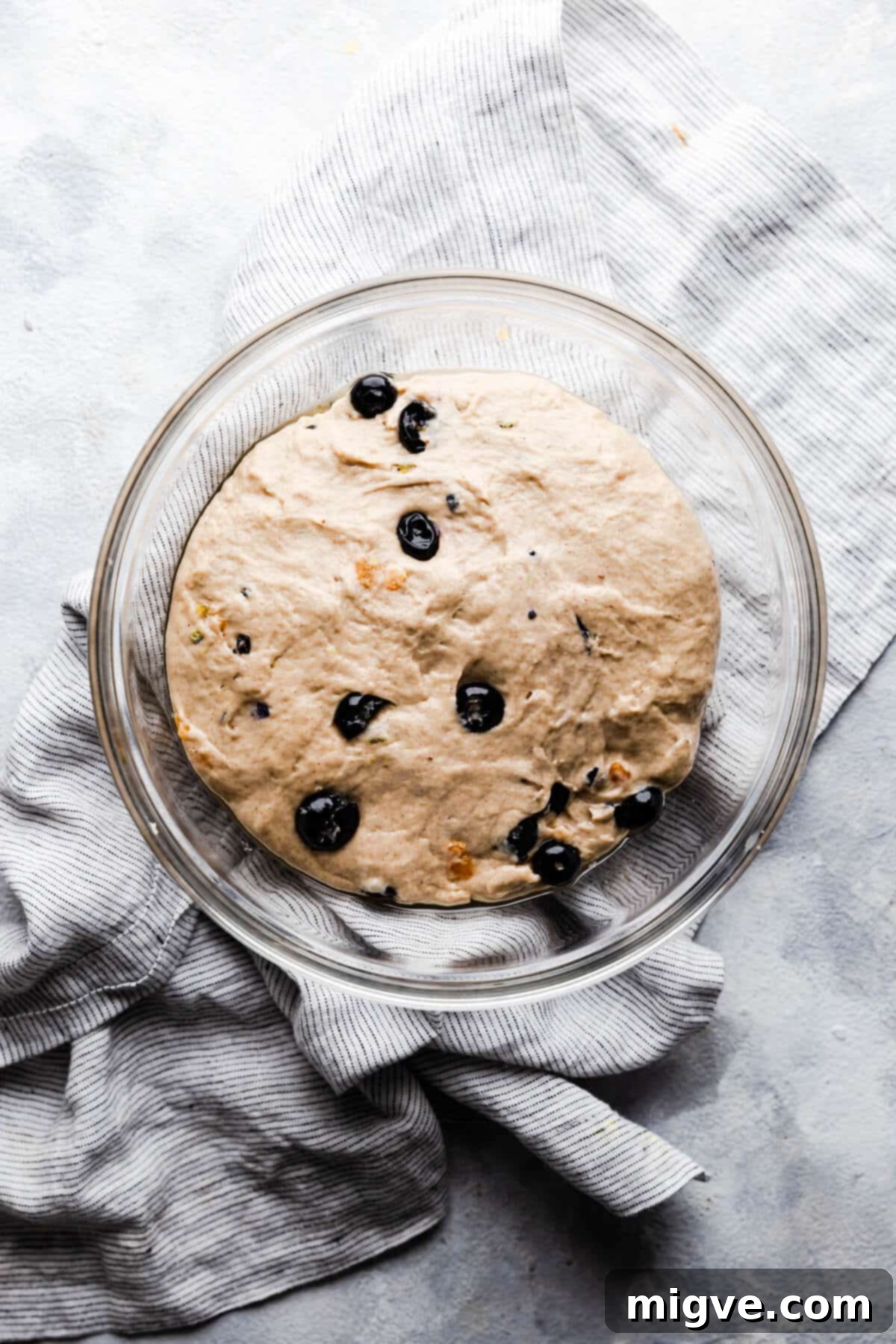
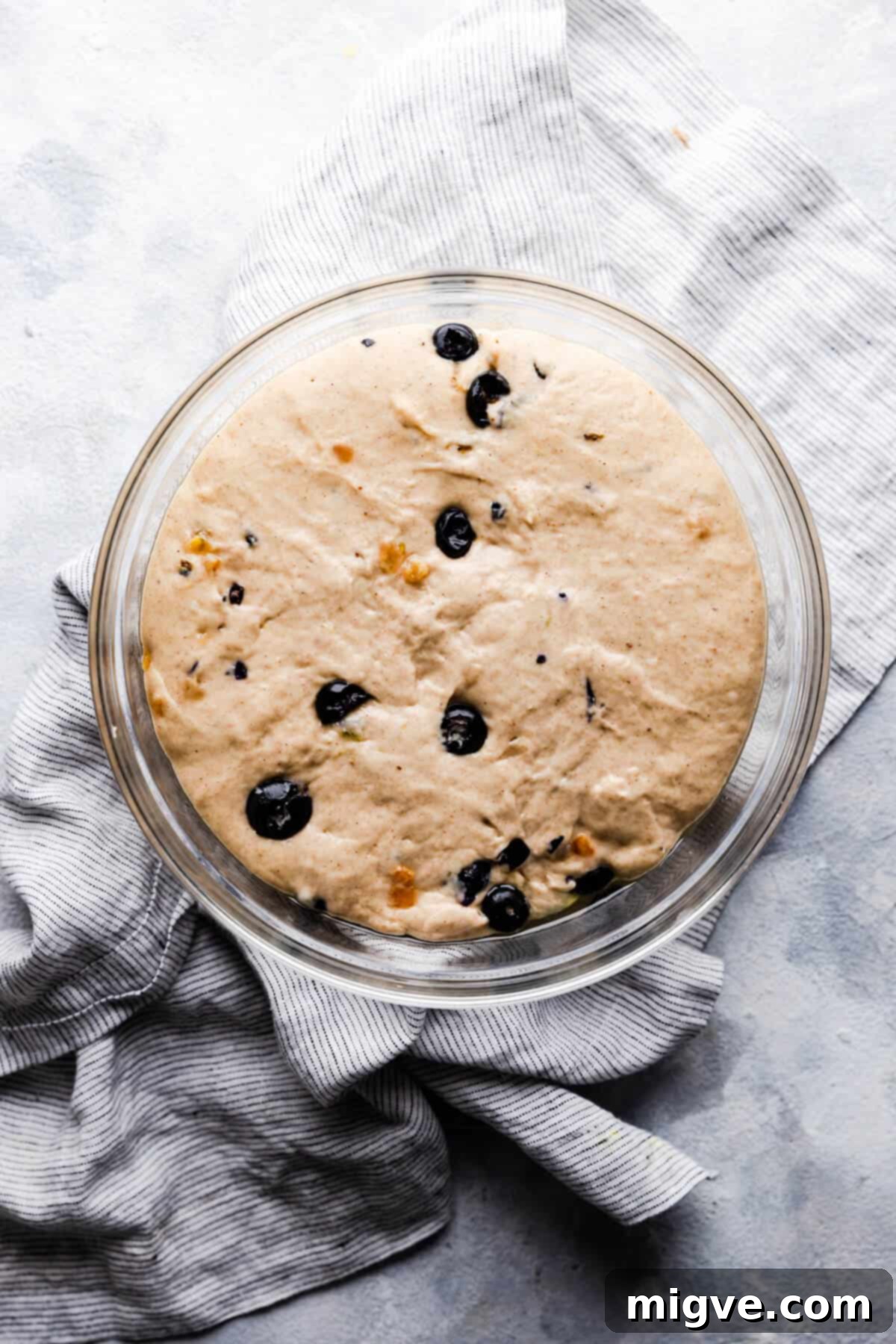
- Divide and Shape the Buns: Once the dough has risen, gently ‘punch it down’ to release the trapped air. Transfer the dough onto a lightly floured surface. For uniform buns, use digital kitchen scales to divide the dough into 12 equal pieces. This ensures consistent baking and appearance.
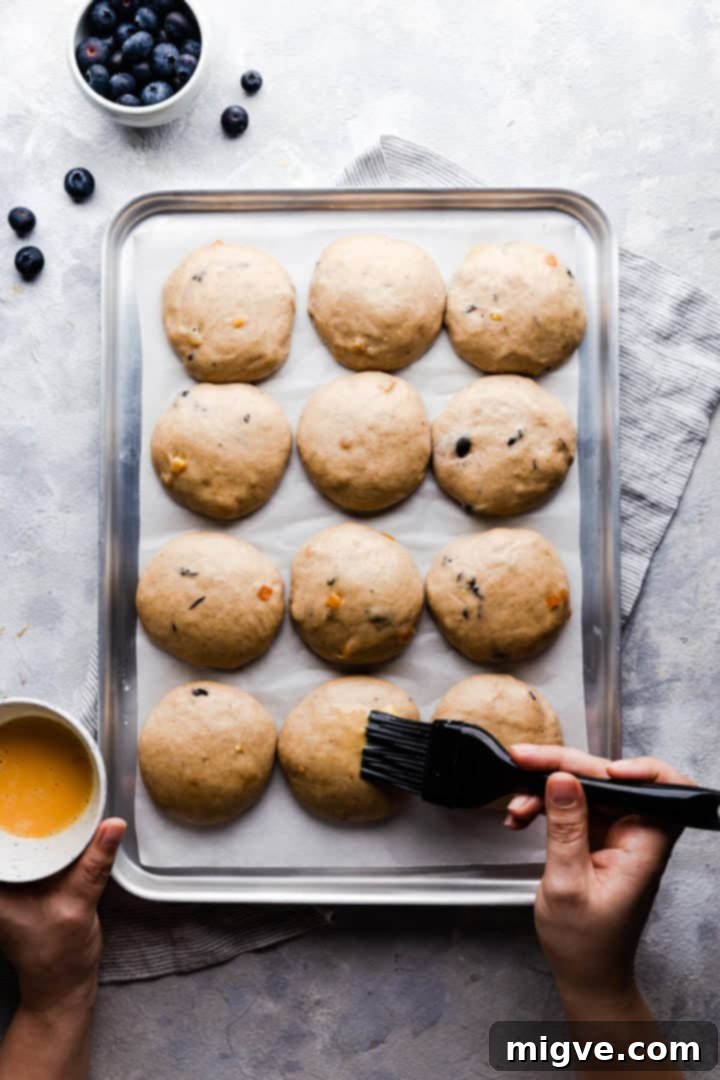
- Form and Second Rise: Take each piece of dough and use the palm of your hand to roll it into a tight, smooth ball. This creates tension on the surface, which helps the buns hold their shape. Arrange the shaped buns on a large baking tray lined with baking paper, leaving about 1 cm of space between each bun to allow for expansion. Cover them loosely and let them rise again in a warm place for another 30 minutes. This second prove, or ‘proofing,’ is essential for a light, airy texture.
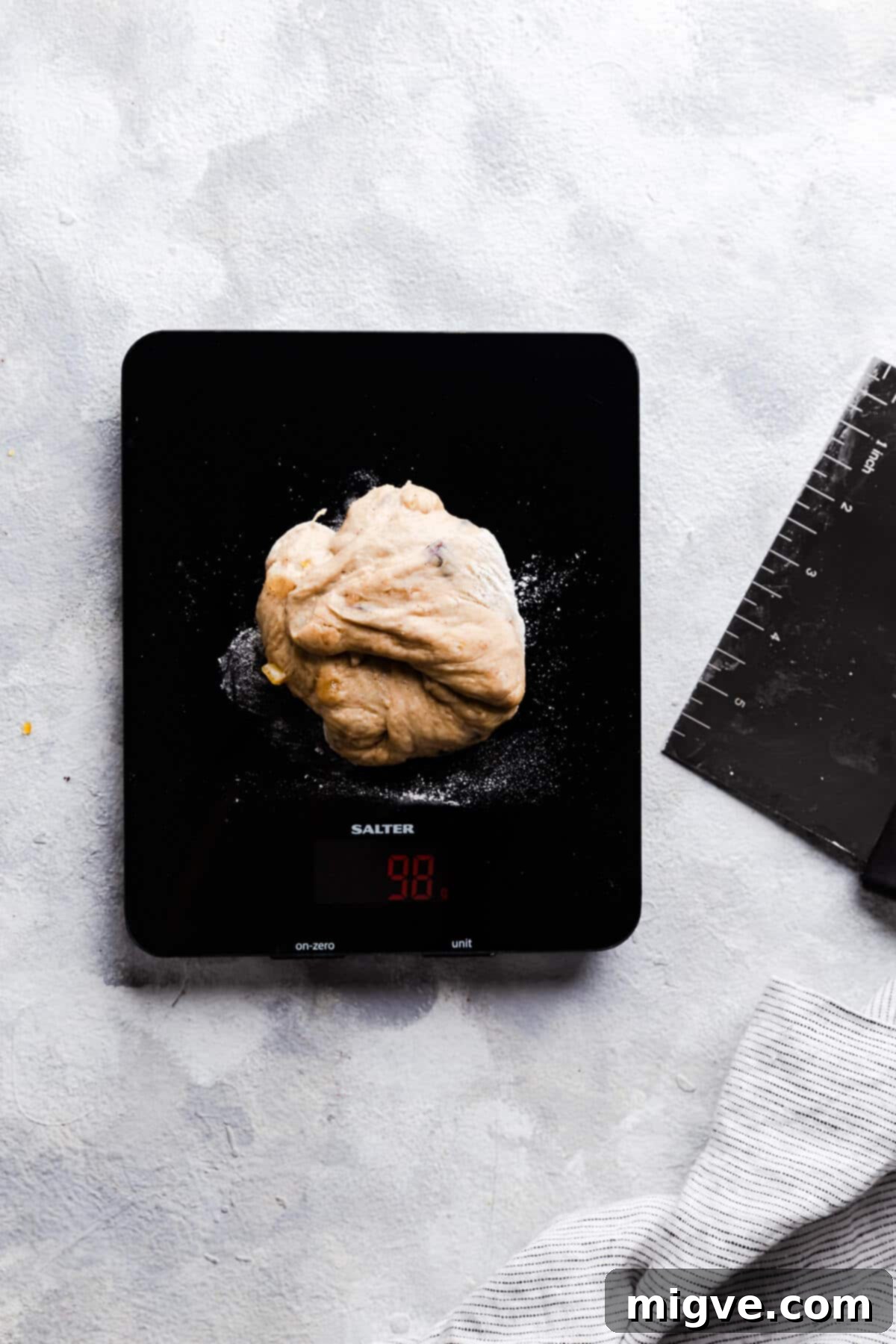
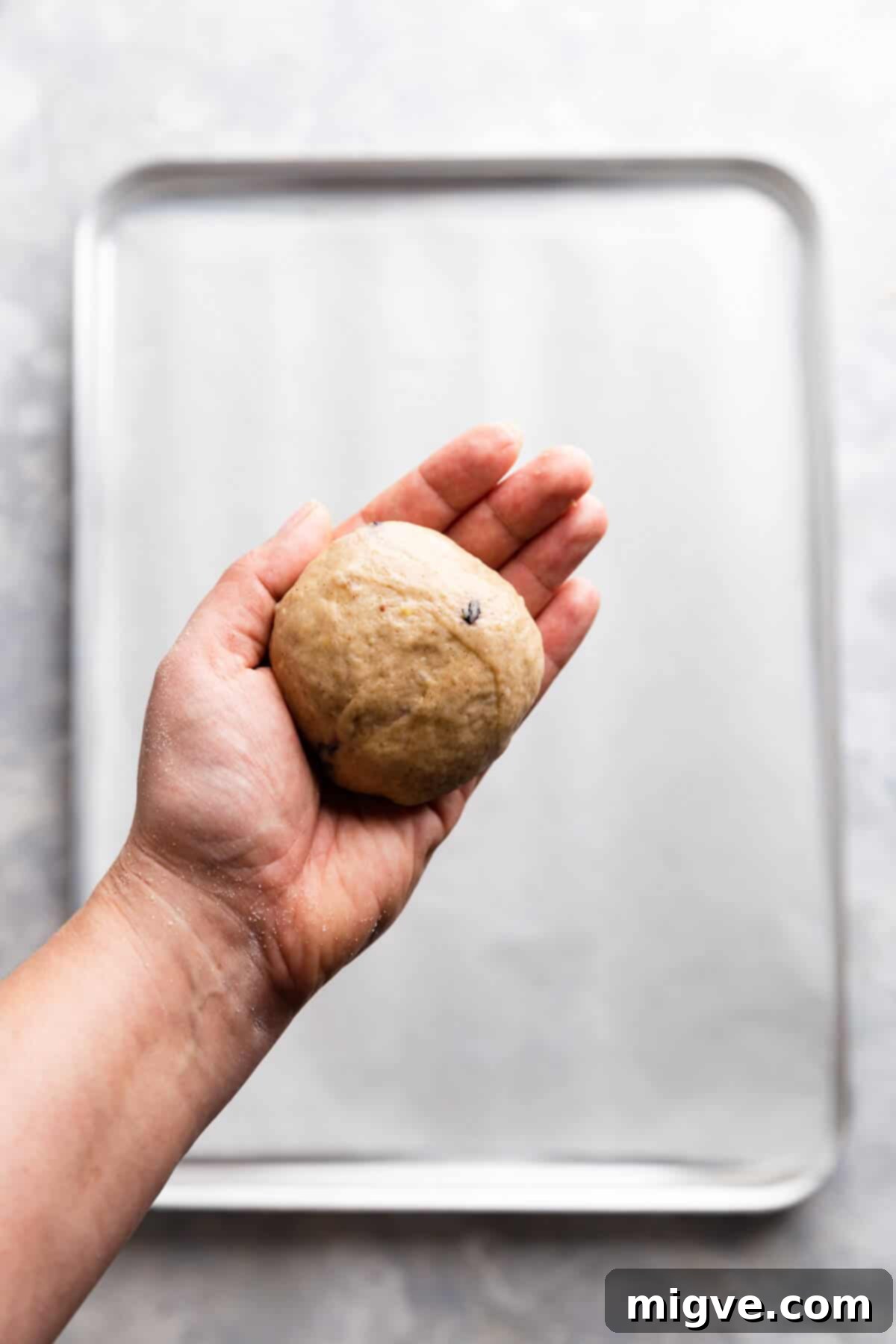
- Pipe the Iconic Crosses: Preheat your oven to 180°C (160°C fan). While the oven heats, prepare your cross paste (see detailed instructions below). Using a piping bag, carefully pipe the distinctive cross pattern over the top of each bun. This step gives hot cross buns their classic appearance.
- Add Optional Crumble (If Using): If you’re opting for the modern crumble topping, now is the time to sprinkle it generously over the piped buns. You may not need all of the crumble; any leftovers can be frozen for another delicious recipe.
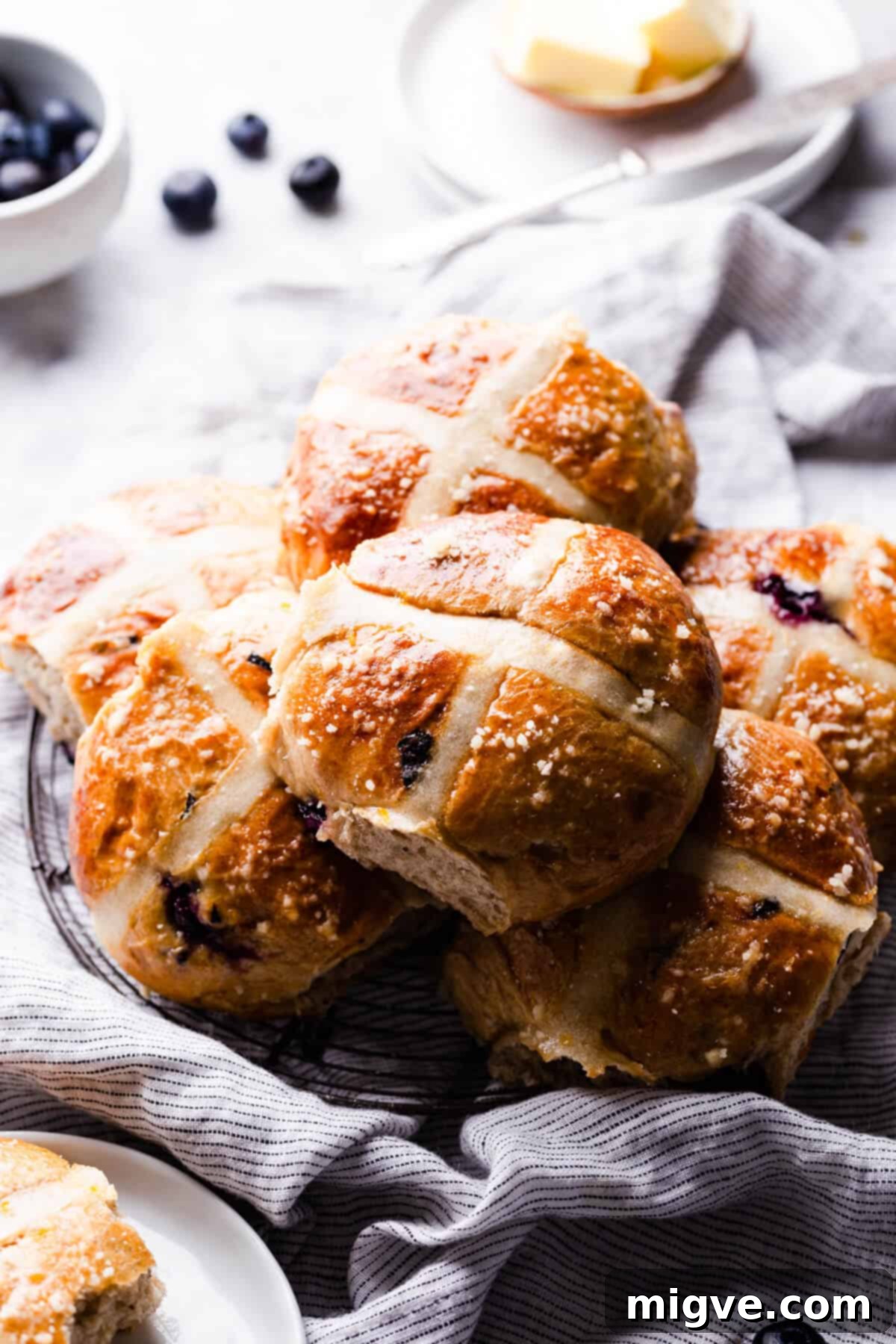
- Bake and Glaze: Bake the buns for 15-20 minutes, or until they turn a beautiful golden brown and sound hollow when tapped on the bottom. Immediately after removing them from the oven, brush the warm buns generously with warm apricot jam (or your chosen syrup). This creates the signature glossy, sticky finish.
Mastering the Cross Pattern: Tips for Success
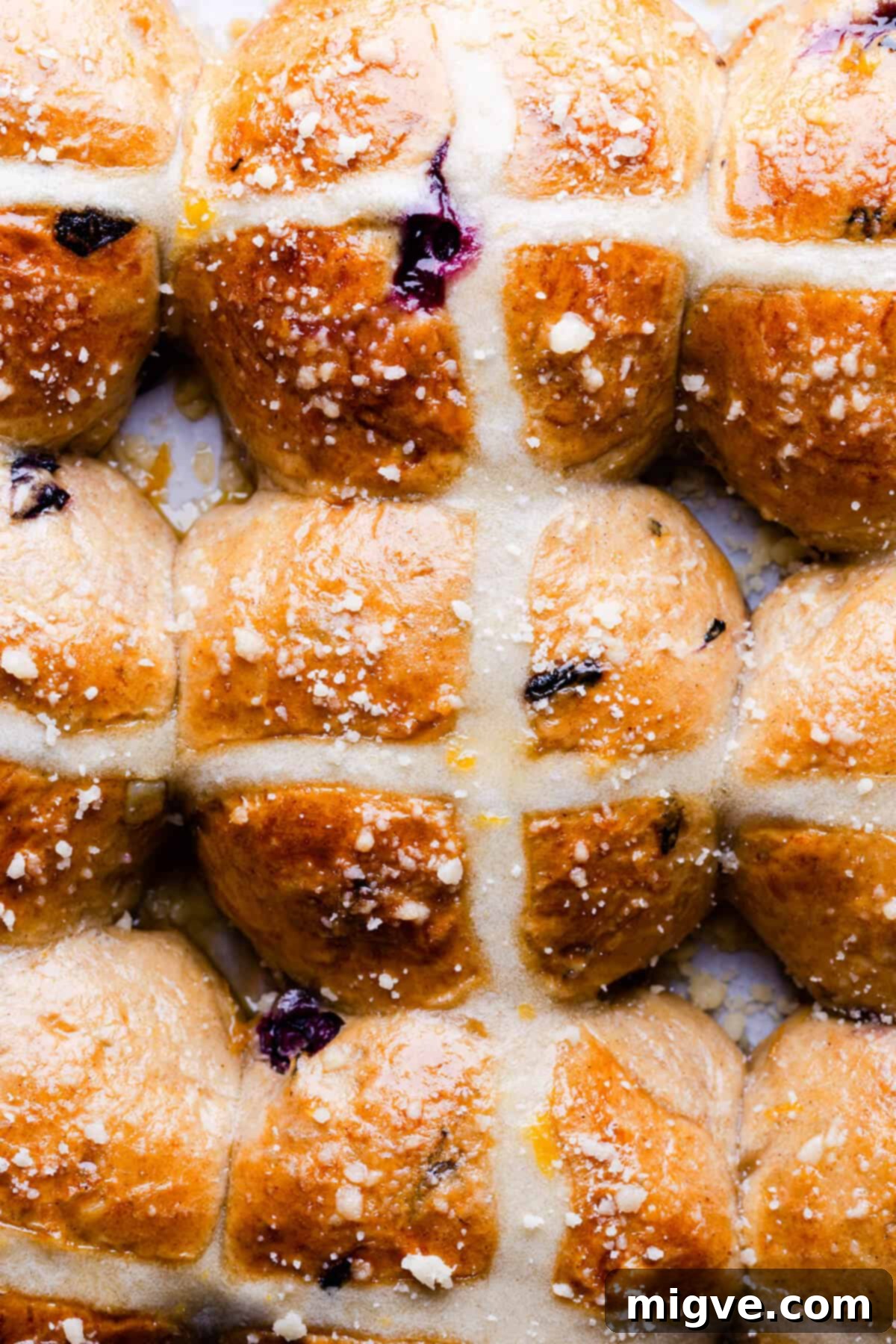
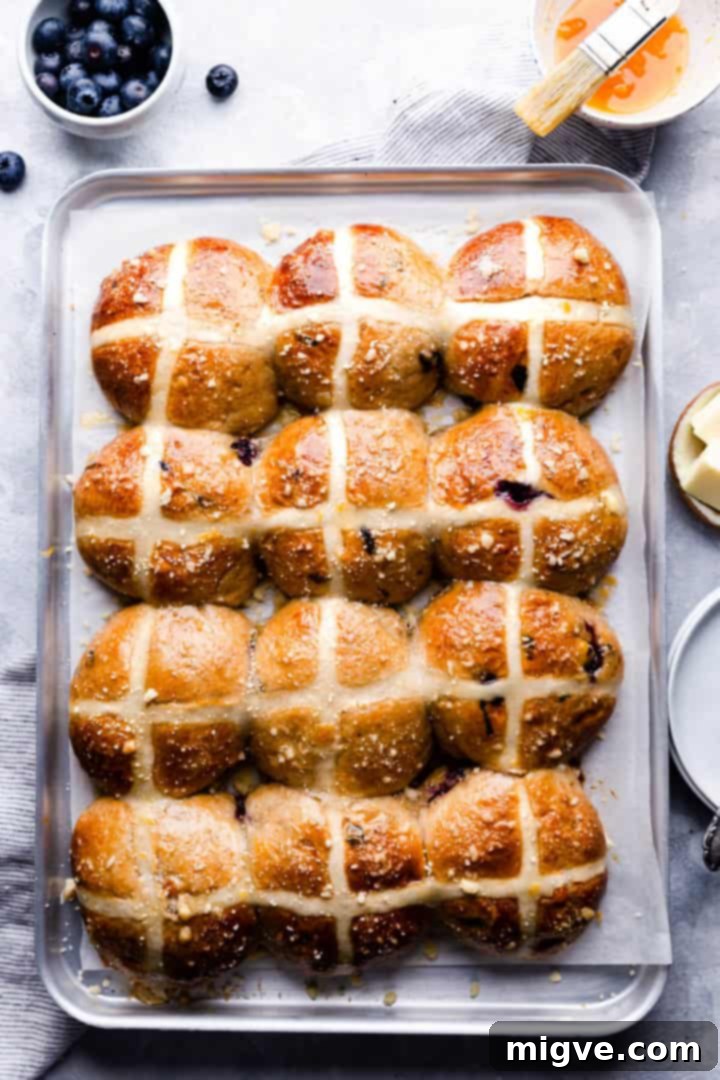
The distinctive cross is an integral part of any hot cross bun, and achieving a clean, well-defined pattern is key. The cross mixture is typically made from a simple paste of flour and water. I find that plain (all-purpose) flour works perfectly for this, though strong bread flour is also an option. The consistency of this paste is critical: it should be quite thick, similar to pancake batter or thick cream, but still able to flow through a piping bag. Resist the temptation to add too much water, as a thin paste will simply slide off the domed tops of the buns and melt away during baking, becoming barely visible.
For piping, a piping bag fitted with a small, plain round nozzle (around 3mm is ideal) will give you the most control. If you don’t have a nozzle, simply snip a very small corner off a sturdy piping bag to create a tiny opening. Practice on a plate first to get a feel for the flow and pressure.
Hint: Instead of piping individual crosses on each bun, which can be fiddly, a much easier and more efficient method is to pipe a continuous line along each row of buns in one direction, and then another set of continuous lines across them in the perpendicular direction. This creates a grid of crosses with minimal effort and ensures consistency.
When piping, try to work slowly and steadily, allowing the paste to gently “wrap” around and hug the curves of each bun. This technique is important because as the buns expand further during baking, a properly adhered cross paste is less likely to crack or break, ensuring your beautiful crosses remain intact and prominent. Don’t rush this step; a steady hand will yield the best results.
Creative Variations to Elevate Your Buns
Hot cross buns are incredibly versatile, making them perfect for customization. Don’t be afraid to experiment with different ingredients and flavor combinations to suit your personal taste or whatever you have available. Here are a few exciting ideas to upgrade your classic hot cross buns:
- Chocolate Orange Delight: For a decadent twist, swap the blueberries for rich chocolate chips (dark, milk, or white chocolate all work beautifully). Replace the lemon zest with vibrant orange zest to create a classic and comforting chocolate-orange flavor profile. The citrus brightens the chocolate notes beautifully.
- Fruit and Marzipan Magic: For a sophisticated flavor, omit the candied fruit peel and instead incorporate a blend of dried cranberries and golden raisins. The real magic happens when you add about 100g of finely grated marzipan directly into the dough during kneading. Marzipan infuses the buns with a wonderful, almondy sweetness and a delicate, aromatic fragrance that’s truly irresistible.
- Nutty Indulgence: If you love a bit of crunch, finely chop some walnuts, pecans, or almonds and mix them into the dough. You can add them alongside or in place of the fruit peel, providing a delightful textural contrast and a rich, earthy flavor that pairs wonderfully with the spices.
- Apple & Cinnamon Swirl: For an autumn-inspired bun, dice a small apple (like Honeycrisp or Granny Smith for a tart contrast) into tiny pieces and toss them with an extra sprinkle of cinnamon before adding to the dough.
- Ginger & Lemon Zest: Add a teaspoon of ground ginger to your spice mix and extra lemon zest for a zesty, warming bun with a delightful kick.
- Vegan Hot Cross Buns: For those following a plant-based diet, hot cross buns can still be enjoyed! Many excellent vegan recipes exist that use plant-based milk and butter substitutes. For a reliable option, check out this fantastic Vegan Hot Cross Buns recipe from A Mummy Too blog.
Storing and Reheating for Lasting Freshness
One of the many joys of homemade hot cross buns is their deliciousness even days after baking, especially when properly stored and reheated. Here’s how to keep them fresh and enjoy them again:
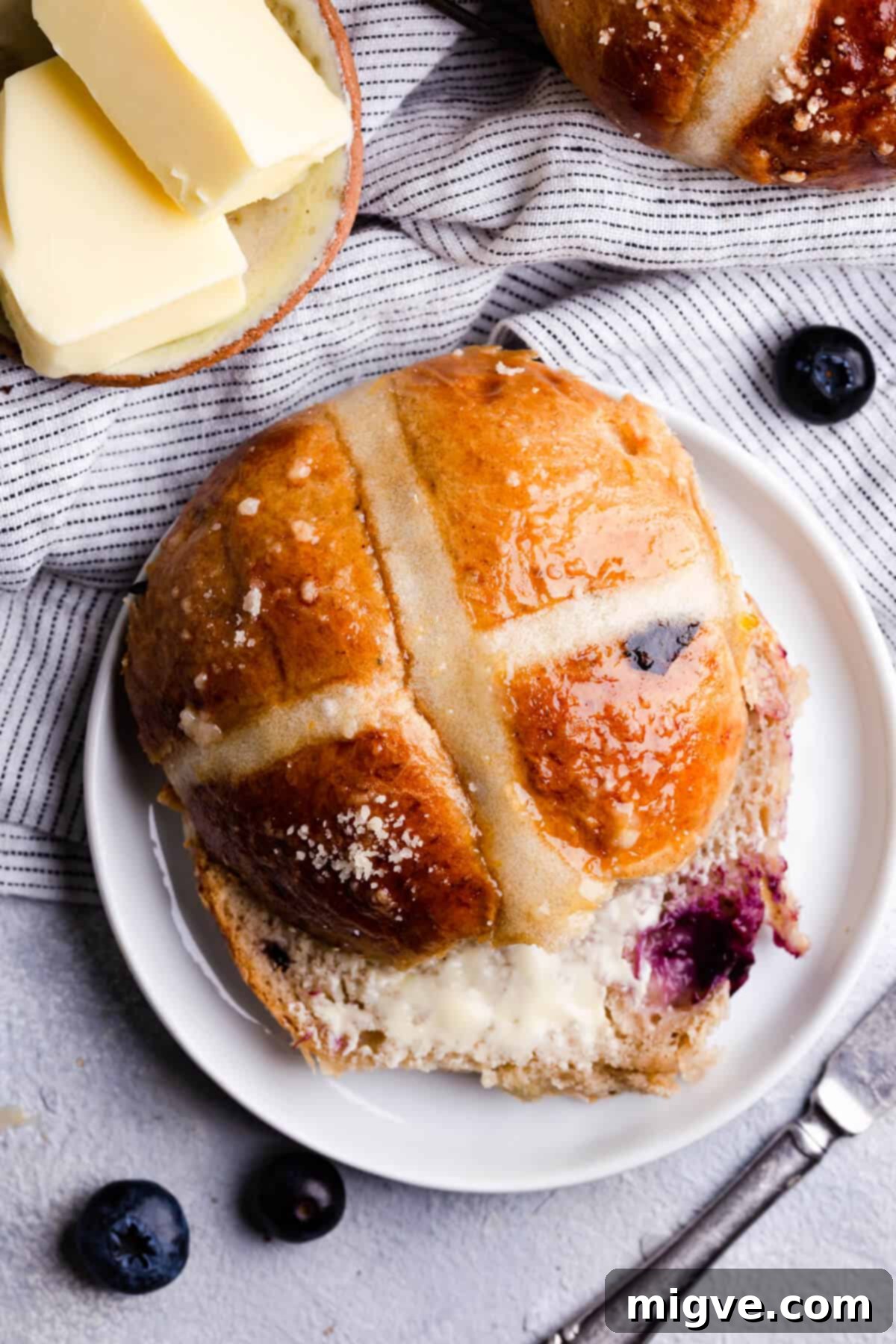
Any leftover buns should be stored in an airtight container at room temperature. They will remain wonderfully fresh and flavorful for 2-3 days. To bring them back to their initial glory, reheating is simple and quick. The easiest method is to slice them in half and place them into a toaster for a couple of minutes until warmed through and lightly golden. They taste absolutely delicious toasted, especially when slathered with a generous amount of butter, a drizzle of honey, or your favorite jam.
Alternatively, you can reheat them in the oven. Preheat your oven to 150°C (300°F) on a fan setting. Place the buns onto a baking tray, and for best results, cover them loosely with aluminum foil to prevent them from drying out. Heat for 5-10 minutes, or until they are warmed through to the center. Remove them from the oven and serve immediately for that irresistible freshly-baked experience.
Plan Ahead: Make-Ahead and Freezing Options
Life can be busy, but that shouldn’t stop you from enjoying homemade hot cross buns. This recipe is incredibly forgiving and offers excellent make-ahead and freezing options, allowing you to enjoy these delightful treats with minimal fuss when you’re ready.
Make Ahead Overnight (Dough Proving): You can easily prepare the dough in advance. Follow the recipe instructions through the first proving step (Step 3). Once the dough has doubled in size, transfer it to a clean, lightly oiled bowl, cover it tightly with plastic wrap, and place it in the refrigerator overnight (for up to 12-18 hours) to slowly prove. The next day, remove the dough from the fridge and let it come to room temperature and continue rising for about 2 hours, or until it has fully doubled in size again. Then, proceed with Step 4 of the recipe as usual.
Make Ahead Overnight (Shaped Buns Proving): Another convenient make-ahead option is to shape the buns the night before. Follow the recipe through Step 4, where you divide and shape the dough into individual buns. Arrange these pre-shaped buns on your prepared baking tray, cover them loosely with plastic wrap, and refrigerate overnight. On baking day, remove the buns from the fridge and allow them to sit at room temperature for approximately 1.5 to 2 hours. This gives them time for their final rise before baking.
Freezing Baked Hot Cross Buns: Yes, you can freeze baked hot cross buns! Once your buns have completely cooled after baking, transfer them to a freezer-friendly bag or an airtight container, ensuring they are well-sealed to prevent freezer burn. They can be stored in the freezer for up to 3 months. When you’re ready to enjoy them, simply thaw the buns at room temperature for about 2 hours. You can then reheat them using the toasting or oven methods described above for a warm, fresh taste.
Freezing Unbaked Hot Cross Buns: For ultimate freshness on baking day, you can freeze the buns unbaked. After shaping the buns (Step 4), arrange them on a baking tray and freeze them flat until solid. Once frozen solid, transfer them to a freezer-friendly bag or container, again ensuring they are well-sealed. When you want to bake them, remove them from the freezer, place them on a greased baking tray, and allow them to sit and rise at room temperature for a longer period, typically 3-5 hours, or until they have doubled in size. Then, bake them according to the recipe instructions.
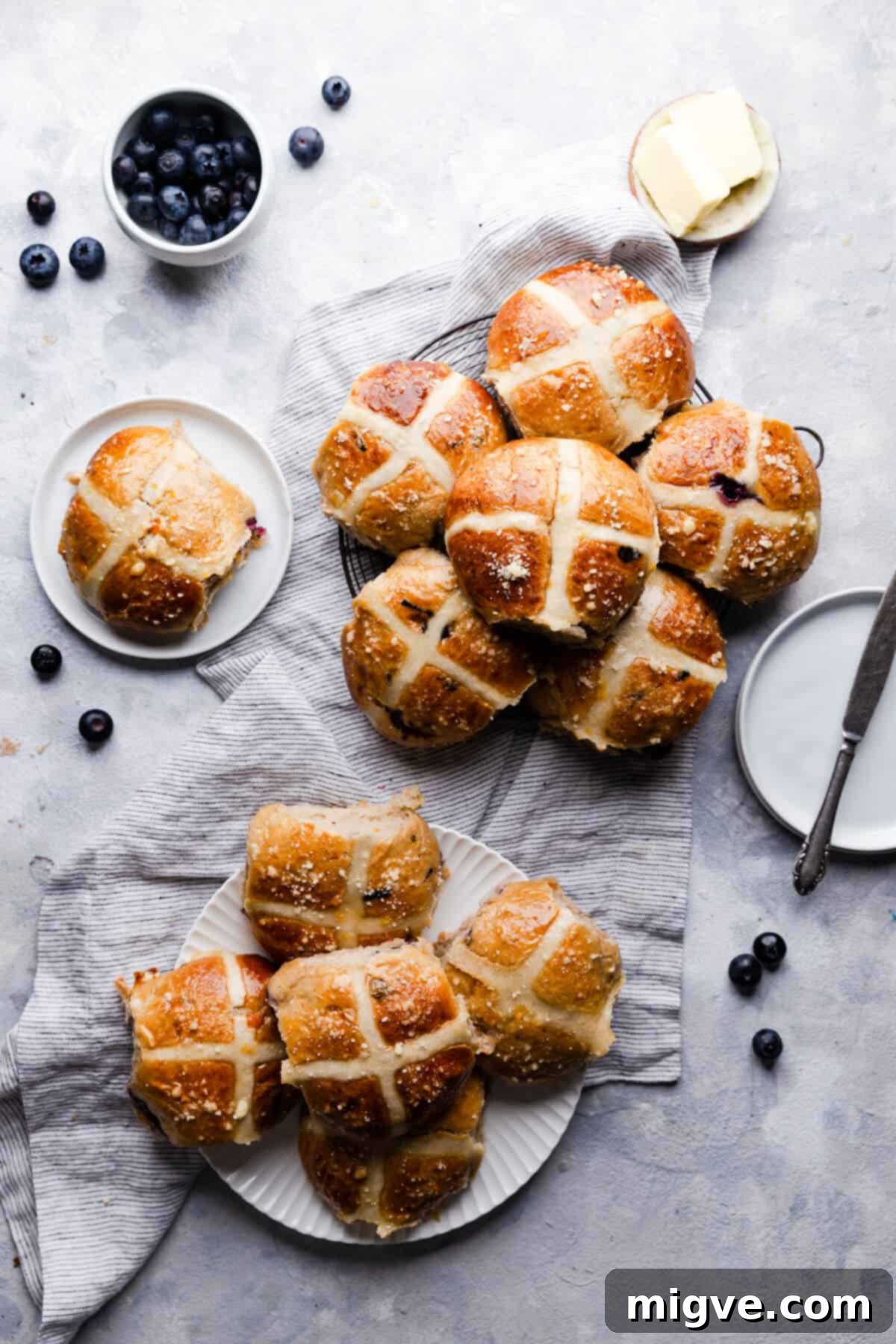
To pin this recipe and save it for later, use the button on the recipe card below, or on any of the beautiful photos throughout this post.
If you try this recipe, or any other recipe on Anna Banana, please take a moment to rate the recipe and/or leave me a comment. Your feedback is invaluable, not only do I love hearing from you, but it also helps other readers who are considering making the recipe. Happy baking!
Frequently Asked Questions About Blueberry Hot Cross Buns
- Can I use different fruits instead of blueberries? Absolutely! While blueberries are fantastic, you can easily substitute them with other dried or fresh fruits. Raisins, currants, chopped dried apricots, or even finely diced apples (tossed with a little lemon juice to prevent browning) would all make wonderful additions. Adjust the quantity to your preference.
- What if my dough isn’t rising? Several factors can affect dough rising. Ensure your yeast is fresh and active (especially if it’s active dried or fresh yeast, perform the activation test first). The milk mixture should be lukewarm, not too hot (which kills yeast) or too cold (which slows it down). Also, ensure your proving environment is warm and free from drafts. Patience is key; sometimes dough just needs more time, especially in cooler kitchens.
- Can I make these hot cross buns gluten-free? While this specific recipe is not designed to be gluten-free, it is possible to adapt hot cross buns using gluten-free flour blends. However, gluten-free baking often requires different ratios and techniques due to the absence of gluten, which provides structure. You would need to find a specific gluten-free hot cross bun recipe rather than directly substituting the flour in this recipe for the best results.
- How do I get a perfect, smooth glaze? For a super smooth glaze, make sure your apricot jam is warmed gently with a little water until it’s thin enough to brush easily. You can also strain it through a fine-mesh sieve to remove any fruit chunks, ensuring a perfectly clear and shiny finish. Apply the glaze immediately to the warm buns.
📖 Recipe

Print Recipe
Pin Recipe
Blueberry Hot Cross Buns
Equipment
- Freestanding mixer with hook attachment
- large baking tray
- baking paper
- large bowl
- piping bag with plain nozzle (or without nozzle)
- pastry brush optional
Ingredients
- 280 ml full fat milk
- 50 g unsalted butter
- 1 large egg
- 500 g strong white bread flour
- 70 g caster sugar
- 7 g fast action dried yeast *see notes for options
- 2 teaspoon ground mixed spice
- 1 tablespoon ground cinnamon
- 1 teaspoon salt
- 2 medium lemons zest only
- 100 g blueberries fresh or frozen
- 40 g mixed fruit peel
- 2 teaspoon olive oil for greasing the bowl
For the cross & glaze:
- 50 g plain flour
- 1 tablespoon sugar
- 2 tablespoon apricot jam
For the crumble topping (optional):
- 30 g flour strong bread flour or plain flour
- 20 g chilled, unsalted butter chopped
- 1 tablespoon caster sugar
Instructions
- Place the milk in a saucepan over low heat and warm it up gently (do not boil). Add the butter and allow it to melt completely, swirling the saucepan occasionally to help it along. Set the mixture aside until it cools to a lukewarm temperature (around 105-115°F / 40-46°C). Once lukewarm, whisk in the egg until well combined.
- In the bowl of a standing mixer (or a large mixing bowl), combine the strong white bread flour, caster sugar, fast-action dried yeast, ground mixed spice, ground cinnamon, salt, lemon zest, and mixed fruit peel. Pour the lukewarm milk-butter-egg mixture into the dry ingredients. Begin mixing on low speed for a couple of minutes until the dough starts to come together. Increase the speed to medium and continue to mix and knead for 4-5 more minutes (or 10-15 minutes by hand). You’re looking for a smooth, elastic dough that no longer sticks to the sides of the bowl. Finally, add the blueberries and mix on low speed just until they are evenly combined, being careful not to overmix and crush them.
- Lightly grease a large, clean bowl with olive oil. Transfer the dough to this bowl, turning it once to coat. Cover the bowl tightly with plastic wrap or a clean kitchen towel and set it aside in a warm, draft-free place to rise for 1 hour, or until it has clearly doubled in size. While the dough is proving, line a large baking tray with baking paper and set it aside.
- Once the dough has risen, gently ‘knock down’ the air by lightly pressing on it. Transfer the dough onto a lightly floured surface. Using digital kitchen scales for precision, divide the dough into 12 equal pieces. Take each piece and, using the palm of your hand, roll it into a tight, smooth ball. Arrange the shaped buns on the prepared baking tray, ensuring there’s about 1 cm of space between each bun. Cover the tray loosely and set it aside in a warm place to prove for a second time, for 20-30 minutes, or until visibly puffy.
- If you are using the optional crumble topping, prepare it now. In a small bowl, rub all the crumble ingredients (flour, chilled butter, caster sugar) together with your fingertips until the mixture resembles coarse breadcrumbs. Chill this mixture until you’re ready to use it.
- Preheat your oven to 180°C (350°F / 160°C fan). To prepare the cross mixture, whisk together 50g plain flour with enough water (approximately 2-3 tablespoons) to form a thick but still pipeable paste. Transfer this mixture into a piping bag fitted with a small, plain nozzle (or with a tiny corner snipped off). Pipe the cross pattern on top of the risen buns. If using the crumble topping, sprinkle it evenly over the buns at this stage. Bake the buns for 15-20 minutes, or until they are golden brown and cooked through.
- While the buns are still warm, prepare the glaze. Gently heat 2-3 tablespoons of apricot jam with 2 tablespoons of water in a small saucepan or microwave-safe bowl until the jam is melted and smooth. Using a pastry brush, liberally brush the warm buns with this shiny apricot glaze. Serve immediately and enjoy!
Please note that all my recipes are developed and tested in metric grams. I recommend that you use digital scales for more accurate results. I have provided a conversion to US customary in the recipe but please note that I haven’t tested using this method.
Notes
- You can use any type of active yeast in this recipe. Just remember that proving times may vary for different types of yeast. Check my ‘Types of yeast’ section of this blog post for some helpful tips and conversion ratios.
- For the cross pattern, it is often easier and more efficient to pipe a continuous line along each row of buns in one direction, and then another set of continuous lines across them (perpendicularly) rather than piping individual crosses on each bun. This ensures consistency and saves time.
Make ahead instructions:
- To make ahead, prepare the dough through step 3 (first prove). Transfer the risen dough to a clean, lightly greased bowl, cover it tightly, and place it in the fridge overnight to prove slowly. The next day, remove the dough from the fridge and allow it to come to room temperature and rise for about 2 hours, then proceed to step 4.
- It’s also possible to allow the shaped buns to prove in the fridge overnight. Follow the recipe through step 4 (shaping the buns). Arrange the pre-shaped buns on a baking tray, cover them, and refrigerate overnight. Before baking, remove them from the fridge and allow them to sit at room temperature for about 1 hour 30 minutes to 2 hours for their final rise.
Storage and reheating instructions:
Any leftover buns can be stored in an airtight container at room temperature for 2-3 days. To reheat the buns, simply place them into a toaster for a couple of minutes. They taste delicious toasted with some butter, honey, or jam.
You can also reheat them in the oven. Heat the oven to 150°C (300°F / fan setting), place the buns onto a baking tray and cover with kitchen foil to prevent drying. Heat them for 5-10 minutes, then remove from the oven and serve.
Freezing:
You can freeze both baked or unbaked buns for up to 3 months. To freeze baked buns, allow them to cool completely, then transfer into a freezer-friendly bag or container. Thaw them at room temperature for about a couple of hours, then reheat as desired.
Unbaked buns should first be frozen individually on the baking tray until solid before being transferred into a freezer-friendly bag or container. When ready to use, remove them from the freezer, place them on a greased baking tray, and allow them to sit and rise at room temperature for 3-5 hours (this might take longer than unfrozen dough). Then, bake as per the recipe instructions.
Nutrition
This recipe was originally published in March 2021. It has been updated with revised recipe and tips in April 2022, and further expanded in [Current Year, e.g., 2024] for enhanced clarity and comprehensive baking guidance.