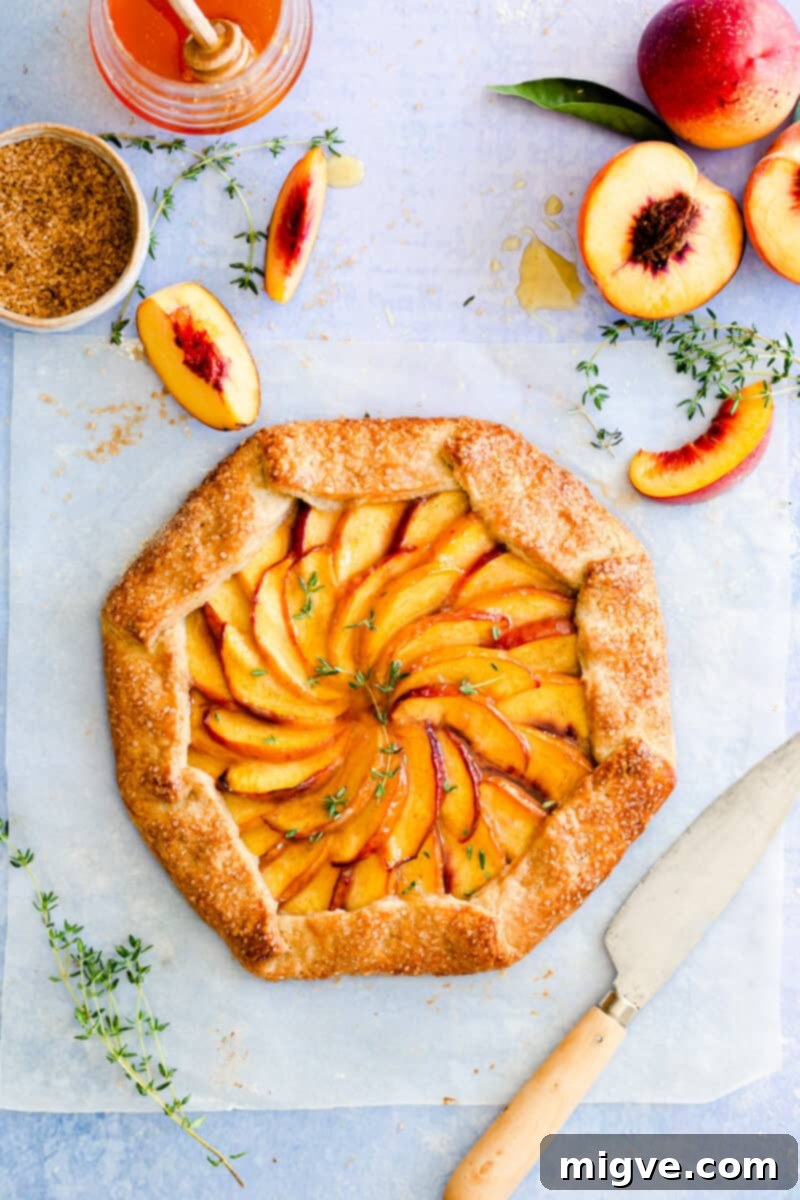
Welcome to the ultimate guide for crafting the most exquisite homemade peach galette. This rustic, free-form tart is a quintessential ode to summer, brimming with the sweet, succulent flavors of ripe peaches nestled atop a rich frangipane filling, all encased in a perfectly crispy, buttery crust. Forget complicated baking; this recipe is designed to be easy, uncomplicated, and utterly delicious, making it perfect for bakers of all skill levels. Whether you’re a seasoned pastry chef or just beginning your culinary journey, this peach galette offers a delightful way to enjoy seasonal fruits with minimal fuss and maximum flavor.
Galette: Your Go-To for Seasonal Fruit and Vegetable Delights
Galettes hold a special place in the baking world, primarily due to their delightful simplicity and versatility. Unlike traditional pies that require precise crimping and intricate lattice work, galettes embrace a beautiful, rustic charm. You don’t need fancy equipment or advanced pastry skills to create a stunning galette; a rolling pin, a baking sheet, and a desire to bake are truly all you need. This accessibility makes galettes an excellent choice for less experienced bakers or anyone looking for a comforting, homemade dessert without the stress.
Beyond their ease, galettes are an incredibly flexible canvas for showcasing the bounty of any season. They are a perfect, uncomplicated, and delicious vehicle for enjoying a wide array of seasonal fruits or vegetables. Imagine the vibrant flavors of berries in spring, apples in autumn, or even savory combinations like roasted squash and goat cheese in winter. You can easily transform them into sweet treats, much like this delightful strawberry galette, or savory masterpieces, such as a hearty tomato galette. The beauty of a galette lies in its adaptability, allowing you to experiment with various fillings and flavor profiles to suit your taste and the freshest ingredients available.
Crafting the Perfect Flaky Pastry
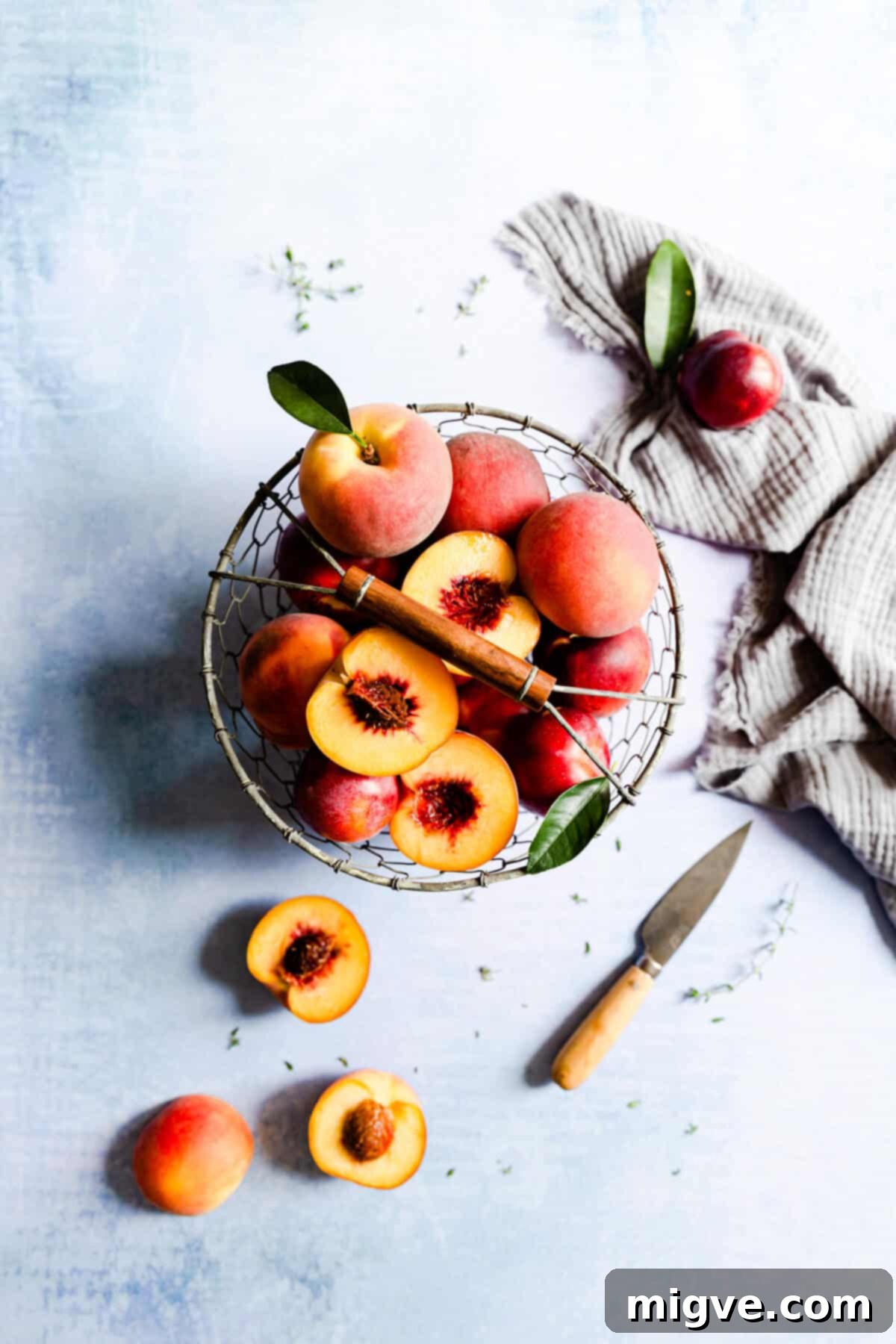
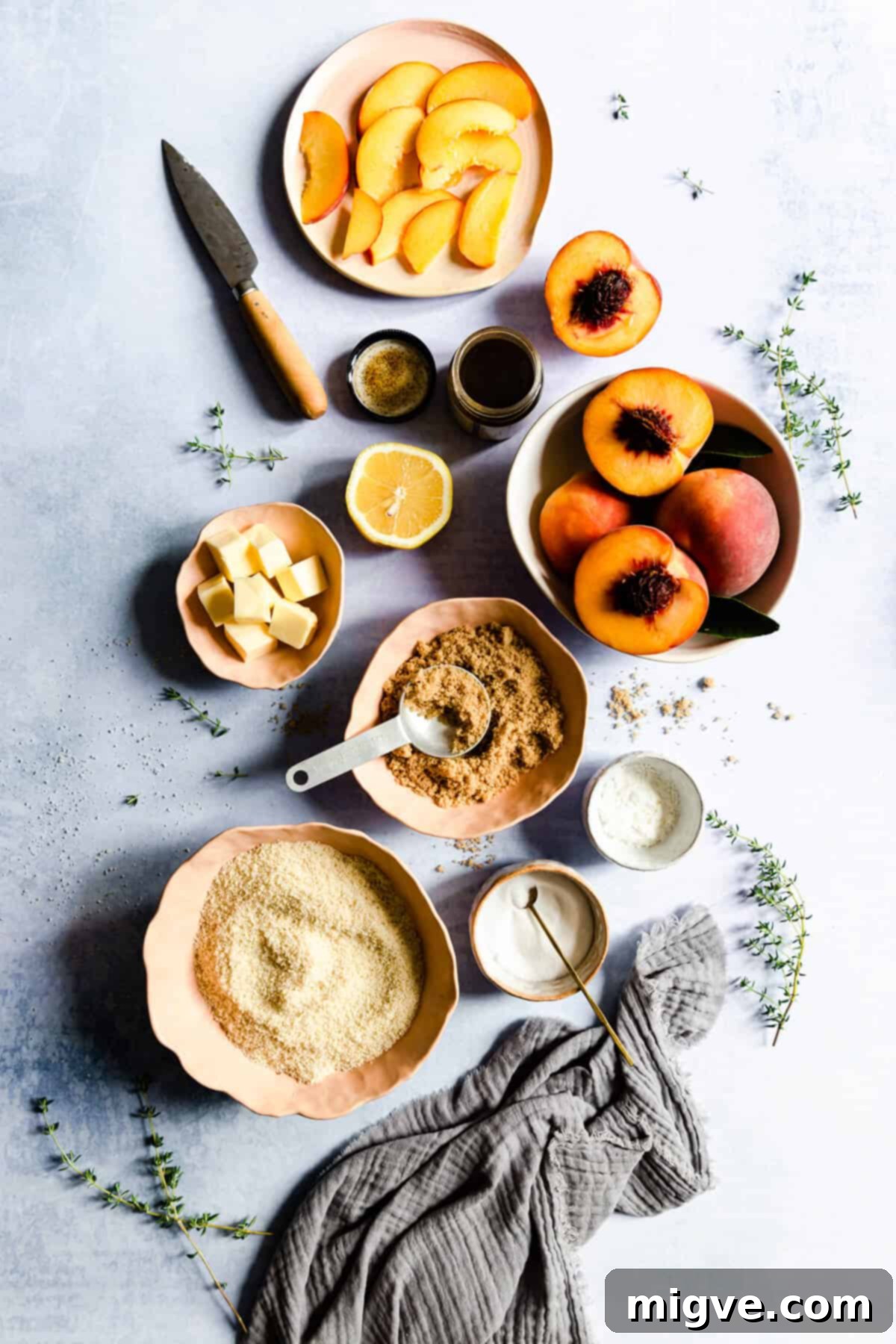
The foundation of any exceptional galette is its pastry crust, and thankfully, making a superb galette pastry is surprisingly straightforward, especially when you follow a few key principles. The most crucial rule to remember is maintaining extreme coldness for your butter and water. This isn’t just a suggestion; it’s the secret to achieving that coveted flaky, tender texture that makes a galette so irresistible.
To ensure optimal coldness, I always recommend placing your cubed butter in the freezer for about 10-15 minutes before you begin. Similarly, pour your water into a measuring jug and add a few ice cubes to it, allowing it to chill thoroughly. Keeping the dough as cold as possible prevents the butter from melting too quickly during the mixing process. When butter stays cold in the dough, it creates pockets of steam as it bakes, which in turn leads to those beautiful, airy, and flaky layers we all adore. If the butter melts prematurely, your dough will lose its structural integrity, resulting in a dense, tough crust rather than the light, crispy texture you’re aiming for.
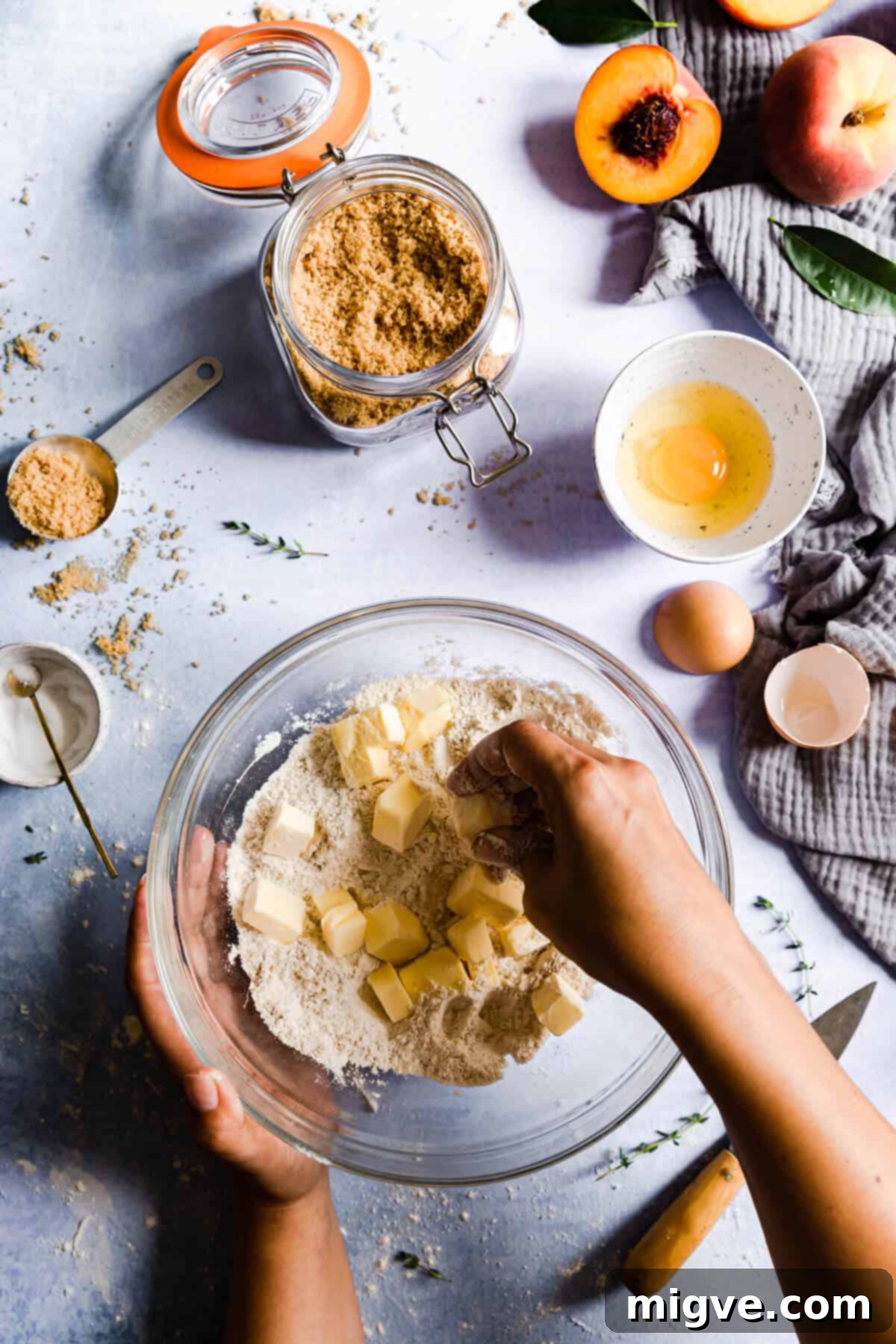
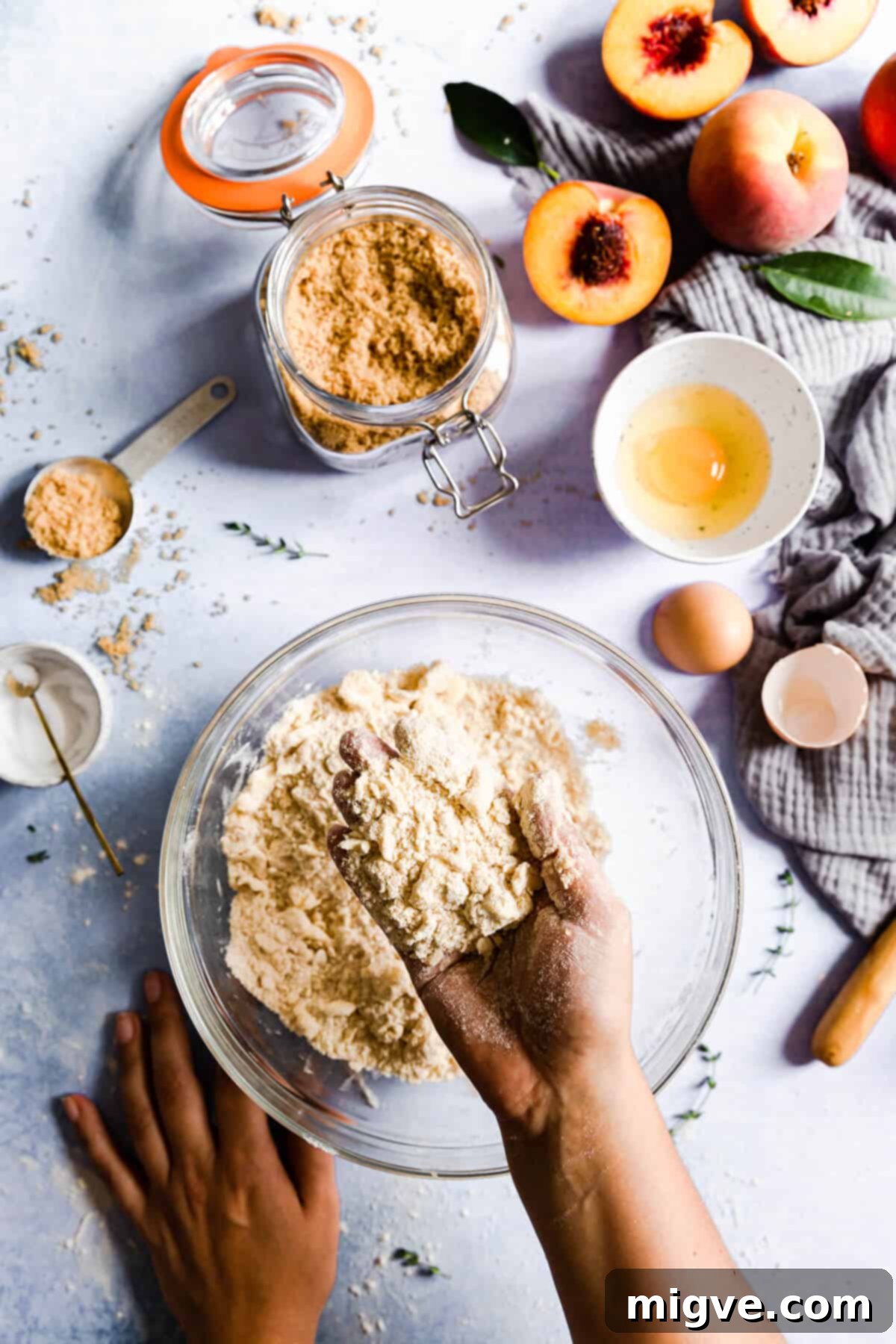
When incorporating the super cold butter into the flour mixture, work quickly and use only the tips of your fingers. This minimizes heat transfer from your hands to the butter. Aim for a texture that resembles coarse breadcrumbs with some pea-sized butter chunks still visible. These butter pockets are what will create the flaky layers. If you have a pastry cutter or a food processor, these tools can also be very effective in achieving the desired crumbly texture without overworking the dough.
The Indispensable Step: Chilling Your Galette Dough
I cannot stress enough the importance of chilling your dough. This step is absolutely paramount for a successful galette. Just as keeping your ingredients cold during mixing prevents the butter from melting, chilling the formed dough further solidifies the fat, ensuring it remains distinct within the flour layers. This chilled fat is what prevents your galette from shrinking excessively during baking and guarantees that signature flaky, crispy texture we all crave.
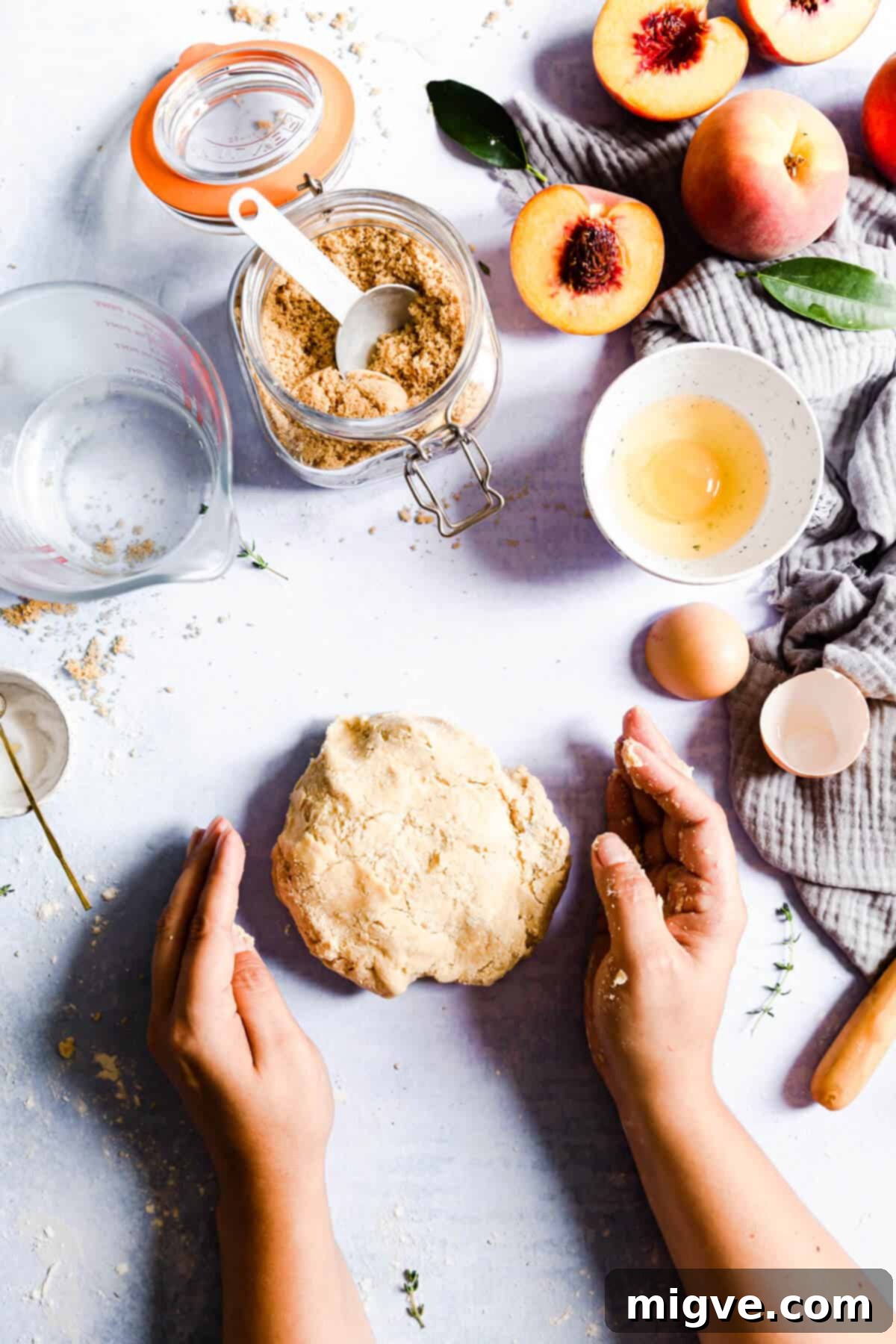
A well-chilled dough is also significantly easier to handle and roll out. It will be less sticky, more pliable, and less prone to tearing. I highly recommend chilling your dough for at least an hour, though chilling it overnight in the refrigerator can yield even better results. This extended chill time allows the gluten in the flour to relax, making the dough more extensible and less likely to spring back when rolled.
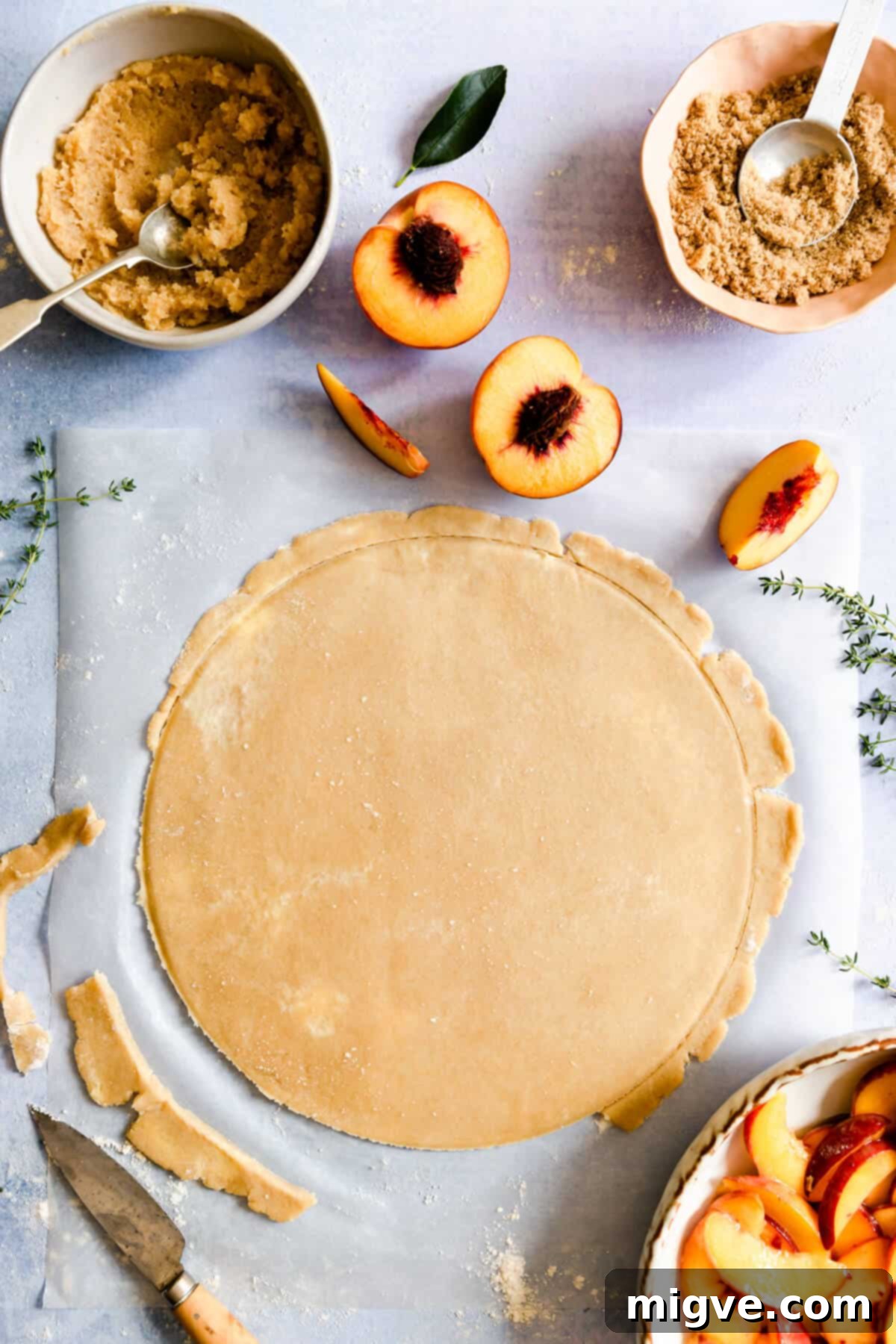
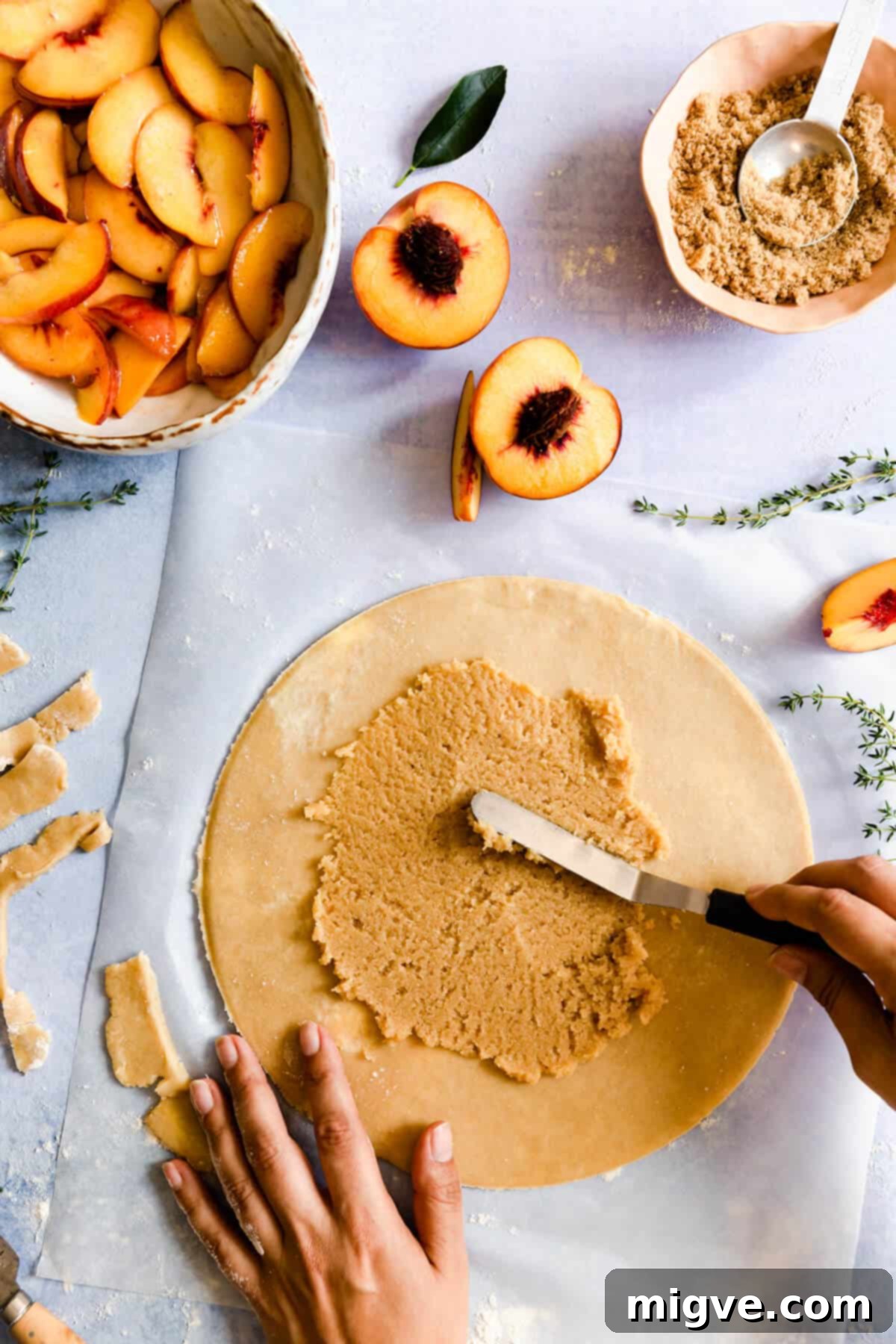
When it comes to rolling out your galette crust, working directly on a large piece of baking paper (parchment paper) is a game-changer. This method makes transferring the delicate, rolled dough to your baking tray incredibly easy, as it can be quite flimsy and prone to breaking if moved directly. I often take an extra step, chilling my galette after each significant stage of assembly: once I’ve rolled it into a large circle, and then again after I’ve added the frangipane and fruit filling. A quick 20-minute chill at each point isn’t strictly necessary but will undeniably contribute to an even flakier, crispier result and a more stable structure.
Furthermore, pay attention to the thickness of your dough. Aim for approximately 5 mm (about 1/5 inch). If the crust is rolled too thick, it can become dense and doughy, overpowering the delicate filling. Conversely, if it’s rolled too thin, it may struggle to hold the filling properly and could tear during baking, leading to a messy leakage of delicious peach juices.
Mastering the Art of Galette Filling
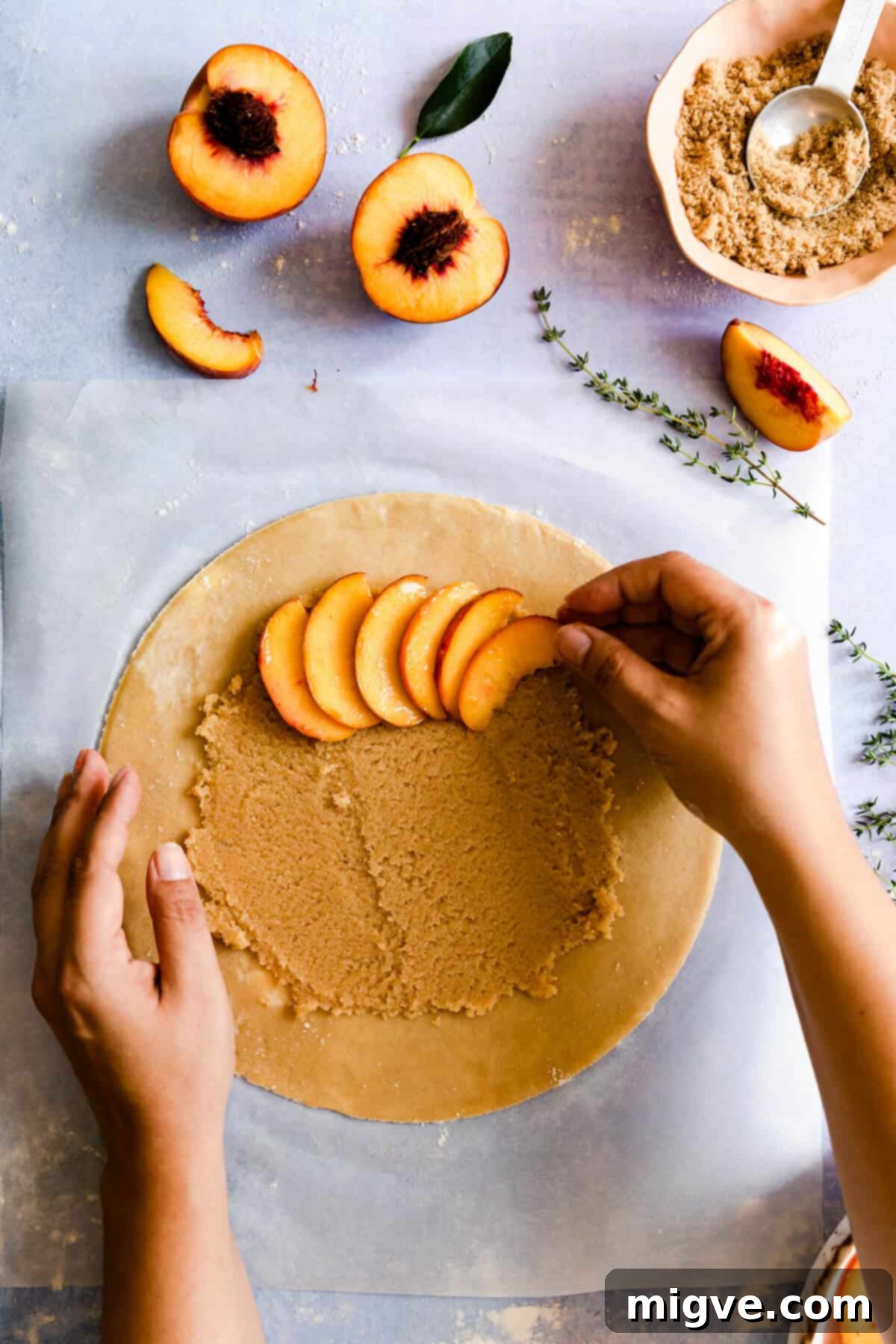
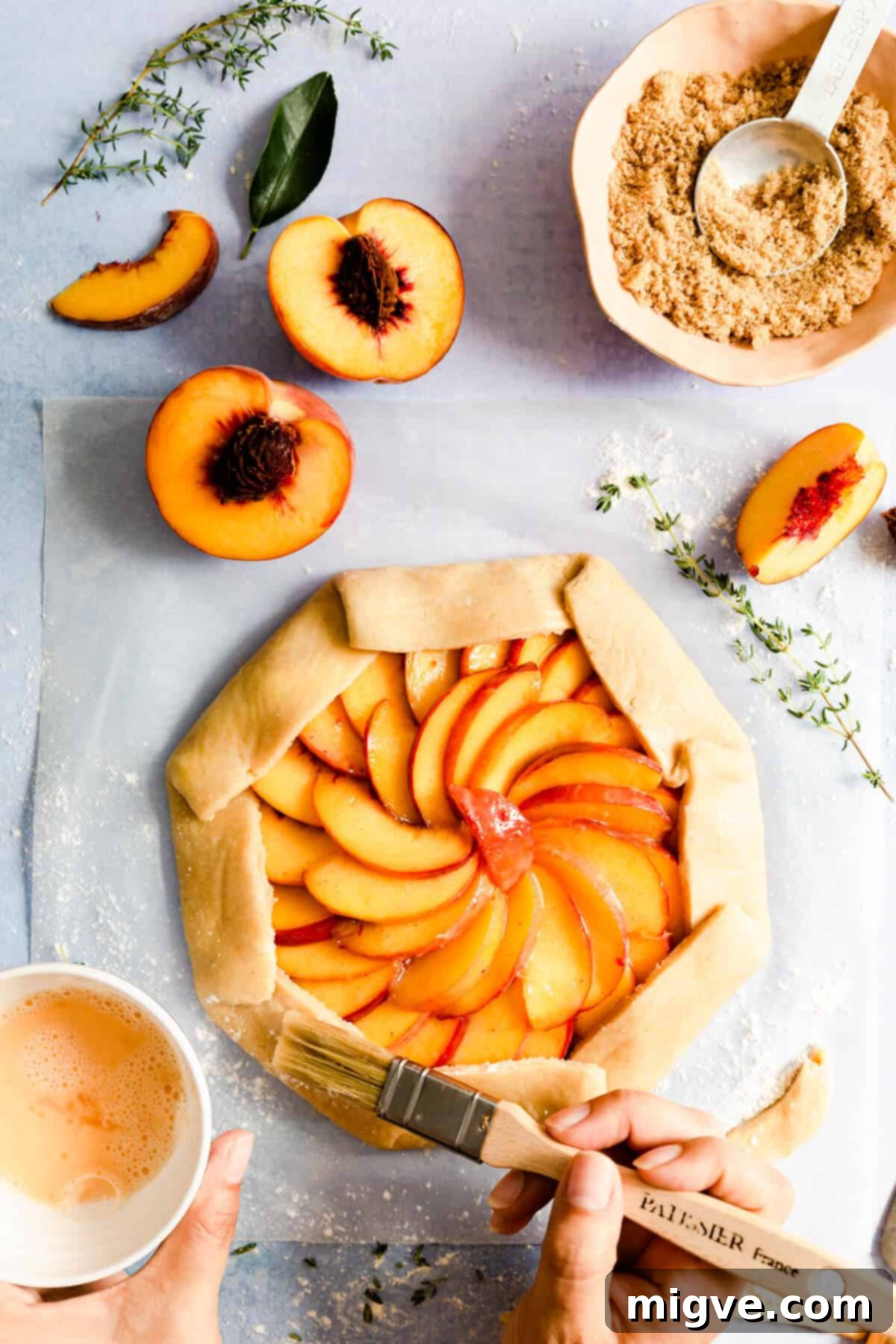
The filling is the heart of your peach galette, and achieving the right balance is key to a spectacular outcome. When adding your juicy peach slices, aim for an even layer across the frangipane base. You can arrange them in a beautiful, decorative pattern or simply scatter them artfully – the rustic nature of a galette allows for creative expression. The crucial point is to avoid piling the filling too high. An overly thick layer of fruit can release too much moisture during baking, potentially leading to a soggy bottom crust, which is the nemesis of any pastry chef, amateur or professional.
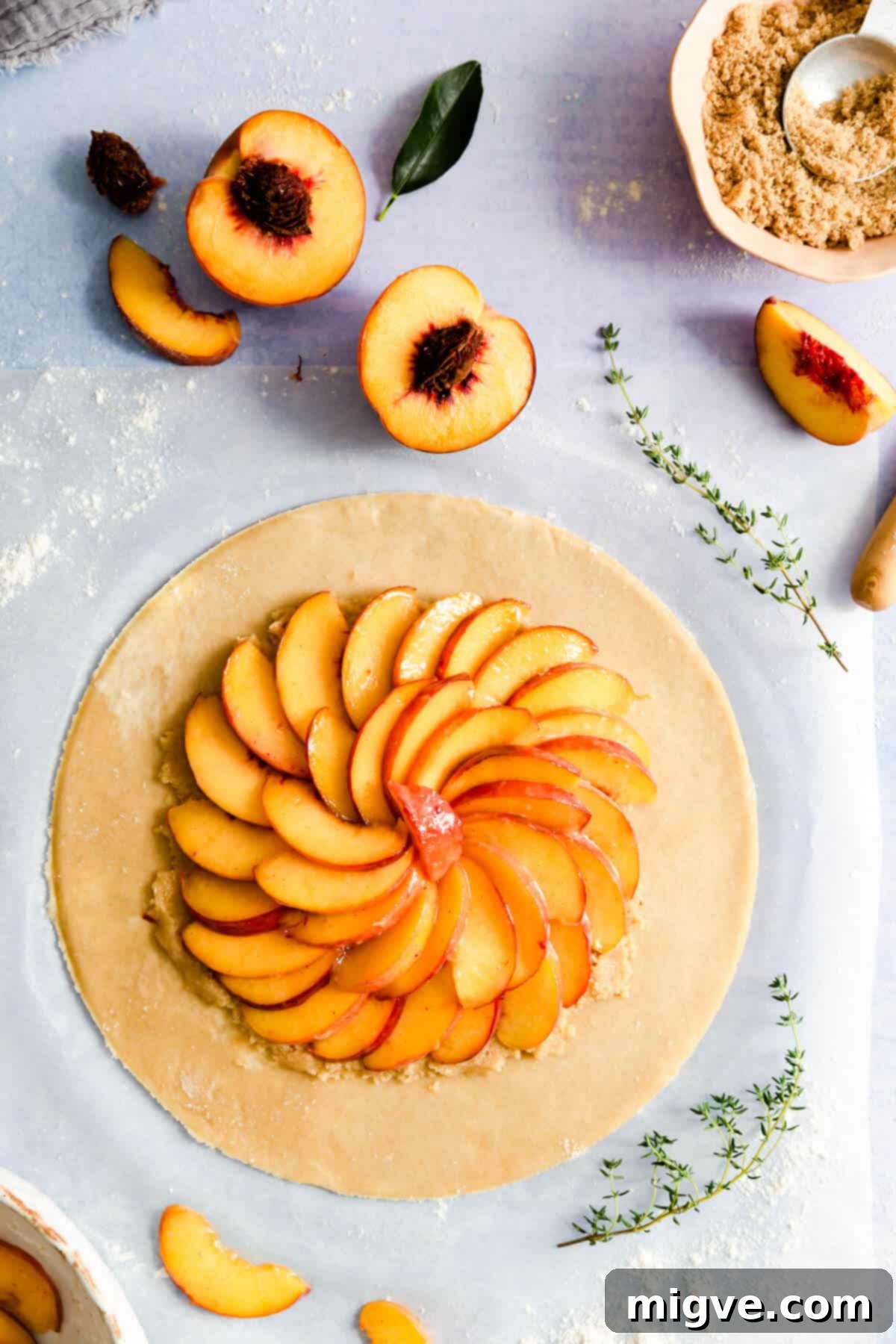
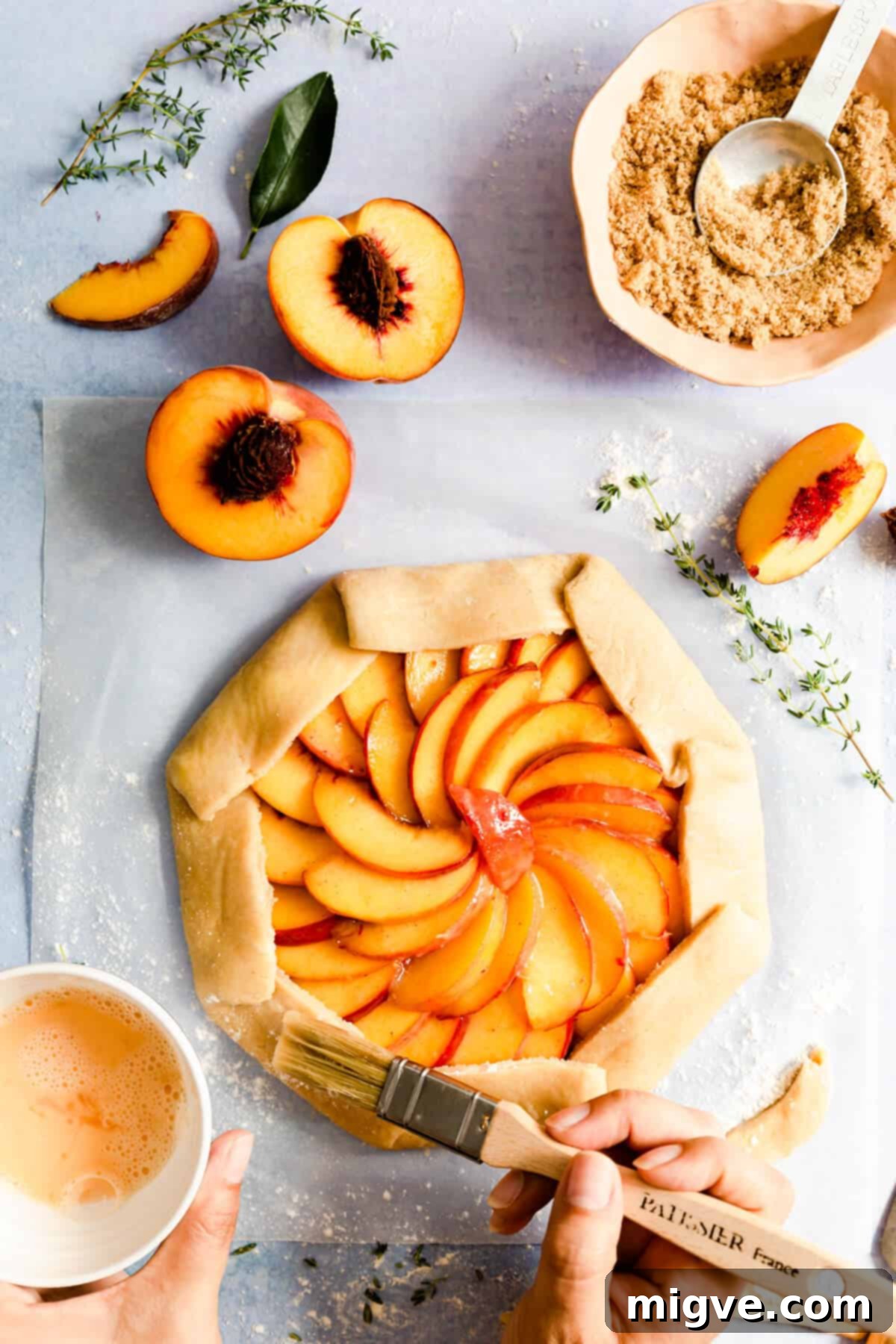
Once your fruit is arranged, gently fold the edges of the galette crust inwards, allowing them to slightly overlap the fruit filling. This creates the signature free-form shape. Be mindful not to fold too little, as the edges might unfold during baking, spilling precious fruit juices. Conversely, folding too much of the crust will hide all that beautiful, colorful fruit, detracting from the visual appeal. Finding that perfect balance between structural integrity and aesthetic presentation is important for a truly show-stopping peach galette.
Elevating Your Galette with Final Touches
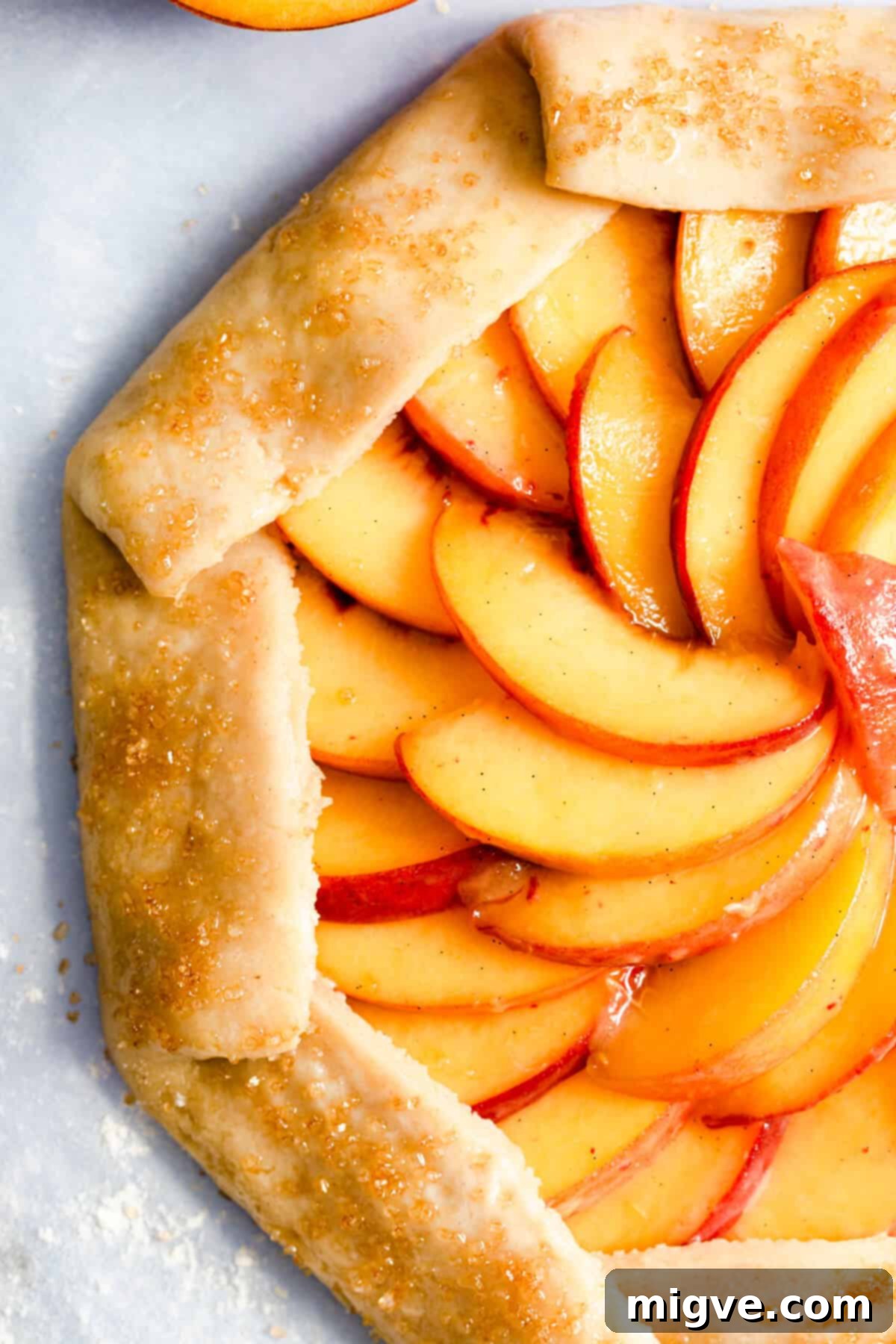
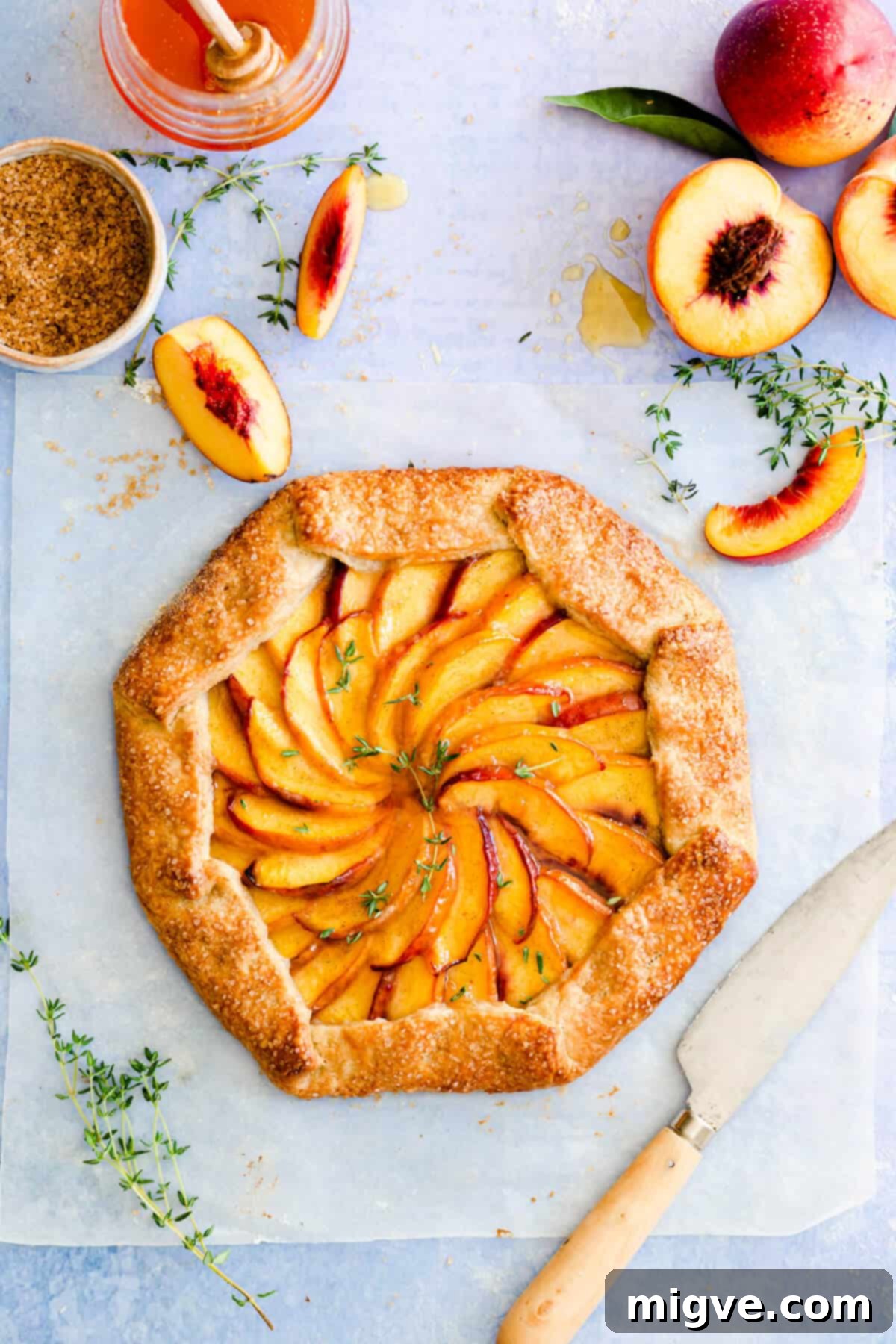
Just before your gorgeous peach galette enters the oven, there are a few simple final touches that can truly elevate its appearance and texture. A light sprinkle of demerara sugar over the exposed crust is entirely optional, but highly recommended. As it bakes, the demerara sugar caramelizes, adding a wonderful, glistening, sweet crunch that beautifully contrasts with the tender fruit and flaky pastry. This simple step adds both visual appeal and an extra layer of texture.
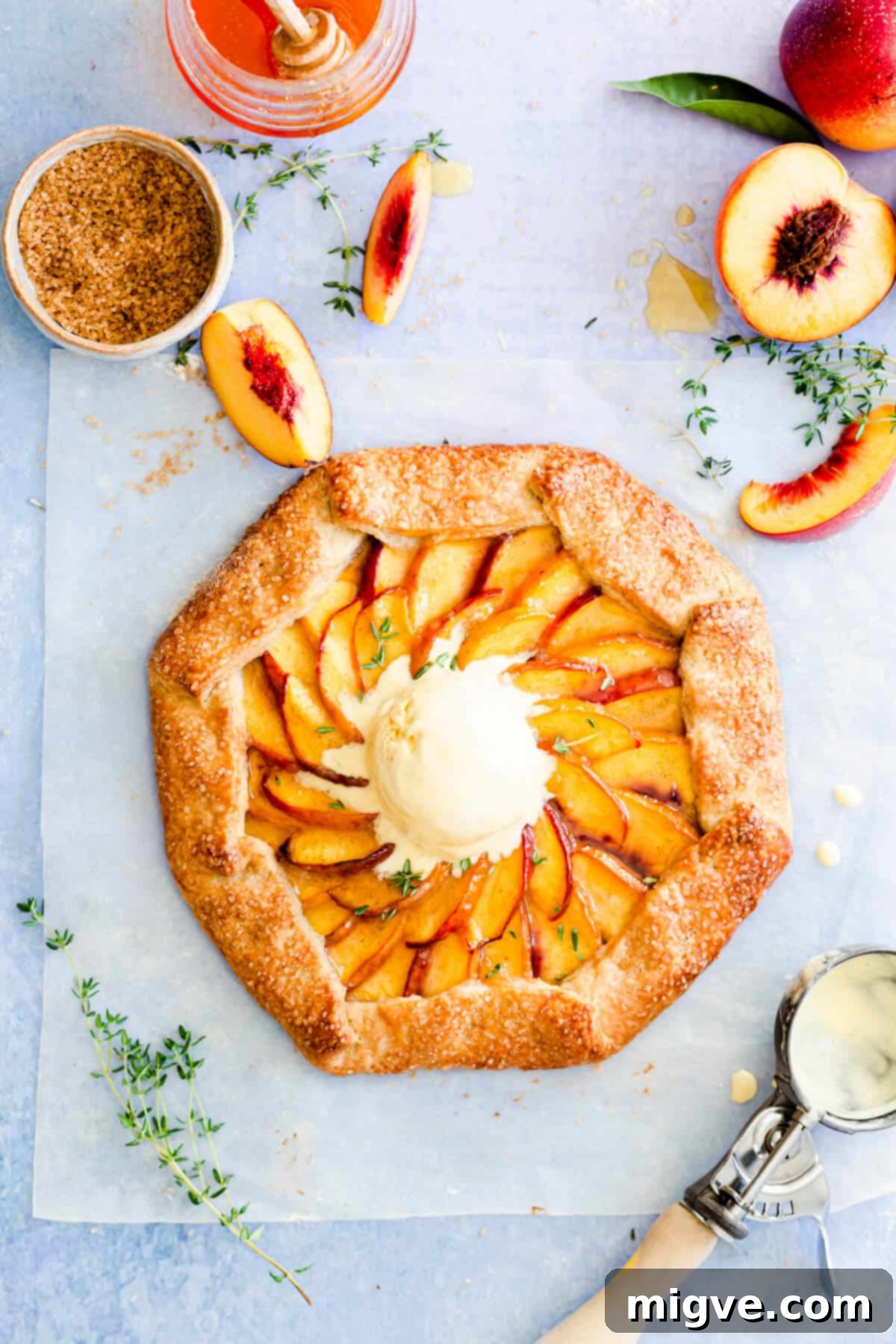
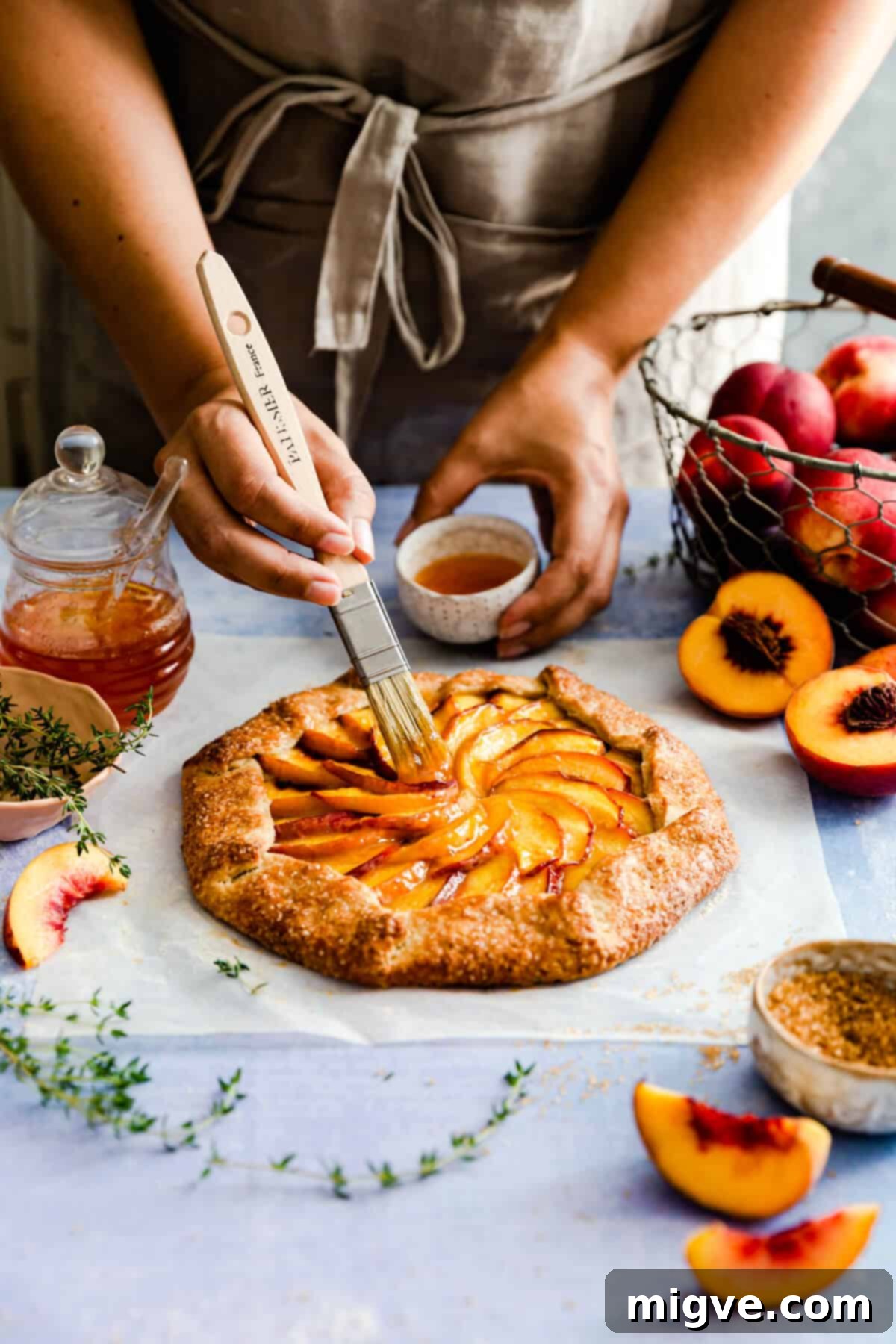
Once your galette is baked to a golden-brown perfection and allowed to cool slightly, a finishing glaze can take it to the next level. Gently brush the fruit filling with a thin layer of warmed peach or apricot jam. This creates a beautiful, shiny glaze that not only enhances the visual appeal but also locks in moisture and adds a touch more sweetness. For those feeling adventurous, a delicate drizzle of honey or a few sprigs of fresh thyme can also work wonders with peaches, offering an additional layer of aromatic complexity, though these are, of course, completely optional and depend on your preferred flavor profile.
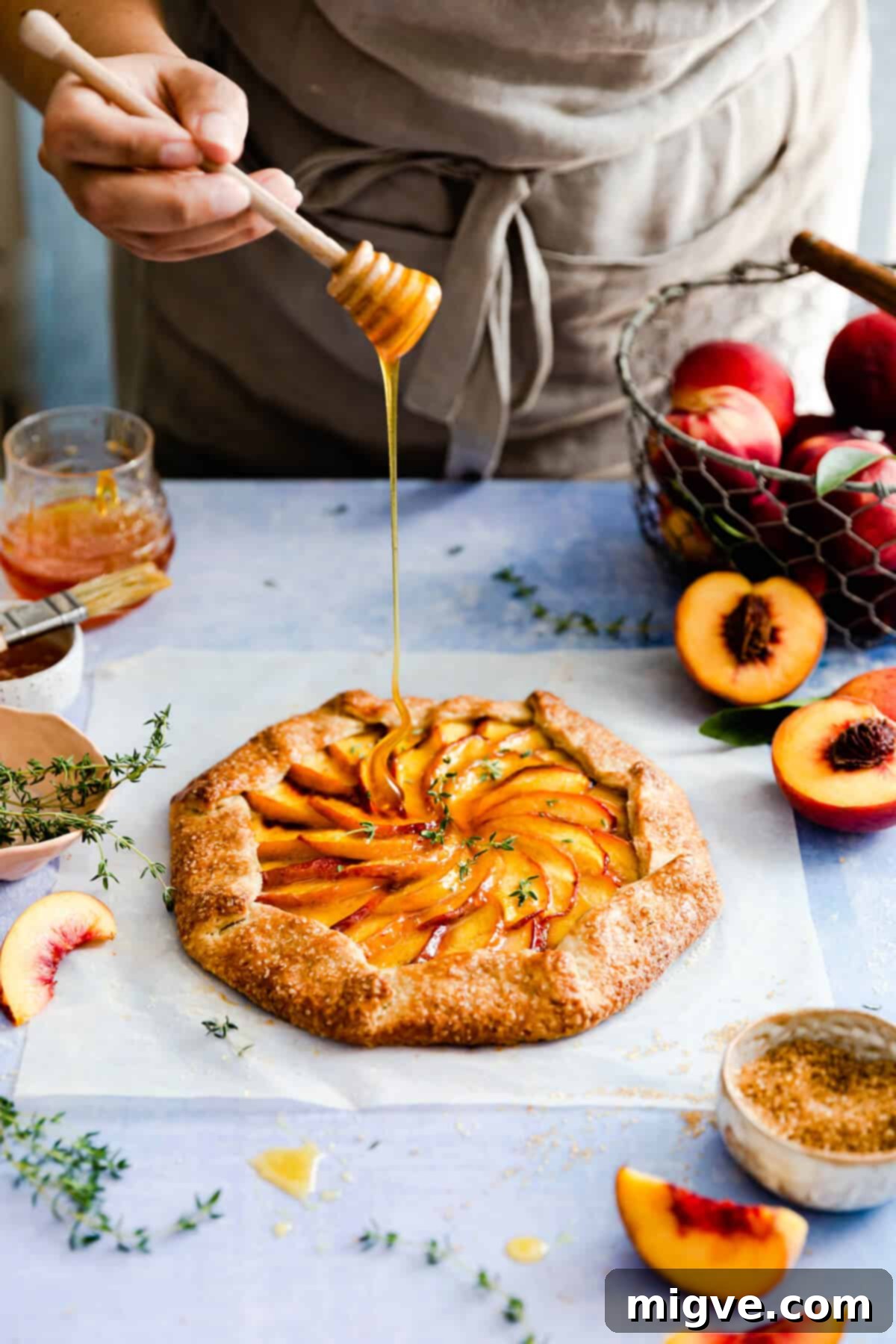
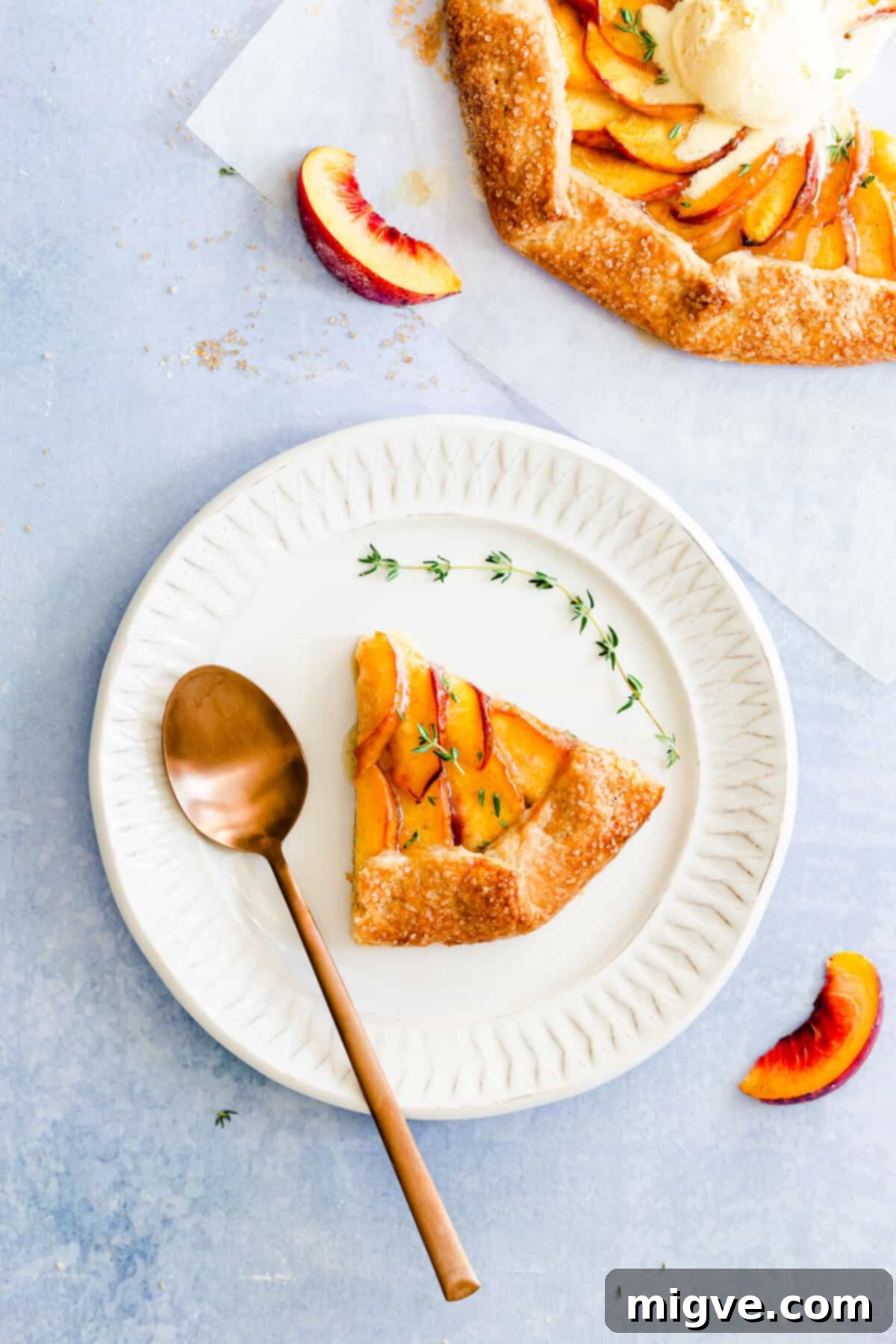
Serve this brown sugar peach galette slightly warm or at room temperature. It pairs exquisitely with a generous scoop of creamy vanilla ice cream, a dollop of freshly whipped cream, or a spoonful of tangy crème fraîche. Each accompaniment adds its own delightful contrast, making every bite a true indulgence.
Make-Ahead and Storage Tips for Your Peach Galette
One of the many convenient aspects of baking a galette is the flexibility it offers for make-ahead preparation, allowing you to enjoy fresh-baked goodness with minimal last-minute effort. You can prepare the galette crust dough well in advance and store it securely wrapped in plastic film in the refrigerator for up to 3 days. For longer storage, the unbaked crust can also be frozen for up to 3 months. When ready to use, simply thaw it overnight in the fridge before rolling. This foresight ensures you’re always just a step away from a homemade dessert.
The delicious frangipane filling can also be prepared ahead of time. Store it in an airtight container or a bowl with a tight-fitting lid in the refrigerator for up to 2 days. This makes assembly on baking day quick and easy. However, the peach filling, with its delicate slices and juices, is best prepared on the day you plan to bake. This prevents the peaches from becoming too watery or discolored, ensuring the freshest flavor and best texture in your finished galette.
While a galette truly shines when served on the day it’s baked, any leftovers can be stored and enjoyed for a couple of days. Simply cover the galette loosely with aluminum foil or plastic wrap and keep it at room temperature. For optimal enjoyment, you can gently warm slices in a preheated oven or microwave before serving, reviving some of that fresh-baked warmth and crispness. Avoid airtight containers for extended periods as they can trap moisture and make the crust soft.
Thank you for joining me on this culinary journey to create the perfect brown sugar peach galette. I hope this detailed guide empowers you to bake a dessert that delights your senses and brings a touch of summer magic to your table. Don’t forget to connect with me on my social channels: Instagram, Pinterest, and Facebook. I love seeing your creations!
If you’ve tried this recipe or any other from my collection, I would be thrilled to hear about your experience! Please feel free to leave a comment and a rating below the recipe card in the comments section. Your feedback is invaluable and helps others discover delicious new bakes.
📖 Recipe

Print Recipe
Pin Recipe
Brown sugar peach galette
Equipment
- rolling pin
- mixing bowls
- baking tray
Ingredients
For the Crust:
- 190 g plain flour
- 50 g soft light brown sugar
- ¼ teaspoon salt
- 120 g cold butter cubed
- 60 ml ice cold water
For the Frangipane Filling:
- 50 g butter softened
- 50 g soft light brown sugar
- 100 g ground almonds
- 1 small egg
For the Peach Filling:
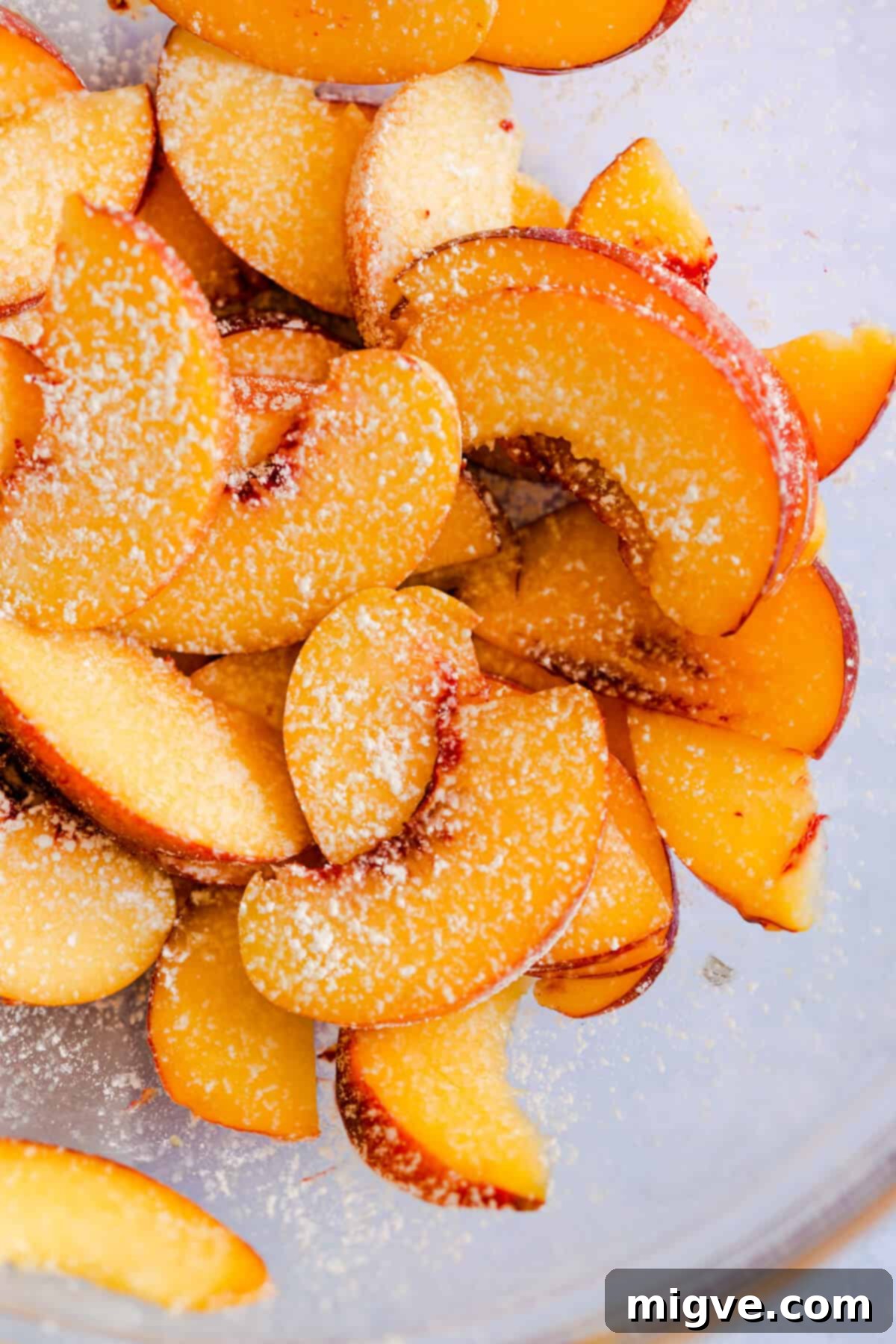
- 3 medium peaches sliced thinly
- ½ medium lemon juice only
- ½ teaspoon vanilla extract
- 2 tablespoons caster sugar
- 1 tablespoon cornflour
For Finishing:
- 1 small egg for eggwash
- 1 teaspoon demerara sugar optional
- 1 tablespoon peach or apricot jam
Instructions
- For the Crust:
- Place flour, brown sugar, and salt in a large mixing bowl and combine thoroughly. Add the cubed cold butter and, using your fingertips, quickly rub it into the flour mixture until it resembles the texture of large breadcrumbs, with some pea-sized butter pieces remaining.
- Gradually add the ice-cold water, mixing just until the dough comes together. Knead it gently a few times to form a cohesive dough. Shape the dough into a flat disc, wrap it tightly in plastic film, and refrigerate for 1-2 hours (or overnight for best results).
- Prepare the Frangipane: In a separate bowl, cream together the softened butter and brown sugar until the mixture is light and fluffy. Beat in the egg until fully incorporated. Fold in the ground almonds until a smooth, paste-like texture is achieved. Set this frangipane aside.
- Prepare the Peaches: In a bowl, gently mix the thinly sliced peaches with lemon juice, vanilla extract, caster sugar, and cornflour. This coating helps prevent the fruit from becoming too watery during baking. Set aside. Meanwhile, preheat your oven to 180°C (170°C fan / 350°F).
- On a large piece of baking paper, roll out the chilled pastry dough into a large circle, approximately 11 inches (28 cm) in diameter, aiming for about 5 mm thickness. You can use the back of a large dinner plate or a bowl to trace and trim the edges for a neater circle. If the pastry becomes too soft or sticky during rolling, return it to the fridge for about 20 minutes to firm up. Spread the frangipane filling evenly over the center of the dough, leaving a clear border of about 2 inches (5 cm) around the edge. Arrange the sliced peaches decoratively on top of the frangipane. Gently fold the exposed edges of the pastry over the fruit, creating pleats as you go, to slightly overlap the filling.
- Brush the folded pastry edges with the prepared egg wash (one small egg whisked). If desired, sprinkle the crust with demerara sugar for added crunch and sparkle. Carefully slide the baking paper with the assembled galette onto a baking sheet. Bake in the preheated oven for 30-35 minutes, or until the crust is golden brown and the fruit filling is tender and bubbling.
- Allow the galette to cool on the baking sheet for at least 15-20 minutes before handling. While still slightly warm, brush some peach or apricot jam over the fruit filling to create a beautiful, shiny glaze. Serve warm or at room temperature, perhaps with a scoop of vanilla ice cream or a dollop of fresh cream.
Please note that all my recipes are developed and tested using metric grams for accuracy. I highly recommend using digital scales for the best results. While I provide a conversion to US customary measurements in the recipe, I haven’t personally tested the recipe using these units.
Video
Notes
- If your crust dough becomes too soft or difficult to work with at any point, simply place it back in the fridge for about 15-20 minutes to firm up. This will make it much easier to handle.
- For make-ahead convenience, you can prepare the crust dough and the frangipane filling up to 2-3 days in advance and store them separately in the fridge. Both components can also be frozen for up to 3 months; just remember to thaw them overnight in the refrigerator before using.
Nutrition
If you enjoyed reading this post and would like to receive future recipes, baking tips, and seasonal inspiration directly to your inbox, make sure to sign up for my newsletter! Happy baking!