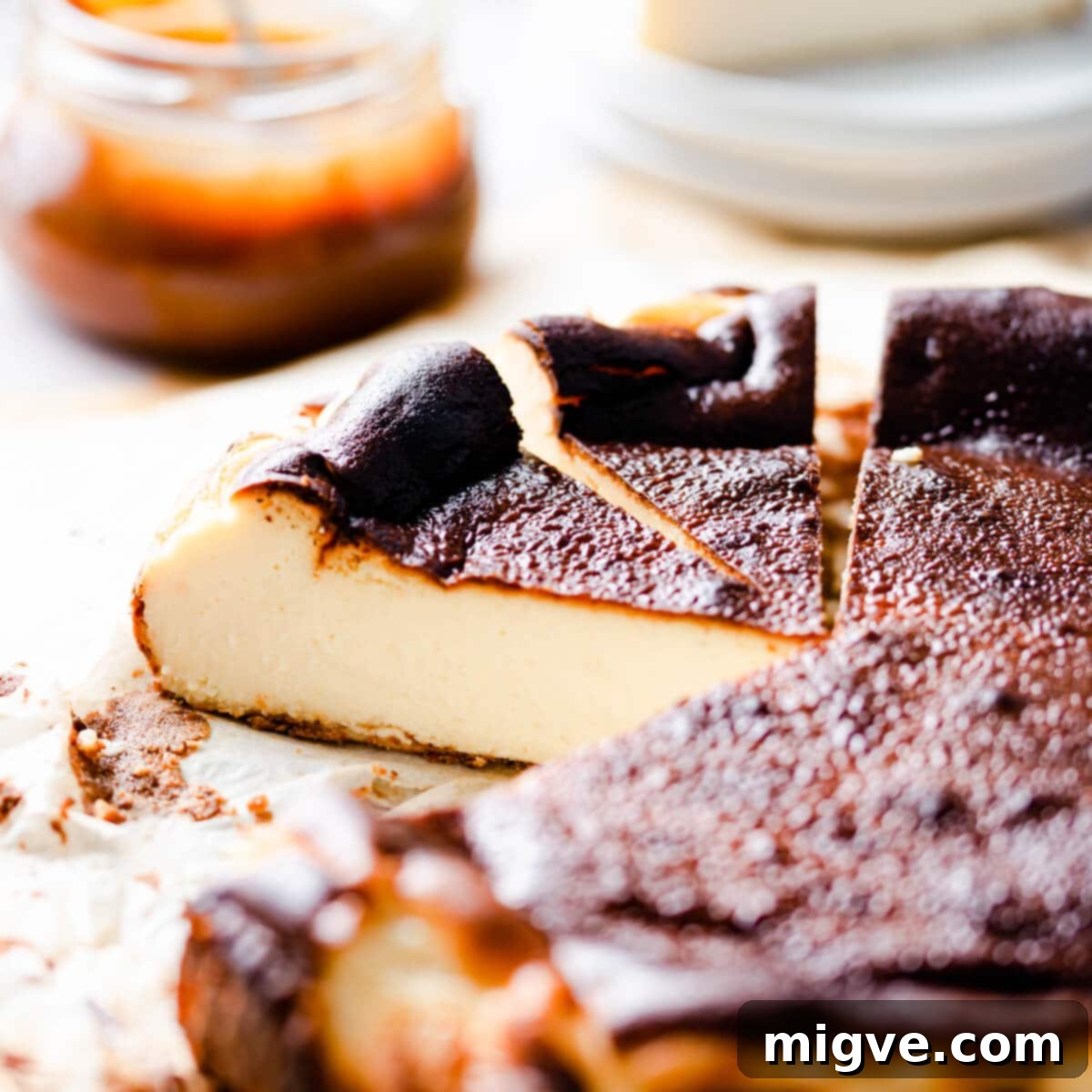
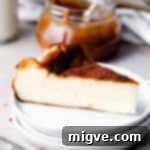
Welcome to the ultimate guide for creating the most extraordinary dessert: the **Burnt Basque Cheesecake**! This isn’t just any cheesecake; it’s a unique culinary masterpiece renowned for its dramatic, **deeply golden-brown to beautifully charred exterior** and an **incredibly smooth, creamy, and luxuriously light interior** that truly melts in your mouth. Forget everything you thought you knew about traditional cheesecakes; this San Sebastian-born delight breaks all the rules, and you’ll be thrilled it does.
What makes the Burnt Basque Cheesecake stand out? Firstly, there’s **no crust to meticulously prepare**, and you won’t need a fussy water bath. This high-temperature baking method creates its signature ‘burnt’ look, which is actually a rich caramelization, offering a delightful contrast to the silky-smooth filling. It’s an exceptionally **easy and forgiving recipe**, making it perfect for novice bakers and seasoned pros alike. Its rustic charm and irresistible flavor guarantee it will become your signature dessert for any gathering or a special treat for yourself.
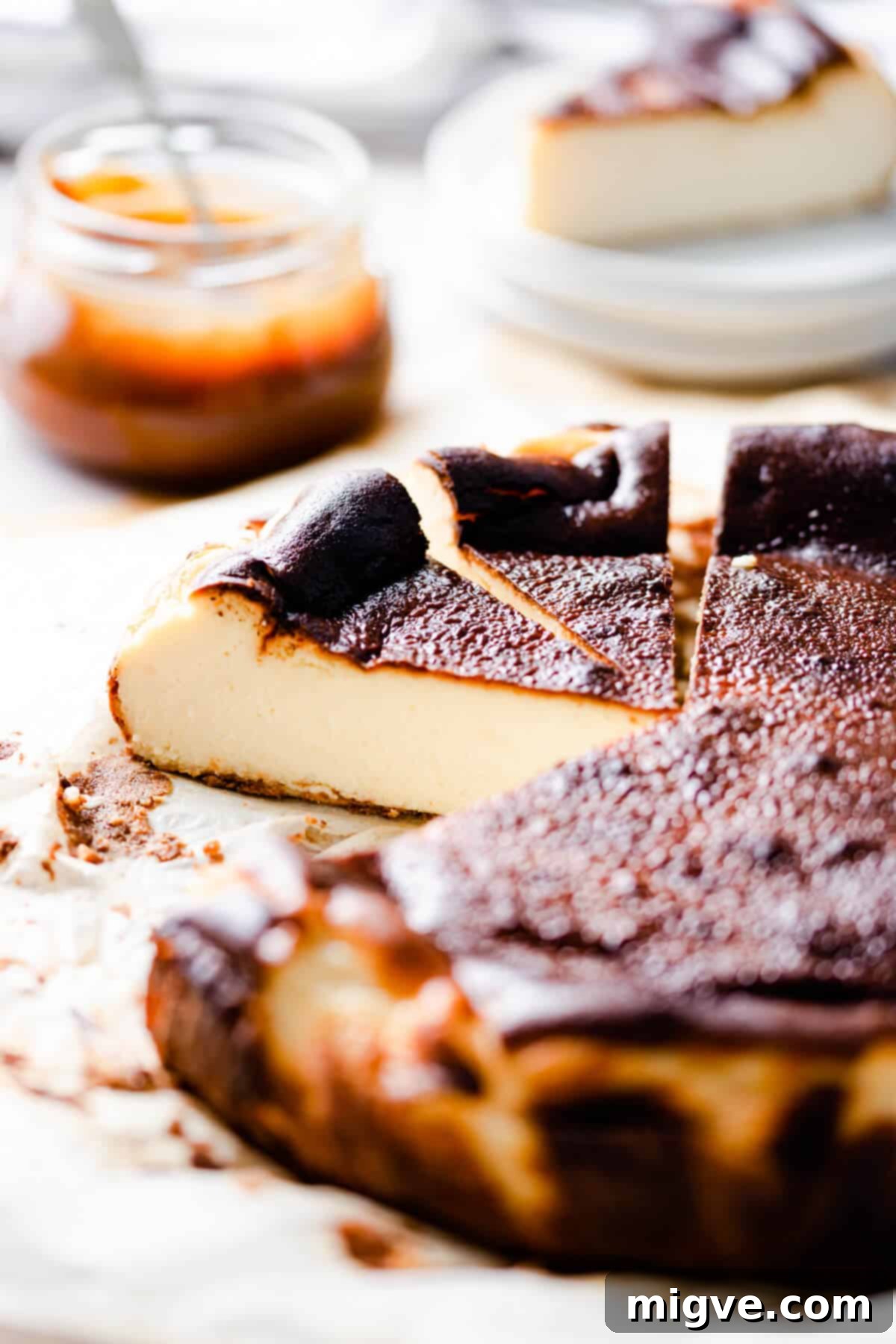
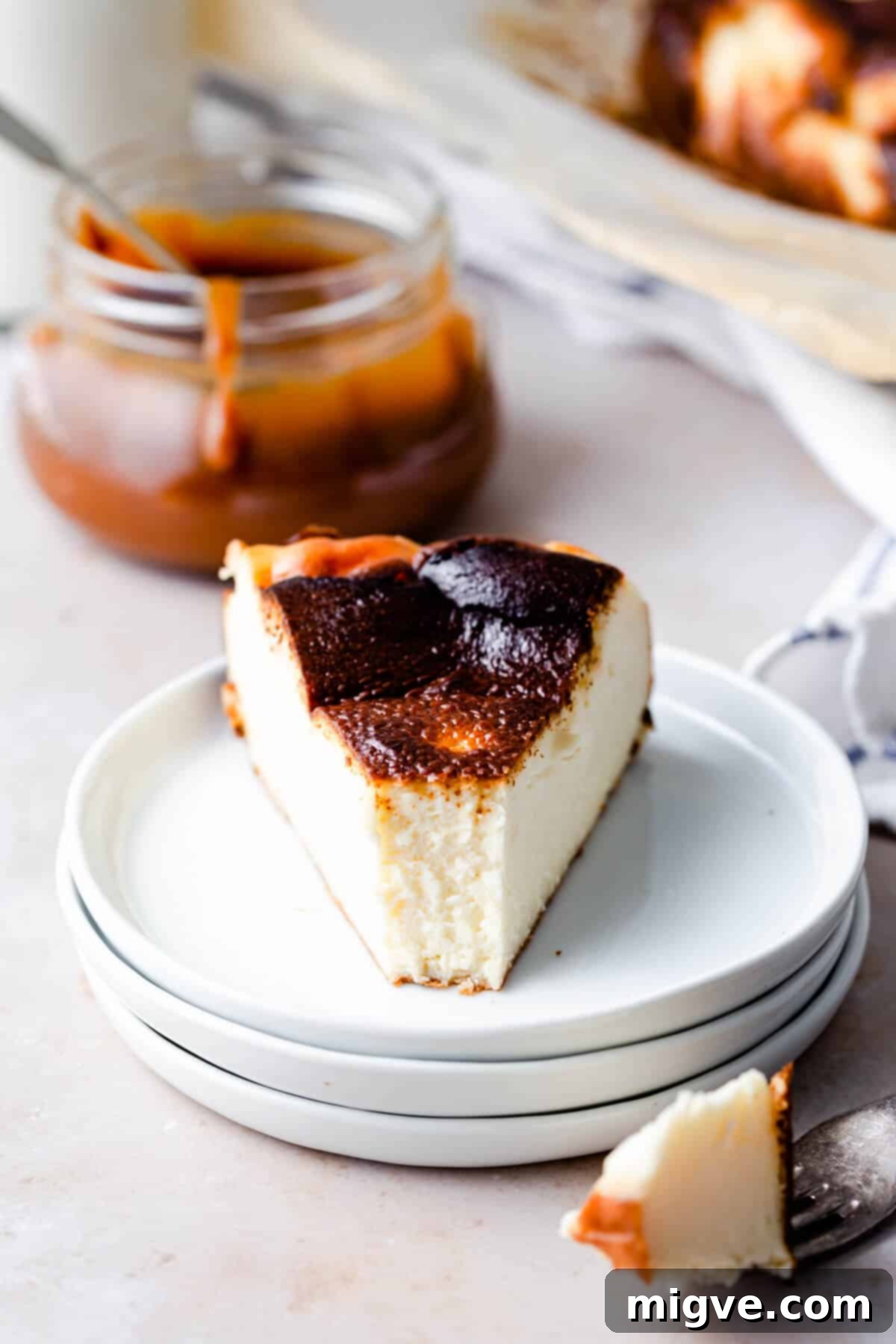
Originating from the Basque Country in northern Spain, specifically the La Viña restaurant in San Sebastian, this cheesecake is locally known as **Tarta de Queso**. It has gained global fame for its unconventional appearance and phenomenal taste. Unlike dense, New York-style cheesecakes, the Basque version boasts a light, almost mousse-like texture in the center, transitioning to a firmer, custard-like consistency towards the edges. The caramelized top isn’t just for show; it acts as a natural, flavorful crust, adding layers of sweet, slightly bitter notes that beautifully complement the rich dairy filling.
If you’re accustomed to more traditional cheesecakes featuring a biscuit or cookie crust, you might enjoy exploring our Honey Cheesecake recipe or this vibrant Raspberry Ripple Cheesecake. For those who appreciate the simplicity of no-bake desserts, our Strawberry White Chocolate Cheesecake recipe or the indulgent No Bake Baileys Cheesecake recipe offer equally delicious, fuss-free options. However, if you’re ready for a culinary adventure that promises big flavor with minimal effort, the Burnt Basque Cheesecake is an absolute must-try.
Jump to Recipe
Essential Ingredients for Your Burnt Basque Cheesecake
Creating the perfect Burnt Basque Cheesecake relies on a few key, high-quality ingredients. The beauty of this recipe lies in its simplicity, so choosing the right components is paramount to achieving that signature creamy texture and rich flavor. Pay close attention to the details below to ensure your cheesecake turns out flawlessly.
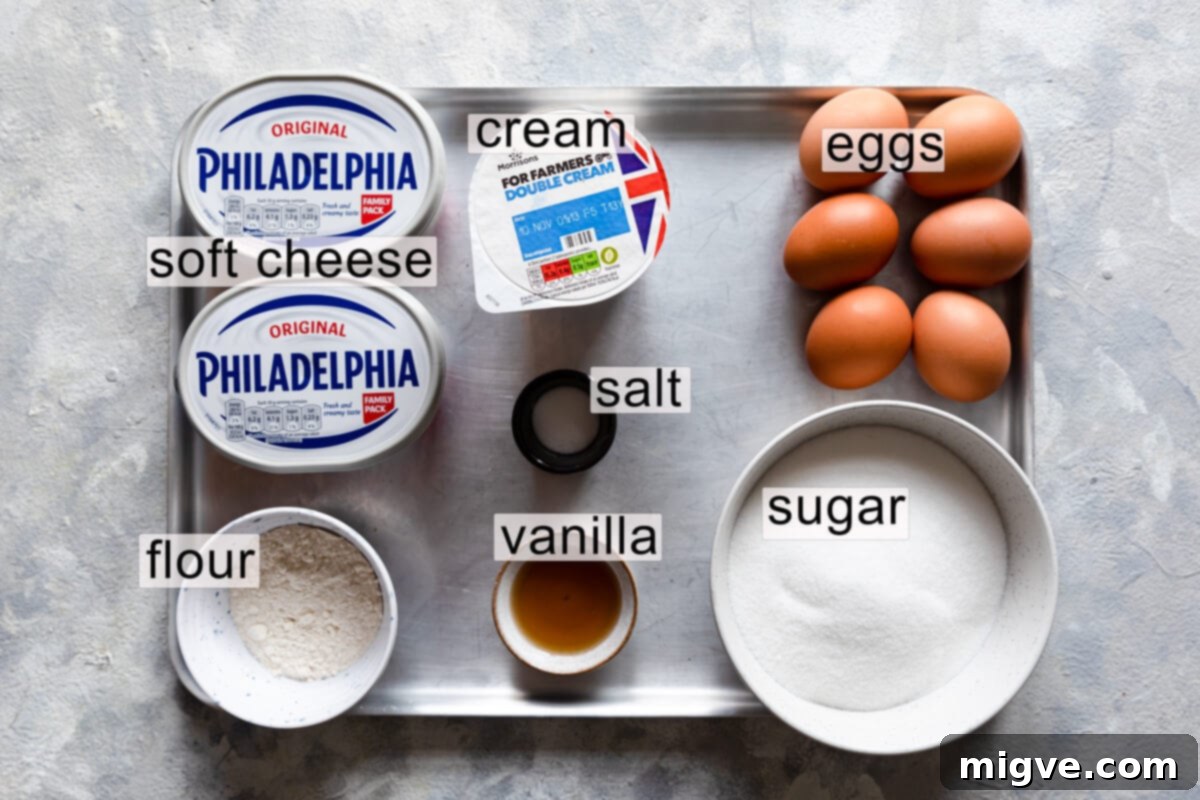
- Cream Cheese / Soft Cheese: This is the star of the show. For an unforgettably rich and smooth texture, always opt for **full-fat cream cheese**. Brands like Philadelphia are popular choices due to their consistent quality and creaminess, but feel free to use your preferred brand as long as it’s the full-fat variety. Low-fat alternatives will compromise the texture and the cheesecake’s ability to set properly, resulting in a less luxurious experience.
- Sugar: White caster sugar or granulated sugar are ideal for this recipe. Their fine crystals dissolve easily, creating a smooth batter without a gritty texture. The sugar not only provides sweetness but also contributes to the beautiful caramelization of the exterior during the high-heat baking process.
- Eggs: Use large eggs, and critically, ensure they are at **room temperature**. Room temperature eggs emulsify much better with other ingredients, creating a homogeneous, lump-free batter. This ensures a consistent and silky texture throughout the cheesecake.
- Cream: **Double cream or heavy cream** is essential for achieving the exceptionally smooth, rich, and dense texture that distinguishes this Burnt Basque Cheesecake. Its high-fat content ensures the cheesecake sets beautifully and contributes significantly to the decadent mouthfeel. Again, full-fat is non-negotiable here; low-fat substitutes will prevent the cheesecake from setting correctly, leading to a runny or grainy result.
- Vanilla: A touch of vanilla extract is crucial for enhancing the overall flavor profile. It adds a warm, aromatic depth that complements the creamy dairy notes. For an even more pronounced vanilla presence, consider using vanilla bean paste, which also introduces those lovely specks of vanilla bean.
- Flour: A small amount of plain or all-purpose flour is included to help stabilize the batter and contribute to the cheesecake’s structure and slight rise. It acts as a binder, preventing the cheesecake from becoming too fragile and ensuring a smooth, uniform consistency. For a gluten-free option, refer to our variations section.
Crucially, all of your cheesecake ingredients must be at room temperature. For best results, remove them from the refrigerator at least one hour (preferably two) before you begin preparing the recipe. This step is vital for achieving a smooth, well-emulsified batter and the signature creamy texture of the Burnt Basque Cheesecake.
For the complete list of ingredients with precise measurements and the detailed recipe card, please scroll to the bottom of this post.
Step-by-Step Guide to Baking Your Basque Cheesecake
Baking this iconic Burnt Basque Cheesecake is surprisingly straightforward. Follow these simple instructions to achieve a perfectly caramelized exterior and an irresistibly creamy interior. The key is in the preparation and the high-heat baking.
- **Prepare Your Pan:** Begin by generously greasing a 10-inch (25 cm) round springform cake tin with butter. Ensure both the bottom and sides are thoroughly coated. This initial layer of butter helps the parchment paper adhere smoothly.
- **Line with Parchment Paper:** You’ll need two sheets of baking paper, each roughly 16×12 inches (40×30 cm). Place the first sheet at the bottom of the greased pan, pressing it firmly around the base and up the sides. Grease this sheet with a little more butter, then place the second sheet directly on top, overlapping the first.
- **Create the Signature Look:** Don’t worry about perfection when lining. Pleat and crease the parchment paper to fit snugly all around the baking tin. These creases are not flaws; they are essential for giving your baked cheesecake its characteristic rustic, ridged edge, which is part of its charm.
- **Ensure Overhang:** It’s crucial to ensure there are at least 2 inches (5 cm) of baking paper sticking up above the top and sides of the tin. The cheesecake will rise significantly during baking, and this overhang prevents any overflow.
- **Preheat Oven:** Preheat your oven to a high temperature of 200°C (180°C fan / 400°F). A high temperature is fundamental to achieving the characteristic “burnt” exterior.
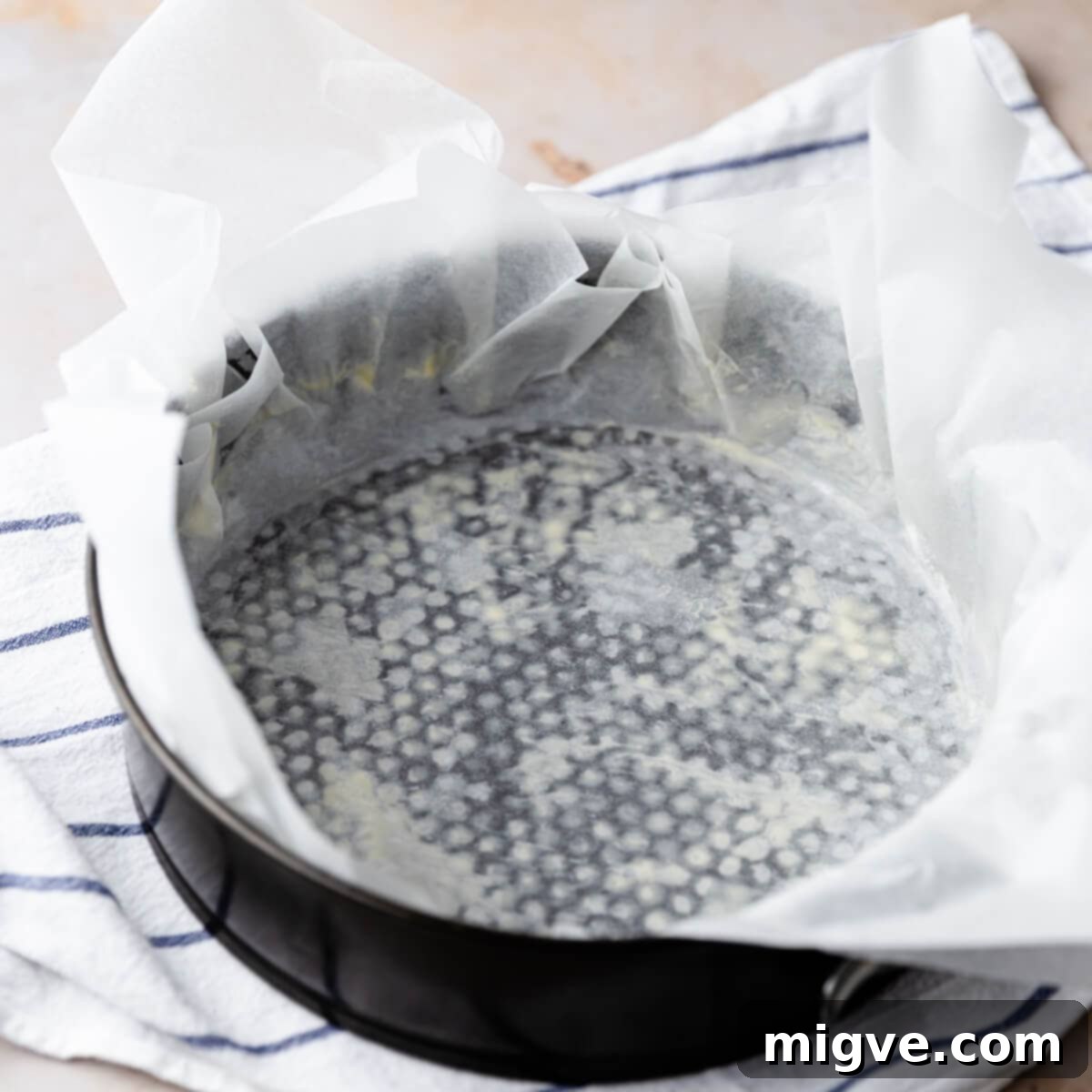
Thoroughly grease and line your baking tin with ample parchment paper overhang.
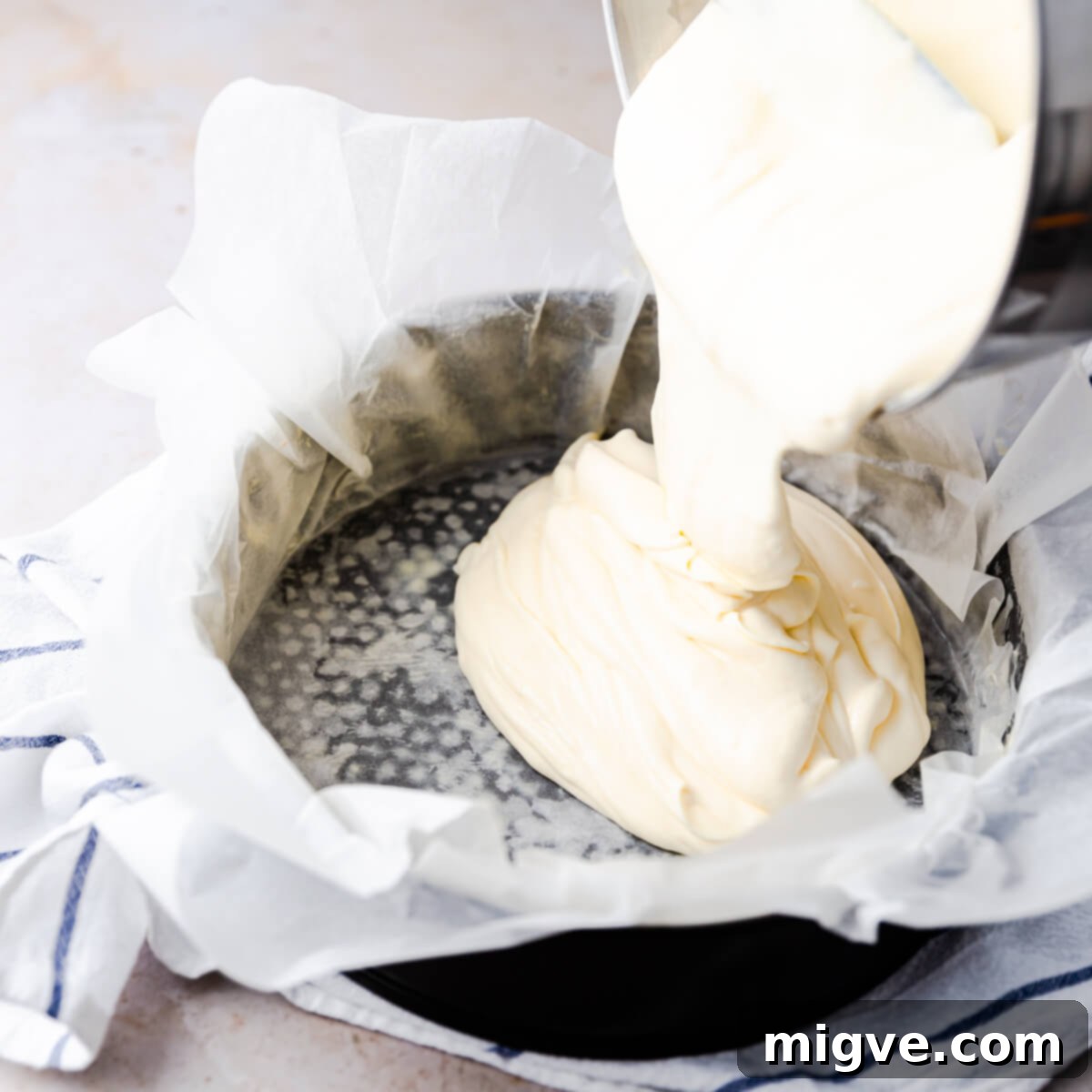
Combine all ingredients until the batter is smooth, creamy, and free of lumps. Carefully pour the batter into your prepared pan.
Hint: After pouring the batter, gently tap the baking tin against your kitchen counter a few times. This simple step helps to release any trapped air bubbles, ensuring a smoother, more even texture in your finished cheesecake.
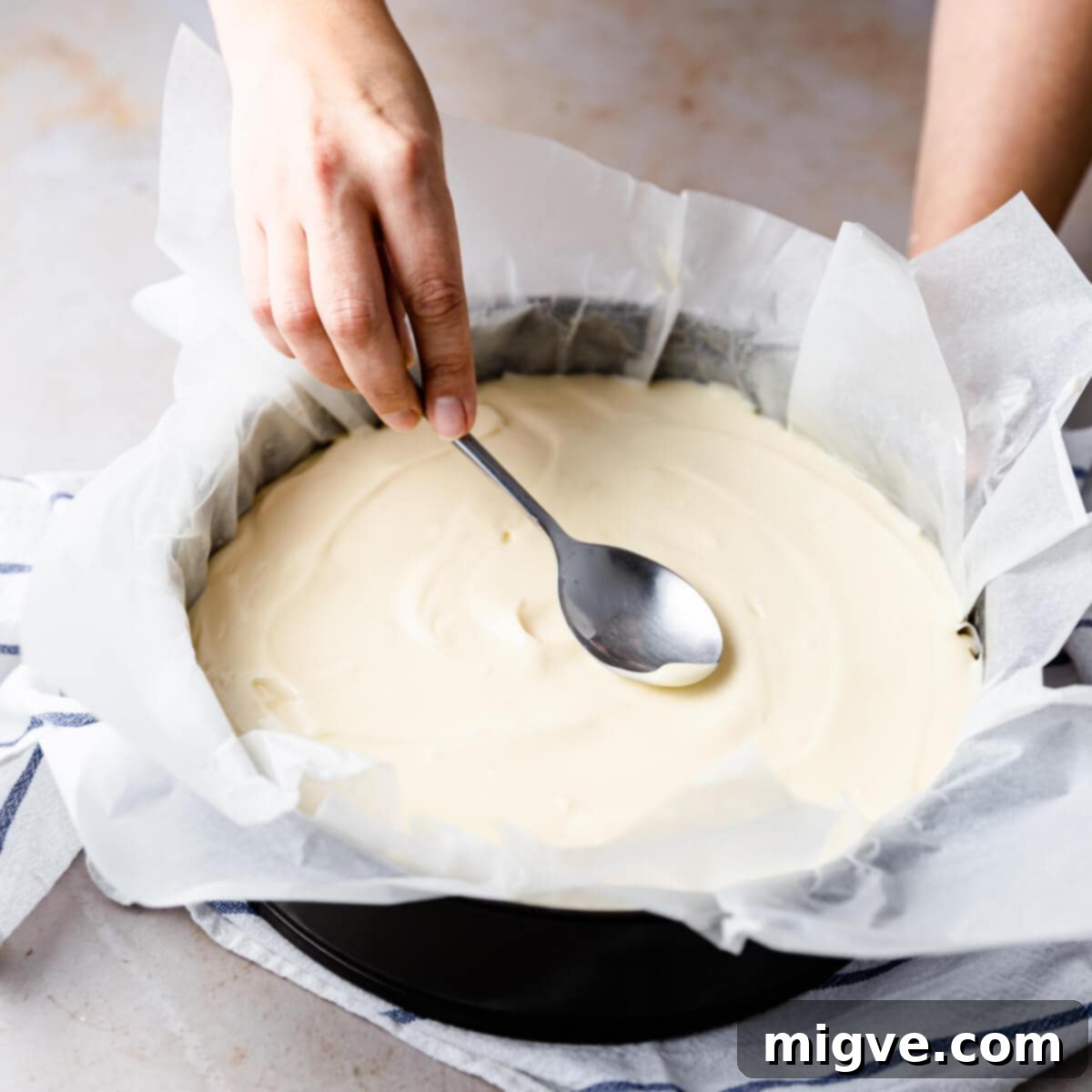
Gently smooth the top surface of the batter with the back of a spoon or a spatula, then bake for 60-65 minutes until deeply caramelized.
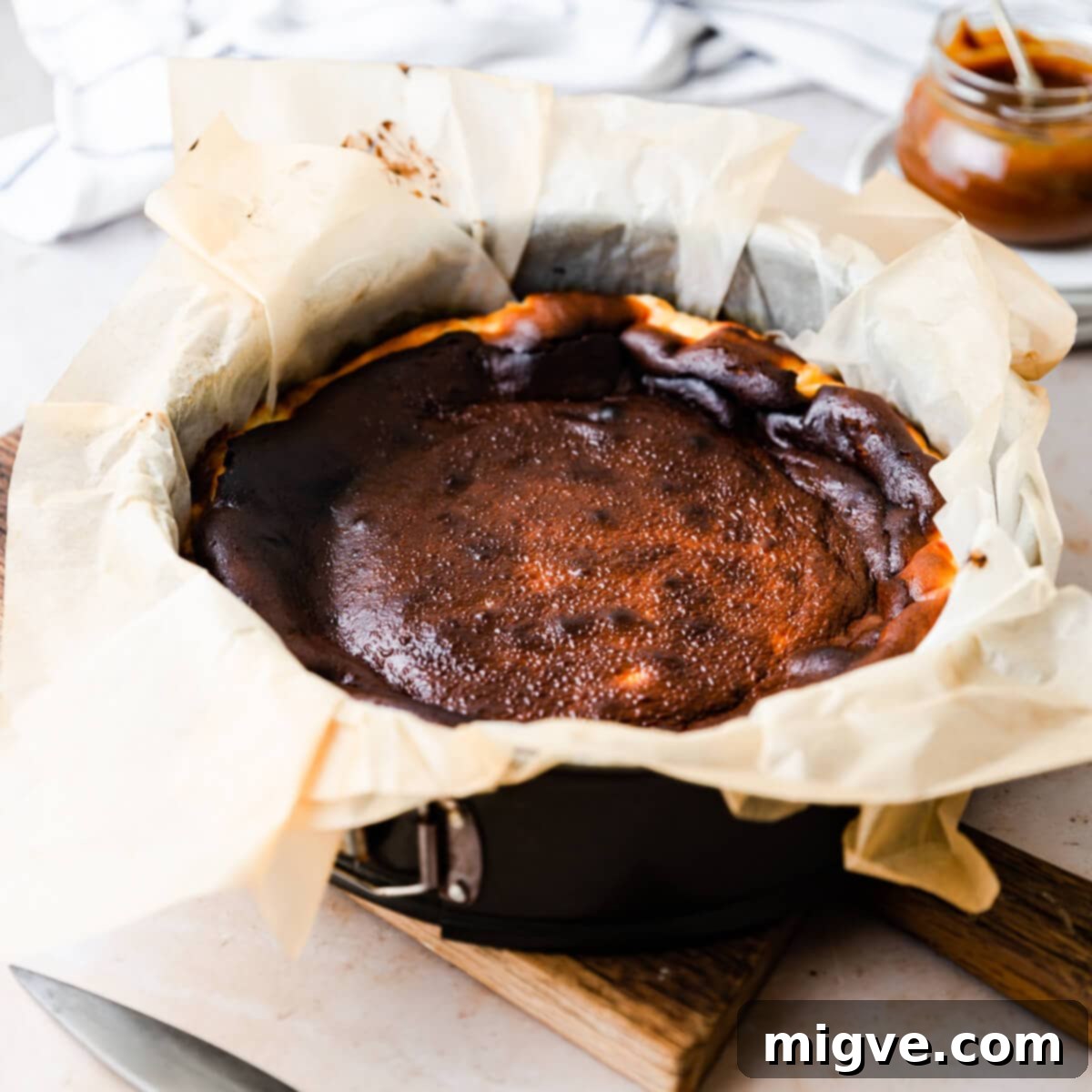
Allow the cheesecake to cool completely at room temperature, then chill thoroughly in the fridge for several hours before attempting to remove it from the pan.
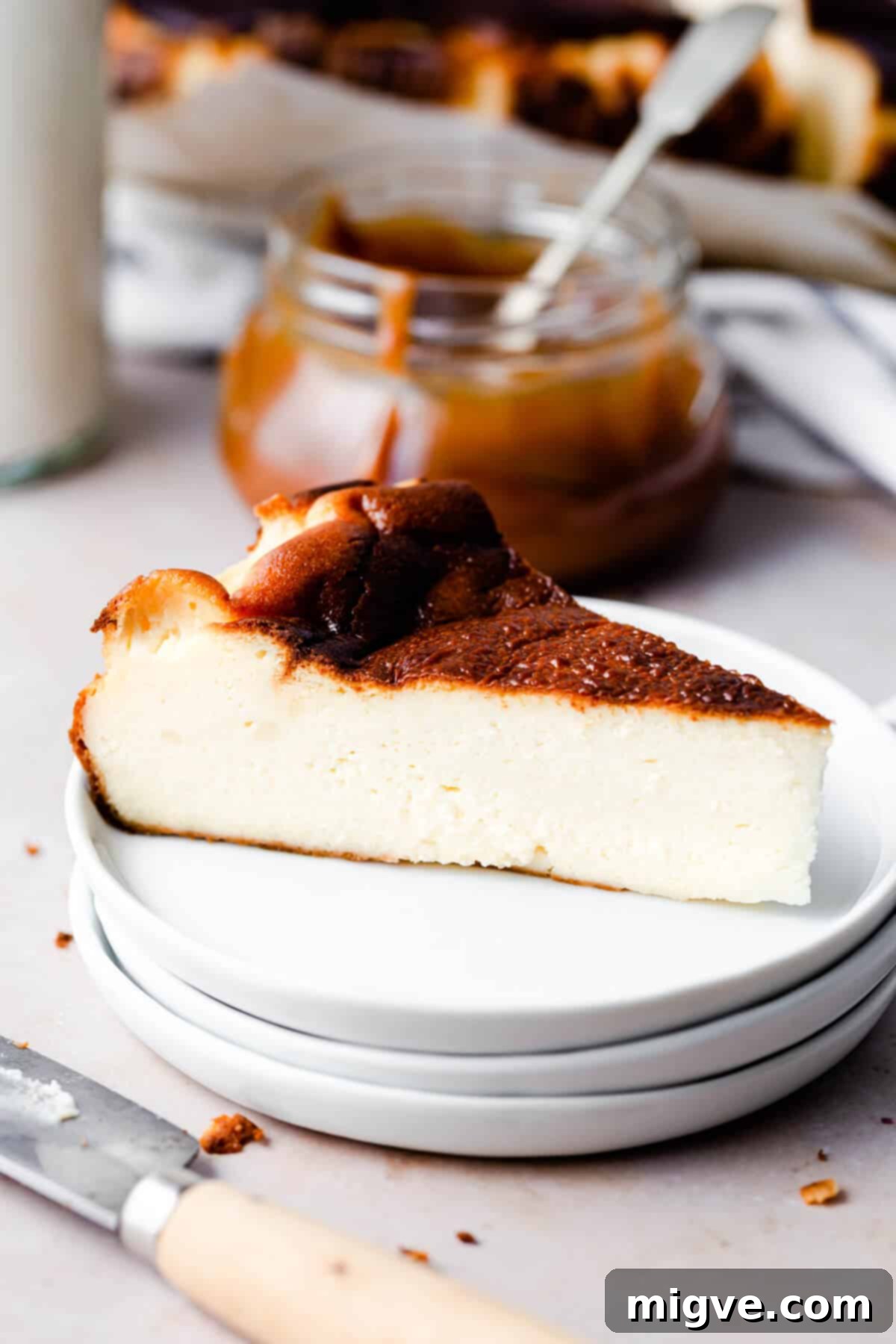
Baker’s Tip: The beauty of Burnt Basque Cheesecake is its adaptability to personal preference. If you adore a softer, more molten and creamy center, experiment by reducing the baking time by 5-10 minutes. Conversely, if you prefer a firmer, more set texture throughout, extend the baking time by an additional 5-10 minutes. Always look for that deep golden-brown to slightly charred top, with a distinct jiggle in the center when gently shaken.
Creative Variations for Your Basque Cheesecake
While the classic Burnt Basque Cheesecake is spectacular on its own, it also serves as a fantastic canvas for various flavor enhancements and toppings. Don’t be afraid to experiment and personalize your creation!
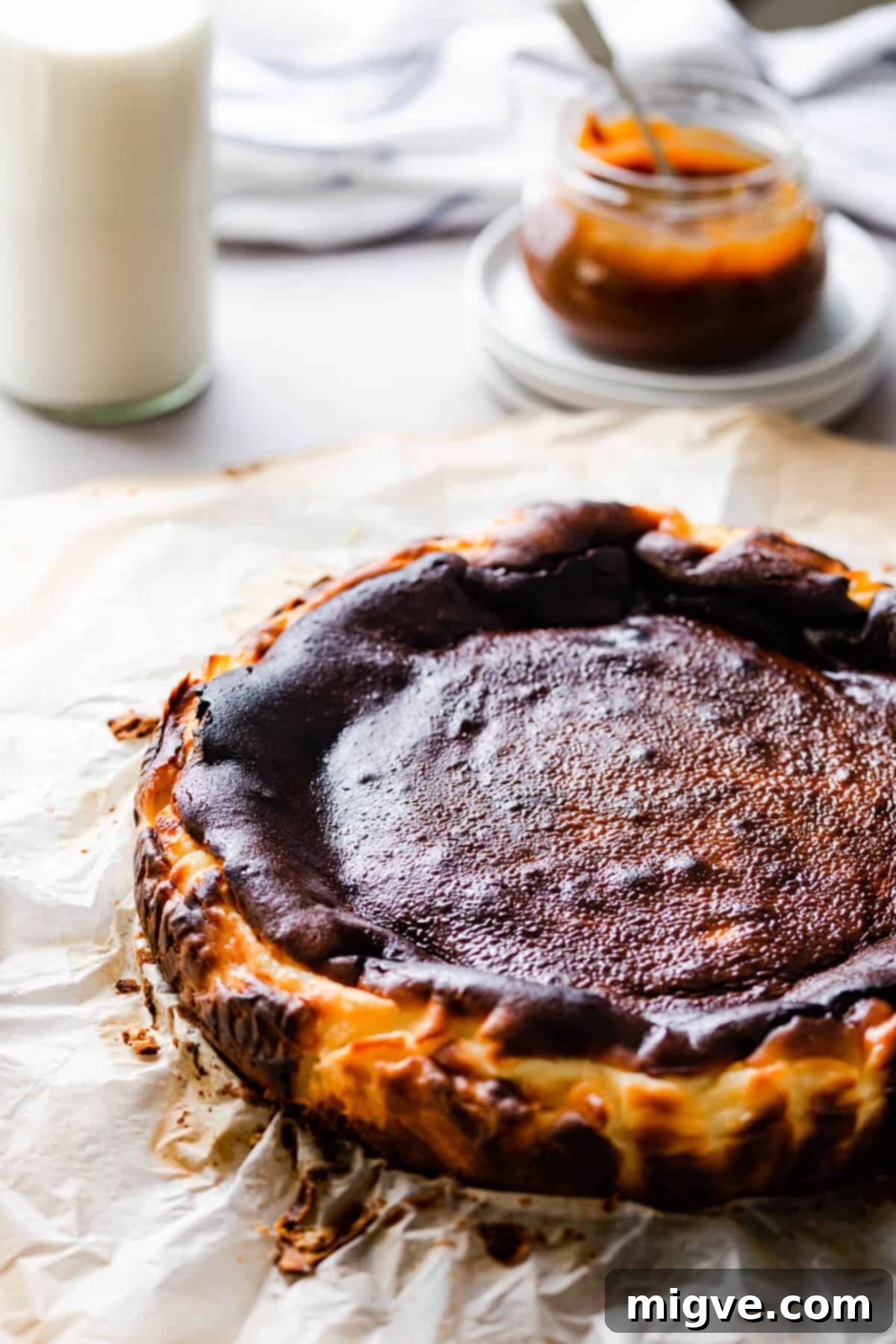
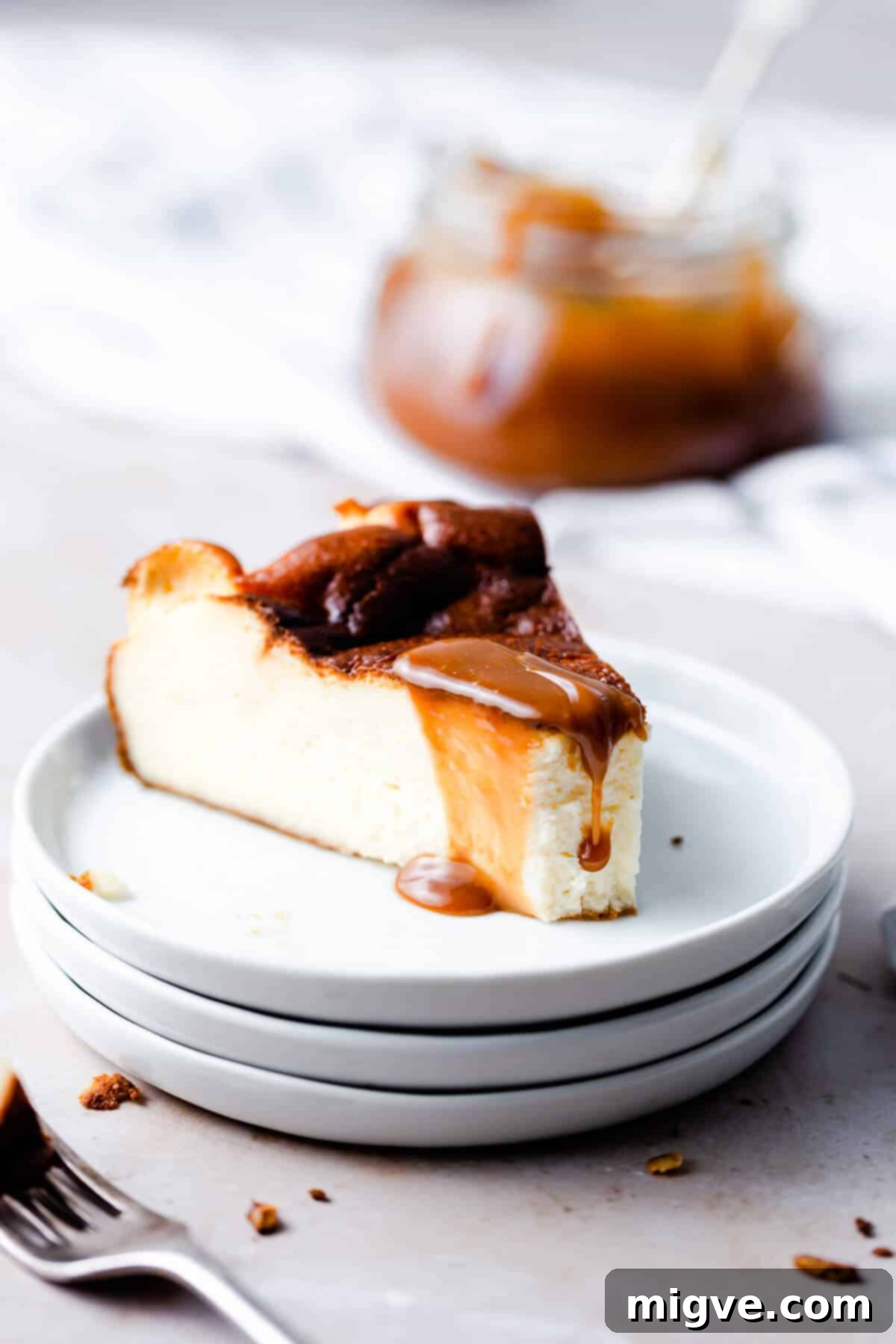
- Elevate with Toppings: A simple drizzle can transform your cheesecake. We love serving this cheesecake with a luscious caramel sauce, but the possibilities are endless. Consider a rich chocolate sauce, melted dark or white chocolate, or a vibrant berry compote for a fruity contrast. This Blueberry Sauce Recipe would be an exquisite pairing. Fresh berries like raspberries or strawberries also add a pop of color and freshness.
- Gluten-Free Basque Cheesecake: Easily adapt this recipe for gluten-free diets by simply substituting the plain or all-purpose flour with your favorite gluten-free all-purpose flour blend. Ensure your chosen blend includes a binder (like xanthan gum) for best results, or add a small amount separately.
- Citrus Zest Infusion: For an extra layer of brightness and aroma, incorporate some fresh lemon, lime, or orange zest into your cheesecake batter. The citrus notes will beautifully complement the rich cream cheese and vanilla, adding a refreshing zing without overpowering the classic flavor.
- Coffee or Espresso: For coffee lovers, a tablespoon or two of instant espresso powder dissolved in a tiny bit of hot water and added to the batter can create a subtle, sophisticated coffee-flavored cheesecake.
- Spices: A pinch of cinnamon, nutmeg, or even a touch of cardamom can add warmth and complexity, especially if you plan to serve it during cooler months or festive occasions.
Essential Equipment for a Perfect Basque Cheesecake
One of the many appealing aspects of this easy Basque cheesecake recipe is that it doesn’t require any specialized or overly fancy equipment. With a few basic kitchen tools, you’ll be well on your way to baking this impressive dessert.
- Electric Mixer: While manual mixing is possible, an electric mixer is highly recommended to achieve that perfectly smooth, lump-free batter. A stand mixer fitted with the paddle attachment offers hands-free convenience, but a hand-held electric mixer will also work beautifully to ensure all ingredients are thoroughly combined and airy.
- Springform Baking Tin: This is a crucial piece of equipment for cheesecakes. A springform pan, with its removable sides, allows for effortless unmolding of the delicate cheesecake once it’s baked and chilled, preserving its beautiful rustic edges. It’s important to use a pan with taller sides (at least 3 inches or 7-8 cm), as the cheesecake will puff up considerably during baking before settling. This recipe was developed using a 10-inch (25 cm) round springform pan, which yields generous slices. Alternatively, a round pan with a loose bottom can also be used.
- Baking Paper / Parchment Paper: Absolutely essential for this recipe. Lining your baking tin properly with plenty of overhang is key to preventing any leaks of the liquid batter and achieving the distinctive crinkled sides of the cheesecake. Don’t skimp on the parchment paper; the excess material will ensure your cheesecake rises without spilling over and creates its iconic “burnt” perimeter.
- Large Mixing Bowls: You’ll need a couple of large mixing bowls to accommodate the batter as you combine the ingredients.
- Spatula: A flexible spatula is handy for scraping down the sides of your mixing bowl, ensuring all ingredients are fully incorporated, and for smoothing the top of the batter before baking.
Storage and Serving Tips for Your Basque Cheesecake
Proper storage is essential to maintain the freshness and delightful texture of your Burnt Basque Cheesecake. This dessert truly benefits from a good chill, allowing its flavors to meld and its creamy interior to set perfectly.
Store your leftover Basque cheesecake in an airtight container in the refrigerator for up to **3 days**. To enjoy it at its best, always bring it back to **room temperature** before serving. This allows the creamy texture to soften slightly, enhancing its melt-in-your-mouth quality and releasing its full spectrum of flavors. Many find that the cheesecake’s flavor actually deepens and improves after an overnight chill in the fridge, making it an ideal make-ahead dessert for entertaining.
The Burnt Basque Cheesecake is also surprisingly suitable for **freezing**, allowing you to enjoy this treat for longer. You can freeze it either whole or in individual slices. To freeze, wrap the entire cake or each slice in a double layer of clingfilm (plastic wrap), ensuring it’s completely sealed to prevent freezer burn. It can be stored in the freezer for up to **one month**. When you’re ready to indulge, thaw the cheesecake overnight in the refrigerator, then bring it to room temperature for about 30-60 minutes before serving. This careful thawing process helps preserve its delicate texture.
Top Tips for the Best Burnt Basque Cheesecake
Achieving the perfect Burnt Basque Cheesecake is simpler than you think, especially with these insider tips to guide you:
- Monitor Browning Closely: The characteristic “burnt” top is key, but you want caramelization, not actual charring. If the top of your cheesecake appears to be browning too quickly or excessively before the baking time is up, loosely tent some aluminum foil over the pan. This will slow down the browning process while allowing the cheesecake to continue cooking through. Always handle with care to avoid burns.
- The Importance of Chilling: Patience is a virtue, especially with this cheesecake. It is absolutely crucial for the Burnt Basque Cheesecake to be chilled for at least several hours, and ideally **overnight**, before serving. This extended chilling period serves two vital purposes: it allows the cheesecake to properly set, transforming from a wobbly batter to a stable, creamy dessert, and it significantly develops and deepens the flavors, making each bite even more satisfying. Do not rush this step!
- Room Temperature Serving: While chilling is important for setting, this cheesecake truly shines when served at room temperature. The flavors are more pronounced, and the texture becomes wonderfully soft and luxurious. Remove it from the fridge about 30-60 minutes before you plan to slice and serve.
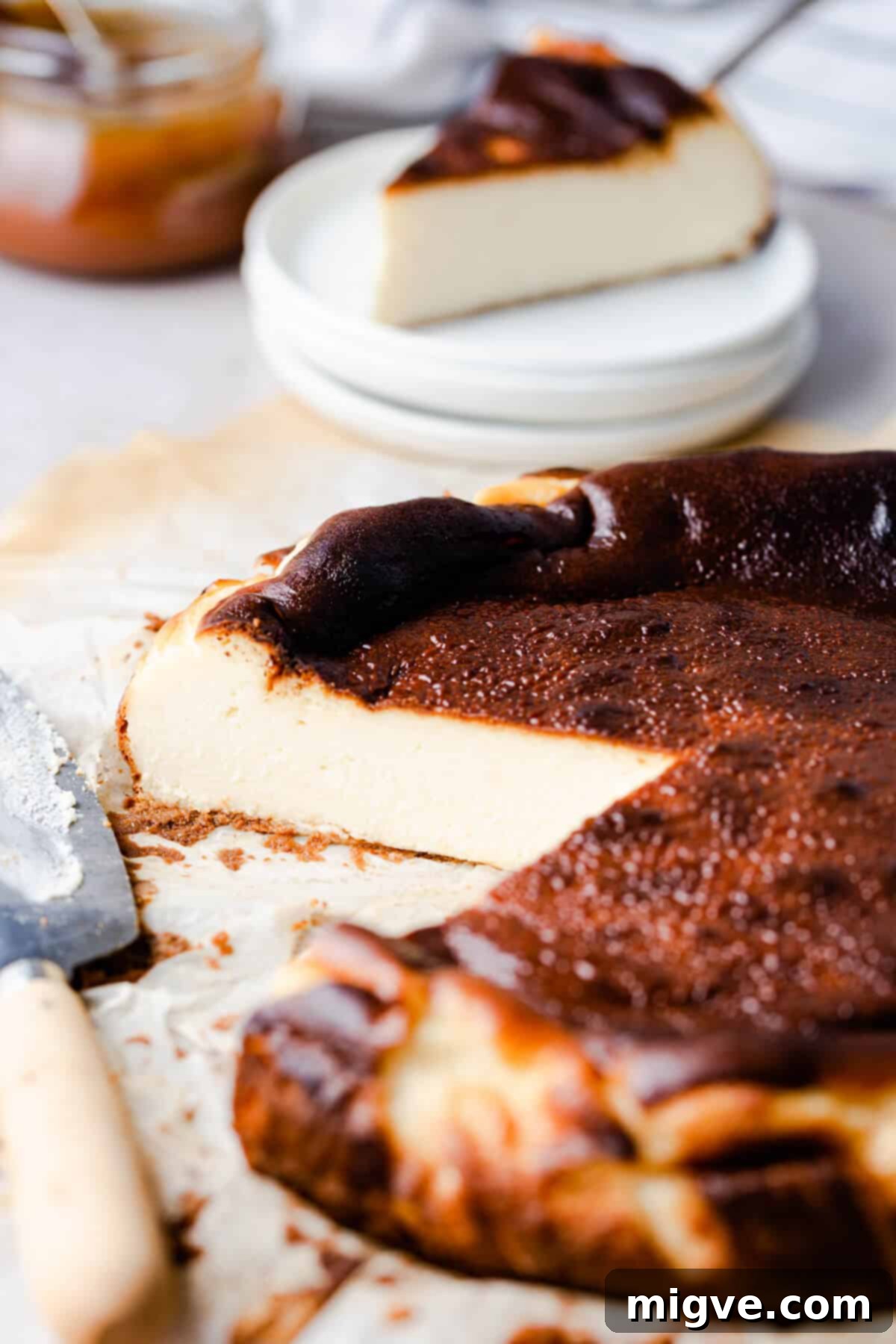
- Don’t Fear the Cracks: Unlike traditional cheesecakes where cracks are seen as a flaw, they are a hallmark of the Burnt Basque Cheesecake! As it cools and sinks, the surface will naturally crack, adding to its rustic and charming appearance. Embrace them!
Frequently Asked Questions About Burnt Basque Cheesecake
Burnt Basque cheesecake is often considered the rebellious cousin of traditional cheesecakes. The primary differences are stark: it has **no crust**, unlike most classic cheesecakes that rely on a biscuit or graham cracker base. It’s also baked at a much **higher temperature** and purposefully achieves a deeply caramelized, often charred, exterior – a feature that would be considered a flaw in other cheesecakes. Furthermore, it doesn’t require a water bath, making the baking process far simpler. Its interior is notably lighter and creamier, almost custard-like, compared to the typically dense New York-style cheesecake. The signature collapse and cracked surface as it cools are also unique and desired characteristics.
Firstly, congratulations! Cracks on the surface of your Burnt Basque cheesecake are not only normal but highly desirable! This is a hallmark of an authentic Tarta de Queso. The cracking occurs due to the significant temperature difference between the rapidly cooked exterior and the still-soft interior, along with the natural contraction of the cheesecake as it cools and sinks. It’s a sign of a perfectly baked Basque cheesecake, contributing to its rustic charm and distinct texture. So, embrace those beautiful cracks!
If your Basque cheesecake didn’t achieve that iconic deep golden-brown or lightly charred top, there are a few common culprits. First, double-check your oven temperature. Ovens can vary significantly, so investing in a separate oven thermometer is always a good idea to ensure accuracy. If your oven runs cool, it might not be reaching the high temperatures required for caramelization. Secondly, ensure you baked it for the full recommended time. If the top still looks under-baked or not browned enough after the suggested baking time, you can carefully place the cheesecake under the grill (broiler) for a few minutes. Keep a very close eye on it during this step, as it can go from perfectly caramelized to truly burnt very quickly! Once you’re satisfied with the color, remove it and proceed with cooling.
Absolutely! The recipe can be scaled. For a smaller 8-inch (20 cm) pan, you’ll generally need to reduce the ingredients by about 25-30% and adjust baking time, usually to 45-55 minutes. For a larger 12-inch (30 cm) pan, you might increase ingredients by 25-30% and extend baking time. Always remember that adjusting pan size will necessitate adjustments to baking time, so keep a close watch on the cheesecake’s appearance and jiggle. The goal is always a deeply caramelized top and a slightly jiggly center.
Don’t forget to save this recipe for later! You can use the Pin button on the recipe card below or on any of the beautiful photos above to add it to your Pinterest board.
If you try this delightful Burnt Basque Cheesecake recipe, or any other recipe from Anna Banana, please take a moment to rate it and/or leave a comment. Your feedback is invaluable to us and helps other home bakers discover and enjoy these recipes!
📖 Burnt Basque Cheesecake Recipe
Pin Recipe
Burnt Basque Cheesecake
One of the easiest and most delicious cheesecakes you will ever make! With a caramelized, deeply ‘burnt’ exterior and a wonderfully creamy, yet light center, this iconic cheesecake is simply impossible to resist. Perfect for any occasion!
Equipment
- 10 inch (25 cm) round springform cake tin
- Baking paper
- Hand-held electric mixer or freestanding mixer with the paddle attachment
Ingredients
- 900 g full-fat cream cheese (Philadelphia), room temperature
- 300 g sugar (caster or granulated)
- 6 large eggs, room temperature
- 480 ml double cream, room temperature
- 1 teaspoon salt
- 1 teaspoon vanilla extract
- 45 g plain flour
Instructions
- Preheat your oven to 200°C (180°C fan / 400°F). Grease a 10-inch (25 cm) round springform cake tin thoroughly.
- Line the greased cake tin with 2 overlapping sheets of baking paper. Ensure the paper extends at least 2 inches (5 cm) above the top and sides of the tin. This is crucial as the cheesecake will rise significantly while baking.
- In a large bowl, using an electric hand-held mixer or a standing mixer fitted with a paddle attachment, beat together the cream cheese and sugar on low speed until the mixture is smooth and creamy, about 2-3 minutes. Scrape down the bottom and sides of the bowl. Continue mixing until there are no lumps and the sugar has fully dissolved (test by rubbing a small amount of batter between your fingers).
- Increase the mixer speed to medium. Add the eggs one at a time, beating well after each addition. Remember to scrape down the sides and bottom of the bowl frequently. Reduce the speed to medium-low, then add the double cream, salt, and vanilla extract. Mix for another 30 seconds until well combined.
- Turn off the mixer. Sift the plain flour over the cream cheese mixture. Beat on low speed until the flour is fully incorporated, about 30 seconds, scraping the sides and bottom of the bowl thoroughly. Your batter should be silky-smooth with no lumps remaining.
- Pour the prepared batter into your lined cake tin. Bake the cheesecake for approximately 60-65 minutes, or until the top is deeply golden-brown to slightly charred and the center still has a distinct jiggle when gently shaken.
- Remove the cheesecake from the oven and let it cool completely in the tin at room temperature (it will noticeably sink and shrink as it cools). Once cooled, transfer it to the fridge to chill for a minimum of 4-5 hours, or ideally overnight. Before serving, gently remove the cheesecake from the springform pan and peel away the baking paper. Allow it to come to room temperature for about 30-60 minutes. Slice and enjoy!
Please note that all my recipes are developed and tested using metric grams. I highly recommend using digital scales for the most accurate and consistent results. While a conversion to US customary units is provided in the recipe, please be aware that I have not specifically tested the recipe using these measurements.
Notes
- Ensure all ingredients are at room temperature before you start making this recipe. This helps create a smooth, homogenous batter.
- Use ample baking paper to line the tin, ensuring at least 5 cm (2 inches) of overhang. This prevents leaks and accommodates the cheesecake’s significant rise during baking.
- It is absolutely crucial to allow the cheesecake to cool completely in the baking tin, and then to chill it thoroughly in the fridge. Do not attempt to remove it from the baking tin prematurely, as it will not be properly set and may collapse.
Storage:
Store any leftover cheesecake in an airtight container in the fridge for up to 3 days. For the best flavor and texture, bring it to room temperature before serving.
To freeze: Wrap the entire cheesecake or individual slices in a double layer of clingfilm (plastic wrap) and place in the freezer. It can be frozen for up to a month. Thaw overnight in the fridge and allow to come to room temperature before serving.
Nutrition
Did you make this?
Tell me how you liked it! Leave a comment below or take a picture and tag @anna_wierzbinska on Instagram. I absolutely love seeing your delicious creations inspired by my recipes!
This recipe was originally published in December 2020. It has been thoroughly updated with fresh photos, a revised recipe, and enhanced tips in November 2022 to provide you with the best possible baking experience.