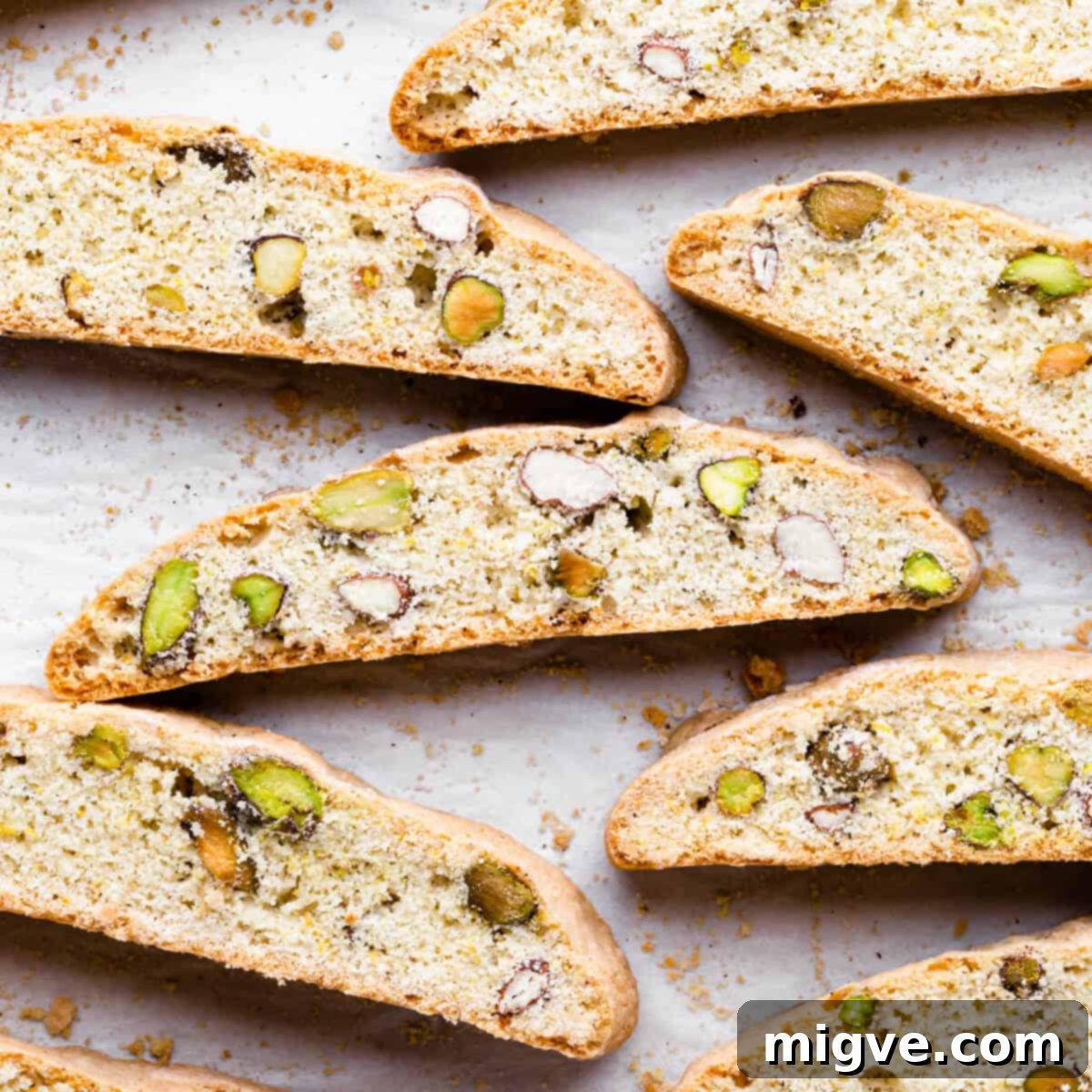
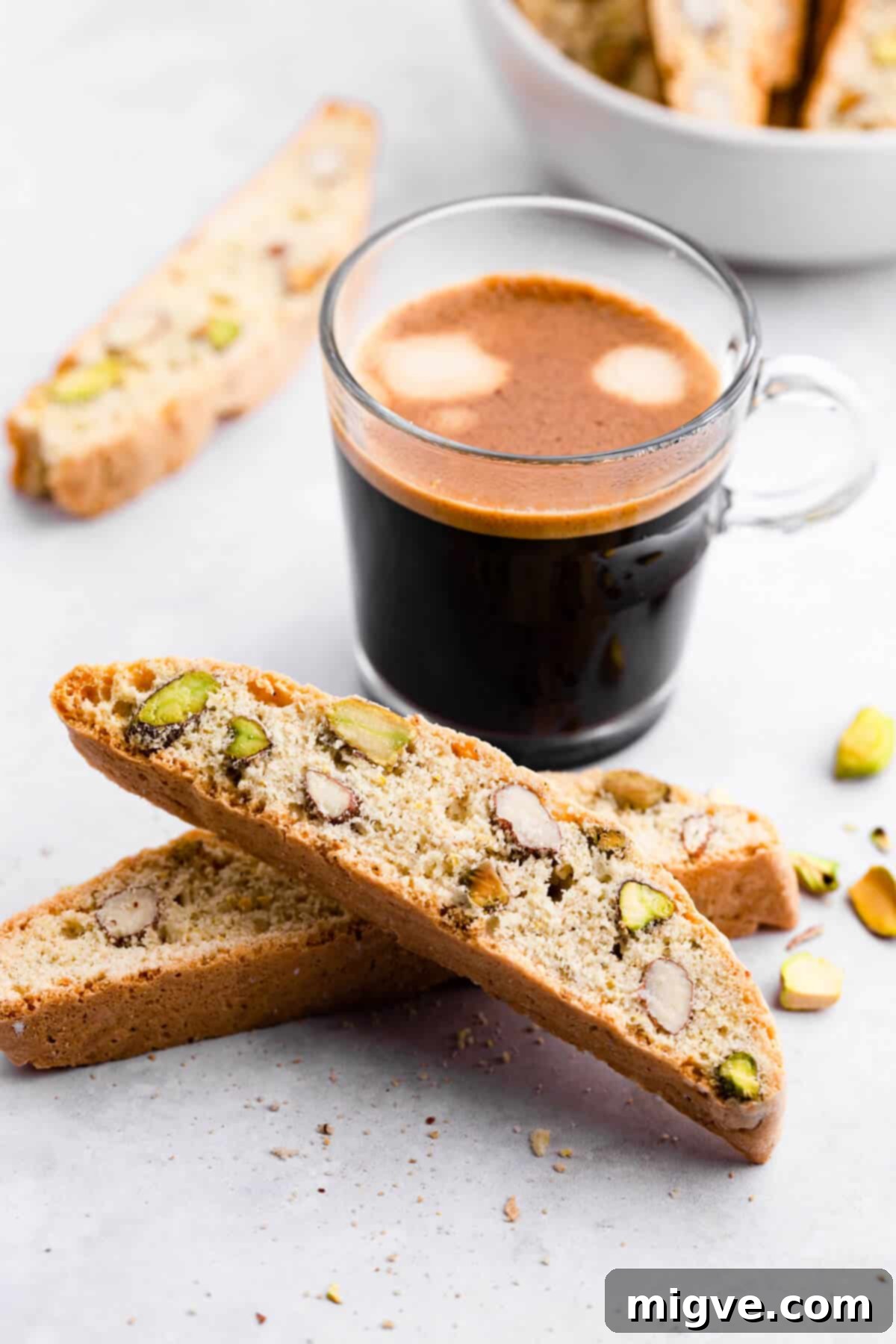
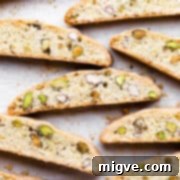
Indulge in the irresistible charm of homemade Lemon and Pistachio Biscotti, a classic Italian twice-baked cookie that promises a delightful crunch with every bite. These exquisite biscuits, bursting with vibrant lemon zest and the rich, nutty flavor of pistachios, are perfectly crafted for dunking into your favorite hot beverage. Their distinctive crispy and crunchy texture not only makes them a true pleasure to eat but also grants them an impressive shelf life, allowing you to enjoy this delicious treat for weeks when stored properly. Whether it’s a quiet morning coffee, an afternoon tea ritual, or a warming hot chocolate, these biscotti are the ideal companion, transforming any moment into a mini Italian getaway.
Biscotti, traditionally known as *cantucci* in Italy, originate from the city of Prato. These elongated, almond-filled cookies have been a beloved part of Italian culinary heritage for centuries, celebrated for their simple yet profound flavors and their enduring freshness. Our version elevates this tradition with a bright, zesty lemon profile perfectly balanced by the subtle sweetness and unique crunch of pistachios and almonds. They are not just cookies; they are an experience, a small piece of culinary art designed to be savored slowly, preferably with a warm cup in hand. Discover the joy and simplicity of creating these bakery-quality biscotti in your own kitchen with this detailed and easy-to-follow recipe.
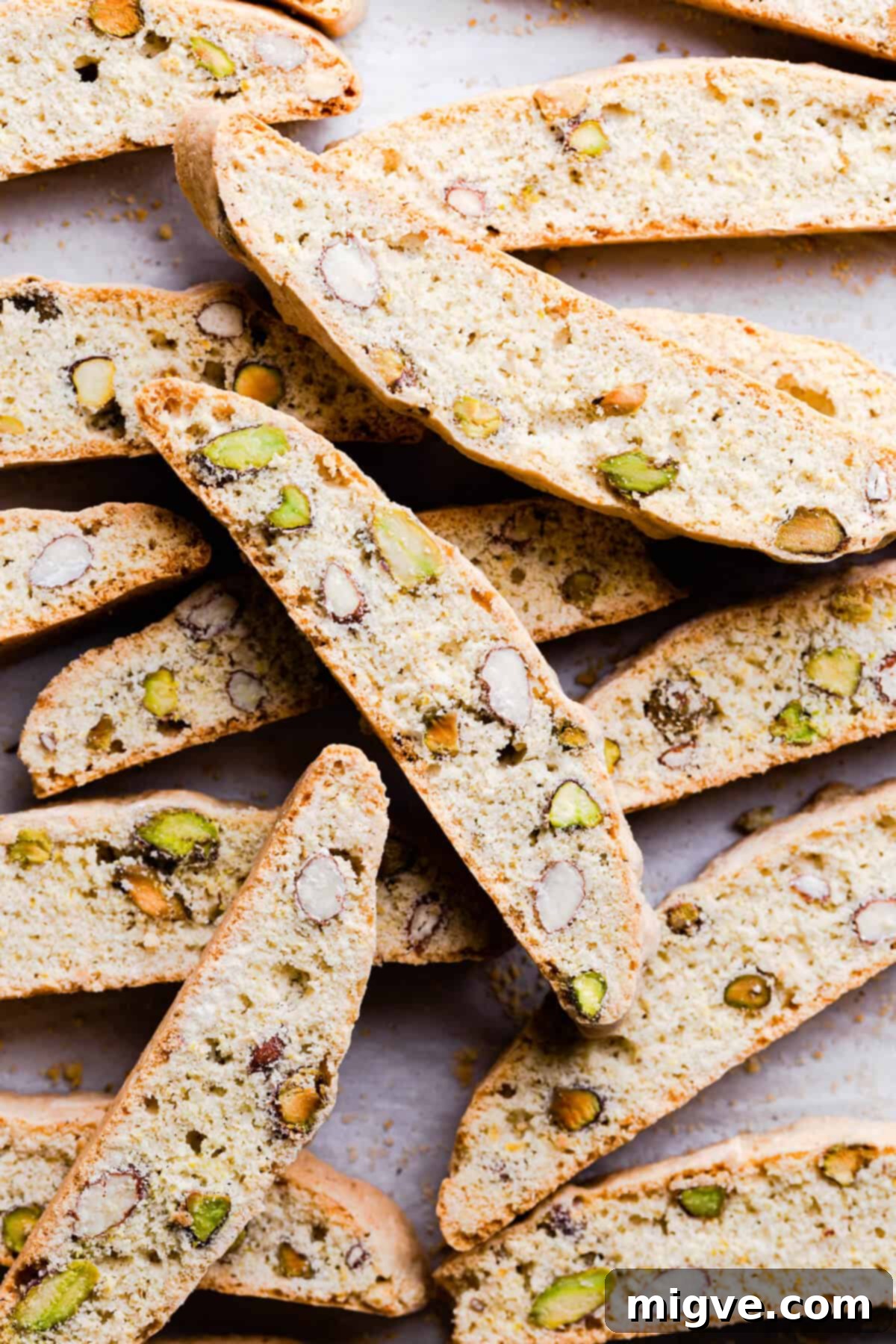
Essential Ingredients and Clever Substitutions for Your Biscotti
Crafting these delectable lemon and pistachio biscotti begins with a straightforward dough, elevated by the aromatic zest of fresh lemons and a harmonious blend of pistachios and almonds. Here’s a comprehensive look at the ingredients you’ll need and flexible swaps to truly make this recipe your own:
Caster Sugar: I prefer caster sugar for its finer texture, which dissolves beautifully into the dough, resulting in a smooth and delicate crumb. However, standard white granulated sugar will perform just as well, offering a slightly coarser texture to the finished cookie. The key is to beat it thoroughly with the eggs to incorporate air, ensuring a light and airy base for your biscotti.
Eggs: Always use large eggs for this recipe, and critically, ensure they are at room temperature. Room temperature eggs emulsify much more effectively with sugar and other wet ingredients, leading to a smoother batter and a more uniformly textured biscotti. Planning ahead by taking them out of the fridge an hour before baking can make a significant difference.
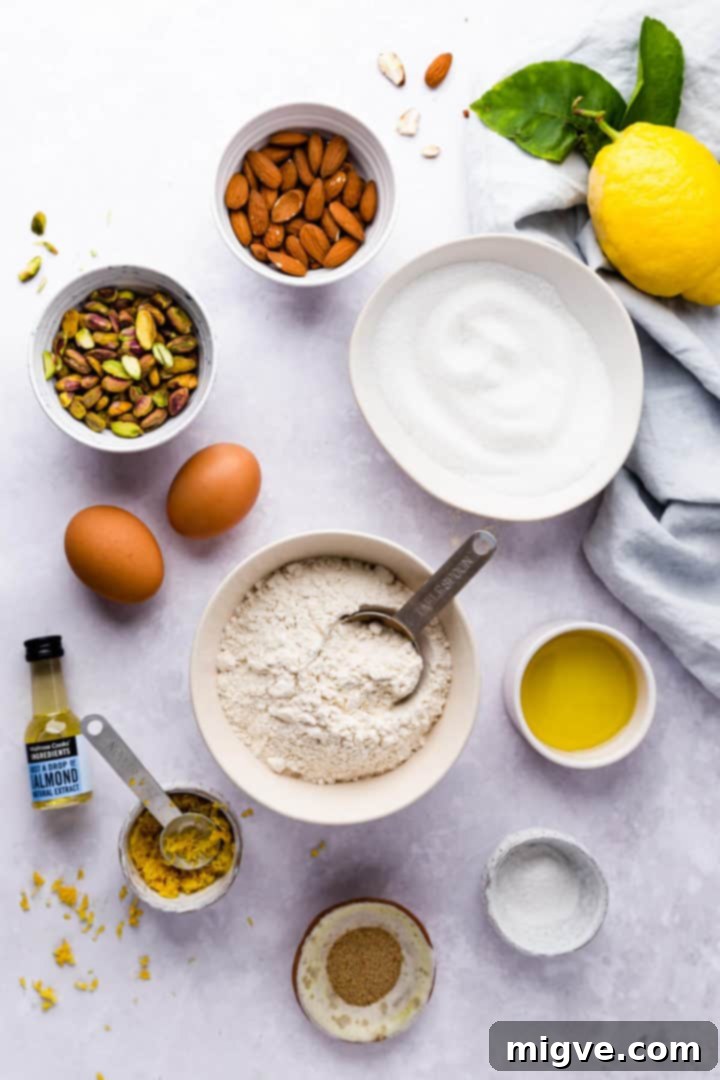
Almond Extract: This extract introduces a beautiful, complementary aroma that perfectly enhances the nutty notes from the pistachios and almonds. Its distinctive flavor adds depth to these cookies. If almond extract is unavailable, a teaspoon of pure vanilla extract makes an excellent alternative, offering a classic warmth that never disappoints.
Olive Oil: Opt for a mild-flavored olive oil to avoid overpowering the delicate lemon and pistachio flavors. Extra virgin olive oil can sometimes be too strong. Alternatively, you can substitute the olive oil with an equal amount of unsalted butter, melted and then allowed to cool slightly before incorporating it into the wet ingredients. This swap will yield a richer, slightly more tender biscotti.
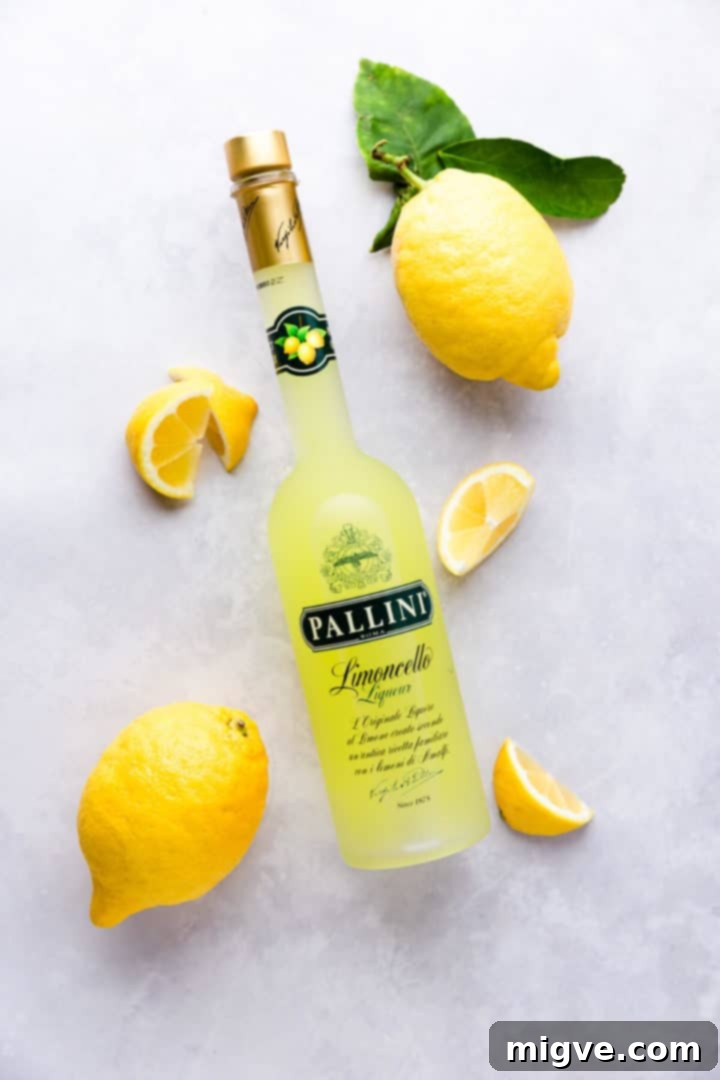
Limoncello: The inclusion of this delightful Italian lemon liqueur is optional but highly recommended. It intensifies the lemon flavor, adding a sophisticated, boozy complexity to the biscotti. If you prefer to omit alcohol, simply skip it entirely, or replace it with 1 teaspoon of lemon extract or 1 teaspoon of fresh lemon juice for an added citrus punch.
Pistachios: For convenience and ease, use shelled pistachios. While you can roughly chop them for a more uniform distribution, I often find it unnecessary, as the whole nuts offer satisfying bursts of flavor and texture. If pistachios aren’t your preference, feel free to increase the amount of almonds or substitute them with another nut like walnuts or pecans for a different twist.
Almonds: Whole almonds are ideal for this recipe, as they provide a robust texture. Blanched almonds can also be used. Similar to pistachios, there’s no need to chop them unless you desire smaller pieces. These nuts contribute to the signature crunch of biscotti and pair wonderfully with the lemon.
Flour: This recipe calls for plain, all-purpose flour, which provides the necessary structure. However, don’t hesitate to experiment with different types of flour to achieve varying textures or dietary needs. This recipe is also remarkably adaptable to gluten-free flour blends, making it accessible for those with gluten sensitivities. Just ensure your chosen blend contains xanthan gum or add a small amount separately for structure.
Baking Powder: This leavening agent helps the biscotti rise slightly during the first bake. If you find yourself without baking powder, a quarter teaspoon of baking soda can be used as a substitute, though it may slightly alter the final texture and rise.
Cardamom: I am particularly fond of the exotic, fragrant notes that ground cardamom brings to this recipe. Its warm, citrusy, and slightly spicy flavor complements the lemon and nuts beautifully. If cardamom isn’t to your taste, you can swap it for cinnamon, nutmeg, or allspice. Alternatively, you can omit it completely if you prefer a simpler flavor profile.
Lemons: The quality of your lemons is paramount here. I highly recommend using extremely aromatic varieties like Sorrento lemons, known for their abundant natural lemon oil in the peel. You’ll need at least 2 tablespoons of zest. Always opt for unwaxed lemons, as you will be using the peel directly in your bake. Freshly zested lemon is key to achieving that bright, zesty flavor that defines these biscotti.
Step-by-Step Guide to Perfect Homemade Biscotti
Making biscotti might seem intimidating, but it’s a straightforward process that rewards you with a truly special treat. Follow these steps for crisp, flavorful lemon and pistachio biscotti:
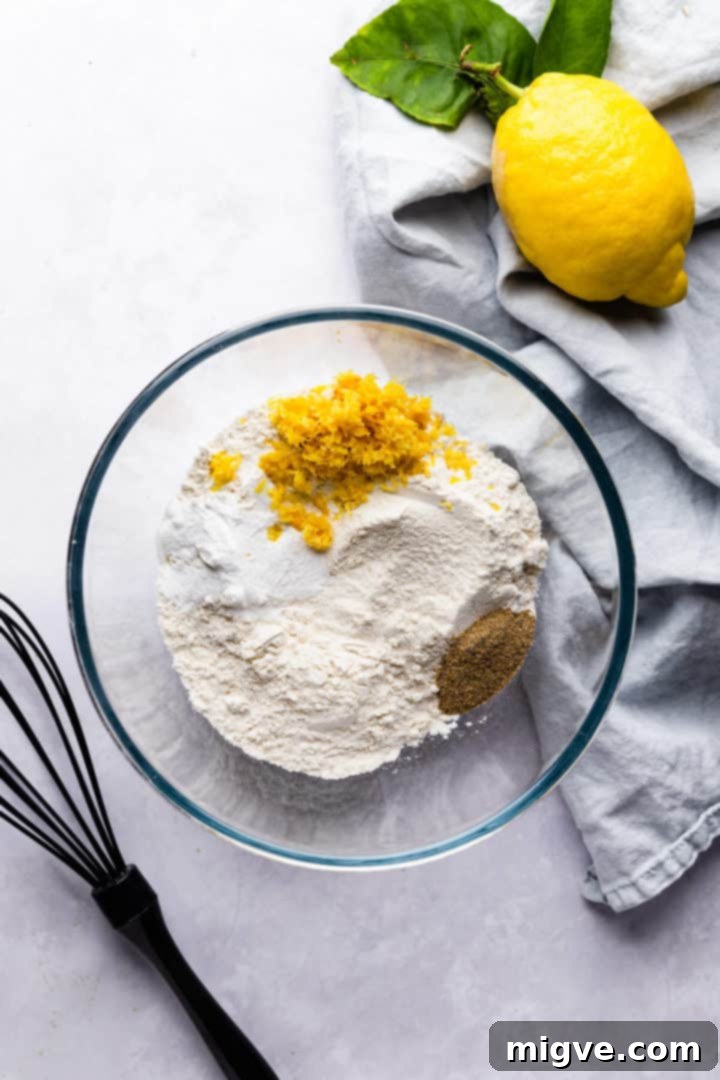
- Prepare Your Dry Ingredients: Begin by combining all your dry ingredients – flour, baking powder, salt, ground cardamom, and the fragrant lemon zest – in a large bowl. Whisk them together thoroughly to ensure even distribution. This preliminary step ensures that all the leavening agents and spices are well integrated throughout the dough.
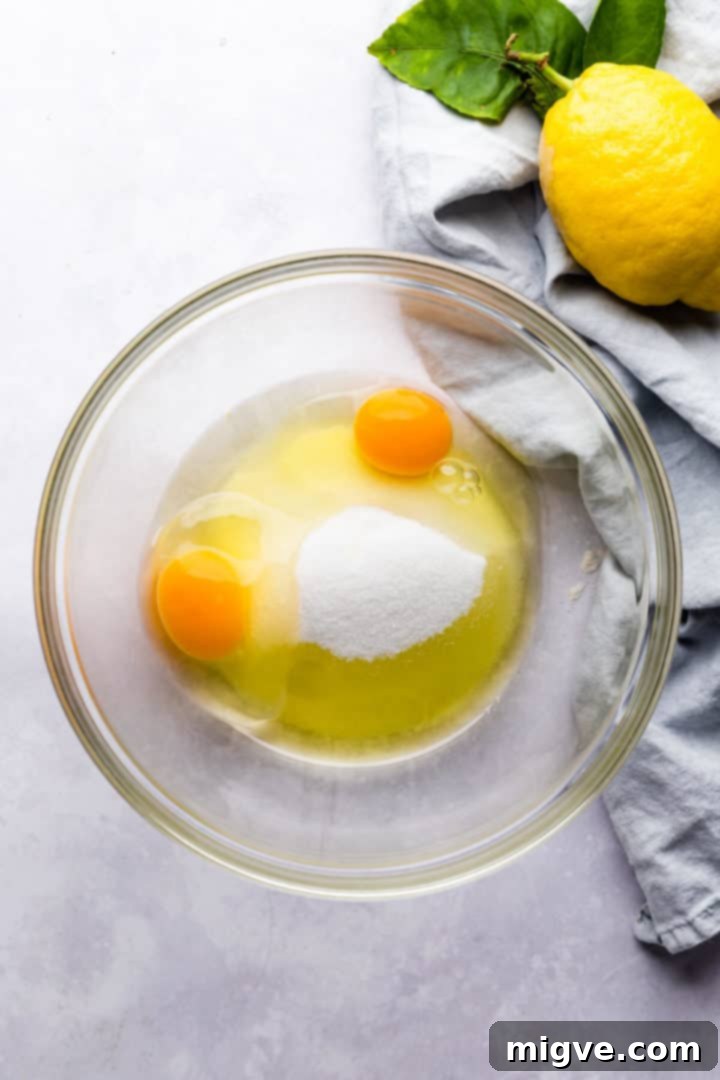
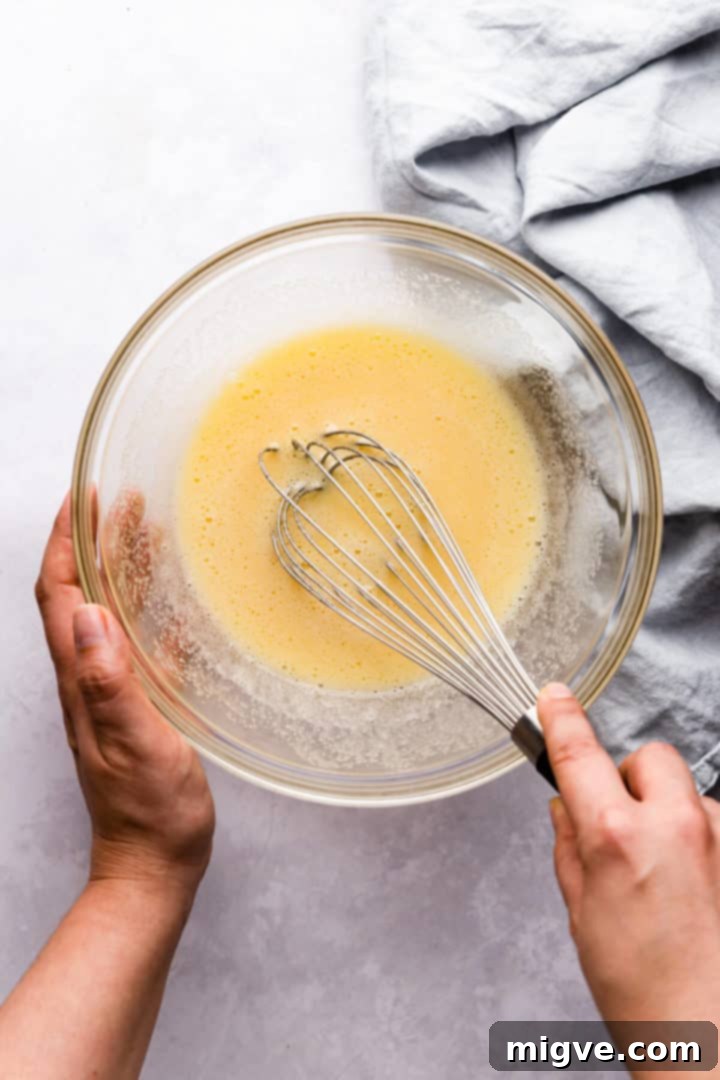
- Create the Wet Mixture: In a separate, spacious bowl, combine the eggs, caster sugar, almond extract, olive oil, and optional limoncello. Using a hand-held electric mixer or a robust kitchen whisk, beat these ingredients vigorously until the mixture becomes noticeably pale and fluffy. This typically takes about 3-4 minutes. The goal is to incorporate plenty of air, which will contribute to the biscotti’s texture.
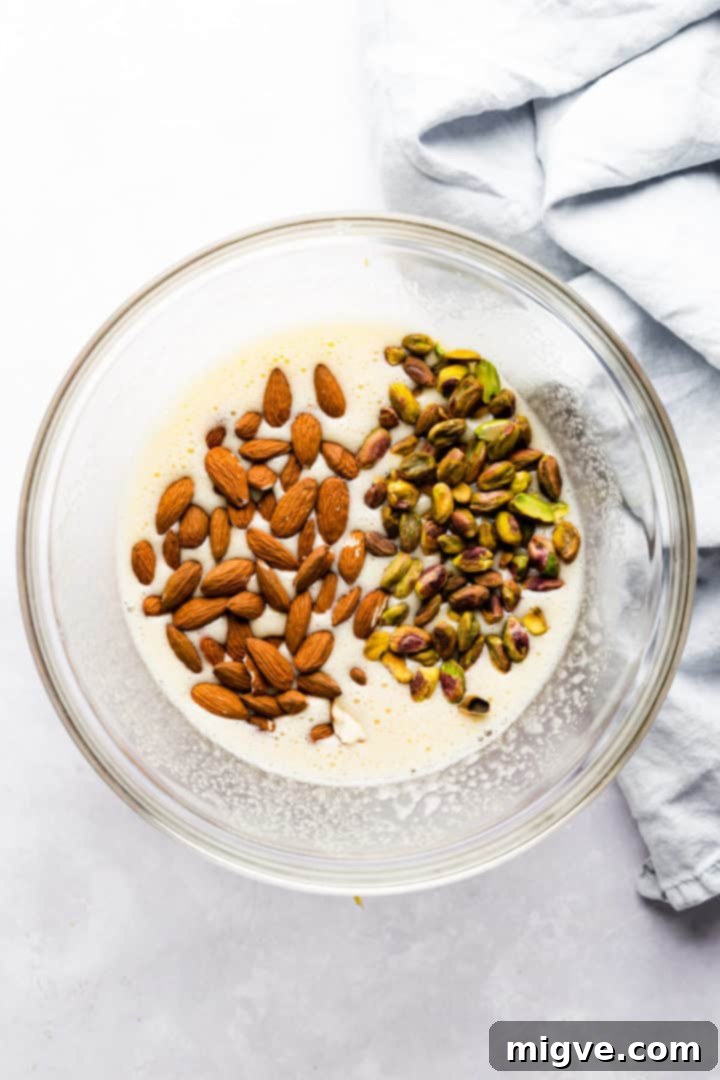
- Combine Wet and Nuts: Gently fold the pistachios and almonds into the fluffy egg mixture. Ensure they are evenly coated and distributed.
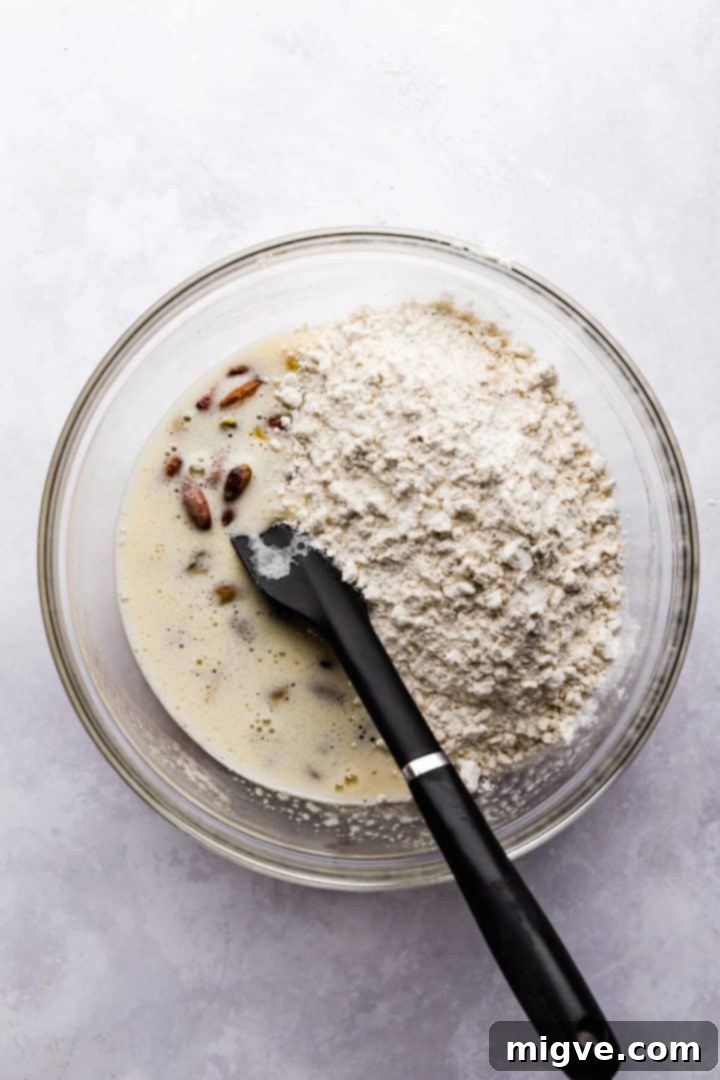
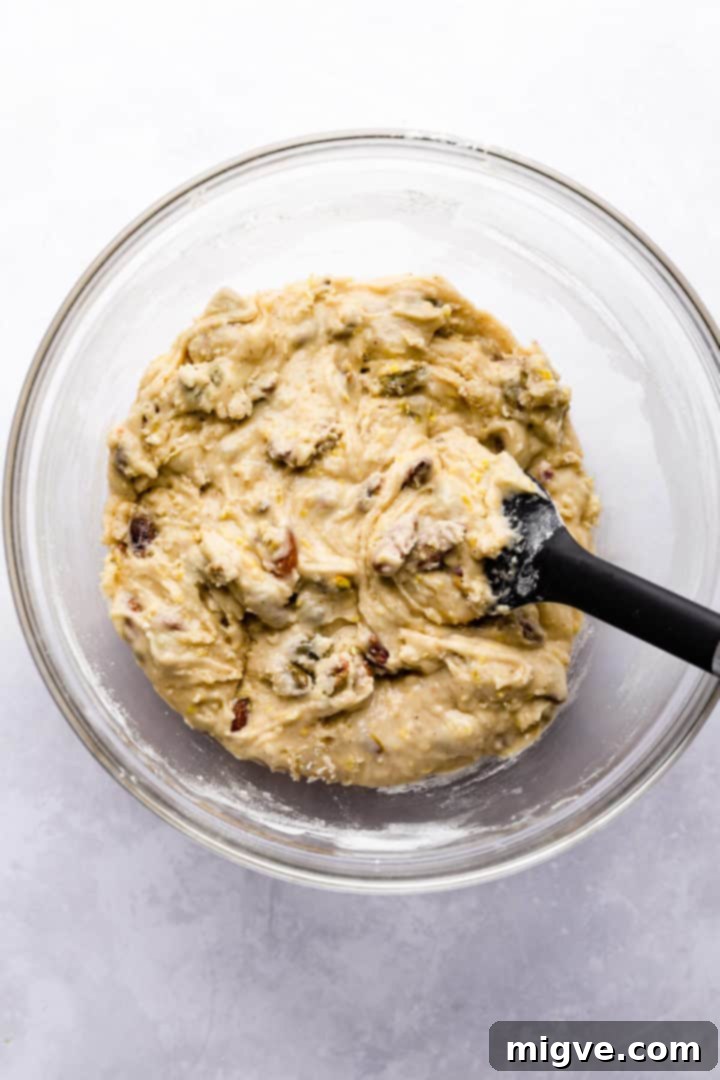
- Bring the Dough Together: Gradually add the dry ingredient mixture to the bowl containing the wet ingredients and nuts. Using a wooden spoon or spatula, fold everything together until just combined. Be careful not to overmix, as this can lead to tough biscotti. The dough will be quite sticky at this stage, which is perfectly normal.
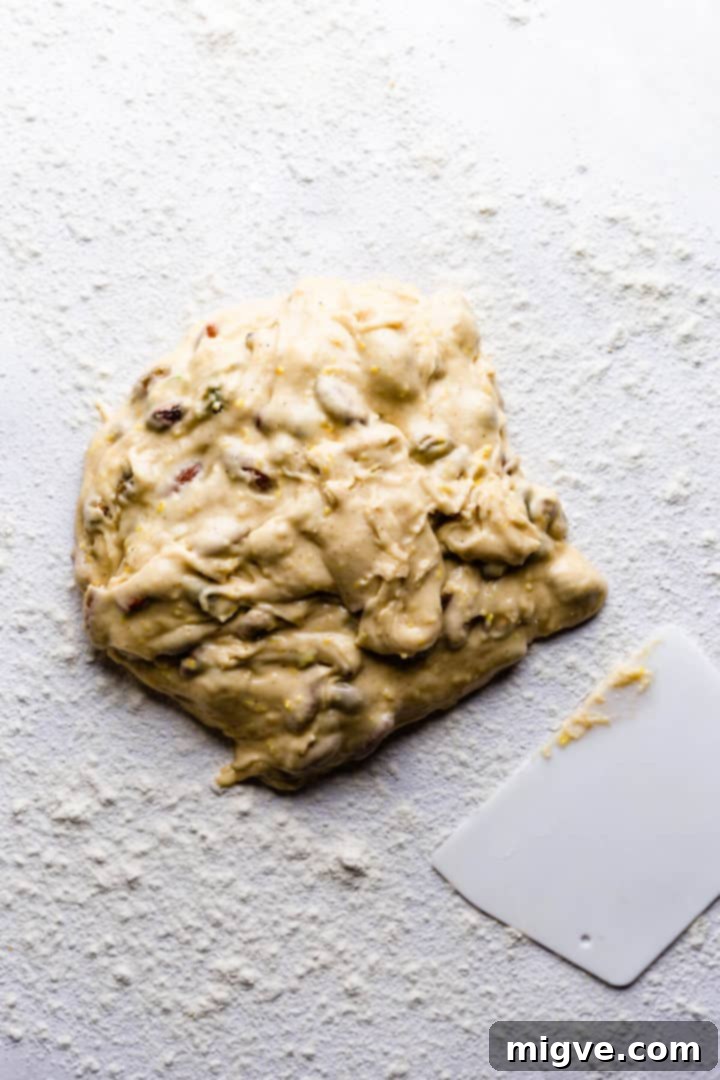
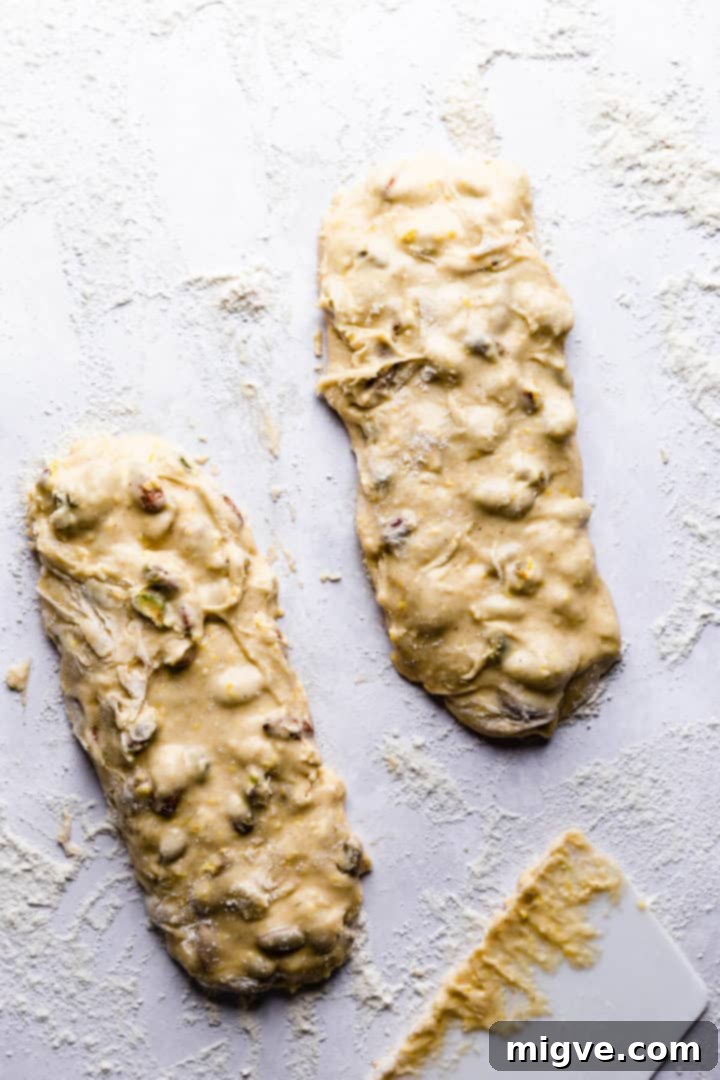
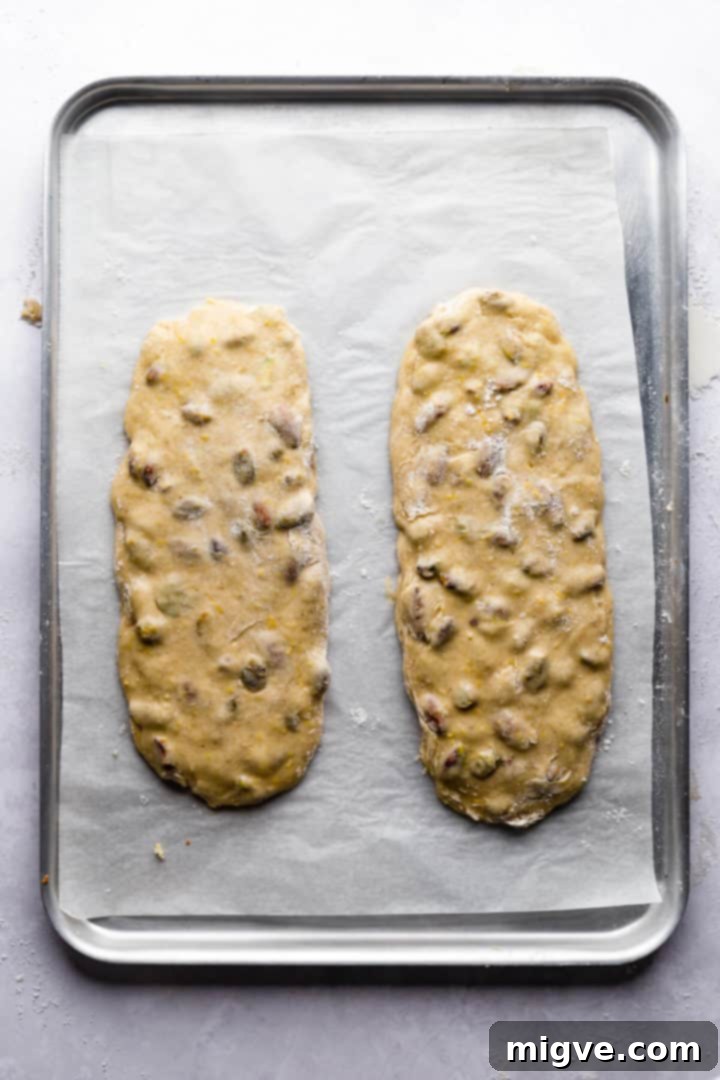
- Shape the Dough: Lightly flour your work surface generously, and make sure your hands are well-floured too. Transfer the sticky dough onto the floured surface and divide it into two equal halves. Using your lightly floured hands (a dough scraper can also be very helpful here), gently shape each half into a log. Aim for logs approximately 15cm long and 7cm wide, but don’t worry about perfect precision.
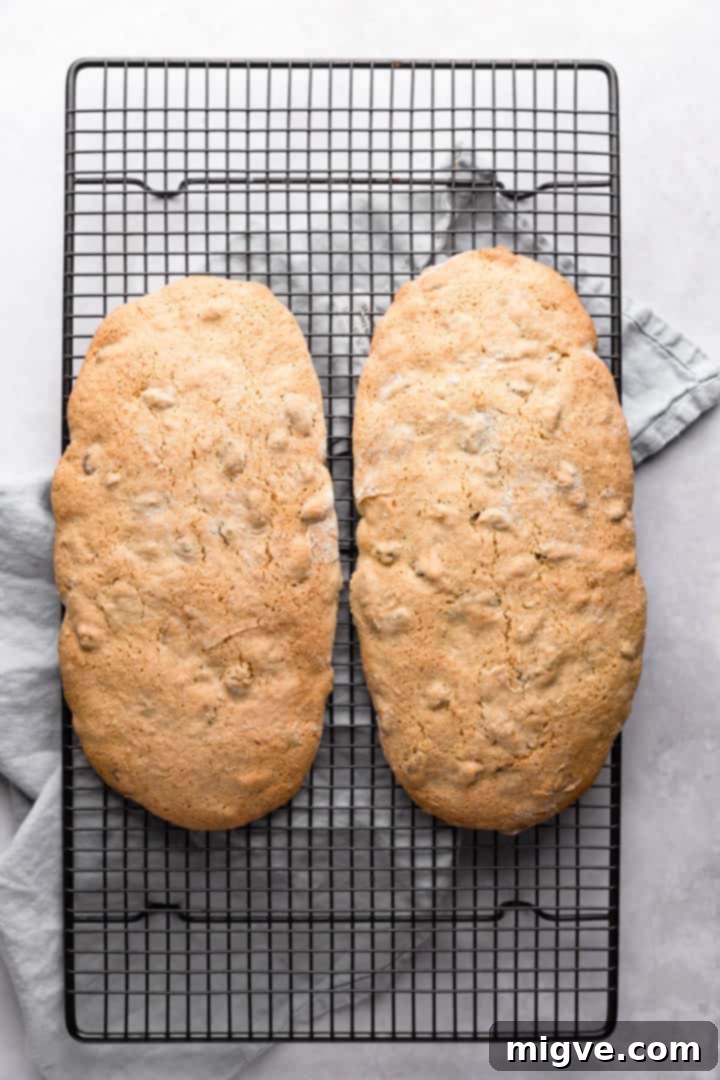
- First Bake: Carefully transfer the shaped dough logs onto a baking sheet lined with parchment paper. Bake in a preheated oven (175°C fan) for about 20 minutes, or until the logs are beautifully golden brown and firm to the touch.
- Cool and Slice: Once the first bake is complete, remove the logs from the oven and transfer them to a wire rack to cool for precisely 10 minutes. This cooling period is crucial: the logs need to be cool enough to handle comfortably, but still warm enough to slice without crumbling. If you let them cool for too long, they will harden significantly, making them difficult to cut and prone to snapping. Reduce your oven temperature to 160°C (fan) during this cooling time.
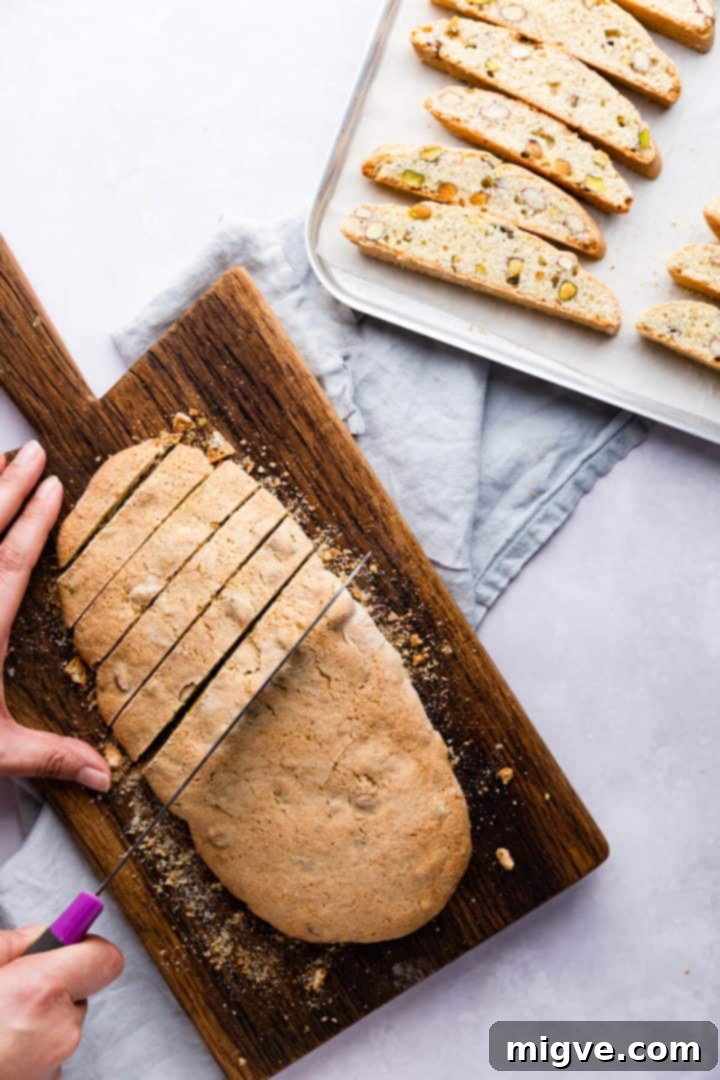
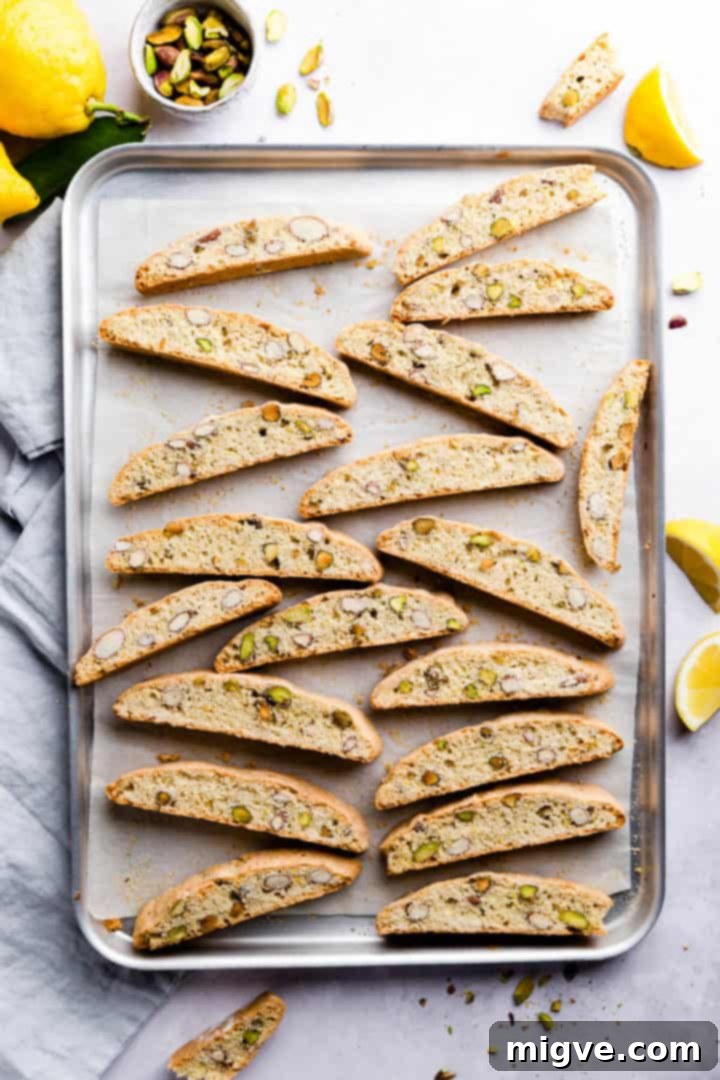
- Second Bake (The “Biscotti” Step): Transfer the slightly cooled logs to a chopping board. Using a large, sharp serrated knife, slice them at a slight angle into individual biscotti, aiming for pieces about 2 cm (¾ inch) thick. Arrange these slices, cut-side down, back onto your baking sheet. Return them to the preheated oven (160°C fan) for another 6 minutes on each side, turning them halfway through. This second bake is what gives biscotti its signature dry, crisp, and hard texture, making them ideal for dunking.
- Final Cool Down: Once perfectly golden brown and crisp, remove the biscotti from the oven and let them cool completely on the wire rack. They will continue to crisp up as they cool.
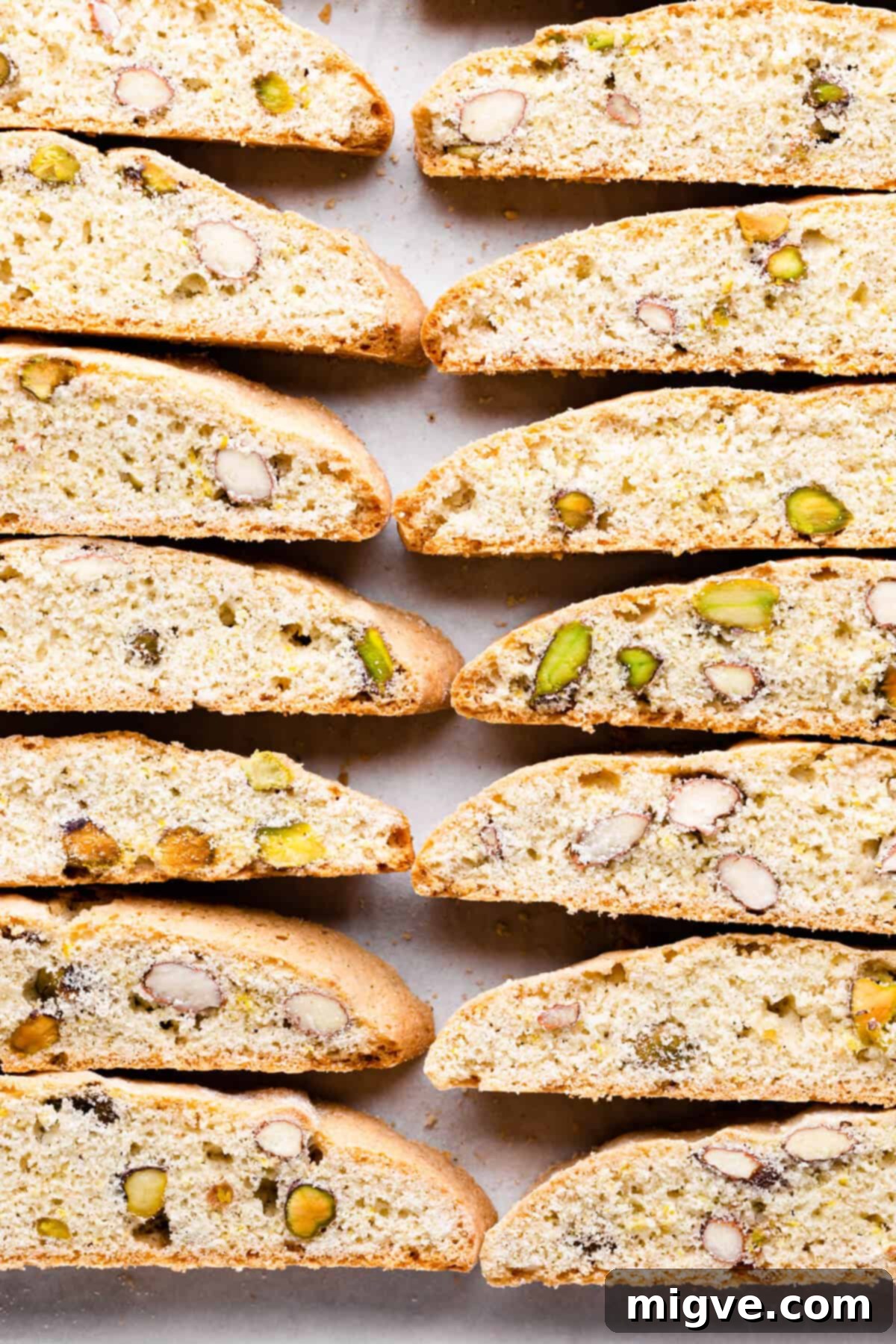
Storing and Freezing Your Lemon Pistachio Biscotti for Lasting Freshness
One of the many wonderful qualities of these lemon and pistachio biscotti is their remarkable shelf life. Their low moisture content, a result of the twice-baked method, allows them to stay fresh and crisp for an extended period, making them perfect for preparing in advance or gifting. When stored correctly, these delightful treats will maintain their crunchy texture and exquisite flavor for a good 2-3 weeks in an airtight container at room temperature. For optimal freshness, ensure the container is completely sealed to prevent any moisture from softening the biscotti.
Should you wish to prolong their enjoyment even further, biscotti are excellent candidates for freezing. You have a couple of convenient options, allowing you to enjoy fresh-tasting biscotti whenever the craving strikes, for up to 3 months:
- Freezing Half-Baked Biscotti (The Pro Tip): This method is fantastic for having freshly baked biscotti on demand. After their initial bake (the first 20 minutes as logs), allow them to cool completely on a wire rack. Once cooled, transfer the logs to a freezer-friendly container or a zip-top bag, ensuring they are well-protected from freezer burn. When you’re ready for a fresh batch, simply remove the logs from the freezer, let them thaw slightly at room temperature (this might take 15-30 minutes), slice them as directed, and proceed with the second bake. This ensures maximum crispiness and that delightful ‘fresh from the oven’ aroma.
- Freezing Fully-Baked Biscotti: You can also freeze your biscotti after they have been fully baked and cooled. Arrange the cooled biscotti in a single layer in a freezer-friendly container, separating layers with parchment paper if stacking. To thaw, simply remove them from their container and let them sit at room temperature for a few hours.
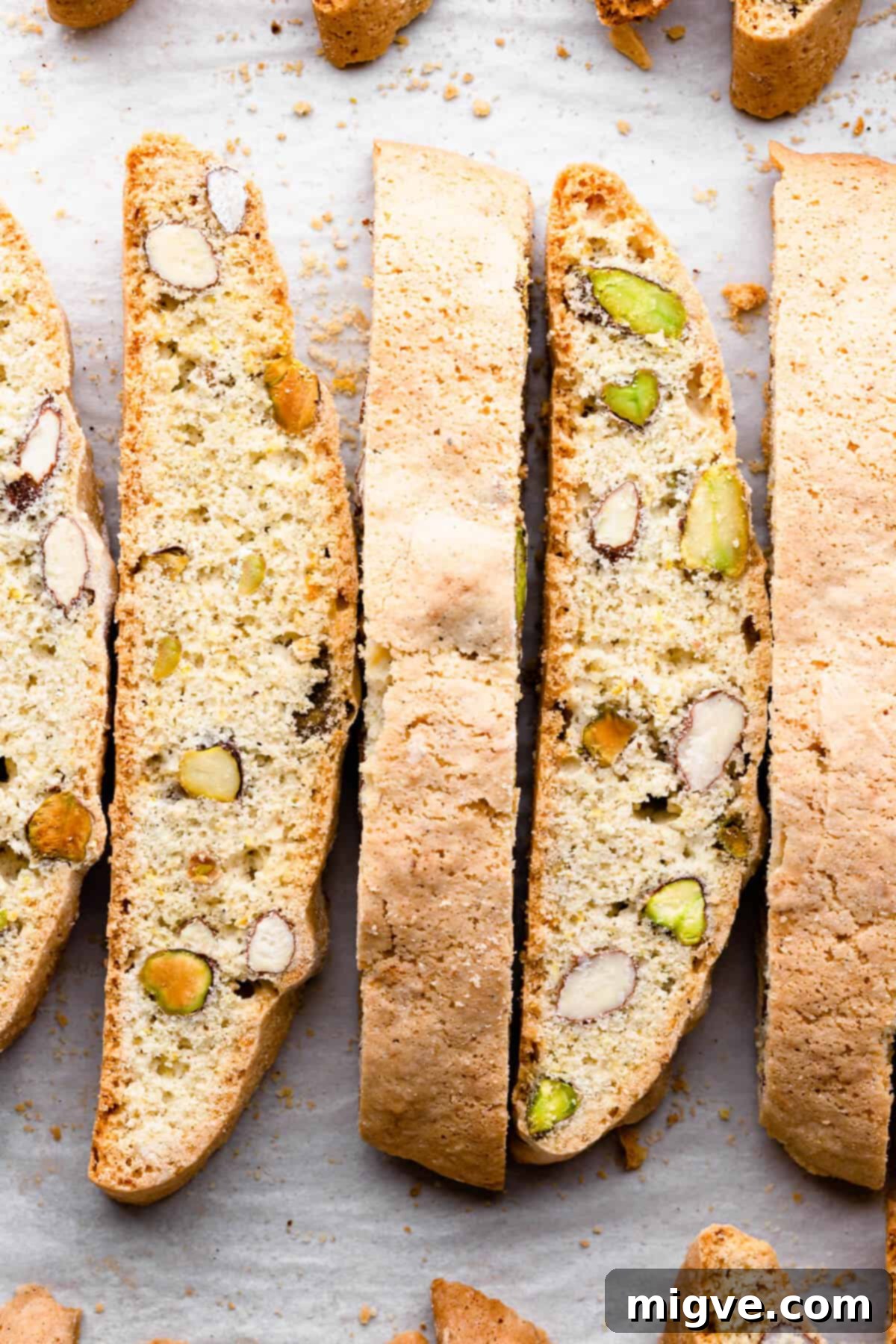
It’s important to note that after thawing, fully-baked biscotti might lose a bit of their original crispy texture. But fear not! A quick reheat in a preheated oven at 170°C (340°F) for about 5 minutes will bring them back to life, restoring their wonderful crispiness. For even more detailed instructions on freezing biscotti and maximizing their freshness, you can explore resources like this comprehensive guide on freezing biscotti.
Frequently Asked Questions About Biscotti
Biscotti’s unique texture often leads to questions from those new to this Italian delight. Let’s clarify some common queries:
Is biscotti supposed to be hard?
Absolutely, yes! The characteristic hardness and crumbly texture of biscotti are by design. This distinctive quality is precisely what makes them so perfect for dunking into hot beverages like coffee, tea, or Vin Santo. The hard exterior softens beautifully when steeped in liquid, absorbing the flavors of your drink and offering a truly satisfying experience. This twice-baked nature is reflected in its name; “biscotti” literally means “twice-cooked” in Italian, a process that removes moisture and results in their firm texture and impressive longevity. If you generally prefer a softer cookie but adore lemon flavors, consider exploring recipes like Iced Lemon Cookies from Boston Girl Bakes. Alternatively, for other Italian-inspired soft treats, try Italian Amaretti Cookies, known for their chewy centers and crisp shells, or these delightful Italian Almond Cookies.
What Other Delicious Additions Can I Mix into the Biscotti Dough?
The beauty of biscotti lies in its versatility. The basic dough serves as a fantastic canvas for a wide array of flavors and mix-ins, allowing you to customize your batch to suit any season or preference. The possibilities are nearly endless!
- Nuts: Beyond pistachios and almonds, experiment with toasted walnuts, pecans, hazelnuts, or even macadamia nuts for different textural and flavor profiles.
- Dried Fruit: Incorporate cranberries, chopped dried apricots, raisins, figs, or candied orange peel for bursts of sweetness and chewiness. My Cranberry and Amaretto Biscotti recipe is a perfect festive example for the holiday season!
- Chocolate: Add mini chocolate chips (dark, milk, or white), chopped chocolate, or even cocoa powder to the dough for a rich, indulgent treat. A drizzle of melted chocolate over the cooled biscotti is also a delightful finishing touch.
- Spices: Explore a wider range of spices like ginger, nutmeg, allspice, or even a touch of black pepper for an unexpected kick.
- Zest & Extracts: Beyond lemon, consider orange or lime zest for a different citrus note. Various extracts such as orange, anise, or rum can also introduce exciting new dimensions.
Come December, these custom biscotti make for truly thoughtful and delicious edible gifts for friends, family, and colleagues. They’re a fantastic way to share your baking creativity!
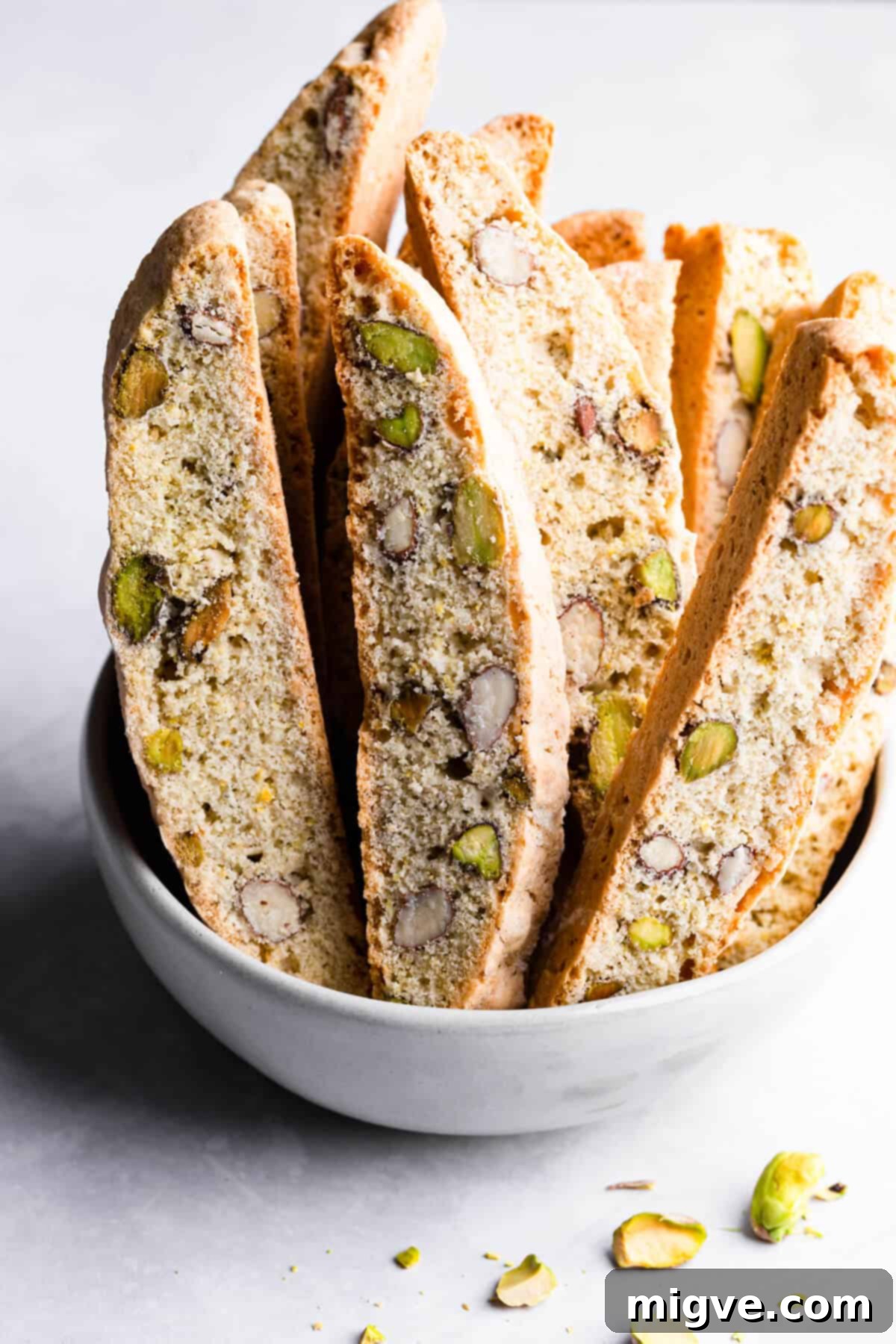
Can I Make This Recipe Gluten-Free?
Absolutely! This biscotti recipe is wonderfully adaptable for those following a gluten-free diet. To make it gluten-free, simply substitute the plain all-purpose flour with a high-quality gluten-free all-purpose flour blend. It’s also crucial to ensure that your baking powder is certified gluten-free, as some brands may contain wheat starch. Look for a blend that is specifically designed for baking and ideally contains xanthan gum, or add a small pinch of xanthan gum (about ¼ teaspoon per cup of flour) to aid with the dough’s structure and elasticity, which can sometimes be lacking in gluten-free flours. This small adjustment will help ensure your gluten-free biscotti maintains its classic crispy texture and holds together beautifully.
We’d love to see your creations! Make sure to tag me on Instagram and leave a comment below if you try this, or any other of my recipes. To save this recipe for later, use the button on the recipe card or pin any of the inspiring photos above to your favorite boards.
📖 Lemon and Pistachio Biscotti Recipe
Print Recipe
Pin Recipe
Lemon and pistachio biscotti
Equipment
- large baking sheet
- baking paper
- large serrated knife
Ingredients
- 150 g caster sugar
- 2 large eggs
- 1 teaspoon almond extract
- 2 tablespoon olive oil
- 2 tablespoon limoncello optional
- 100 g pistachios
- 75 g almonds
- 250 g plain flour
- 1 teaspoon baking powder
- ½ teaspoon salt
- ½ teaspoon ground cardamom
- 2 large lemons zest only
Instructions
- Preheat the oven to 175°C (fan) and line two medium or one large baking tray with baking paper.
- In a large mixing bowl, beat together the eggs and sugar until pale and fluffy, about 3-4 minutes. Then, add almond extract, olive oil, and limoncello. Whisk for another minute or so until all the ingredients are well combined. Tip in the pistachios and almonds and, using a spoon or spatula, fold them into the mixture.
- In a separate bowl, mix together the flour, baking powder, salt, ground cardamom, and lemon zest. Add these dry ingredients to the bowl with the wet mixture and, using a wooden spoon or spatula, fold all ingredients together until just combined.
- Transfer the dough onto a well-floured surface. Make sure your hands are also well-floured. Divide the dough into two pieces, then shape each into a rough log (mine were about 15cm long and 7cm wide, but precision is not essential here). A dough scraper can make this process easier, but it can also be done by hand. Transfer each log onto a baking sheet/tray and bake for 20 minutes until golden.
- Remove the baked logs from the oven and let them cool on a wire rack for 10 minutes. Reduce the oven temperature to 160°C. Place the logs on a chopping board and, using a large, serrated knife, cut the logs at a slight angle into slices, about 2 cm thick. Place the slices cut-side down on a baking tray and bake again for 6 minutes on each side, until golden brown. Remove from the oven and allow to cool completely. Enjoy!
Please note that all my recipes are developed and tested in metric grams. I recommend that you use digital scales for more accurate results. I have provided a conversion to US customary in the recipe but please note that I haven’t tested using this method.
Notes
- Substitutes:
- Caster sugar can be swapped for granulated sugar.
- If no almond extract is available, use some vanilla extract instead.
- Olive oil can be replaced with melted butter.
- If you don’t want to use limoncello, you can skip it or add 1 teaspoon of lemon extract instead.
- The dough will be sticky, so make sure you flour the work surface AND your hands really well.
- Allow the biscotti logs to cool for 10 minutes on a wire rack after the first bake, so they are cool enough to handle and slice. Do not leave them any longer than 10 minutes, as the dough will become really crispy and hard, resulting in the biscotti breaking and snapping as you slice them.
- Storing: The biscotti will keep exceptionally well in an airtight container for a few weeks.
- Freezing: You can freeze biscotti for up to 3 months in a freezer-friendly container. To thaw, remove them from their container and let them sit at room temperature for a few hours. If they have lost their crunchy texture, you can pop them in the oven at 170°C for 5 minutes. See the blog post above for more ways to freeze biscotti.