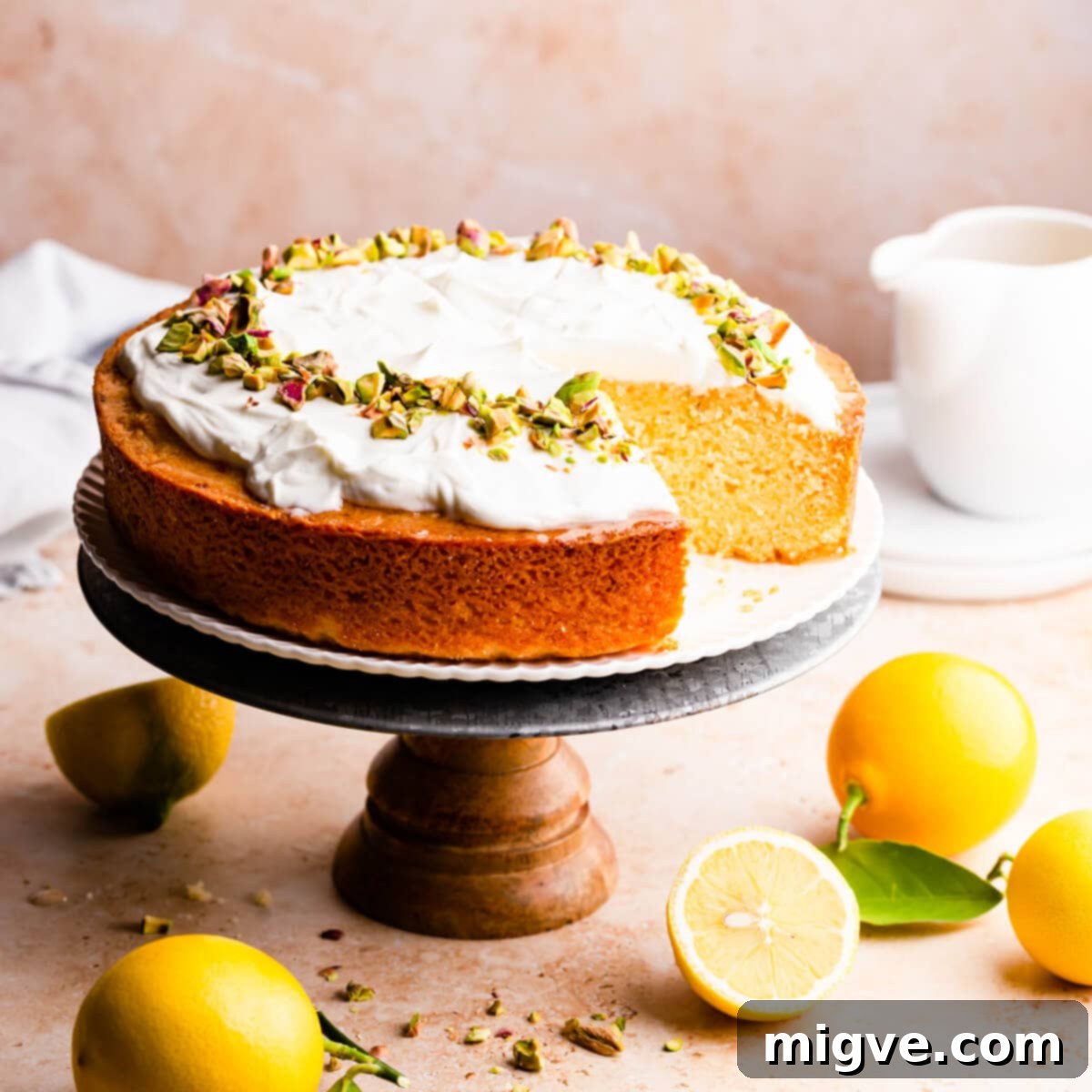
The Ultimate Easy Lemon Semolina Cake: A Zesty and Moist Delight
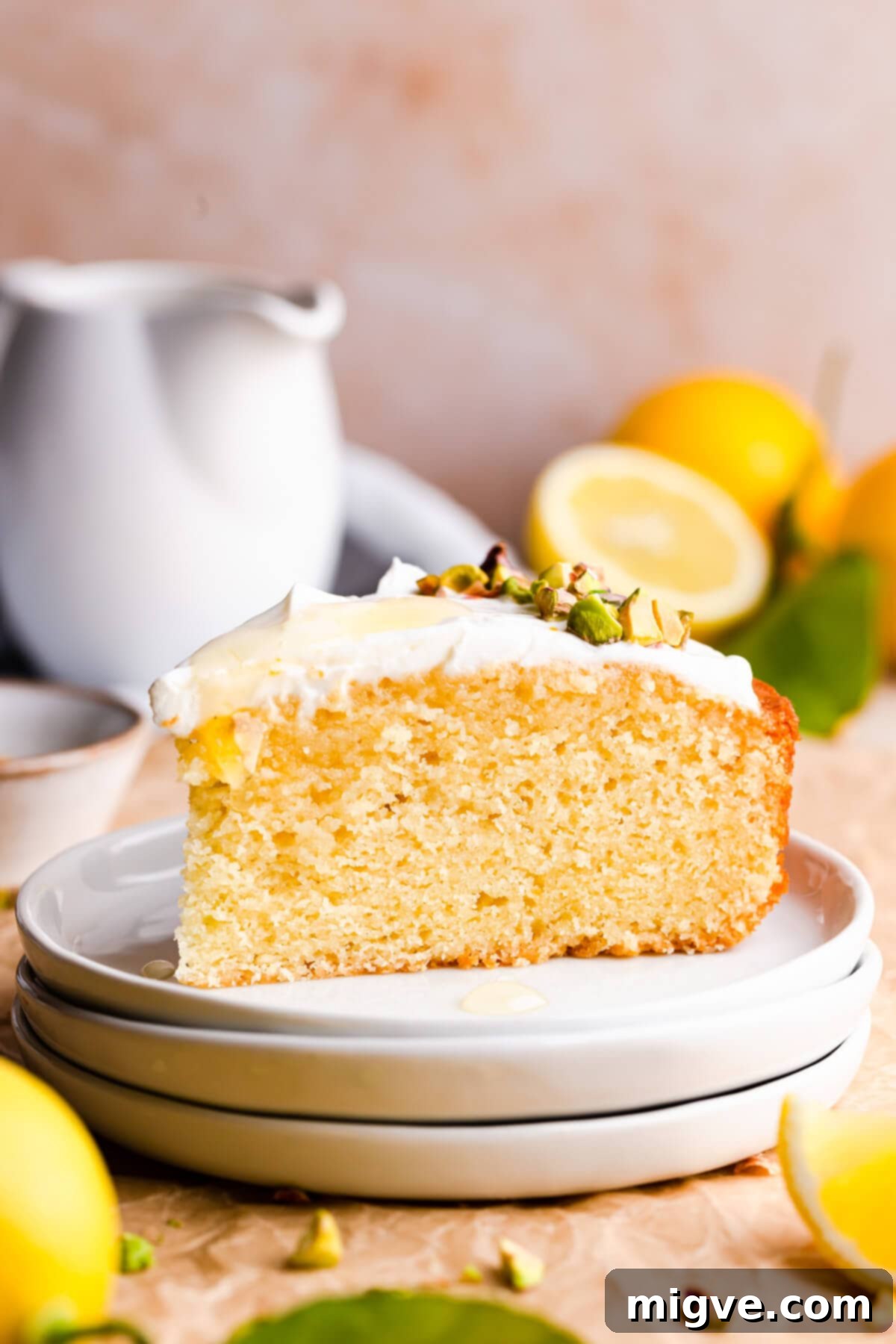
Indulge your senses with this exquisitely light and tender easy lemon semolina cake, a true masterpiece for all citrus enthusiasts. This delightful bake promises an incredibly soft and moist crumb, bursting with the vibrant, zesty essence of fresh lemons, and crowned with an elegant appearance that makes it perfect for any occasion. From casual tea times to special gatherings, this cake consistently delivers a truly satisfying dessert experience.
What sets this cake apart is the inclusion of fine semolina, which bestows a remarkably unique, delicate, and slightly crumbly texture. This distinctive quality, combined with a generous soaking of simple yet aromatic lemon syrup, ensures the cake remains wonderfully moist and flavorful for several days. Its straightforward preparation makes it an ideal choice for both seasoned bakers and those new to the kitchen, promising a quick and rewarding baking project that culminates in a truly irresistible everyday treat.
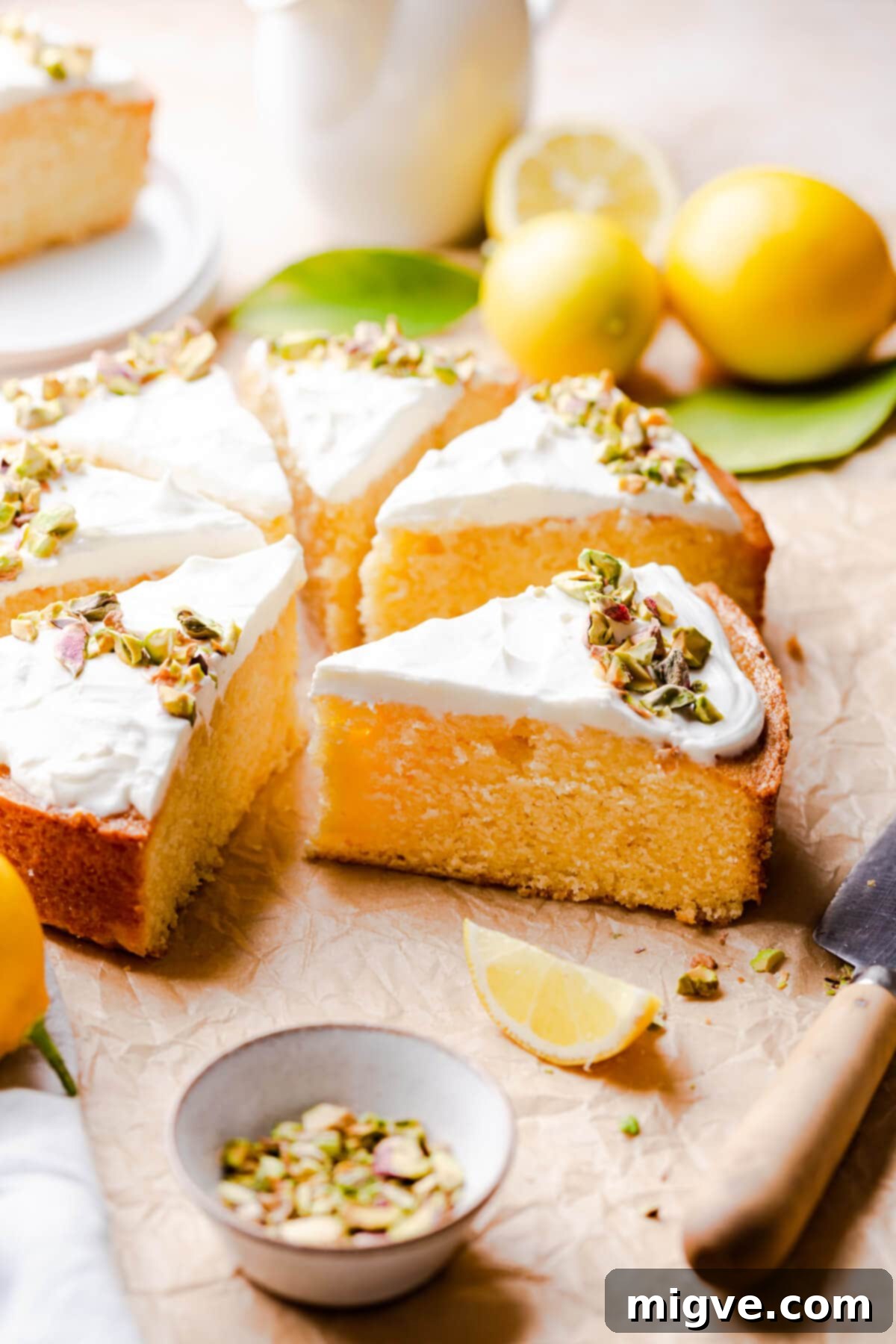
For those who appreciate the bright, invigorating flavor of lemons in their baking, this recipe is a must-try. It shares a delightful similarity with our beloved Blood Orange Semolina Cakes, offering a beautiful citrus alternative using fresh, vibrant lemons. If you’re inclined towards a more traditional citrus cake without semolina, you might also adore our popular Zesty Lemon Cake recipe or the charmingly simple Small Batch Lemon Drizzle recipe. Each offers its own unique take on lemon perfection, ensuring there’s a citrus bake for every preference.
The delightful sweetness of the lemon sugar syrup finds a harmonious balance with the creamy, tangy topping of Greek yogurt, creating a dessert that is both refreshing and comforting. However, this versatile cake is equally delicious served plain, allowing its pure lemon and semolina flavors to shine through. Whether adorned with a luscious topping or enjoyed in its simple elegance, it promises a delicious experience that will leave you craving another slice.
Essential Ingredients for Your Lemon Semolina Cake
Crafting this delightful lemon semolina cake requires a selection of fresh, high-quality ingredients. Each component plays a crucial role in achieving the cake’s signature texture, vibrant flavor, and moist crumb. Here’s a detailed look at what you’ll need to create this citrus masterpiece, ensuring the best possible results for a truly unforgettable bake:
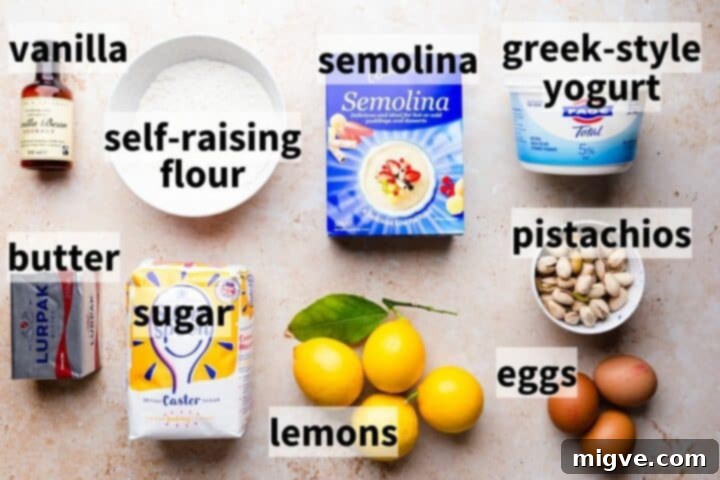
- Self-Raising Flour: This recipe specifically calls for self-raising flour, which contains leavening agents already mixed in, ensuring your cake rises beautifully and achieves a light, airy texture. If you only have plain or all-purpose flour, don’t worry! You can easily substitute it by adding 1 and ½ teaspoons of baking powder to your dry ingredients for the same effect.
- Semolina: The star ingredient that gives this lemon cake its distinct and captivating texture. Semolina, derived from durum wheat, provides a subtle chewiness and a slightly coarser crumb compared to traditional flour, resulting in a cake that is wonderfully tender yet holds its shape. You can use either fine or coarse semolina. If you opt for coarse semolina, which has a grittier feel, a quick pulse in a blender or food processor can grind it into a finer texture, more akin to fine semolina, for a smoother cake crumb.
- Sugar: White caster sugar or granulated sugar are both excellent choices for this recipe. They dissolve well, providing the necessary sweetness and contributing to the cake’s golden crust. Caster sugar is preferred for its fine granules, which incorporate easily into the butter, resulting in a smoother batter.
- Butter: Unsalted butter is generally preferred in baking as it allows you to control the salt content precisely. However, if salted butter is all you have on hand, it will also work perfectly well. Just be sure it’s softened to room temperature for optimal creaming with the sugar, which creates a light and fluffy base for the cake.
- Lemons: The heart and soul of this cake’s flavor. Always use fresh, unwaxed lemons for both the zest and the juice. Unwaxed lemons ensure that the zest is free from any chemical coatings, providing the purest and most aromatic lemon flavor. Fresh lemon juice is crucial for the bright, tangy notes in both the cake and the soaking syrup.
- Vanilla Extract: While not strictly essential, a good quality vanilla extract beautifully complements the lemon flavor, adding a layer of warmth and complexity. It enhances the overall aroma and taste profile of the cake, making it even more inviting.
- Full-Fat Greek-Style Yogurt (Optional Topping): This ingredient is highly recommended for the topping, as its rich, creamy texture and tangy flavor provide a perfect counterpoint to the cake’s sweetness. It adds a refreshing coolness and balances the overall taste profile, making each bite even more enjoyable.
- Pistachios (Optional Garnish): Chopped pistachio nuts are an excellent optional addition for both texture and visual appeal. Their delicate, nutty flavor pairs wonderfully with lemon, and their vibrant green color adds a lovely pop, making your cake look as good as it tastes.
For precise quantities and step-by-step instructions, please refer to the detailed recipe card provided below.
Creative Substitutions & Delicious Variations
This lemon semolina cake recipe is wonderfully adaptable, allowing for various substitutions and creative variations to suit your preferences or what you have available in your pantry. Feel free to experiment and make this recipe truly your own with these exciting ideas:
- Flour Alternatives: If self-raising flour isn’t on hand, you can easily substitute it with an equal amount of plain or all-purpose flour. Just remember to incorporate 1 and ½ teaspoons of baking powder into your dry ingredients to achieve the desired rise and lightness in your cake. This ensures your cake maintains its lovely, tender structure.
- Explore Other Citrus: While lemons are the star here, this recipe is incredibly forgiving and delicious with other citrus fruits. Feel free to swap lemons for oranges to create a sweet and sunny orange semolina cake. Limes offer a sharper, more exotic tang, while grapefruit can provide a delightful bittersweet note. You can even use a vibrant mixture of different citrus fruits for a complex and multi-layered flavor profile.
- Embrace a Vegan Twist: For those seeking a plant-based option, a similar vegan semolina cake is entirely achievable. While this specific recipe uses dairy and eggs, you can find excellent vegan adaptations that use plant-based milks, yogurts, and egg substitutes. We recommend checking out a recipe like the Vegan Semolina Cake recipe from the Domestic Gothess website for inspiration and guidance.
- Alternative Toppings: The Greek yogurt topping offers a refreshing tang, but it’s not your only option! For a richer, more decadent finish, consider topping the cake with light and airy whipped cream. Alternatively, you can serve the cake plain, appreciating its inherent flavors. To add a beautiful decorative touch and an extra burst of lemon, garnish your plain cake with elegant candied lemon slices or a sprinkle of fresh lemon zest.
- Mini Cakes and Cupcakes: This versatile cake batter is perfect for baking individual portions. Simply divide the batter among cupcake liners or small mini cake tins. Reduce the baking time to approximately 15-20 minutes, or until a toothpick inserted into the center of a mini cake comes out clean. These individual treats are perfect for parties, lunchboxes, or simply enjoying a smaller, perfectly portioned dessert. Adjust the amount of syrup poured over them accordingly.
Step-by-Step Baking Instructions
Creating this flavorful lemon semolina cake is a straightforward and enjoyable process. Follow these detailed steps to achieve a perfectly moist, tender, and zesty cake that will impress everyone.
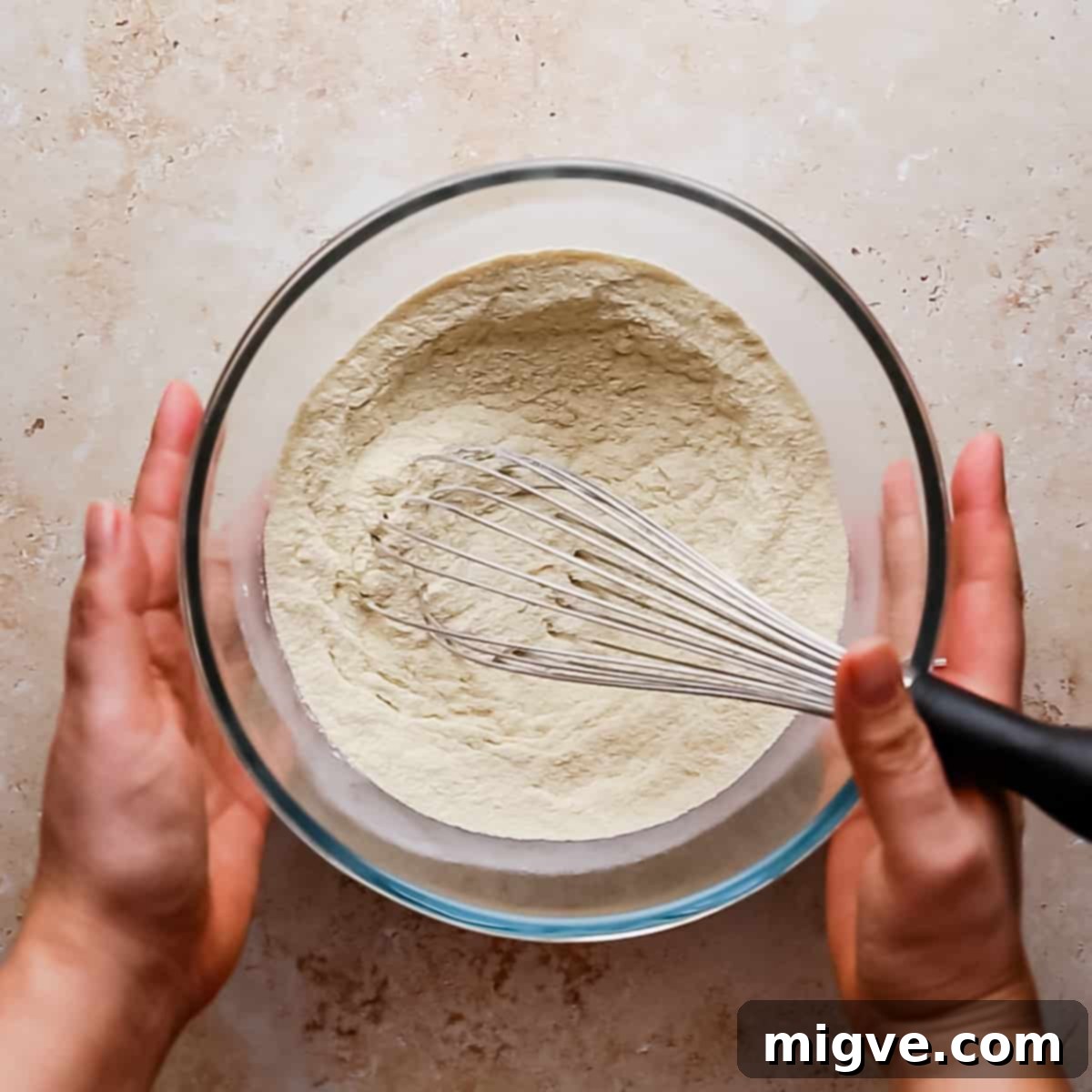
1. Prepare Dry Ingredients and Lemon Mixture: In a large mixing bowl, thoroughly whisk together the self-raising flour, semolina, and a pinch of salt until well combined. In a separate small jug or bowl, mix the fresh lemon zest, lemon juice, and vanilla extract. Set this liquid mixture aside, as it will be incorporated into the wet ingredients later.
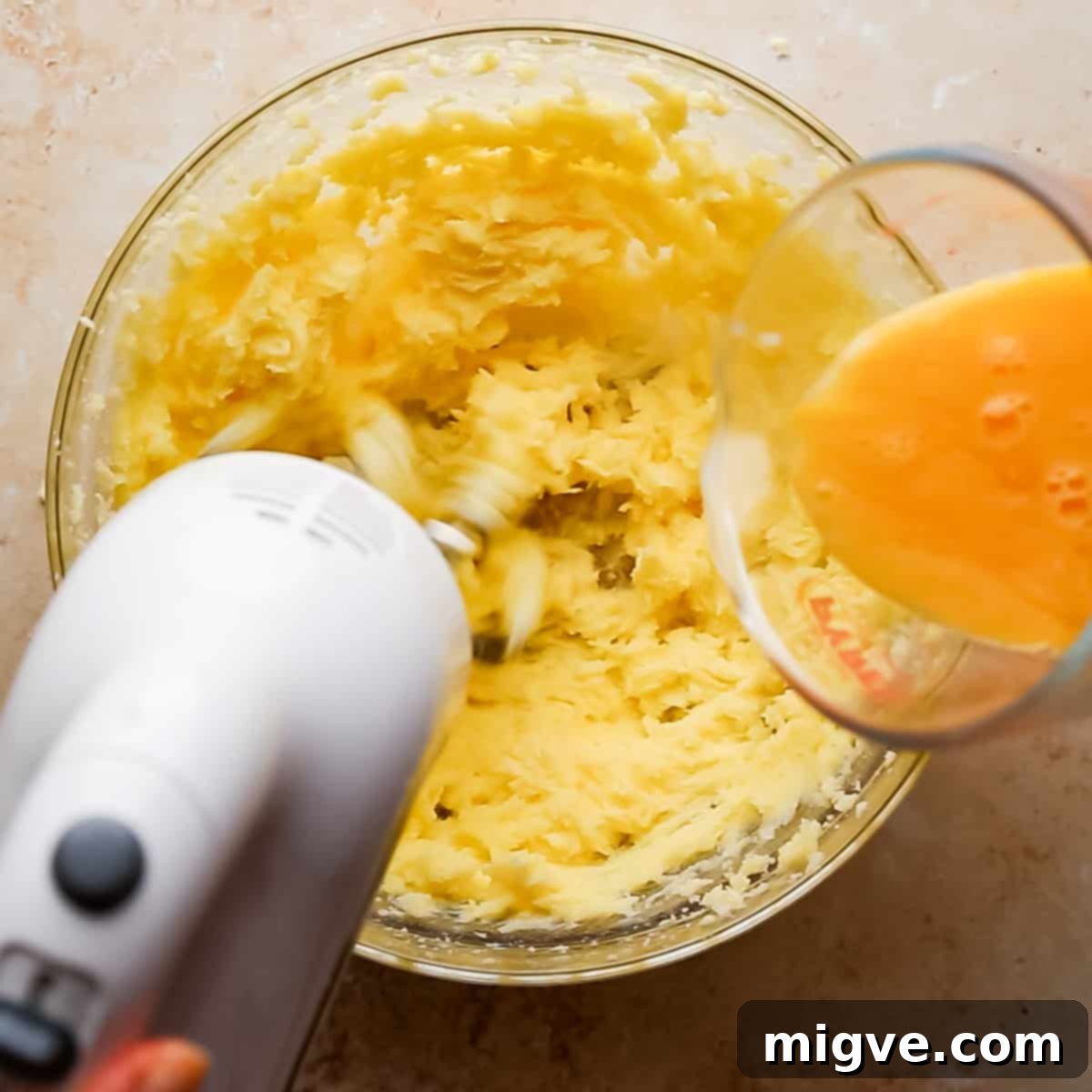
2. Cream Butter and Sugar: In a separate, larger mixing bowl, using an electric mixer, cream the softened butter and sugar together. Beat them on medium-high speed for 2-3 minutes until the mixture becomes pale, light, and fluffy. This aeration is key to a tender cake. Then, add the eggs one at a time, beating well after each addition to fully incorporate them. Scrape down the sides of the bowl with a spatula as needed to ensure everything is evenly mixed.
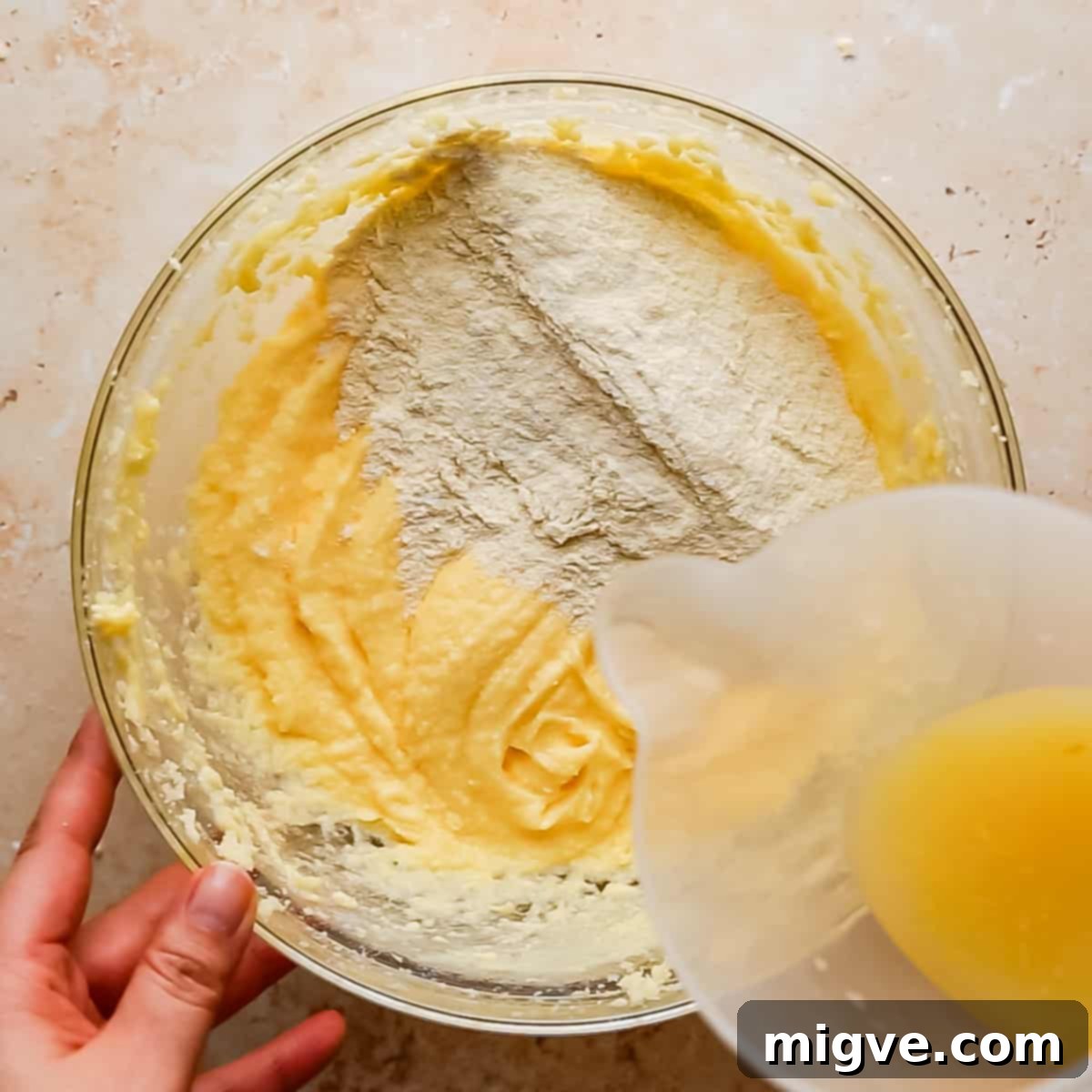
3. Combine Wet and Dry Ingredients: Gently fold in half of the flour and semolina mixture into the creamed butter, sugar, and egg mixture. Follow this with half of the reserved lemon juice and vanilla mixture. Fold carefully until just combined, being careful not to overmix. Then, add the remaining flour mixture and lemon juice, and continue to fold until the batter is smooth and no streaks of dry ingredients remain. Overmixing can lead to a tough cake, so stop as soon as it’s combined.
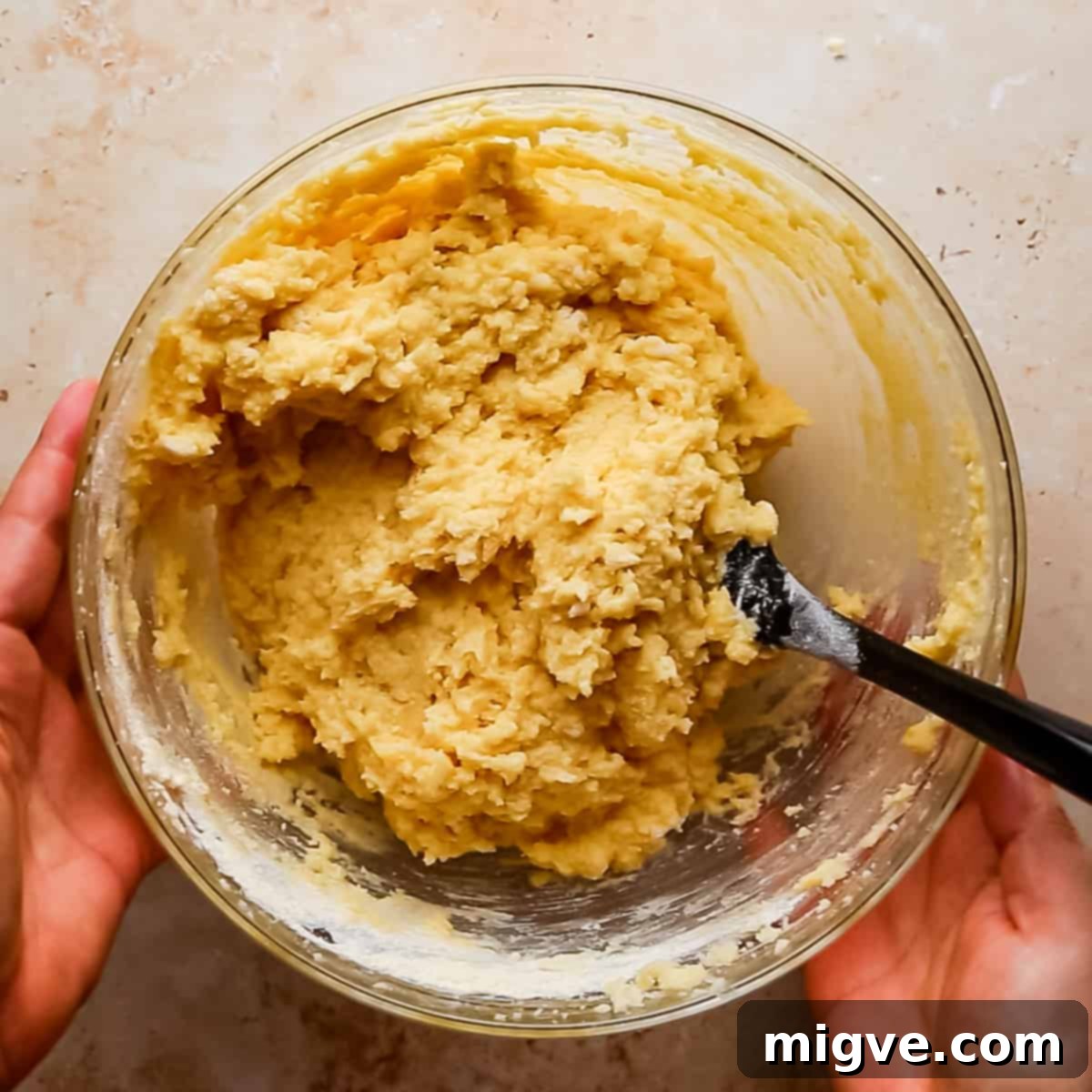
4. Bake the Cake: Preheat your oven to 180°C (160°C fan). Prepare a 20 cm (8-inch) loose-base cake tin by greasing it thoroughly and lining the bottom with baking paper. Transfer the prepared cake batter into the lined tin, using an offset spatula or the back of a spoon to gently smooth the top surface for an even bake. Bake for approximately 40-45 minutes, or until a wooden skewer or toothpick inserted into the center of the cake comes out clean. This indicates it’s fully cooked. Once baked, remove the cake from the oven and allow it to cool completely in the tin on a wire rack before attempting to remove it.
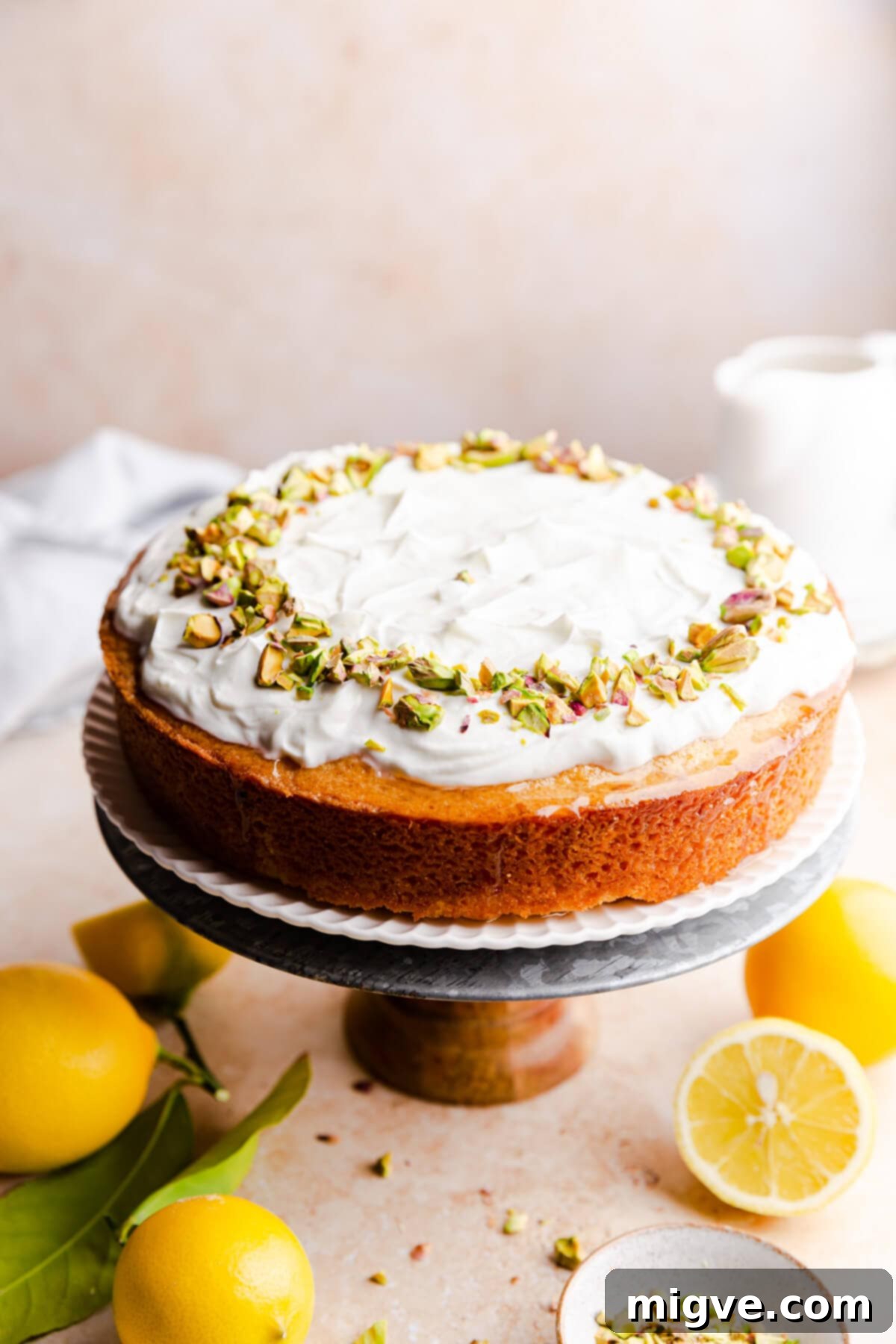
Once your cake has completely cooled, it’s ready for the final touches. Drizzle it generously with the prepared lemon sugar syrup, allowing it to soak in and enhance the cake’s moistness and flavor. Finish by topping it with a dollop of creamy Greek yogurt and a sprinkle of chopped pistachios, if desired. Cut into elegant slices and savor every delicious bite of this homemade lemon semolina cake!
Enhancing Your Serving Experience: To achieve maximum flavor absorption and a wonderfully moist texture, prepare the lemon sugar syrup and allow it to cool down to room temperature. Once your cake is also completely cool, gently poke its surface with a skewer or fork to create small channels. Pour the cooled syrup evenly over the cake, letting it seep in for at least 30 minutes. This infusion process is key to the cake’s signature moistness. After the syrup has absorbed, proceed with adding the Greek yogurt topping and a sprinkle of vibrant pistachios.
For a simpler approach, you can also serve the lemon cake plain, without any yogurt topping. In this case, consider serving it slightly warm or hot, perhaps with a generous drizzle of warm custard or a scoop of your favorite vanilla bean ice cream on the side. This creates a comforting and indulgent dessert perfect for a cozy evening.
Storage & Freezing Guidelines for Your Lemon Semolina Cake
One of the many appealing qualities of this lemon semolina cake is its excellent keeping power. Thanks to the semolina and the hydrating lemon syrup, this cake retains its delightful moistness and spongy texture for several days, making it an ideal bake-ahead dessert. Proper storage is key to preserving its freshness and flavor. Here’s how to best store your cake, whether it’s topped or plain, and how to freeze it for future enjoyment:
Storing Leftovers
With Yogurt Topping: If your cake has been topped with Greek yogurt, it’s essential to store any leftovers in an airtight container in the refrigerator. This will keep the yogurt fresh and prevent it from spoiling. When stored correctly, the cake with yogurt topping will remain delicious for up to 3 days.
Plain Cake (Without Yogurt Topping): For a plain cake, without any yogurt or perishable toppings, you have more flexibility. Store it in an airtight container at room temperature. Placed on your kitchen counter, this plain cake will stay wonderfully fresh, moist, and spongy for an impressive 5 to 6 days. The lemon syrup acts as a natural preservative, helping to maintain its soft texture.
Freezing Instructions
This lemon semolina cake is also an excellent candidate for freezing, particularly if you want to enjoy it at a later date or simply savor individual slices over time. However, there’s a crucial tip to remember when freezing:
Do NOT pour the simple lemon syrup over the cake before freezing it. If you soak the cake in syrup and then attempt to freeze it, the syrup can form ice crystals within the cake. This not only alters the cake’s delicate texture upon thawing but can also lead to freezer burn, diminishing its flavor and quality.
To Freeze the Cake:
- Ensure the baked cake is completely cooled to room temperature.
- Wrap the cooled, plain cake (without syrup or any topping) tightly in a double layer of cling film (plastic wrap).
- For added protection against freezer burn, you can then wrap it in a layer of aluminum foil or place it in a freezer-safe bag or container.
- Store the wrapped cake in the freezer for up to 3 months.
To Thaw and Serve from Frozen:
- Remove the frozen cake from the freezer and transfer it to the refrigerator to thaw overnight. This slow thawing process helps maintain its texture.
- Once thawed, remove the wrapping.
- Gently poke the surface of the cake with a skewer or a fork to create small holes.
- Prepare fresh lemon syrup (or use previously stored syrup that has been brought to room temperature) and generously pour it over the thawed cake.
- Allow the syrup to absorb into the cake for about 30 minutes before slicing and serving. You can then add the Greek yogurt and pistachios if desired.
Following these storage and freezing guidelines will ensure that every slice of your lemon semolina cake is as delightful as the first, whenever you choose to enjoy it!

Expert Baking Tips for the Perfect Lemon Semolina Cake
Achieving a consistently perfect lemon semolina cake is easy when you follow a few key tips and tricks. These insights will help you navigate common baking challenges and ensure your cake turns out beautifully moist, flavorful, and just as you imagined every time.
- Choosing the Right Cake Tin: This recipe has been carefully tested and perfected using a 20 cm (8 inch) loose-base cake tin, which is approximately 5 cm (2 inches) tall. This size ensures the cake rises to a desirable height and bakes evenly. If you opt to use a 20 cm square baking tin or a larger round cake tin, be aware that the cake will likely be less tall. Consequently, you will need to adjust your baking times accordingly – a wider, shallower cake may bake faster, so start checking for doneness a few minutes earlier.
- Don’t Panic if the Batter Splits: It’s quite common for the cake batter mixture to appear as though it has split or curdled slightly, especially after adding the eggs, particularly if your eggs or butter aren’t at precisely the same temperature. Rest assured, this is perfectly normal and nothing to worry about. The mixture will come together beautifully during the baking process, and it will not adversely affect the final texture or taste of your cake.
- Preventing a Soggy Cake Center: Sometimes, a cake might develop a slight indent or dip in the center after baking. If this happens, it’s crucial to ensure that the lemon sugar syrup does not pool there for an extended period. Allowing the syrup to collect in a depressed area can make that part of the cake excessively soggy and potentially cause it to collapse further. To prevent this, gently brush the syrup from the middle part of the cake, distributing it equally over the entire surface with a pastry or silicone brush, ensuring even absorption and a consistent, moist texture throughout.
- Maximizing Your Lemons: Don’t let any part of your fresh lemons go to waste! After zesting and juicing for the cake and syrup, use up any leftover lemon zest and lemon juice in other delicious recipes. They are fantastic for adding a bright, tangy kick to a variety of dishes, from dressings and marinades to other desserts. For example, consider making these easy and delicious Lemon Cookies, or a refreshing lemonade.
Frequently Asked Questions About Lemon Semolina Cake
Here are some common questions about making and enjoying this delightful lemon semolina cake, along with detailed answers to help you achieve the best results.
While you technically don’t *have* to use semolina, it’s the ingredient that truly defines this cake and gives it its unique characteristics. Semolina adds a subtle sweetness and a distinctive, slightly nutty flavor that you won’t get from regular flour alone. More importantly, it contributes to the cake’s signature texture – a delicate, slightly granular crumb that is incredibly moist and tender. If you substitute semolina entirely with self-raising or plain flour, the cake will still be delicious, but its texture and taste profile will undoubtedly be different, resembling a more traditional sponge cake rather than a semolina cake. For the authentic experience, we highly recommend sticking with semolina.
Semolina generally refers to the coarsely milled endosperm of durum wheat. However, depending on the grinding methods and manufacturers, you might find different distinctions in the shops. Most commonly, you’ll encounter:
- Coarse Semolina: This has a noticeably gritty texture, similar to fine sand. It’s often used for traditional puddings or savory dishes. If using coarse semolina in this cake recipe, we recommend a quick pulse in a blender to achieve a finer consistency, which will result in a more tender crumb.
- Fine Semolina: This is much softer and silkier in texture than its coarse counterpart, almost approaching the fineness of regular wheat flour but still with a distinctive quality. Most semolina sold in UK shops for baking is typically fine semolina, making it ideal for cakes like this one.
- Semola (or Semolina Flour): This is the finest grind of durum wheat, even finer than fine semolina. It has a silky, flour-like consistency and is primarily used for making fresh pastas, pizzas, and certain types of artisan breads, where its high protein content contributes to elasticity and strength. While some producers might label fine semolina as “semolina flour,” true semolina flour (semola rimacinata) is a distinct product. For this cake, fine semolina is what you’re looking for.
A soggy lemon cake, particularly a semolina cake, can be a common issue but is usually preventable. The most frequent culprits are related to the temperature of the cake and the syrup. This could be caused by either adding the lemon syrup when it was still too hot, or by not allowing the cake itself to cool down sufficiently before applying the syrup. For optimal absorption and to maintain the cake’s tender structure without turning it soggy, ensure two critical steps are followed: 1) Allow the baked cake to cool completely to room temperature. 2) Allow the lemon syrup to cool down to room temperature before pouring it over the cake. Applying cool syrup to a cool cake allows for gradual and even absorption, resulting in a perfectly moist, rather than soggy, texture.
More Irresistible Lemon Recipes You’ll Love
If you’ve fallen in love with the bright and zesty flavors of this lemon semolina cake, then you’re in for a treat! We have a collection of other lemon-infused delights that are sure to tantalize your taste buds. Explore these delicious recipes for more ways to enjoy the vibrant taste of citrus:
- Lemon Curd SlicesRating: 4.82 out of 5 stars (16 votes)
- Small batch lemon drizzle cakeRating: 4.86 out of 5 stars (28 votes)
- Zesty Lemon CakeRating: 4.83 out of 5 stars (23 votes)
- Lemon Mascarpone TartRating: 4.27 out of 5 stars (30 votes)
Did you try this recipe? Leave a ⭐⭐⭐⭐⭐ rating below and tag @anna_wierzbinska on Instagram!
📖 Recipe

Print Recipe
Pin Recipe
Lemon Semolina Cake
Equipment
- ▢ 20 cm (8 inch) loose-base round or square cake tin
- ▢ baking paper
- ▢ hand-held electric mixer or freestanding mixer with the paddle attachment
- ▢ 2 large mixing bowls
- ▢ small saucepan
Ingredients
For the cake:
- ▢ 150 g self-raising flour see notes for the alternative
- ▢ 150 g semolina
- ▢ ½ teaspoon salt
- ▢ 2 medium lemons zest only
- ▢ 100 ml lemon juice (about 3 medium lemons)
- ▢ 1 teaspoon vanilla extract
- ▢ 250 g sugar caster or granulated
- ▢ 250 g butter softened
- ▢ 3 large eggs
- ▢ 150 g full-fat Greek-style yogurt optional
- ▢ 40 g unsalted pistachios, roughly chopped optional
For the lemon syrup:
- ▢ 100 g sugar caster or granulated
- ▢ 100 ml lemon juice (about 3 medium lemons)
Instructions
To make the cake:
- Preheat oven to 180°C (160°C fan). Grease a 20 cm loose-base cake tin and line its bottom with baking paper. Set aside.
- In a medium bowl, whisk together the flour, semolina, and salt. In a small jug or bowl, combine the zest of two lemons, 100 ml of lemon juice, and the vanilla extract.150 g self-raising flour, 150 g semolina, ½ teaspoon salt, 2 medium lemons, 100 ml lemon juice, 1 teaspoon vanilla extract
- Using an electric mixer, cream together the softened butter and sugar until the mixture is pale and fluffy (about 2-3 minutes). Add the eggs, one at a time, whisking well after each addition and scraping the bowl as needed.250 g sugar, 250 g butter, 3 large eggs
- Tip half of the flour mixture into the egg and butter mixture, followed by half of the lemon juice mix. Fold gently to combine. Then, add the remaining flour and lemon juice and fold again until just combined, ensuring not to overmix. Transfer the batter into the prepared cake tin and smooth the top with an offset spatula or the back of a spoon.
- Bake the cake for 40-45 minutes, or until a toothpick inserted into the middle comes out clean. Remove from the oven and allow the cake to cool completely on a wire rack.
To make the lemon syrup:
- Place the sugar and lemon juice into a small saucepan over medium heat. Stir until the sugar dissolves completely, then simmer until the mixture reduces by about half (approximately 3 minutes). Take off the heat and allow the syrup to cool down completely to room temperature.100 g sugar, 100 ml lemon juice
- When the cake is completely cool, poke its surface with a skewer or fork to create small holes for the syrup. Pour half of the cooled lemon syrup over the top of the cake (use a pastry or silicone brush to spread the syrup evenly if needed), and allow it to soak in for about 30 minutes. Save the remaining lemon syrup for serving alongside slices or for additional moistness later.
- Top the cake with Greek yogurt and a sprinkle of chopped pistachios (optional). Slice and enjoy your delicious lemon semolina cake!150 g full-fat Greek-style yogurt, 40 g unsalted pistachios, roughly chopped
Please note that all my recipes are developed and tested using metric grams. I highly recommend using digital scales for the most accurate results. While I have provided a conversion to US customary in the recipe, please be aware that I have not personally tested the recipe using this method.
Video
Notes
- For a delightful twist, you can easily substitute lemons with oranges or even use a mixture of both, or any other citrus fruit you prefer.
- It is absolutely crucial to allow the cake to cool down completely to room temperature before you drizzle it with the lemon syrup. This prevents a soggy texture and ensures optimal absorption.
Storage instructions:
If topped with yogurt, store the cake in an airtight container in the fridge for up to 3 days. A plain cake (without any topping) can be stored at room temperature in an airtight container for up to 5 days, maintaining its lovely moistness.
Freezing instructions (for the plain cake, without the syrup or the topping):
You can freeze the entire cake or individual slices. Wrap the cooled cake tightly in a double layer of cling film (plastic wrap) and store it in the freezer for up to 3 months. When ready to enjoy, thaw the cake in the fridge overnight. Once thawed, poke the top surface with a skewer and then drizzle with the cooled sugar syrup, allowing it to soak in before serving.
Nutrition
Calories: 374kcal |
Carbohydrates: 79g |
Protein: 8g |
Fat: 4g |
Saturated Fat: 1g |
Polyunsaturated Fat: 1g |
Monounsaturated Fat: 2g |
Trans Fat: 1g |
Cholesterol: 4mg |
Sodium: 185mg |
Potassium: 228mg |
Fiber: 3g |
Sugar: 47g |
Vitamin A: 73IU |
Vitamin C: 24mg |
Calcium: 70mg |
Iron: 1mg